
Guides
Verified vs Private Car Listings in Albania: How to Choose
Verified vs Private Car Listings in Albania: How to Choose

A verified listing comes from a dealership that has been vetted by the marketplace. A private listing comes from an individual selling their own car. Neither is automatically the better buy. The right choice depends on your budget, how much paperwork you want to handle yourself, and how carefully you check the car. On CarPulse both types sit side by side, with the same filters (make, model, year, mileage, price, fuel type) and the same VIN-based vehicle data, so you can compare them like for like.
This guide explains what separates the two, what to check in each case before you pay, and how to read a listing so you spend your time on cars worth seeing.
TL;DR
- Verified listings come from vetted dealerships; private listings come from individuals. On CarPulse you can browse both with the same filters and compare them on equal terms.
- Private sellers often price lower, because they have no overhead. A dealer gives you a business to deal with and a network that has been vetted.
- Whoever sells, the same core checks apply: the VIN against the documents, ownership matching the seller’s ID, mileage against service history, and a proper road test.
- Never pay a deposit before you have seen the car, the papers and the VIN, and complete the transfer through a notary and the road-transport authority.
- Electric and leased cars add their own questions: battery documents, charging, and who actually owns the car during the lease.
Table of Contents
- What the two listing types mean in practice
- Why verification helps you narrow the list
- Where private listings win
- The checks that apply to both types of seller
- Paying safely
- Completing the transfer
- Electric cars, new cars and leasing
- Which should you choose?
- Our perspective
- Selling? Make your listing easy to trust
- FAQ
- Sources
What the two listing types mean in practice
A private listing is posted by an individual who owns the car and is selling it directly. You deal with the owner: they know how the car was driven, serviced and fuelled, and you negotiate with the person who will sign the contract.
A verified listing is posted by a dealership that has gone through verification on the platform. CarPulse describes its marketplace as combining a trusted, verified dealer network with a modern user experience. For you as a buyer, that means a business stands behind the advert, usually with several cars in stock, a showroom or lot, and a reputation to protect.
The practical differences are less about the car and more about the process around it:
| Verified dealership listing | Private listing | |
|---|---|---|
| Who you deal with | A business with a stock of cars | The individual owner |
| Price | Often includes the dealer’s margin and preparation | Often lower, with more room to negotiate |
| Car history | The dealer may know the car’s origin, especially for imports | The owner usually knows the full day-to-day story |
| Choice | Several cars at one address | One car per seller |
| Viewing | Showroom or lot, regular hours | At the owner’s convenience |
| Paperwork | Dealer is used to the process | You and the seller handle it together |
None of this makes one route safer by default. A careful buyer gets a good car from either. A rushed buyer can get a bad one from either.
Why verification helps you narrow the list
The Albanian used-car market is large and varied. Nearly every car on the road arrived as an import, and a single model can come with very different histories depending on where it came from and who owned it. That makes the first filter valuable: who is selling?
Verification helps in three ways:
- It shortens your shortlist. If you want a seller that is an established business, you can start with dealer listings and skip the rest.
- It gives you someone accountable. A dealership that keeps a name and a stock has an interest in repeat business.
- It saves time on volume. If you are comparing several similar cars, a dealer lets you see them in one visit.
Verification is a starting point for trust, not a replacement for checking the car. The checks below apply to every listing you are serious about.
Where private listings win
Private sellers are a big part of what makes a marketplace useful, especially if you want an affordable used car.
- Price flexibility. An individual selling a family car is not carrying a showroom’s costs, and many are open to a reasonable offer.
- Honest ownership story. You can ask who drove it, where it was serviced, why they are selling. A seller who owned the car for years can usually answer in detail.
- Direct communication. On CarPulse you contact the seller through the platform and can save the search or bookmark the listing while you compare.
The trade-off is simply that more of the process is on your side: arranging the viewing, checking the documents, agreeing the payment and walking through the transfer. The next sections show how to do that cleanly.
The checks that apply to both types of seller
The same six checks apply whether the seller is a dealership or a neighbor. Do them in this order, because the early ones are free and can end a bad deal in minutes.
1. Read the listing closely
Compare the make, model, year, mileage and fuel type in the advert with what you see on the car and in the papers. Listings that use VIN-based data start from the vehicle’s own record, which cuts down on typing errors, but you should still check that the car in front of you matches. Look for photos of the dashboard, the odometer and the interior, not only the exterior.
2. Match the VIN to the documents
The VIN is the 17-character vehicle identification number. It should be identical on the registration papers, on the chassis and on the windscreen. If any of those locations differs, stop the purchase. Our guide to verifying an online car seller walks through the VIN, ownership and identity checks in order.
3. Confirm that the seller is the owner
The documents you should see, according to a buyer’s guide for Albania, include proof of ownership that matches the seller’s ID, the registration certificate, an up-to-date technical inspection, compulsory third-party liability insurance and the carbon tax invoice. For an imported car you should also see the customs clearance document, known as the DAV.
From a dealership, you are entitled to expect this file to be in order. From a private seller, ask for it before you travel. A seller who hesitates over showing an ID that matches the ownership papers has told you what you need to know.
4. Test the mileage
Mileage is the most commonly manipulated number on a used car. The same guide suggests checking it against the service history and against the wear on the pedals and driver’s seat. It also gives a simple warning sign: a car from 2012 showing only 80,000 km deserves a second look.
5. Inspect the car itself
Bring someone who knows cars, or a mechanic, and use the daylight. Useful checks include:
- Paint. A thickness gauge shows panels that were repainted after an accident.
- Cold start. Ask that the engine not be warmed up before you arrive. Listen for noises and look underneath for oil leaks.
- Interior. Damp smells, stained carpets or a musty cabin can point to water damage. If you notice a smell you cannot place, this explainer on diagnosing the source of car odour helps you work out whether it is a surface issue or something deeper.
- Road test. Drive at least 20 minutes, including some highway speed, so you feel the transmission, brakes and steering under load.
Technical inspection matters too, and our overview of vehicle inspection in Albania explains what the certificate covers and how often it is required.
6. Look for debts and fines
The same buyer’s guide notes that unpaid fines can be checked with DPSHTRR, the national road-transport authority. Check before you pay, not after. A car with unresolved debts or restrictions is a problem you inherit.
Paying safely
Payment is where most scams happen, and the advice is the same for both seller types.
- Be wary of deposit-only requests. A seller who asks for money before you have seen the car, the papers and the VIN is asking you to take the risk. The buyer’s guide lists “deposit only” payments among the common scams.
- Pay at the notary. The shqiperi.org used-car guide explains that transfer and registration go through the relevant authorities, usually with a notary. Agree the payment method in advance, and have the payment and the signature happen in the same place.
- Budget for the extras. Transfer fees, taxes, insurance and any required inspection are part of the real price. For an imported car, add customs and transport costs.
A verified dealership will typically have a standard routine for payment and paperwork. With a private seller, you set the routine together, so agree it before the meeting.
Completing the transfer
After payment, ownership must be changed officially. An Albanian transfer guide from October 2025 lists a request form, ID or passport, ownership documents, circulation permit, ownership certificate, plates, an RBS certification and a physical-condition record for the change of ownership of an already registered vehicle. Requirements can change, so confirm the current list with the authority or notary before you go.
For a clear walkthrough, read our guide to car ownership transfer in Albania, and if the car needs registering, see how to register a car in Albania. Until the transfer is complete, the car is not yet legally yours.
Electric cars, new cars and leasing
Your audience is wider than petrol-car buyers, and each group has its own questions.
Electric vehicles. Filter by fuel type to see electric listings. Ask for the charging cable and adapters that come with the car, and for documentation about the battery. For a dealer listing, ask what the dealer knows about the car’s origin and previous use. For a private listing, ask the owner how and where they charged it.

New cars. New cars are generally sold by dealerships, so verified listings are the natural place to look. Compare the full price, what is included, and the delivery and registration arrangements before you commit.
Leasing. If a car is offered with leasing, confirm in writing who owns the car during the lease, what the monthly payment covers, and what happens at the end of the term. Read the contract in full before signing.
Imported cars. For any imported vehicle, calculate the full cost including customs, transport and registration, and confirm the customs clearance document is present.
Which should you choose?
Use this as a quick decision aid.
- Choose a verified dealership listing if you want a business behind the sale, several cars to compare in one place, or a smoother paperwork routine.
- Choose a private listing if you want to negotiate on price, talk to the person who actually drove the car, and are comfortable handling the checks above.
- Use both at the start. Save a search with your make, budget and fuel type, then compare dealer and private cars side by side. The one that passes the VIN, document and road-test checks is the one to buy.
Our step-by-step guide to buying a used car in Albania safely puts the full process in order, and the 2026 used-car buying guide goes deeper into the costs.
Our perspective
We built CarPulse so that the question “dealer or private?” does not have to be a leap of faith. Verified dealerships and private individuals list in the same place, with the same structured data, so you compare cars rather than guessing between websites.
VIN-based listing is the part we care most about. When a seller enters a VIN, the vehicle details fill in automatically, so the advert starts from the car’s real record and not from what someone remembered to type. For buyers, that means fewer mismatches between the advert and the papers. For sellers, it means a listing that takes minutes.
Buyers use CarPulse free of charge: you can search, save, bookmark and message sellers without paying. We also offer AI price evaluation and vehicle history checks, because a fair price and a clear history are what make a decision easy.
Our advice is simple. Shortlist from both seller types, check the VIN against the papers, and do not pay until you have seen the car. Do that and either route works well.
Henri
Selling? Make your listing easy to trust
If you are on the other side, the same things that reassure a buyer help you sell: a complete listing, a clear VIN, honest photos and papers ready to show. Private sellers and dealerships list on CarPulse through paid plans: Basic is €14.99 per month and Premium is €29.99 per month. VIN-based listing fills in the vehicle details for you, and your car appears among listings that buyers can filter by make, model, year, mileage, price and fuel type.
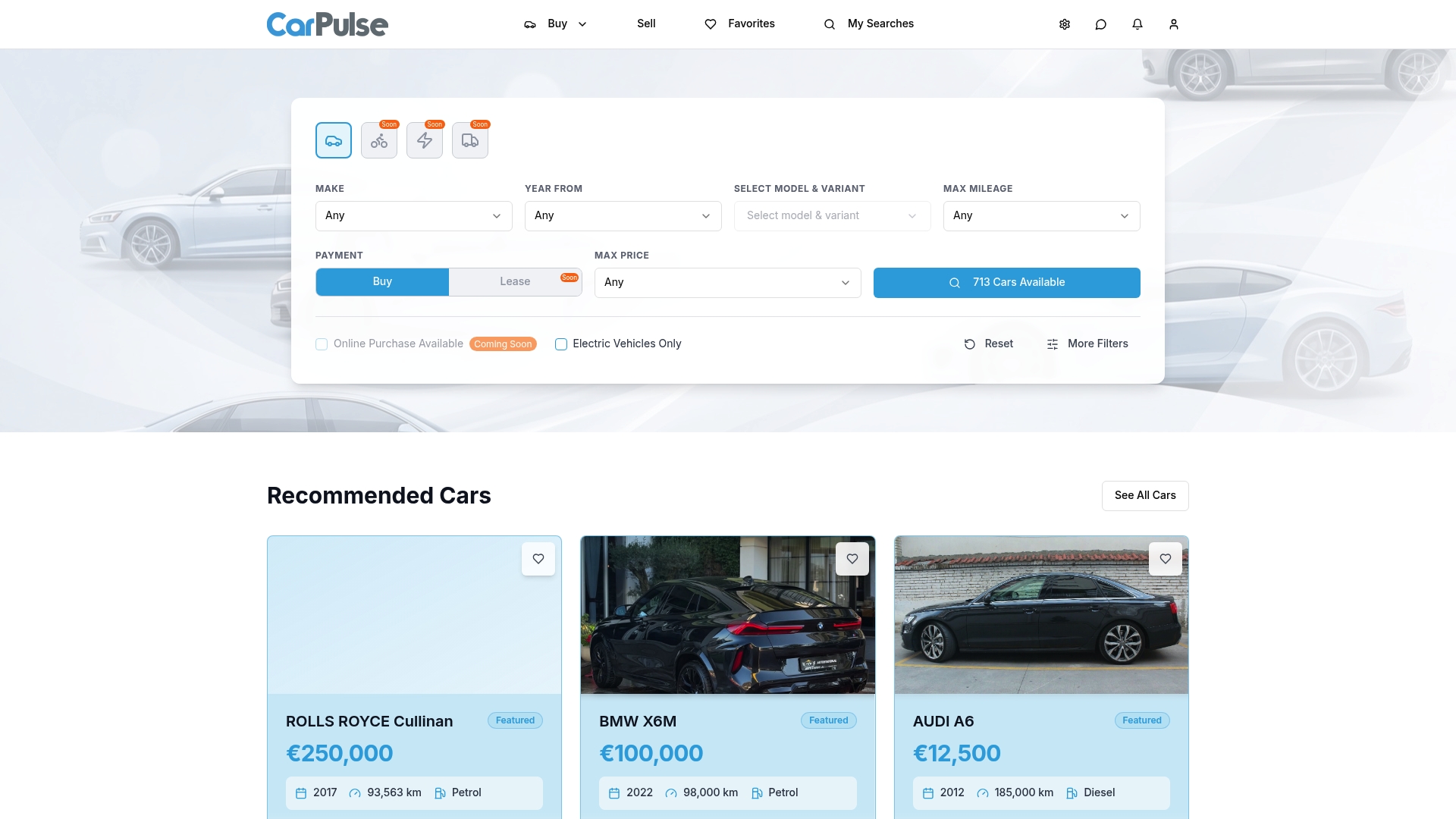
Browse the full range, from cars and motorcycles to vans, trucks and trailers, on the CarPulse homepage. If you are preparing to sell, our guide to the documents you need to sell a car in Albania lists what to gather first.
FAQ
Is a verified listing always safer than a private one?
Verification tells you the seller is an established dealership, which is a good starting point. The car still needs the same checks as any other: VIN against documents, ownership against ID, mileage against history, and a road test. Treat verification as the first filter and your own inspection as the deciding one.
Are private sellers cheaper than dealerships?
Often, because individuals do not carry showroom costs, and many are open to negotiation. Compare similar cars by year, mileage and fuel type, and use the AI price evaluation on CarPulse as a reference for what a fair price looks like.
What documents should I ask for before paying?
Ask for proof of ownership matching the seller’s ID, the registration certificate, a current technical inspection, liability insurance and the carbon tax invoice. For imported cars, also ask for the customs clearance document (DAV), according to Albania 1912’s buyer guide. Complete the sale through a notary.
Do buyers pay to use CarPulse?
No. Browsing listings, saving searches, bookmarking favorites and contacting sellers is free for buyers. Sellers, both private and dealerships, pay to list their vehicles.
Sources
- How to buy a used car in Albania for foreigners: a complete guide
- Buying a Used Car in Albania
- How to Bring and Register Your Vehicle in Albania