
Guides
3 Checks to Verify an Online Car Seller in Albania: VIN,...
3 Checks to Verify an Online Car Seller in Albania: VIN, NIPT, Invoice

Before you send money or agree to meet, run three checks: confirm the seller’s identity and account history, request the VIN and pull a vehicle history report, and insist on a traceable payment tied to a fiscal invoice. That combination catches most scams because a fraudulent seller almost never has all three lined up. A verified dealer or a genuine private seller will hand these over without hesitation.
TL;DR:
- Requiring the VIN and fiscal invoice from a seller significantly reduces the risk of fraud, as most scams fail to produce both documents simultaneously.
- Verified dealers promptly provide business registration details, NIPT, and recent invoices, aligning with Albanian tax enforcement measures.
- A vehicle history report linked to the VIN can reveal critical issues like accidents, odometer rollback, theft records, or multiple owners that contradict the listing.
- Bank transfers after in-person inspection are the safest payment method, as they create a paper trail and allow the buyer to verify the car first.
- Marketplace platforms with VIN data and verified dealer status offer higher security compared to social media listings, which often lack traceable documents and accountability.
Table of Contents
- Verifikim Shitësi Online: The Step-by-Step Checklist
- How to Confirm a Seller Is a Registered Business
- How to Use the VIN and Read a Vehicle History Report
- Which Payment Methods Are Actually Safe
- Red Flags and the Exact Questions to Ask
- Marketplaces vs. Social Media: What Changes
- What Actually Separates a Safe Car Purchase From a Risky One
- CarPulse: Verified Listings Without the Guesswork
- Sources
- FAQ
Verifikim Shitësi Online: The Step-by-Step Checklist
Run through these checks in order, before you get emotionally attached to the car in the photos.
- Check the seller’s account age and consistency. A profile created last week with one listing and no history is not automatically a scam, but it removes any margin for trust. Cross-reference the phone number and name across the listing, messages, and any linked social profiles.
- Look past the star rating. Ratings can be inflated with a handful of friendly reviews, so read the actual feedback text and check whether buyers mention real delivery experiences or just generic praise. Review integrity matters more than the raw score.
- Ask if the seller is a business or a private individual, and adjust your checks accordingly. This is the basic split between KYC (identity checks for individuals) and KYB, which verifies a business, and it determines which documents you should be asking for next.
- Request the VIN before anything else. A legitimate seller gives it up in seconds; a seller stalling on the VIN is stalling for a reason.
- Match the VIN report against the listing. Mileage, accident history, and registration details all need to line up with what you were shown.
- Confirm the site itself is secure. Look for HTTPS, a visible return policy, and a privacy policy that isn’t just a placeholder page.
- Ask for a fiscal invoice or proof one will be issued at sale. No invoice is one of the clearest signals something is off.
- Choose a payment method that keeps you in control until you’ve inspected the car.
A few things to keep scanning for as you go:
- Seller refuses a video call or in-person meeting before payment.
- Price sits far below comparable listings with no explanation.
- Seller pushes you to communicate only through a personal WhatsApp or Viber number.
- Photos look reused or professionally staged rather than taken of the actual car.
Pro Tip: Screenshot every message and document the seller sends you, including timestamps. If a deal turns sour, that thread is often the only paper record you’ll have.
How to Confirm a Seller Is a Registered Business
If someone is listing multiple cars or calling themselves a dealer, ask for three things: the NIPT (business registration number), a company registration excerpt, and a recent fiscal invoice from another sale. A real dealer produces these without friction, because they’re required to have them anyway.
Albania’s tax authority actively monitors bank transfers tied to online sales and can flag sellers operating without registration, which means legitimate dealers have a strong incentive to stay compliant. Non-registration carries a fine, while operating without fiscalization carries a higher fine range. That enforcement is exactly why a missing fiscal invoice should worry you more than a missing star rating.
- If a seller claims to be a registered business, ask for the NIPT first, before discussing price.
- Check that the registration excerpt name matches the name on the bank account you’d be paying.
- A brief delay of a day or two while a seller pulls documents together is normal, since business verification (KYB) typically takes longer than identity checks on individual sellers.
- A seller who goes silent or gets defensive when asked for these documents is telling you something.
How to Use the VIN and Read a Vehicle History Report
The VIN is the single most useful piece of information a seller can give you, because it unlocks a record independent of anything the seller tells you. A proper report typically shows:
- Accident history, including whether damage was reported as structural or cosmetic.
- Mileage progression over time, which catches odometer rollback that’s invisible from the dashboard alone.
- Theft or lien records, meaning the car may not legally belong to the person selling it.
- Registration and ownership transfer history, including how many owners the car has had.
Compare every field against what the listing and photos claim. If the report shows a rebuilt title but the ad calls the car “accident free,” that’s not a misunderstanding, that’s a decision point. When a report turns up a real issue, you have three moves: walk away, renegotiate hard using the report as leverage, or ask the seller to produce repair documentation and an independent mechanical clearance before you go further.
Which Payment Methods Are Actually Safe
Not all payment methods carry the same risk, and for a car purchase, the difference matters more than it does for a $50 online order.
- Bank transfer after inspection. This is the safest common option because it leaves a paper trail and lets you confirm the car matches the listing before money moves.
- Cash or transfer on delivery, tied to inspection. Works well for local deals, but only pay once you’ve physically seen the car, checked the VIN plate against the report, and confirmed the paperwork is in the seller’s name.
- Marketplace-mediated payment. Where a platform holds or tracks the transaction, you get a layer of dispute support that a private bank transfer never gives you.
- Escrow for higher-value or cross-city deals. Slower, but it removes the risk of paying before you’ve ever seen the car in person.
Avoid wiring a deposit to someone you’ve never met in person for a car you haven’t inspected, no matter how good the story is.
Pro Tip: Ask for a proforma invoice before you pay anything. It’s a simple document, but a seller who can’t produce one usually can’t produce a fiscal invoice later either.
Keep every receipt, the proforma, and the final fiscal invoice together. If a dispute ever comes up, that stack of paper is your entire case.

Red Flags and the Exact Questions to Ask
Stop the deal immediately if you see any of these:
- The seller refuses to share the VIN or gives a partial one.
- The price is dramatically below market with a vague excuse (“relocating,” “urgent sale”).
- The seller pushes hard to move communication off the platform within the first few messages.
- No fiscal invoice is offered, and the seller gets vague when you ask about one.
Send these questions to every seller before you commit to a meeting:
- “Can you send the full VIN and a photo of the registration document?”
- “Will you provide a fiscal invoice at the point of sale?”
- “Why are you selling the car?”
- “Can I verify your name against the vehicle registration?”
Validate the answers, not just the fact that you got answers. Ask for a photo of the actual registration document, not a typed summary, and cross-check any bank transfer receipt the seller sends against the name on that registration.
Marketplaces vs. Social Media: What Changes
A marketplace built around VIN-populated listings and verified-dealer badges gives you something a social media post never will: a messaging history, dispute support, and a platform with its own reason to keep sellers honest. Layered verification, combining identity checks, business checks, and ongoing monitoring, is what separates a marketplace listing from a random post in a buy-and-sell group.
Social media listings deserve extra caution for a specific reason: no invoice, no traceable payment, and no registered address are the recurring pattern in regional scam reports. A short account history with no prior posts is another signal worth weighing.
- Trust marketplace badges and VIN-populated fields more than a Facebook post with stock photos.
- If a seller found you on social media and asks to move to a private chat immediately, slow down.
- If someone asks you to pay before providing any documents, decline and ask for the invoice and VIN first, on the record.
What Actually Separates a Safe Car Purchase From a Risky One
The VIN, the fiscal invoice, and a traceable payment aren’t three separate hurdles. They’re one test, because a seller who’s genuinely running a legitimate operation can produce all three without friction, while a scam almost always breaks down on at least one. That’s the part most buyer guides miss when they treat “check the VIN” and “get an invoice” as separate to-do items instead of one combined signal.
Platforms that build verification into the listing process, VIN-based fields that auto-populate details, verified-dealer status, message histories tied to an account, remove a lot of the guesswork that private-to-private deals leave entirely on the buyer. That’s worth factoring into where you shop, not just how carefully you check once you’ve found a car.
— Henri
CarPulse: Verified Listings Without the Guesswork
Many marketplaces cut a step out of the process most buyers dread: chasing a seller for a VIN, then chasing a separate report to check it. Listings often populate directly from the VIN, and sellers may go through a verification step before their listings go live, so some identity and business checks are partly done.
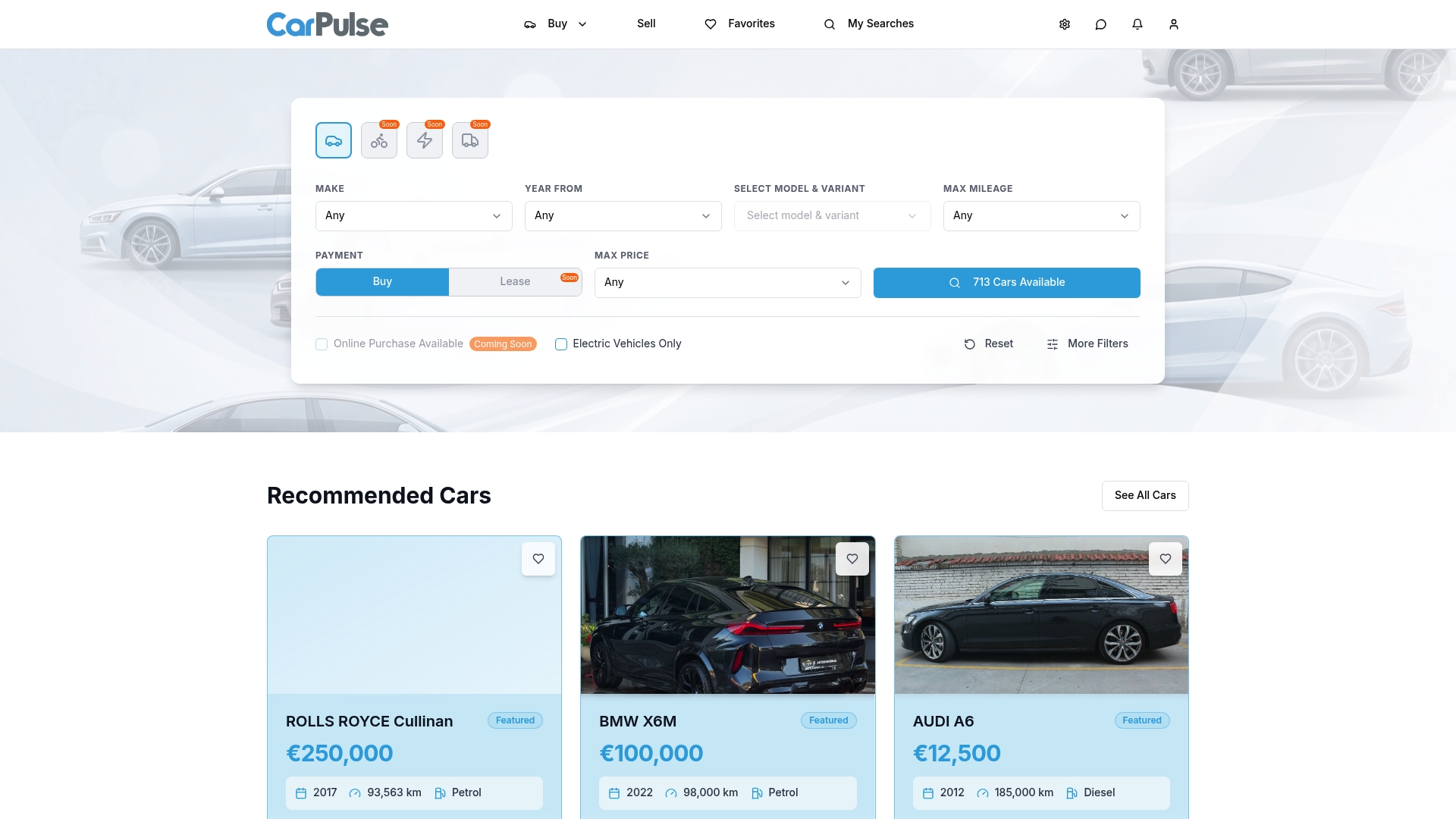
Whether you’re comparing used car listings across Albania or you’re ready to list a car for sale with your documentation already in order, the platform is built around the same principle this article walks through: verify first, then transact. Browse current listings on CarPulse and see the seller and vehicle details up front, before you ever have to ask.
Sources
- Shitjet online: si të rregulloheni — AlProfitConsult
- Tatimi E-Commerce — Shitje Online në Shqipëri (2026)
- Membercheck — VIN and AML context (Albania)
- Marketplace seller verification: KYC and KYB guide — Identomat
FAQ
What Is the Fastest Way to Verify an Online Car Seller?
Request the VIN, ask for a fiscal invoice, and confirm the seller’s identity or NIPT if they claim to be a dealer. A seller who hesitates on any of these is telling you something before you’ve even asked directly.
Why Does the VIN Matter More Than the Photos?
Photos can be staged or reused, but a VIN report pulls independent history on accidents, mileage, and theft or lien status that the seller can’t edit.
Is It Safe to Pay by Bank Transfer for a Used Car?
Bank transfer is one of the safer options when it happens after inspection, since it creates a paper trail. Pay only after you’ve confirmed the VIN and paperwork match the car in person.
What Should I Do if a Seller Refuses to Provide a Fiscal Invoice?
Treat it as a serious warning sign. Albanian fiscalization enforcement means a legitimate, registered seller can produce an invoice without difficulty, so refusal usually points to tax non-compliance or an unregistered operation.
Does Buying Through a Verified Marketplace Actually Reduce Risk?
Yes. Marketplaces that require VIN-based listings and verify dealer status remove several of the manual checks a buyer would otherwise have to run alone on a private sale.