Guides
New vs used car in Albania: Make the smart choice
New vs used car in Albania: Make the smart choice
TL;DR:
- Buying a new car in Albania offers warranty and reliability benefits, but involves higher upfront costs and depreciation.
- Used cars require careful inspection, knowledge of import regulations, and understanding total ownership costs for better value.
Choosing between a new and a used car in Albania is rarely as simple as comparing price tags. You have to weigh import regulations, depreciation curves, hidden maintenance costs, and long-term resale value all at once. Albanian car buyers also face a layer of legal complexity that most European markets do not, since customs and tax rules directly affect which vehicles you can legally bring in and what you will ultimately pay. This guide breaks that decision into clear, manageable steps so you can shop with confidence.
Table of Contents
- Understand the basics: Comparing new and used cars in Albania
- Breaking down total ownership cost
- Risk management: Inspections and documentation for used cars
- Weighing certainty, reliability, and peace of mind
- Our take: Why the “best” choice is personal in Albania
- Find your next car with confidence
- Frequently asked questions
Key Takeaways
| Point | Details |
|---|---|
| Regulations matter most | Albanian law on age and emissions for imports heavily influences your options. |
| Total cost over time | Factor purchase price, depreciation, and ongoing risk—not just what you pay upfront. |
| Professional used car inspection | Never skip a professional inspection to minimize risk when buying used. |
| Depreciation impacts resale | New cars lose value fastest; used cars may give you more for your money long-term. |
| Decision depends on priorities | Your tolerance for risk, need for warranty, and flexibility with regulations decide which choice is right for you. |
Understand the basics: Comparing new and used cars in Albania
The decision is more complex than price, so let’s clarify the fundamental differences and what rules matter most right here in Albania.
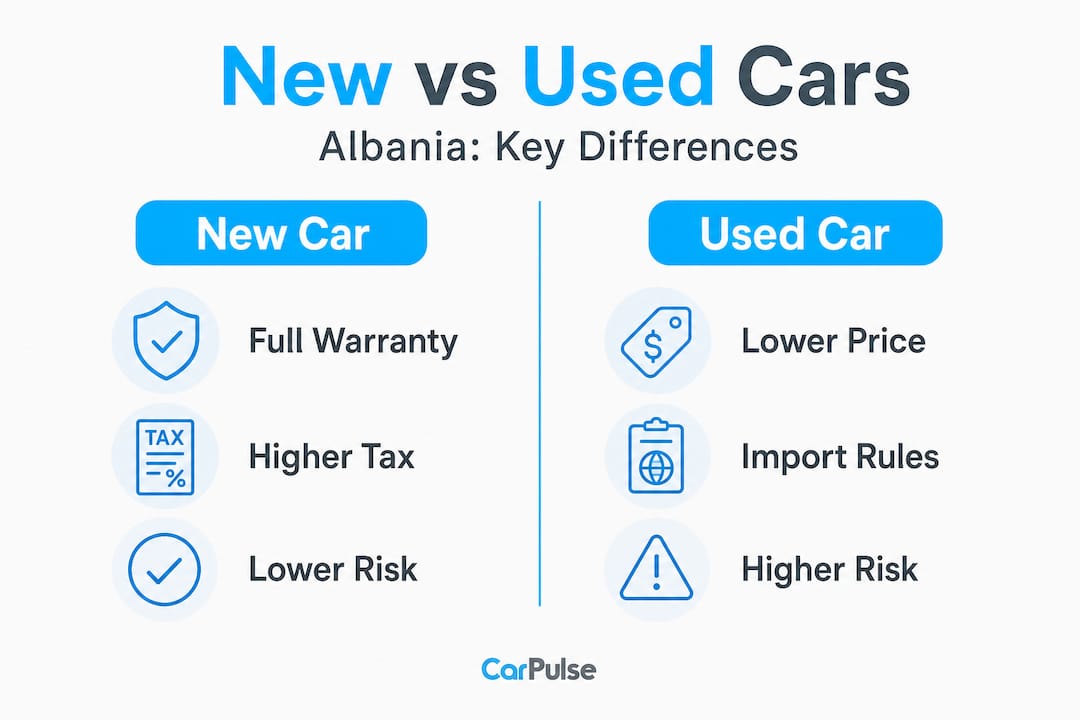
Albanian buyers who want to purchase a used vehicle from abroad face strict eligibility filters before anything else. Under current customs and tax rules, imported used cars must be less than 10 years old and meet at least the Euro 4 emissions standard. Vehicles that fall outside those limits simply cannot clear customs for private use. This immediately removes a large slice of cheap older inventory from the equation, narrowing the practical gap between new and used pricing.
Both new and used vehicles are subject to 20% VAT in Albania. On top of that, excise duties apply based on engine size and fuel type, so a large-displacement diesel import carries a meaningfully higher tax bill than a small-petrol city car. Understanding those layers before you commit to a budget is essential. You can read more about used car pricing factors to get a clearer sense of how taxes compound with mileage and age.
Here is a side-by-side comparison of the core factors:
| Factor | New car | Used car |
|---|---|---|
| Purchase price | Higher | Lower |
| Import eligibility | Always eligible | Must be under 10 years, Euro 4+ |
| VAT | 20% | 20% |
| Warranty | Full manufacturer warranty | Limited or none |
| Depreciation risk | High in year 1 | Lower (already depreciated) |
| Maintenance unpredictability | Low | Moderate to high |
| Emissions compliance | Euro 5 or Euro 6 | Varies, must meet Euro 4 minimum |
| Documentation risk | Minimal | Requires thorough checks |
Some buyers focus entirely on the sticker price, but that approach misses the full picture. A well-maintained three-year-old vehicle that passes all eligibility checks can represent excellent value, while a borderline-compliant import that needs immediate repairs may cost more over two years than a brand-new entry-level car. A useful overview of the buying and selling guide for Albanian buyers covers the ownership transfer paperwork you will encounter regardless of which path you choose.
Key takeaway: In Albania, your first question is not “new or used” but rather “is this vehicle legally eligible, and what is the total tax burden?” Answer those two questions first, and the rest of the decision becomes much cleaner.
Breaking down total ownership cost
With the basics clear, it’s time to look beyond the purchase price. Here’s how to work out what you will really spend over the years.
Sticker price is a starting point, not a final answer. The most overlooked cost in any car purchase is depreciation, which is the rate at which your vehicle loses market value over time. According to Experian’s depreciation research, new cars lose roughly 16% of their value in the first year alone, and up to 55% by the end of year five. That means a €25,000 new car could be worth around €11,250 five years later. A used car that has already passed through those early depreciation years gives you a much flatter value curve going forward.

Used SUVs can hold value better than sedans in some markets. For context on resale performance, used SUVs with strong resale value show that model choice matters as much as new versus used when you are thinking about exit value. In Albania, where SUVs are popular on rural and mountain roads, this is particularly relevant.
Understanding key factors for used car prices in the Albanian market helps you spot whether a listing is fairly priced or inflated, saving real money before you even negotiate.
Here is a simplified cost comparison over a five-year ownership period:
| Cost category | New car (est.) | Used car, 3 years old (est.) |
|---|---|---|
| Purchase price | €22,000 | €12,000 |
| VAT and import taxes | Included in dealership price | €2,400+ depending on specs |
| Depreciation loss (5 yrs) | ~€9,900 (45%) | ~€3,600 (30%) |
| Maintenance and repairs | €1,500 | €3,500 |
| Insurance (5 yrs) | €3,000 | €2,000 |
| Estimated total cost | ~€36,400 | ~€21,500 |
Note: These figures are illustrative. Your actual numbers will vary based on model, fuel type, driving habits, and insurance tier.
The customs and tax rules reinforce treating this as a total cost problem. Ignoring import duties when calculating your used car budget is one of the most common and costly mistakes Albanian buyers make.
Step-by-step checklist for calculating your total ownership cost:
- Find the asking price, then add VAT, excise, and registration fees.
- Research the model’s typical depreciation rate after five years.
- Look up average annual maintenance costs for that make and model.
- Get at least two insurance quotes before you finalize the purchase.
- Factor in the cost of any immediate repairs revealed during inspection.
- Compare the total five-year figure against your next best alternative.
Pro Tip: When comparing a new car dealership price against a used import, always convert both to a “five-year total cost” figure. A €5,000 difference at the point of purchase can shrink or reverse entirely once you account for taxes, repairs, and depreciation.
Risk management: Inspections and documentation for used cars
Since buying used carries risk, here’s exactly how to manage it and avoid expensive surprises.
The single biggest danger in buying a used car in Albania is not overpaying. It is buying a car with hidden mechanical problems or unresolved legal issues. These problems can cost you far more than you saved on the purchase price. A professional pre-purchase inspection is strongly recommended because many serious problems simply are not visible to the untrained eye during a casual walkthrough.
Step-by-step inspection process:
- Exterior check: Look for misaligned panels, color inconsistencies, and rust spots around wheel arches and door sills. These can signal prior accident repairs.
- Interior check: Test every electronic function including windows, climate controls, and the instrument cluster. Worn pedals on a low-mileage car are a red flag.
- Under-hood inspection: Check coolant and oil condition, look for leaks or corrosion on the battery terminals, and verify the VIN plate matches the documents.
- Undercarriage inspection: If possible, put the car on a lift. Look for frame damage, exhaust leaks, and worn suspension components.
- Test drive: Drive at multiple speeds, including highway speeds if possible. Listen for clunks, vibrations, or hesitation under acceleration. Our guide on how to test drive a used car walks through every step in detail.
- Professional PPI (pre-purchase inspection): Even if everything looks fine, pay a trusted independent mechanic to do a full inspection. This typically costs €50 to €100 and can save you thousands.
For a more detailed walkthrough of the mechanical checks, this detailed used car inspection guide covers what to examine at each stage of the process.
Documentation is equally important. You need to verify:
- Ownership documents match the seller’s identification exactly.
- Service history exists and is consistent with the odometer reading.
- No outstanding fines or taxes are attached to the vehicle registration.
- Import documents confirm the car meets Albania’s Euro 4 minimum and is within the 10-year age limit.
Read the safe used-car buying steps to get a full picture of the documentation process in Albania.
Remember: A seller who resists a professional inspection should be treated as a major warning sign. Legitimate sellers have nothing to hide and usually welcome the validation.
Pro Tip: If the inspection turns up faults, do not walk away automatically. Use the findings as a negotiation tool. A brake job that costs €300 justifies asking the seller to reduce the price by at least that amount, often more given the inconvenience to you.
Weighing certainty, reliability, and peace of mind
After mastering risk management, the final piece is understanding how your own priorities shape the right decision.
Some buyers are comfortable doing research, running inspections, and managing paperwork. Others want to sign once and drive away knowing nothing will break for three years. Both of those positions are completely valid. The Albanian car market has good options for each profile. The question is being honest about which type of buyer you really are.
New car advantages:
- No wear or hidden history to worry about.
- Full manufacturer warranty, typically two to five years.
- Euro 5 or Euro 6 emissions compliance guaranteed.
- Latest safety technology as standard.
- Predictable maintenance schedule for the first few years.
Used car advantages:
- Significantly lower purchase price.
- Depreciation already absorbed by the first owner.
- Wider variety of models and trims available at each price point.
- Can often source vehicles with desirable features already included.
According to NerdWallet’s inspection checklist, reliability and warranty coverage remain compelling reasons for buyers who want lower risk, even when the numbers favor a used vehicle on paper. There is a real cost to uncertainty, and for many buyers that cost is worth paying.
For first-time buyers especially, the first car buying guide for Albanian conditions is an excellent resource before making any final decision.
Bottom line: If you have the time and tools for due diligence, a well-chosen used car is often the smarter financial decision. If you value predictability above everything else, a new car removes most of the variables.
Consider your answers to these questions honestly:
- Can you afford the higher upfront cost and faster depreciation of a new car?
- Do you have time to do thorough research and inspections on used options?
- How long do you plan to keep the vehicle? (Longer ownership periods favor new cars.)
- Is the car for daily city use, long-distance travel, or mountain roads? Each use case has different reliability demands.
Our take: Why the “best” choice is personal in Albania
Every article about new versus used cars eventually tells you “it depends.” That is technically correct, but it is not particularly useful advice on its own. What we have observed through years of watching Albanian buyers navigate this decision is that the regret usually comes from misunderstanding two things: the total regulatory burden, and their own tolerance for uncertainty.
Buying new is sometimes the rational choice, even when the depreciation numbers look harsh on paper. If you are buying a vehicle that you plan to drive for eight to ten years, that first-year depreciation hit matters a lot less. You spread the cost over a longer period, you avoid repair surprises during the ownership cycle, and you have documentation that will hold up perfectly at resale. For buyers in stable financial situations who want simplicity, new is not an emotional indulgence. It is a deliberate, defensible strategy.
Used cars are genuinely smart for buyers who do their homework. But “doing homework” in Albania means more than reading reviews online. It means understanding import eligibility before falling in love with a listing, budgeting for inspection costs, and being prepared for the paperwork involved. The buyers who regret their used car purchases are almost always the ones who skipped one of those steps.
The honest advice we give is this: do not let anyone else’s calculation tell you what to do. Use the total ownership cost framework, know your regulatory constraints, and be honest about your risk tolerance. The complete guide to buying in Albania walks through every stage of that process in detail. Use it as a foundation, then layer in your own situation.
The Albanian car market rewards buyers who are methodical. It tends to punish buyers who rush.
Find your next car with confidence
You now have a clear framework for evaluating new versus used vehicles in Albania. The next step is putting that framework into action with real listings you can trust.
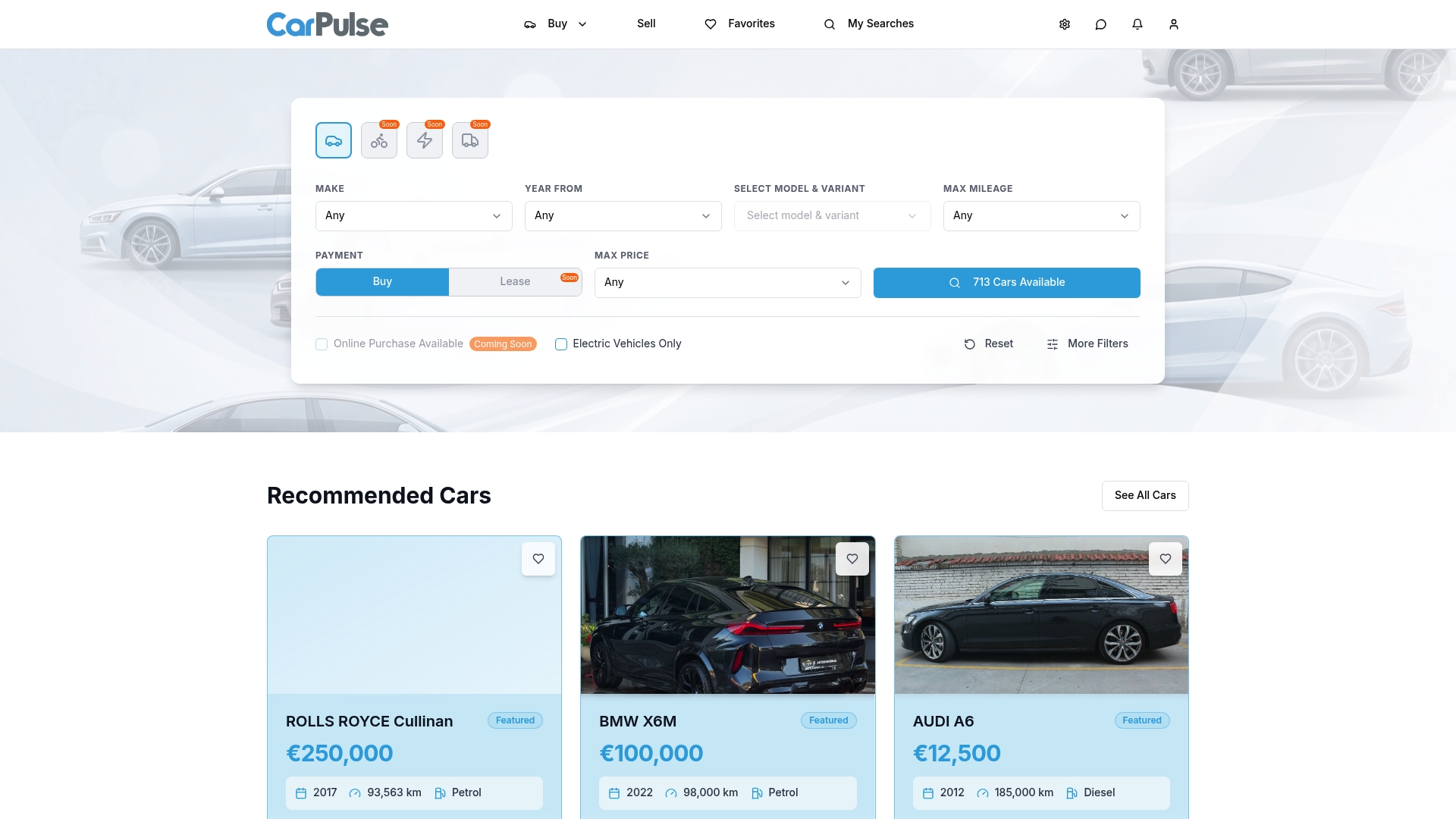
CarPulse is Albania’s online car marketplace, bringing together verified private sellers and dealerships on a single platform. Every listing includes key specs, making it easy to filter by age, fuel type, mileage, and price so you only see vehicles that fit Albania’s import requirements. Whether you are ready to buy or want to sell your car securely, CarPulse provides the tools to do it safely, including VIN-based listings that confirm vehicle details before you ever contact a seller. Browse new arrivals, save your searches, and connect with verified sellers directly from your phone using the CarPulse mobile app. The right car is out there. Start the search where the listings are verified and the process is built for Albanian buyers.
Frequently asked questions
What are the main regulatory barriers for used car imports in Albania?
Used cars must meet Euro 4 standards and be less than 10 years old to qualify for private import, eliminating a large portion of cheaper older vehicles from the market.
How much value does a new car lose in the first year in Albania?
On average, a new car loses about 16% of its value in the first year, making the total ownership cost significantly higher than the purchase price alone suggests.
Why is a professional pre-purchase inspection recommended for used cars?
Professional inspections uncover hidden issues that a casual visual check will miss, and the cost of the inspection is almost always far less than the cost of the problems it prevents.
Is buying new always better than used due to warranty and reliability?
Not always. New cars offer warranty and lower risk, but a properly inspected used vehicle that meets Albanian eligibility requirements can deliver significantly better total value over five years of ownership.
Recommended
- Udhëzues: Blerja e sigurt e një makine të përdorur në… | CarPulse Albania
- Si të provoni një makinë të përdorur: udhëzues i plotë… | CarPulse Albania
- Provë me Makinë të Përdorur: Udhëzues i Plotë për Shqipërinë | CarPulse Albania
- Makina e Parë për Fillestarë: Udhëzues Blerje Shqipëri |… | CarPulse Albania