
Guides
Classifieds vs. Car Marketplaces: Which Is Better in...
Classifieds vs. Car Marketplaces: Which Is Better in Albania?

A general classifieds site is the better choice when you want to reach as many people as possible with almost no setup. A dedicated car marketplace is the better choice when you want structured data, filters that match how people shop for cars, and sellers you can tell apart. In Albania most serious buyers and sellers end up using both, so the real question is what each one does well and which checks you still have to do yourself.
TL;DR
- General classifieds list everything from sofas to apartments. They are fast and familiar, but car details are free text, so quality varies from ad to ad.
- Car marketplaces are built around vehicles: filters for make, model, year, mileage, price and fuel type, plus vehicle data, saved searches and seller profiles.
- Neither type verifies the car for you. In Albania, the technical inspection record, the paperwork and the insurance transfer are what protect you.
- Sellers should compare reach and effort. A VIN-based listing on a car marketplace can cut the typing and the errors.
- Buyers pay nothing to browse and contact sellers on CarPulse. Sellers pay for listings, from 14.99 € per month.
Table of Contents
- What actually separates the two
- Buying a car: where each type helps
- Selling a car: reach versus effort
- How to assess any listing, on any platform
- Paperwork, import rules and insurance to check before you buy
- Electric vehicles and leasing: what to look for in a listing
- Which one should you use?
- List or browse on CarPulse
- FAQ
- Sources
What actually separates the two
A classifieds site is a general noticeboard. One person posts a used phone, the next an apartment, the next a 2014 diesel hatchback. The same form, the same search box and the same categories serve all of it. That is the strength: huge audience, low friction, and a place where almost anyone already has an account.
A car marketplace does one thing. Every listing is a vehicle, so the form asks for vehicle fields, the search filters on vehicle fields, and the page is designed around what a car buyer wants to compare. The platform can also add vehicle-specific tools that a general board has no reason to build, such as VIN lookup, price evaluation or a vehicle history check.

There is also a middle ground you will meet in Albania: social platforms and groups where people post cars among everything else. They behave like classifieds, only with less structure and more chat.
Side-by-side comparison
| Criterion | General classifieds | Dedicated car marketplace |
|---|---|---|
| Audience | Very broad, not only car shoppers | Narrower, but people there are shopping for vehicles |
| Listing form | Free text and a few photos | Vehicle fields, often auto-filled from the VIN |
| Search | Keyword search, basic price filter | Filters by make, model, year, mileage, price, fuel type |
| Comparing cars | Manual: you open each ad and read | Same fields on every listing, so side-by-side is easy |
| Seller types | Mixed, often hard to tell private from trade | Private sellers and dealerships shown as such |
| Tools | Messaging, sometimes favorites | Saved searches, bookmarks, price guidance, history checks |
| Cost to buyer | Free | Free on CarPulse |
| Cost to seller | Often free for a basic ad | Paid listing plans, often with promotion options |
The table shows tendencies, not rules. Each platform sets its own fees and features, so read the current terms of whichever one you use.
Buying a car: where each type helps
Why buyers like classifieds
The main draw is volume and variety. If you are open to anything, including an old runabout from a neighbor, a general board can turn up cars that never reach a specialist site. Prices can look low because sellers are not benchmarking against anything. You also meet sellers who simply want a quick sale and will negotiate.
The cost of that freedom is your time. Mileage might be written three ways, the year might be missing, and the fuel type may only appear in a photo caption. You compare by reading, not by filtering.
Why buyers like car marketplaces
If you already know your budget and the kind of car you want, filters save hours. Set make, model, year range, maximum mileage, price and fuel type, then save the search and let new matches come to you. That matters most in a market where good cars at a fair price do not stay listed long.
Structured listings also make it easier to spot oddities. When a 2016 car shows a mileage far below its neighbors in the results, you see it immediately, because every other listing uses the same fields.
On CarPulse, buyers can filter new and used vehicles, save searches, bookmark favorites and contact sellers directly. Browsing and contacting sellers are free for buyers. Listings come from private individuals and verified dealerships, and the platform is also available as an app for iOS and Android.
Selling a car: reach versus effort
For sellers the trade-off is slightly different. A general board gives you reach with the lowest effort: write a paragraph, add photos, post. But your ad sits in a stream of unrelated items, and every serious buyer will ask you the same questions about year, mileage, owners and fuel because the form never captured them.
A car marketplace asks for more structure, but it hands you better-qualified buyers. When the form is filled from the VIN, the technical details are consistent and you spend less time on typos. That is the idea behind VIN-based listing on CarPulse: the platform populates vehicle details from the VIN, so you add condition, photos and price instead of retyping specifications.
Price is where many private sellers lose money, either by asking too much and waiting, or too little and regretting it. A marketplace that offers price evaluation gives you a reference point before you publish. CarPulse offers AI price evaluation as part of its toolset, designed to give you a data-based starting number, which you should still compare with similar cars in the search results.
Before you list, get your paperwork in order. Our guide to the documents you need to sell a car in Albania walks through what to have in hand, and how ownership is transferred explains what happens once a buyer says yes.
Private seller or dealership?
On a general board you often cannot tell. A dealer may post as a private person, and a private seller may look like a business. On a car marketplace the seller type is part of the listing, which helps you decide how much paperwork and negotiation to expect. Verified dealerships also have a reputation to protect on a platform where their profile is public.
How to assess any listing, on any platform
The platform type changes how easily you can compare cars. It does not change what you must verify. Use this routine wherever you find the car.
- Match the listing to the car. The VIN in the ad, on the car and in the registration documents should be the same. If a seller will not share the VIN before a visit, treat that as a warning.
- Check the mileage against the inspection record. Albania’s roads authority, DPSHTRR, says its technical inspection certificate for vehicles with odometer anomalies is issued only after the mileage status is corrected, and that the real mileage history is recorded on the certificate. DPSHTRR describes the new certificate as a tool against odometer fraud and for transparent mileage history. Ask the seller for the latest certificate and read what it says.
- Inspect in person, in daylight. Check panel gaps, tire wear, fluid leaks and warning lights, and drive it. Ask a mechanic you trust to look at it before you transfer money.
- Meet in a public place and verify the seller’s identity. The person selling should be the person named in the documents, or hold a proper authorization.
- Be wary of prices far below the market. Compare against similar cars on a structured site. A big gap needs a convincing explanation.
- Never pay a deposit to someone you have not met and whose car you have not seen.
Misleading claims and your rights
Albania’s Law on Consumer Protection, No. 9902 of 2008, protects consumer interests and prohibits unfair commercial practices. That is relevant mainly when you buy from a business such as a dealership. A purchase from a private individual is a different relationship, so get terms in writing and keep every message and receipt either way.
Paperwork, import rules and insurance to check before you buy
Whether the listing came from a noticeboard or a specialist site, the legal checklist is the same.
Import age and emission class. If the car was imported used, ask when and under which rules. According to the customs administration’s notice on VKM No. 633 of 26 October 2018, imported used passenger cars must meet Euro 4 and be no older than 10 years, while other motor vehicles must meet Euro 3 and be no older than 15 years. Rules like this can be amended, so confirm the current position with customs before you buy an import. For the emission side of the picture, see what Euro 6 means for Albanian buyers, and if the car was modified or brought in from abroad, read about vehicle homologation.
Insurance. Under Law No. 10076 on compulsory motor insurance, vehicle owners must carry liability insurance for damage to third parties. The same law says that when ownership changes, the rights and obligations of the insurance contract pass to the new owner, who must notify the insurer within 8 days. Put that date in your calendar the day you buy.
Registration and transfer. Make sure the seller can complete the transfer. Our step-by-step guides cover how to register a car in Albania and the full registration process for 2026. Fees for registration and ownership change are set by the authorities and can be updated, so confirm the current amounts on the official service page rather than relying on a figure in a listing or a chat.

Electric vehicles and leasing: what to look for in a listing
Electric-car shoppers should treat the listing as the start of the questions. Look for the battery health information, the charging connector type, and what charger or cable comes with the car. If you plan to use public charging, remember that operators set their own terms. As one example, a local rental company’s published terms tell customers to follow its charging requirements and equipment instructions, which is a reminder that charging rules come from whoever runs the equipment.
A structured marketplace helps here because the fuel type is a filter, so you can narrow to electric and compare like with like. A general board leaves you searching for the words “electric” or “EV” and hoping the seller used them.
For leasing, the questions are different. Ask who owns the car during the contract, whether the lease can be transferred, what the remaining term and payments are, and whether the lessor has to approve a sale. If the listing does not answer them, ask in writing before you view the car.
Which one should you use?
| Your situation | Better starting point |
|---|---|
| You know the exact model and budget | Car marketplace, with saved searches |
| You want the cheapest possible runabout and have time to dig | General classifieds, plus a marketplace for price reference |
| You are selling a recent, well-documented car | Car marketplace, with VIN autofill and a clear price |
| You are a dealership with stock | Car marketplace, where trade sellers are identified |
| You want an electric or hybrid car | Car marketplace, filtered by fuel type |
| You are selling an old car with little paperwork | Either, but be ready to explain the documents |
A sensible habit: use a car marketplace to learn what a fair price is for the model you want, then judge any bargain you see elsewhere against that number.
Our view: structure is what makes a car deal safer
We built CarPulse because buying a car in Albania should not mean decoding a stranger’s paragraph. When every listing carries the same fields, a buyer can compare in minutes, and an honest seller stands out because the details line up.
For sellers, we believe the biggest friction is not finding a buyer, it is typing the same specifications over and over and then fielding the same questions. VIN-based listing is designed to remove that step, and AI price evaluation is designed to give you a grounded starting price instead of a guess.
We also think trust has to be visible. That is why we work with verified dealerships and show seller types clearly, so a buyer knows who they are talking to before they pick up the phone.
No platform replaces an inspection, a document check and a test drive. What we aim to do is make everything before that point faster, clearer and fairer for both sides.
Henri
List or browse on CarPulse
If you are selling, CarPulse offers two listing plans: Basic at 14.99 € per month and Premium at 29.99 € per month. You can see what each includes on the pricing page. Private sellers and verified dealerships can both list, and the VIN-based form fills in vehicle details for you.
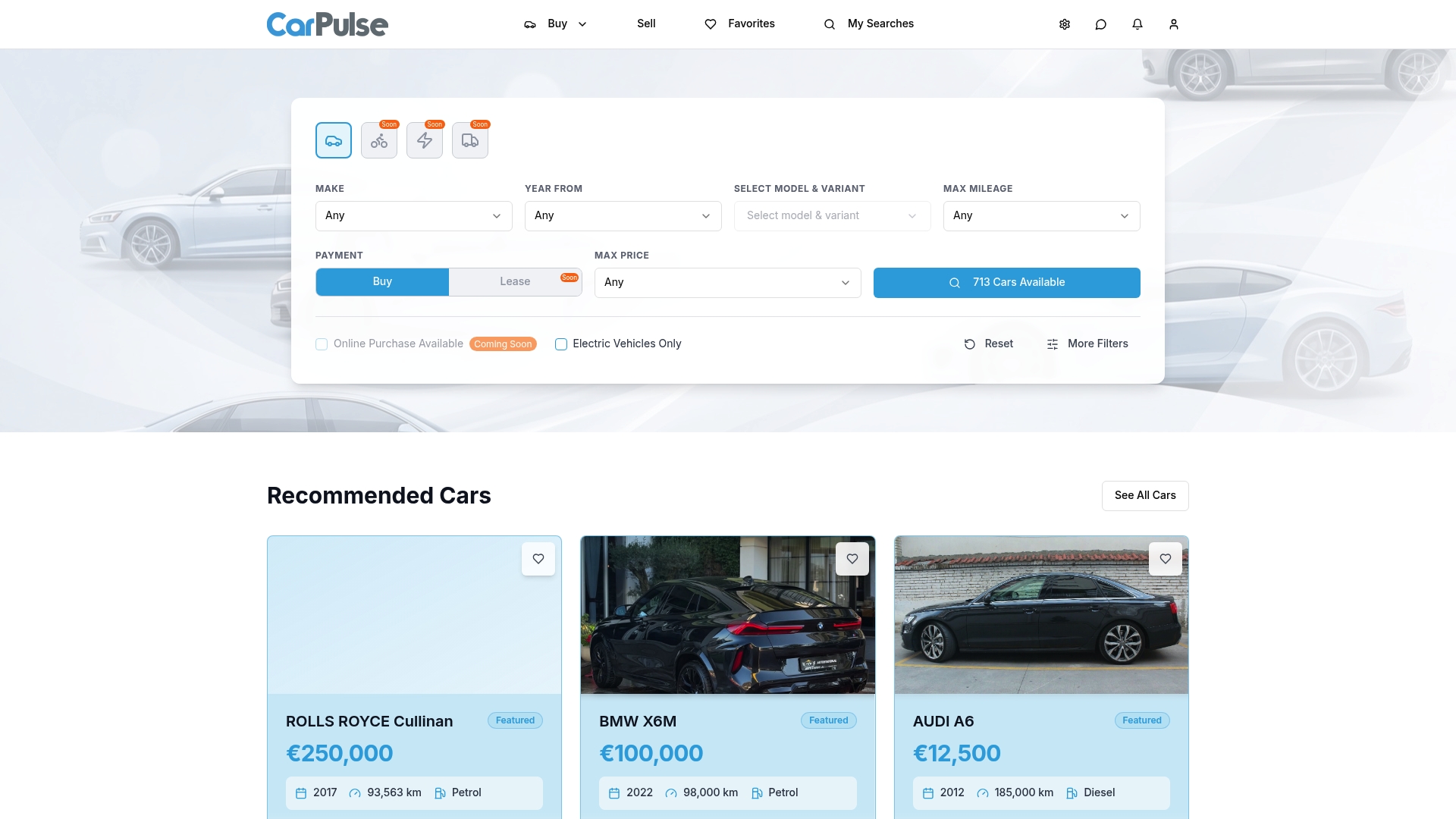
If you are buying, you do not pay to search or to contact sellers. Browse cars, motorcycles, vans, trucks and more on CarPulse, save your searches and bookmark the ones you want to see in person.
FAQ
Is a classifieds site or a car marketplace cheaper for sellers?
General classifieds often allow a basic ad at no charge, while car marketplaces usually charge for listings. The better question is how fast and at what price the car sells. On CarPulse, listing plans start at 14.99 € per month, and the VIN-based form and price evaluation are meant to save you time and help you price correctly.
Are cars really cheaper on general classifieds?
Sometimes the asking price is lower, because sellers are not anchored to market data. But a low price can reflect missing documents, high real mileage or a car that needs work. Compare the ad with similar cars on a structured site, and check the inspection record before you treat a low price as a bargain.
Can I trust a listing that says the mileage is low?
Only if the paperwork supports it. DPSHTRR says the technical inspection certificate records the real mileage history where an anomaly has been found and corrected. Ask to see the latest certificate and compare it with the odometer and the service history.
What should I do right after buying a used car?
Complete the ownership transfer and notify the insurer. Under Law No. 10076, the new owner must tell the insurance provider about the change within 8 days. Our guide to ownership transfer in Albania lists the steps and documents.
Do I need a car marketplace to sell an electric car?
Not strictly, but it helps. A fuel-type filter puts your car in front of people who are looking specifically for electric vehicles, and structured fields make battery and charging details easy to present.
Sources
- DPSHTRR: the new technical inspection certificate and odometer interventions
- Law on Consumer Protection, No. 9902, 17.04.2008
- Customs notice on VKM No. 633 of 26.10.2018
- Law No. 10076 on compulsory motor liability insurance, consolidated
- Auto Rent Teqja terms and conditions