
Guides
How to Register an Imported Car in Albania: Step-by-Step Gui
How to Register an Imported Car in Albania: Step-by-Step Guide

To register an imported car in Albania, you first confirm the car is allowed in (Euro 4 or higher for a used passenger car), register your personal ID with customs, clear the car and pay VAT, then take it to the registration authority with your documents, insurance and fees. Used cars must go to technical inspection within 7 days of first registration. Below you will find each step in order, with the official fees and the mistakes that cost people time.
TL;DR
- Used passenger cars previously registered abroad must meet Euro 4 or higher; new, never-registered cars need Euro 5 or higher and a Certificate of Conformity (CoC).
- Before customs clearance, every individual must register their personal ID in the Asycuda World system by email, as the Albanian Customs Administration describes.
- For passenger cars, customs charges consist of VAT on the customs value. There is no separate import duty.
- Official registration fees for a used car: 2,000 lekë (physical control), 2,500 lekë (traffic permit) and 4,000 lekë (two plates).
- Bringing a foreign-registered car in without declaring it is treated as smuggling, with heavy penalties.
Table of Contents
- Step 1: Check that your car can be imported
- Step 2: Register your personal ID with customs
- Step 3: Clear the car through customs
- Step 4: Translate and prepare your documents
- Step 5: Register the car and get plates
- Step 6: Technical inspection
- Temporary entry: when you do not register at all
- Our perspective
- Common mistakes that delay registration
- Selling or reselling the car later
- Find your next car, or list the one you imported
- FAQ
- Sources
Step 1: Check that your car can be imported
Eligibility comes first, because a car that fails the emissions or age rules cannot be cleared, and shipping costs are then wasted.
The Albanian road transport authority (DPSHTRR) publishes the list of vehicles allowed into the country. The main points for private buyers:
- New passenger cars not previously registered for road use in another country: Euro 5 or higher, with a CoC.
- Used passenger cars previously registered abroad: Euro 4 or higher.
- Used buses and mixed-transport vehicles of categories M2 and N1: Euro 3 or higher and no more than 15 years old.
There is also an age rule. Under Council of Ministers Decision No. 633 of 26 October 2018, a used passenger car must have been produced no more than 10 years before its first registration in Albania, and must meet Euro 4. Emissions rules have been tightened over the years, so read the DPSHTRR page again on the day you buy.
Verify the environmental category
DPSHTRR runs an online service to verify a vehicle’s environmental category. You provide identification. If a representative applies for you, they also need a power of attorney or authorization. Do this before you pay the seller a deposit, using the VIN and the foreign registration papers.
If you are still choosing a car, the question of newer emission standards matters for resale too. Our guide on Euro 6 in Albania explains what buyers should know now.
Step 2: Register your personal ID with customs
Albanian customs works through the Asycuda World system, and it will not process your declaration unless your ID is already in it. According to the Customs Administration, each individual registers in advance by emailing a scanned copy of their ID card:
- to pagesat.dpd@dogana.gov.al between 08:00 and 16:00;
- to helpdesk.dpd@dogana.gov.al between 16:00 and 22:00.
Do this while the car is still in transit, not when it arrives at the border or port. A foreign buyer should use a passport or the ID document they will present at registration, and keep the same document throughout the process so the names match everywhere.
Step 3: Clear the car through customs
The customs declaration is the document that proves the car was legally imported. Without it, DPSHTRR will not register the car.
Documents for the declaration
The customs authority lists the following for the import declaration: a customs declaration, the invoice, the transport document, a packing list, and any other documents needed for preferential tariff regimes or for placing goods on the market. In practice, add the original foreign registration papers and the vehicle’s technical papers, since you need them again later.
What you pay at customs
For passenger vehicles under Heading 8703, the customs authority says charges consist only of VAT applied to the customs value. There is no separate import duty. The customs value is the purchase price plus possible adjustments. When customs cannot establish the value from your invoice, it applies other valuation methods, most often the Available Data File method, which means a suspiciously low invoice may be replaced by a reference price.
The standard VAT rate is 20%. Excise duty is a separate cost: according to a tax adviser’s 2025 guide, it varies with engine size and fuel type. Because the final bill depends on the customs value and the engine, ask customs or a licensed customs broker for a calculation before you commit to a purchase.
A quick worked example of how to budget
Take a hypothetical used car with an invoice value of €10,000. Customs applies 20% VAT to the customs value, so the VAT line alone would be around €2,000 if the customs value equals the invoice, before excise and transport. The excise depends on the engine, so it is the item to confirm in writing. Add the registration fees (below), insurance, and any broker fee. The point of the example is the method: customs value first, VAT on top, then excise, then local fees.

Electric cars
Electric vehicles follow the same procedure but a different tax picture. According to PwC Tax Summaries, the supply of new, zero-mileage, purely electric vehicles never registered in any other country is VAT-exempt in Albania, apart from those rated at 6%. A used electric car does not fall under that exemption. For charging at home or on the road, the Transport Community progress report lists public chargers in Tirana, Shkodra, Dibra and border cities, with a CO2-based import tax in place.
Step 4: Translate and prepare your documents
DPSHTRR requires foreign-language technical and ownership documents to be translated into Albanian and notarized. Exceptions apply to:
- EU-homologated conformity certificates issued by the manufacturer;
- EU registration certificates with harmonized codes;
- registration certificates issued by the USA, Canada and other states, if completed in English.
A German, Italian or French registration paper that follows the EU harmonized codes can usually go in as it is. A Japanese or Turkish document needs a sworn translation. Get the translations done before the appointment, because a missing stamp sends you back to the start.
If homologation is a question for your specific car, see our explanation of vehicle homologation in Albania.
Step 5: Register the car and get plates
With the customs clearance in hand, you apply at DPSHTRR. For a used vehicle bought abroad, the authority asks you to present:
- identity documents;
- a valid document proving you acquired ownership (a sales contract or invoice);
- the vehicle identification document;
- the original technical and ownership documents from the country of origin;
- proof that customs procedures were completed;
- vehicle insurance.
For a new, 0 km car, the list is similar but you present the original Certificate of Conformity (or a manufacturer document with all technical indicators) and the insurance contract.
Arrange the insurance before you go. You cannot complete registration without it, and the contract must name the vehicle by its identification number.
For a longer walk-through of the whole procedure, our guides on registering a car in Albania and the complete 2026 registration guide go through the counter process.
Official fees
| Item | Used car | New (0 km) car |
|---|---|---|
| Certificate of Physical Control | 2,000 lekë | 2,000 lekë |
| Traffic Permit (Leje Qarkullimi) | 2,500 lekë | 2,500 lekë |
| Two license plates (2,000 lekë each) | 4,000 lekë | not listed |
These figures come from the DPSHTRR pages for used vehicles and new vehicles. Fees are revised from time to time, so confirm the amount on the page before you go. Customs VAT and excise are far larger than these fees, so budget most of your attention there.
Step 6: Technical inspection
DPSHTRR requires used vehicles registered for the first time in Albania to be presented within 7 days at the Technical Control Center for a technical inspection. Put the date in your calendar the day you receive your plates.

New cars are treated differently. DPSHTRR states that new passenger cars, ATP vehicles and motorcycles (excluding ambulances and taxis) may circulate without inspection for 3 years from first registration, while other new vehicles get 1 year. Our article on vehicle inspection in Albania covers what inspectors check and how to prepare.
Temporary entry: when you do not register at all
Not every foreign car needs registering. The Temporary Admission Regime lets a private vehicle stay in Albania for 6 months within a 12-month period, provided it has permanent registration outside Albania, is used only by family members, and is not sold, transferred or used commercially.
The risk is on the other side. Entering with a foreign-registered vehicle without declaring it is considered smuggling of vehicles. According to the same customs page, a person who comes forward voluntarily faces a penalty of 50% of the unpaid duties. If authorities stop the vehicle within six months after the permitted period expires, the penalty is 75%. Use by unauthorized persons carries fines from 50,000 to 200,000 lekë. If you plan to stay, declare the car, then either export it or go through the import steps above.
Our perspective
Most import problems we see start before the car leaves the seller’s lot. Buyers pay a deposit for a car, and only afterward check whether it meets the emissions rule or whether the paperwork will be accepted. The order should be reversed: check the VIN, check the environmental category, then agree a price.
That is why we built CarPulse around verified information. VIN-based listing fills in vehicle details automatically, so sellers publish accurate data fast and buyers can compare make, year, mileage and fuel type without guessing. Our vehicle history check and AI price evaluation are designed to help you see whether a price is reasonable before you negotiate.
If you are buying a car that is already in Albania, you skip the customs stage entirely, and ownership transfer is the only procedure left. Buying from a verified dealer on a single platform makes that route simpler, and you never pay us to browse or contact sellers.
Henri
Common mistakes that delay registration
- Skipping the Asycuda ID step. Without it, the declaration cannot be filed, and the car waits at the port or border, often with storage costs.
- Trusting the invoice alone. If customs cannot accept the declared value, it uses another method. A realistic invoice avoids disputes.
- Missing translations. Documents outside the exceptions need a notarized Albanian translation.
- No insurance on the day. Registration requires it.
- Forgetting the 7-day inspection. Used cars must be presented quickly after first registration.
- Assuming a car’s age is irrelevant. The 10-year production rule for used passenger cars comes from the 2018 decision, and the emissions standard applies on top of it.
A practical shortcut: a licensed customs broker can handle the declaration and help estimate VAT and excise. A tax adviser’s guide recommends preparing all documents in advance and registering in Asycuda early, since VAT and excise can raise the final cost significantly.
Selling or reselling the car later
Once your car is registered, selling it is straightforward if you keep the customs clearance document and the registration papers together. Our guides on documents needed to sell a car and car ownership transfer in Albania cover the buyer’s and seller’s side.
Find your next car, or list the one you imported
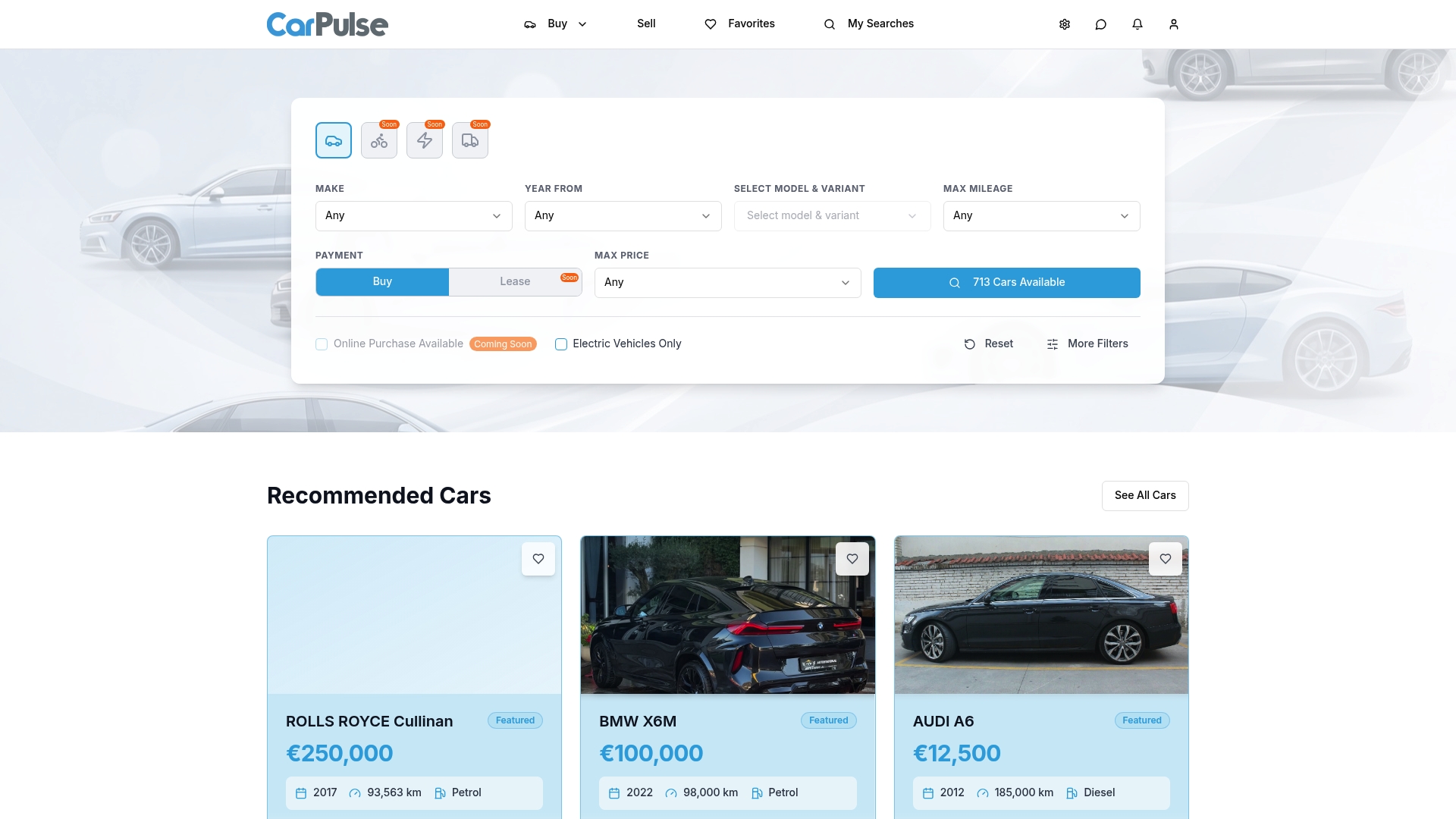
If you would rather buy a car that is already registered in Albania, CarPulse lets you browse new and used listings filtered by make, model, year, mileage, price and fuel type. Buyers can save searches, bookmark favorites and contact sellers at no charge.
If you want to sell, private sellers and verified dealerships list through VIN-based autofill. Plans are Basic at €14.99 per month and Premium at €29.99 per month.
FAQ
Can a foreigner register a car in Albania?
Yes, in principle. You present identity documents, proof of ownership acquisition, customs clearance and insurance like any other applicant. Foreign-language documents must be translated and notarized unless they fall under the listed exceptions. Check the DPSHTRR page for the documents required for your own situation.
Is there import duty on a car in Albania?
For passenger cars under Heading 8703, the customs authority says the charge consists of VAT on the customs value, with no separate import duty. Excise duty may also apply depending on engine size and fuel type. Ask customs or a licensed broker for a calculation of your specific car.
How old can an imported used car be?
Under the 2018 Council of Ministers decision, a used passenger car must have been produced no more than 10 years before first registration in Albania, and must meet Euro 4. Rules on emissions have been tightened over time, so confirm the current requirement with DPSHTRR before buying.
How long can I drive a foreign-registered car in Albania?
Under the Temporary Admission Regime, a privately used foreign-registered car can stay for 6 months within a 12-month period. It must be used only by family members and cannot be sold, transferred or used commercially. Declare it at entry, because undeclared entry is treated as smuggling.
What are the official registration fees?
For a used car, DPSHTRR lists 2,000 lekë for the Certificate of Physical Control, 2,500 lekë for the Traffic Permit and 4,000 lekë for two plates. For a new 0 km car, the first two items apply. Customs VAT and any excise are separate and usually much larger.
Sources
- Mjetet që lejohen të importohen në Republikën e Shqipërisë, DPSHTRR
- Njoftim mbi hyrjen në fuqi të VKM Nr. 633, Albanian Customs
- Verifikimi i Kategorisë Mjedisore të Mjetit, DPSHTRR
- Customs clearance of vehicles, Albanian Customs Administration
- Mjet i Përdorur, DPSHTRR
- Mjet i Ri / 0 km, DPSHTRR
- Albania, Other taxes, PwC Tax Summaries
- Sustainable and Smart Mobility Strategy progress report, Transport Community
- Car Import and Automotive Industry in Albania, World Company Setup
- Importing Personal Vehicles to Albania, expatax.al