
Guides
Odometer Disclosure in Albania: What Buyers and Sellers...
Odometer Disclosure in Albania: What Buyers and Sellers Need to Know

In Albania, mileage is not something a seller can simply claim. The Technical Control Certificate issued at inspection records the odometer reading as part of the vehicle’s history, and the road transport authority treats tampering as a punishable offense. For a buyer, the safest route is a car whose mileage is documented and a seller who will stand behind the number in writing. For a seller, a documented, verifiable mileage is the fastest way to earn trust and close the sale. On CarPulse, listings are built from the VIN and offer a vehicle history check, so the number a buyer sees can be tied to the car itself.
This guide explains the rules in plain terms, shows how to verify a reading step by step, and sets out what sellers and dealers should prepare.
TL;DR
- Albania has no single stand-alone “odometer disclosure form” like some other countries. The practical record is the Technical Control Certificate, which logs kilometers and, on the new model, the mileage history.
- Tampering with an odometer is a punishable offense under current legislation, according to the General Directorate of Road Transport Services (DPSHTRR).
- Buyers should ask the seller to guarantee the mileage in writing or to complete a fresh Technical Control with the new certificate before any money moves.
- Sellers must give complete and accurate information about the goods they sell; consumer law sets a 70,000 lek fine for breaches.
- If you suspect a rolled-back odometer, report it to the police and the competent bodies.
Table of Contents
- What odometer disclosure means in Albania
- How the Technical Control Certificate records mileage
- How to verify a car’s mileage before you buy
- What sellers and dealers should disclose
- Red flags that suggest a rolled-back odometer
- If you think you were deceived
- What may change next
- Where CarPulse fits
- Our perspective
- FAQ
- Sources
What odometer disclosure means in Albania
An odometer is the dashboard counter that shows the total kilometers a car has traveled. “Disclosure” simply means the seller tells the buyer the true reading and does not hide or alter it. Mileage matters because it drives price, wear on the engine and gearbox, and the timing of expensive repairs. A car showing 90,000 km that really has 220,000 km is a very different, and much cheaper, car.
Albanian practice rests on three layers:
- The inspection record. DPSHTRR states that at technical inspection the odometer must be unaltered and functional, because the kilometers are recorded on the Technical Control Certificate as part of the vehicle’s history.
- The consumer protection duty. Albania’s Law No. 9902 on Consumer Protection (17 April 2008, Article 7) obliges traders to give consumers complete and accurate information on goods, including their nature, quality, period of use, maintenance and guarantee. Violations of the information articles are administrative offenses punishable by a 70,000 lek fine from the Consumer Protection Commission. A used car’s mileage is a core part of its period of use.
- Criminal and police channels. Where a buyer has been lied to in the act of sale, DPSHTRR encourages them to report the case to the police and other competent bodies.
In short, the law expects honest information from a trader, and the state keeps its own record of the reading at inspection. Together they make a buyer’s claim much stronger when the paperwork matches the dashboard.
How the Technical Control Certificate records mileage
The Technical Control Certificate is the document you receive after the periodic vehicle inspection at a Technical Control Center. It is the most useful document for odometer questions, so it is worth knowing what changed.
The newer certificate, issued at every center, follows a fully European model in line with EU Directive 2014/45/EU, the directive on roadworthiness testing. Its key feature for buyers is the mileage history: each inspection adds a reading, so you can see the trend over years rather than a single number.
DPSHTRR announced that odometer reading would be added to the certificate, with plug verification for vehicles with digital data and dashboard scanning offered free as part of the service. Panorama reported in November 2021 that the aim was to document readings on certificates and discourage market speculation, with about 600,000 cars to be checked from January 2022.
What happens when an odometer has been tampered with
The inspection system does not just record; it can block. According to DPSHTRR, in the first 15 days of the new certificate, 240 vehicles failed or were refused inspection because of abusive odometer interventions. Vehicles with odometer anomalies, cut cables or defective meters receive a certificate only after the mileage status is corrected and updated, and the real history is noted on the certificate.
The Director General, Blendi Gonxhja, said that flagrant cases of reduced mileage are recorded every day at the centers, and that the historical track is meant to help potential buyers avoid being deceived again. That is a useful reminder: the certificate exists largely for you, the buyer.
Imported vehicles
Many used cars in Albania arrive from abroad, which is where mileage disputes are most common. DPSHTRR reserves the right to determine the true mileage of imported vehicles, to request recent information from foreign counterparts and to note the real status when the mileage has been reduced.
From January 2023, every used vehicle with mileage is registered for the first time in Albania only after its initial odometer status is read with intelligent devices and documented in the system. This means an imported car’s starting reading is now on file from the day it gets Albanian plates. When you buy an imported car, ask whether it was registered after that change, and ask for the certificate showing the reading.

Electric vehicles follow the same logic: they also carry an odometer and a kilometer count that affects battery wear and resale value, and the registration rule above applies to any used vehicle with mileage. If you are shopping for an EV, treat the kilometer reading and the inspection history exactly as you would for a petrol or diesel car.
How to verify a car’s mileage before you buy
Here is a practical routine. Each step takes minutes and can save you thousands of euros.
Step 1: Get the VIN and the plate
The VIN is the 17-character vehicle identification number stamped on the car and printed on its documents. Ask the seller for it before you visit. A seller who hesitates to share the VIN is giving you information in itself. On CarPulse, sellers can list with VIN-based listing, which fills in vehicle details automatically from the number, so a listing with the VIN gives you something concrete to check.
Step 2: Ask for the Technical Control Certificate
Request the latest certificate and, if possible, earlier ones. Compare the readings in order. Mileage should only go up, and at a believable pace. A jump backward, or a year with almost no kilometers followed by a normal year, deserves questions.
Step 3: Check official vehicle data
Since 1 September 2019, citizens can verify vehicle data online through the DPSHTRR page, including cases where they were deceived about mileage, full history checks and imported vehicle checks, with official referrals to counterpart authorities in the vehicle’s country of origin. Use it alongside the vehicle history check available on CarPulse, which is part of the platform’s tools for buyers.
Step 4: Compare the number with the car
Paper is one half; the car is the other. Look at wear in places that cannot be easily faked:
- Steering wheel and gear knob: shiny or worn smooth on a car showing low kilometers.
- Pedal rubbers and driver’s seat bolster: heavy wear does not fit 60,000 km.
- Service book: stamps and dates that stop or contradict the dashboard.
- Dashboard: loose trim, scratches around the cluster, digits that look misaligned or flicker.
- Tires and brakes: original-looking tires on a supposedly high-mileage car, or the reverse.
No single sign proves tampering. Several together are a reason to slow down.
Step 5: Ask for a written guarantee or a fresh inspection
DPSHTRR advises buyers to verify the vehicle’s documents and ask the seller to guarantee the mileage history or complete a Technical Control with the new certificate. The Directorate also explicitly welcomes voluntary re-inspections for mileage verification before a transaction, which means you are not being rude by asking. A written statement of mileage in the sale agreement, signed by the seller, turns a spoken claim into something you can rely on under the consumer protection rules above.
Step 6: Do not pay until the numbers agree
If the dashboard, the certificate, the official data and the service book tell the same story, you can negotiate with confidence. If they do not, walk away or renegotiate based on the higher real mileage.
For a deeper walk-through of reading a report, see our guide on how to check car history before buying in Albania, and for the inspection process itself, vehicle inspection in Albania.
What sellers and dealers should disclose
If you sell, accurate mileage is not only a legal point; it protects your reputation and your price.
- State the reading honestly in the listing. Use the number on the dashboard and match it to your latest Technical Control Certificate.
- Keep the paper trail. Service invoices, previous certificates and import documents show that the mileage grew naturally.
- Disclose what you inherited. DPSHTRR acknowledges that some owners inherit a mileage status that was abused by a previous seller. If you bought the car that way, say so and show the corrected certificate; hiding it is far riskier than explaining it.
- Offer a fresh inspection. A recent certificate with mileage history is the strongest proof you can hand a buyer.
- Mind the fine. Traders who give incomplete or inaccurate information face administrative offenses under the consumer protection law, including a 70,000 lek fine.
Dealers have the most to gain. A verified dealer who lists every car with a VIN, a documented reading and a history check gives buyers fewer reasons to hesitate, which usually shortens the time a car sits unsold.
Red flags that suggest a rolled-back odometer
Use this quick table when you view a car.
| What you see | What it may mean | What to do |
|---|---|---|
| Certificate readings that drop between inspections | Mileage was reduced after the last test | Ask for all certificates and a written guarantee |
| Very low kilometers but heavily worn interior | Dashboard figure does not match use | Request a fresh inspection with the new certificate |
| Seller refuses to give the VIN | Something in the history may not hold up | Do not proceed without it |
| Service book with gaps or no stamps | No independent proof of mileage | Treat the reading as unverified |
| Imported car with no foreign-country documents | Original reading cannot be traced | Ask for import papers and check official data |
If you think you were deceived
Document everything: the listing, messages, the sale agreement, certificates and photos of the dashboard. DPSHTRR encourages anyone lied to in the act of sale or on price to report to the police and other competent bodies. For a consumer complaint about inaccurate information, the Consumer Protection Commission is the body that imposes the fine under the law. If a significant sum is at stake, speak to a lawyer in Albania about your sale contract before you act.
What may change next
The direction in Europe is toward more shared mileage data. The European Commission’s April 2025 proposal would require odometer readings to be recorded in national databases at each service or repair and shared across borders when a vehicle is re-registered, drawing on Belgium’s Car-Pass and the Netherlands’ NAP systems. It is a proposal for the European Union, not an Albanian rule, but because many cars in Albania come from EU countries, better source data abroad would make cross-border checks easier over time. Check the DPSHTRR website for the rules in force when you buy.
Where CarPulse fits
CarPulse is Albania’s online car marketplace for new and used vehicles, bringing together buyers, private sellers and verified dealerships. Buyers browse and filter by make, model, year, mileage, price and fuel type, save searches and bookmark favorites, and do not pay to use the platform. Sellers list with VIN-based listing that populates vehicle details automatically, and the platform offers a vehicle history check and AI price evaluation.
Sellers can choose the Basic plan at 14.99 € per month or the Premium plan at 29.99 € per month; see the pricing page for what each includes. Buyers can start by browsing cars on CarPulse and filtering by mileage.
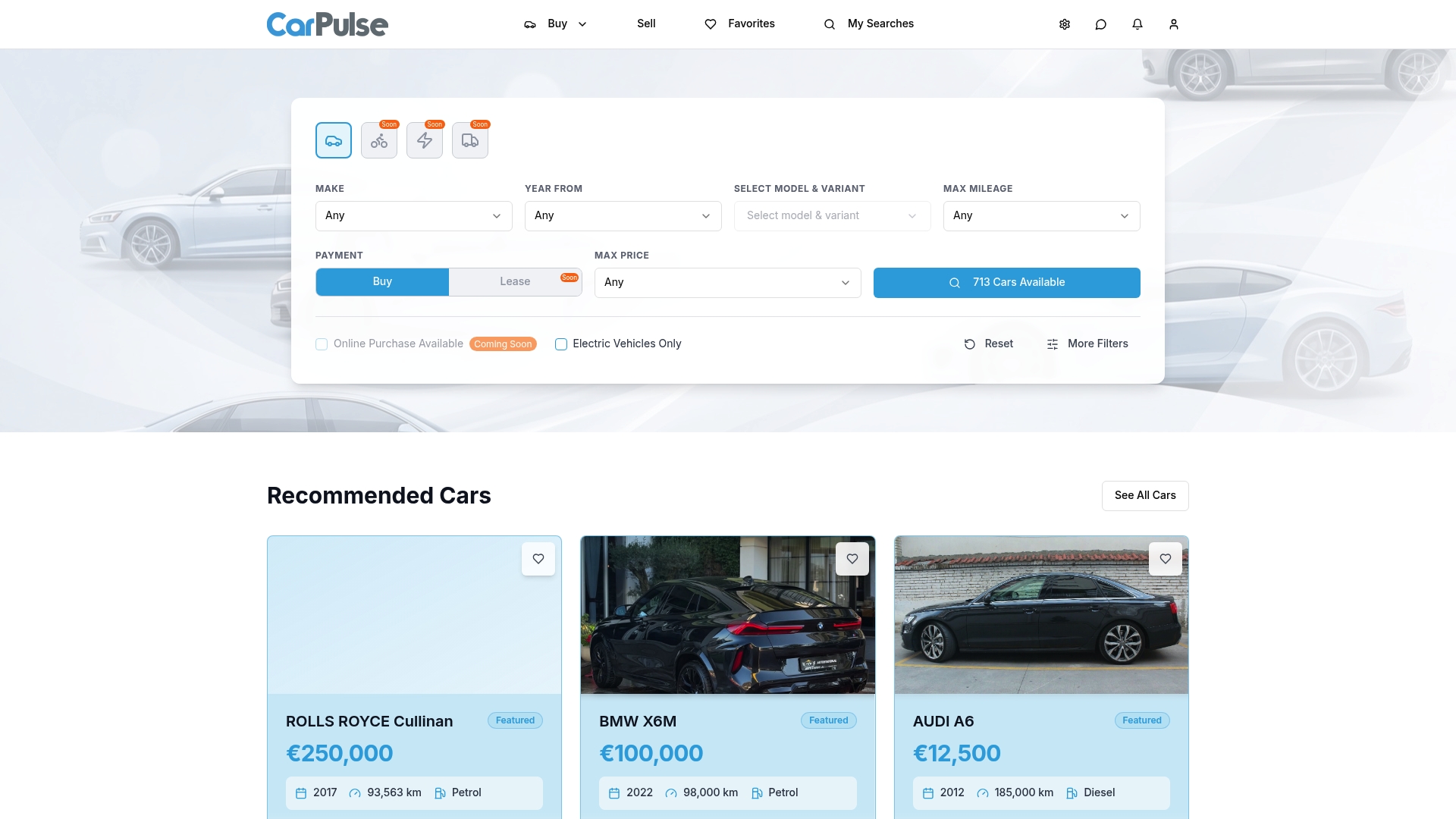
Whether you buy or sell, the habit is the same: match the number on the dashboard with a number on paper.
Our perspective
Mileage is the first thing most buyers look at and the last thing they can check by themselves. That gap is where mistakes and disputes begin.
We built CarPulse around the idea that a listing should carry more than a photo and a price. When a car is listed from its VIN, the vehicle details come from the number itself and not from retyping, which removes a common source of errors. A history check for the vehicle and an AI price evaluation help both sides talk about the same facts. And a network of verified dealers means buyers know who is on the other end.
Our advice to sellers is simple: list the real mileage, keep your Technical Control Certificate handy and say so in the listing. A documented reading sells a car faster than a low number nobody believes. Our advice to buyers is just as simple: ask for the certificate, compare it with the car, and agree the mileage in writing.
Henri
FAQ
Is there a mandatory odometer disclosure form in Albania?
The sources we reviewed describe the Technical Control Certificate, not a separate standard form, as the official record of mileage. The consumer protection law also requires traders to give complete and accurate information on goods. The safest practice is to write the mileage into the sale agreement and attach the latest certificate.
Is it illegal to change a car’s odometer in Albania?
Yes. DPSHTRR states that interference with the odometer is a punishable offense under current legislation. At inspection, vehicles with anomalies, cut cables or defective meters only get a certificate once the mileage status is corrected and the real history is noted.
Does the same apply to imported and electric cars?
Yes for imported cars: since January 2023, a used vehicle with mileage is registered for the first time only after its odometer status is read and documented, and DPSHTRR can request information from foreign counterparts. An electric car also has an odometer and is checked the same way, so ask for the certificate and a history check as with any other car.
What should I do if the odometer seems wrong after I bought the car?
Collect the sale agreement, listing, messages and certificates, and report the case to the police and the competent bodies, as DPSHTRR advises. You can also complain to the Consumer Protection Commission about inaccurate information. For larger sums, consult a lawyer.
Sources
- Kontrolli Teknik i Mjetit, DPSHTRR
- Certifikata e Re e Kontrollit Teknik, DPSHTRR
- Leximi i odometrit në Certifikatën e Kontrollit Teknik, DPSHTRR
- Implementimi i Certifikatës së Re të Kontrollit Teknik, DPSHTRR
- Law on Consumer Protection No. 9902, 2008
- Gonxhja: New Technical Control Certificate carries real vehicle mileage history, ATA
- Online information for vehicle drivers, ATA
- Loja me çmimet dhe hilet me kilometrat, Panorama
- EU Commission proposes overhaul of road safety and vehicle registration rules