
Guides
How to Check Car History Before Buying in Albania
How to Check Car History Before Buying in Albania

TL;DR:
- A vehicle history report records a car’s past, including titles, accidents, mileage, and ownership changes. Checking the VIN through independent sources enhances accuracy and helps identify issues like fraud or damage. Buyers should combine the report with a professional inspection for a reliable used car purchase.
A vehicle history report is a compiled record of a car’s past, covering title status, accident records, mileage readings, ownership changes, and service history. Knowing how to check car history before you hand over money is the single most effective way to avoid buying a flood-damaged, odometer-rolled, or structurally compromised vehicle. In Albania’s used-car market, where imported vehicles often change hands multiple times across different countries, that report is your clearest window into what a car has actually been through. The standard industry term for this process is a vehicle history check, and it starts with one thing: the Vehicle Identification Number, or VIN.
How to check car history: what you need before you start
Every vehicle history check begins with the VIN. The 17-character VIN is stamped on the driver’s side dashboard (visible through the windshield), on the driver’s door jamb, and printed on the vehicle’s official registration documents. If any of these three locations show a different number, stop the purchase immediately.
Once you have the VIN, you need a source to run it through. Your main options fall into three categories:
- NMVTIS-approved providers: The National Motor Vehicle Title Information System (NMVTIS) is a U.S. federal database that aggregates title and accident data from state agencies, insurance companies, and salvage yards. NMVTIS-approved providers supply this data for a fee, but detail levels vary between providers, so comparing two reports on a high-value purchase is worth the cost.
- Online report services: Paid online platforms generate a full car history report using the VIN. A standard report costs $25–$40 as of june 2026, though some sellers or marketplaces include one free with the listing.
- Seller-provided reports: Ask the seller directly. A reputable seller will have a recent report ready. If they refuse or delay, treat that as a warning sign.
| Source type | Cost | Best for |
|---|---|---|
| NMVTIS-approved provider | $25–$40 | Full title and accident data |
| Online report service | $25–$40 | Comprehensive multi-point check |
| Seller-provided report | Free | Quick first review, verify independently |
| Marketplace-included report | Free | Listings on verified platforms like Carpulse |
Pro Tip: Always run the VIN yourself through an independent source, even if the seller hands you a printed report. A seller-provided report could be outdated or selectively chosen.

How to read a vehicle history report step by step
Reading a vehicle history report is not complicated, but the order in which you review each section matters. Missing a critical flag early can cause you to overlook everything that follows.
-
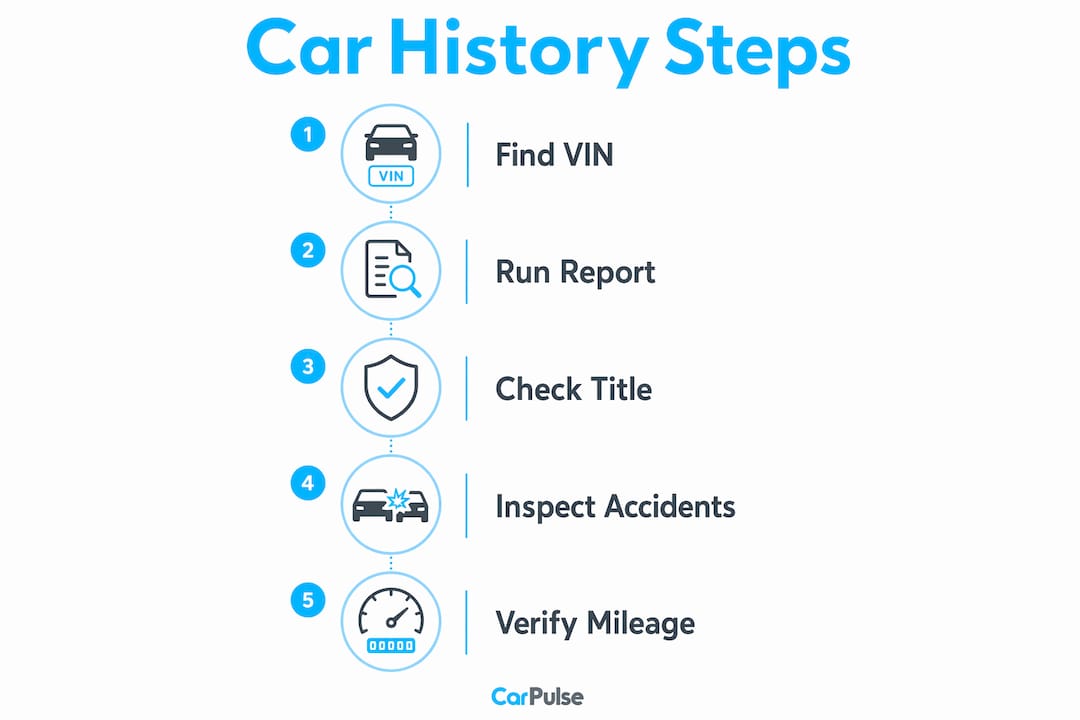
Confirm the VIN matches. The VIN on the report must match the VIN on the dashboard, door jamb, and registration documents exactly. A VIN mismatch between report and car is a major red flag. It can indicate fraud, a replaced body panel, or a rebuilt vehicle assembled from multiple cars.
-
Review title history first. Title status is the most critical section in any car history report. Brands like “salvage,” “flood,” or “rebuilt” signal serious damage with lasting effects on safety and resale value. A salvage title means an insurance company wrote the car off as a total loss. A flood title means water damage reached the vehicle’s systems. Neither is automatically a dealbreaker, but both require deep scrutiny and a significant price reduction.
-
Examine accident and damage records. Not all accidents are equal. Phrases like “structural damage,” “vehicle towed,” or “airbag deployment” are high-concern indicators. “Minor damage” or “paint damage” are far less alarming. Pay attention to the exact wording, because the difference between “minor damage” and “structural damage” can mean thousands of euros in hidden repair costs.
-
Check the mileage timeline. Lay out every mileage entry in chronological order. Mileage must increase gradually over time without suspicious drops. A drop in recorded mileage between two service visits is a strong indicator of odometer rollback, which is a form of fraud common in imported used vehicles.
-
Review ownership and registration history. A car that changed owners three times in two years, or that was registered in multiple countries in quick succession, deserves extra scrutiny. Frequent ownership changes can indicate recurring mechanical problems that frustrated previous buyers.
-
Check service and recall records. Open recalls are safety issues the manufacturer has identified but not yet fixed. If the report shows an open recall, verify its status directly through the manufacturer’s official website before completing the purchase.
Pro Tip: Print or save the report as a PDF before your test drive. Use it as a checklist during the inspection, and cross-reference any damage noted in the report against the physical condition of the car.
Common pitfalls when verifying vehicle history
The biggest mistake buyers make is treating a clean report as a guarantee. A vehicle history report does not substitute for a mechanical inspection. Reports only capture events that were formally reported to insurers, government agencies, or repair shops. A car that was repaired privately after a collision, or maintained by a family member with no receipts, will show no record of those events.
Watch for these specific pitfalls:
- Vague accident descriptions: A report might say “damage reported” without specifying which part of the car or how severe. Always ask the seller for repair invoices that match the report dates.
- Gaps in service history: A three-year gap with no service entries does not mean the car was parked. It likely means maintenance was done off the books, which tells you nothing about the car’s mechanical condition.
- Partial VIN matches: Some buyers accept a report where the first 11 characters match but the last 6 differ. This is never acceptable. Verify the VIN in multiple physical locations and on all documents before trusting any report.
- Odometer inconsistencies: Analyze every mileage entry against service and registration dates. A car with 180,000 km that shows a service record at 95,000 km from three years ago should have added roughly 30,000 km per year since then. If the math does not add up, ask why.
“A clean vehicle history report is not a guarantee of a problem-free car. It should always be combined with a professional mechanical inspection.” — Kelley Blue Book
Pro Tip: Use the report findings as leverage in price negotiations. A documented accident, even a minor one, justifies asking for a lower price or requesting the seller cover a pre-purchase inspection.
How to verify vehicle history in Albania’s used-car market
Albania’s used-car market has specific characteristics that affect how you approach a history check. A large share of vehicles are imported from Germany, Italy, and other EU countries, which means their primary history records exist in foreign databases. That creates gaps when you rely solely on local sources.
Here is how to build a complete picture:
- Cross-reference with the country of origin. If a car was registered in Germany for eight years before arriving in Albania, the most detailed records are in German databases. Ask the seller for the original foreign registration documents and any service booklets.
- Check with local Albanian authorities. The General Directorate of Road Transport Services (DPSHTRR) maintains Albanian registration records. Visiting or contacting them can confirm whether the vehicle’s Albanian registration matches the documents the seller provides.
- Use the report alongside a test drive. A structured test drive for used cars lets you physically confirm what the report describes. If the report notes front-end damage, check the hood alignment, headlight fitment, and paint consistency across the front panels during the drive.
- Ask targeted questions based on the report. If the report shows a title change in 2021, ask the seller what happened that year. If they cannot explain a documented event in their own car’s history, that is a problem.
- Verify the seller’s background on the platform. On verified marketplaces, seller ratings and listing history give you additional context. A dealer with dozens of verified listings carries more accountability than an anonymous private seller.
| Check type | What it reveals | Where to do it |
|---|---|---|
| VIN-based history report | Accidents, title, mileage, recalls | Online report providers, Carpulse |
| Foreign registration documents | Full ownership and service history abroad | Seller-provided, country of origin registry |
| Albanian DPSHTRR records | Local registration and ownership data | In-person or official request |
| Physical inspection | Unreported damage, wear, mechanical issues | Qualified mechanic |
For buyers who want a safe, step-by-step buying process tailored to Albania, combining all four checks above gives you the most complete picture available.
Key takeaways
Checking a car’s history with a VIN-based vehicle history report, then verifying title status, accident records, and mileage consistency, is the most reliable way to avoid a costly mistake when buying a used car in Albania.
| Point | Details |
|---|---|
| Start with the VIN | Locate the 17-character VIN on the dashboard, door jamb, and registration documents before running any report. |
| Title status is the priority | Salvage, flood, and rebuilt title brands signal serious damage; always investigate before proceeding. |
| Read accident wording carefully | “Structural damage” and “airbag deployment” are high-concern terms; “minor damage” is far less alarming. |
| Mileage drops indicate fraud | Any decrease in recorded mileage across service or registration entries is a strong odometer rollback signal. |
| Reports do not replace inspections | A clean report still requires a qualified mechanic’s pre-purchase inspection to catch unreported issues. |
What I’ve learned from watching Albanian buyers skip this step
The most expensive mistakes I have seen Albanian car buyers make share one pattern: they trusted the car’s appearance over its documented history. A freshly detailed interior and a new set of tires can hide a flood-damaged electrical system or a repaired frame. The car looks fine. The report tells a different story.
What surprises most buyers is how much information a vehicle history report actually contains. Reports aggregate ownership, accident history, title status, mileage, service records, and recalls into a single document. That is information no visual inspection can replicate. Yet many buyers in Albania still skip this step because they assume it only applies to American or Western European markets. It does not. The VIN system is global, and a car imported from Italy or Germany carries its full history in that number.
My honest advice: treat the report as the starting point, not the finish line. Use it to ask better questions, negotiate harder, and decide whether to pay for a mechanic’s inspection. A report that shows two accidents and a title change does not mean you should walk away. It means you now know exactly what to ask about and what to price in. That is a position of strength, not uncertainty. Buyers who skip the report negotiate blind.
— Henri
Carpulse makes verified car buying easier in Albania
Albania’s car market is moving toward greater transparency, and Carpulse is built around that shift. As Albania’s largest online car marketplace, Carpulse connects buyers with verified dealerships and private sellers who list vehicles using VIN-based listings, which automatically populate accurate vehicle details from the VIN.
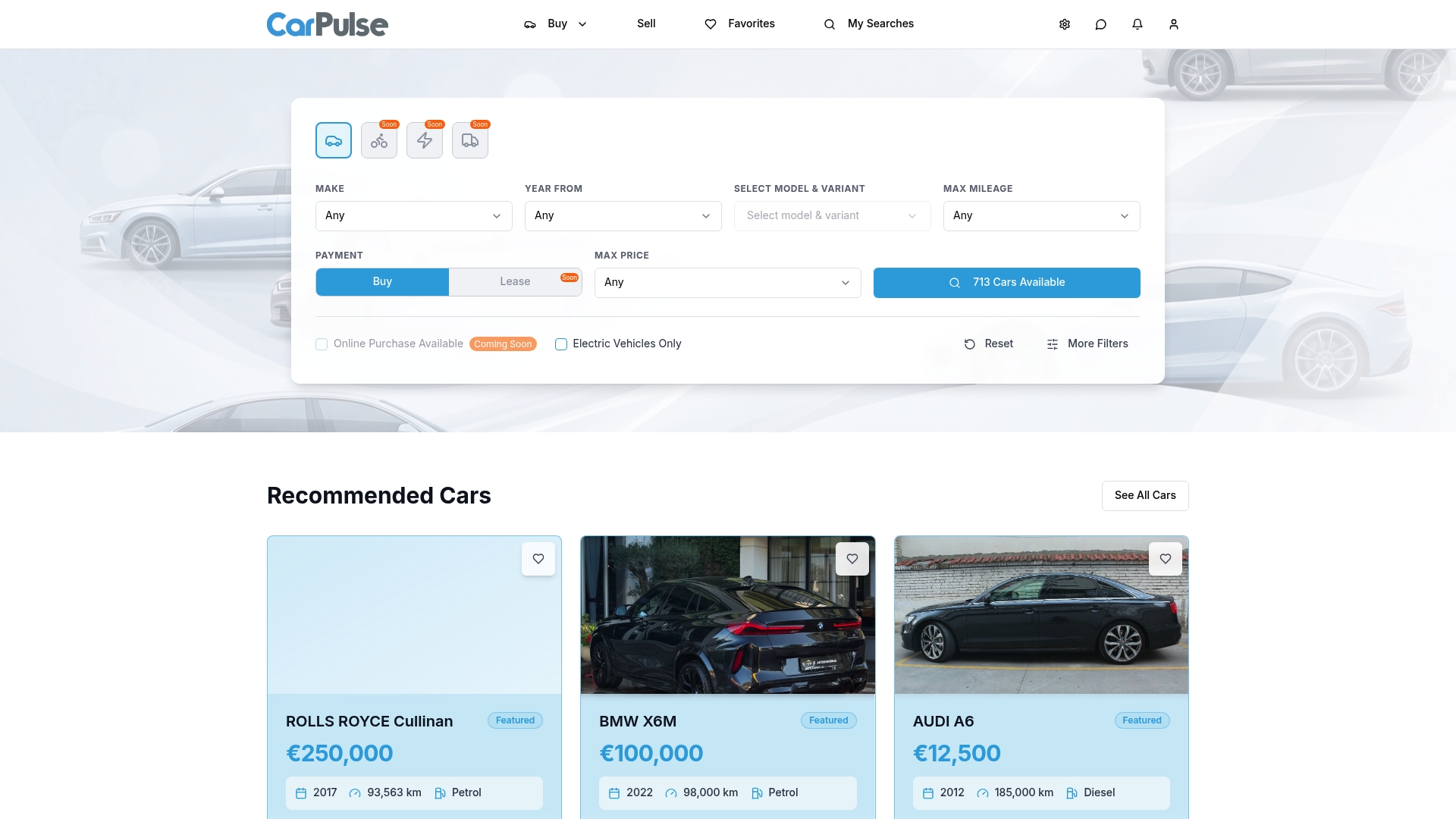
Buyers on Carpulse can access vehicle history data directly through listings, saving the time and cost of sourcing reports independently. The platform’s verified dealer network adds an additional layer of accountability that private sales cannot match. Whether you are browsing by make, model, mileage, or fuel type, every listing on Carpulse Albania is designed to give you the information you need before you ever contact a seller. For buyers who want verified cars with reliable history records, the benefits of verified listings are worth understanding before you start your search.
FAQ
What is a vehicle history report?
A vehicle history report is a compiled document that details a car’s title status, accident records, mileage history, ownership changes, service records, and open recalls. It is generated using the vehicle’s 17-character VIN.
How do I find the VIN on a car?
The VIN is located on the driver’s side dashboard (visible through the windshield), on the driver’s door jamb, and on the vehicle’s official registration documents. All three locations must show the same number.
How much does a car history report cost?
A standard vehicle history report costs $25–$40 as of june 2026. Some sellers and online marketplaces, including Carpulse, include a report free with the vehicle listing.
What does a salvage title mean on a report?
A salvage title means an insurance company declared the vehicle a total loss after an accident, flood, or other major damage event. It has lasting effects on the car’s safety, reliability, and resale value.
Does a clean history report mean the car is problem-free?
No. A clean report only reflects events that were formally reported to insurers, government agencies, or repair shops. Unreported accidents and off-the-books maintenance will not appear. A professional mechanical inspection is always required alongside the report.
Recommended
- Udhëzues: Blerja e sigurt e një makine të përdorur në… | CarPulse Albania
- Makina ne Shitje Shqipëri - Udhëzuesi i Plotë për Blerje | CarPulse Albania
- Si të provoni një makinë të përdorur: udhëzues i plotë… | CarPulse Albania
- Provë me Makinë të Përdorur: Udhëzues i Plotë për Shqipërinë | CarPulse Albania