Guides
Run VIN Checks First to Catch Odometer Fraud, Albanian...
Run VIN Checks First to Catch Odometer Fraud, Albanian Buyers
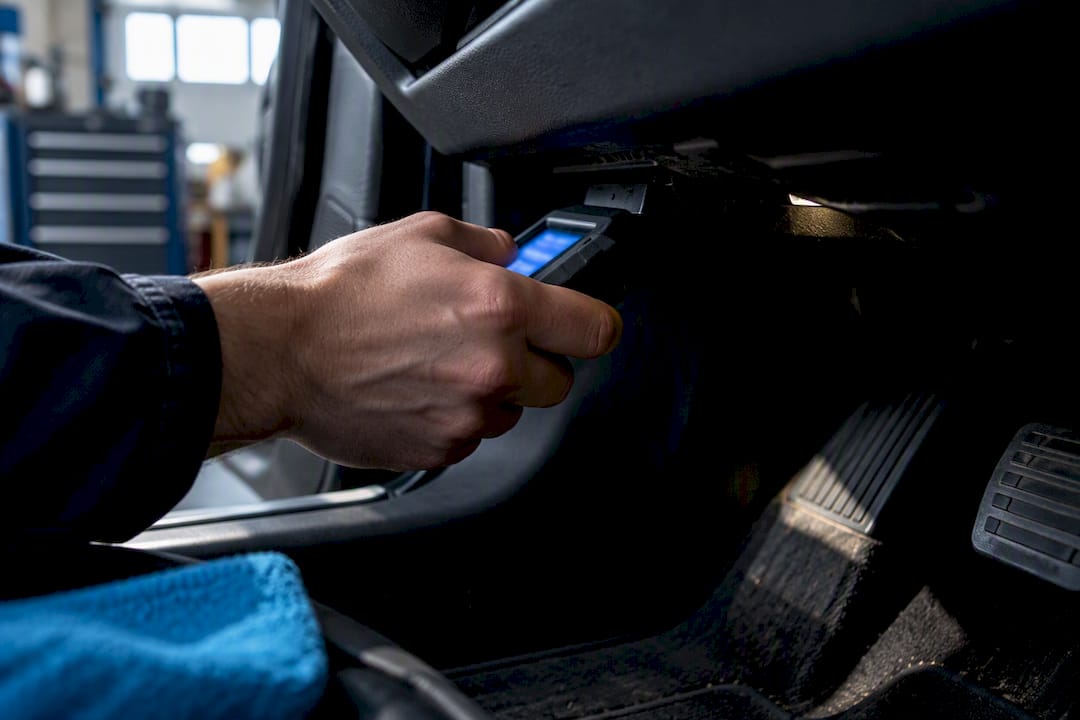
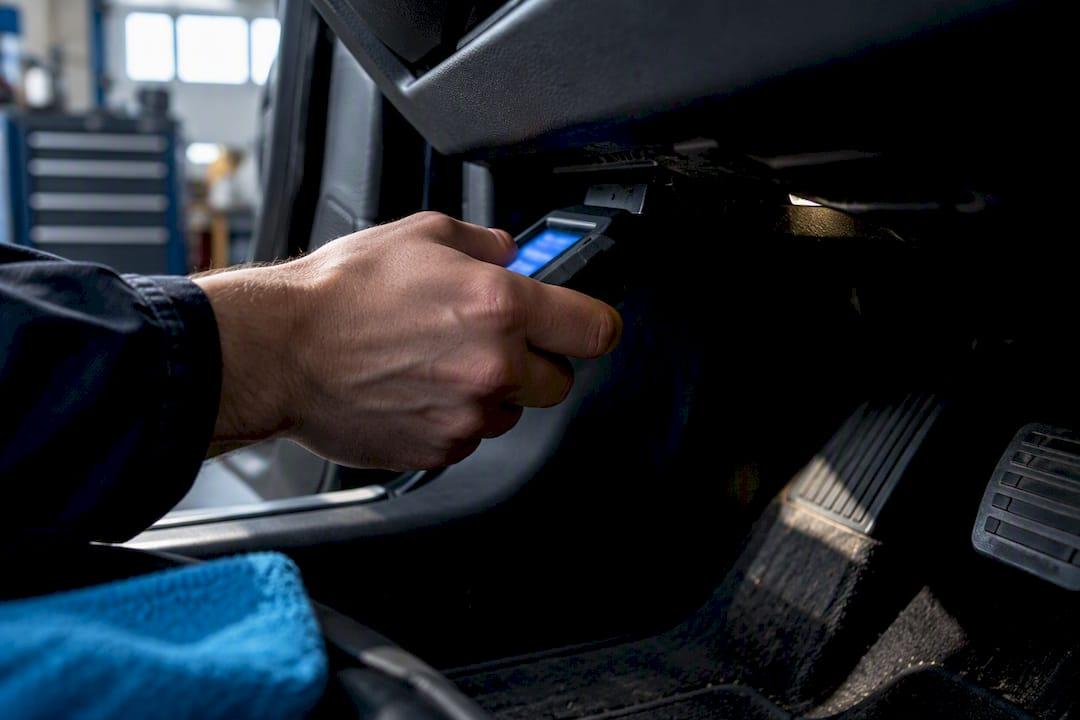
The fastest way to catch a manipulated odometer is to run a VIN-based vehicle history check and line up every recorded mileage entry against the service book, inspection stamps, and title. A 2018 European Parliament study put mileage fraud at 5% to 12% of national used-car sales, jumping to 30% to 50% on cross-border sales. Do the VIN check and the paperwork comparison before you hand over a single lek.
TL;DR:
- Mileage fraud affects 5% to 12% of national used-car sales, rising to 30% to 50% in cross-border transactions, especially in markets without centralized record systems.
- Comparing service book mileage entries, inspecting physical wear, and checking tire age are essential steps to identify possible odometer manipulation during vehicle viewing.
- Digital odometers can be reprogrammed, but diagnostic scans of control modules can reveal inconsistencies in stored mileage data.
- Cross-checking the title, service records, inspection history, and decoding VIN data help uncover discrepancies suggesting odometer rollback.
- Verified VIN-based listings and professional inspections are the best tools to minimize risk before purchasing a used car.
Table of Contents
- What Kilometrazh i Manipuluar Actually Means for Buyers
- How Do You Check for a Manipulated Odometer at a Viewing?
- Where Do You Get a VIN Vehicle History Report?
- What Physical Signs Contradict a Low Mileage Claim?
- Can a Diagnostic Scan Catch a Rolled-Back Odometer?
- How Do You Cross-Check the Title, Service Book, and Inspection Records?
- What Should You Do if You Suspect Mileage Fraud?
- How CarPulse Helps You Verify Before You Buy
- What I’d Actually Tell a Friend Buying Used
- Search Verified Listings Before You Negotiate
- Sources
- FAQ
What Kilometrazh i Manipuluar Actually Means for Buyers
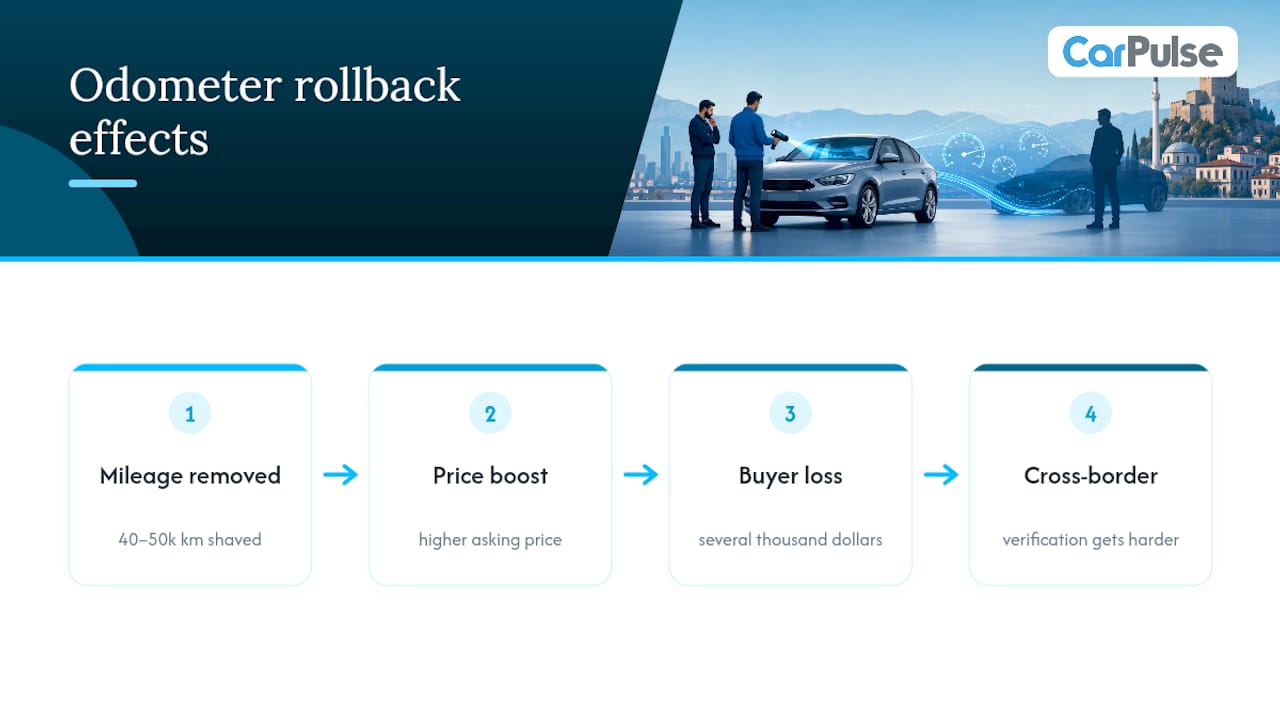
Kilometrazh i manipuluar, or odometer manipulation, is the deliberate alteration of a car’s recorded mileage to make it look newer, less used, and worth more than it is. In the industry, this is usually called odometer fraud or odometer rollback, and it covers everything from a mechanic spinning back an analog dial to someone plugging a diagnostic tool into the OBD port to rewrite digital mileage records.
The economics explain why it persists. Buyers routinely pay a premium for lower mileage, so shaving 40,000 or 50,000 kilometers off a listing can add real money to the asking price. Reporting on the topic estimates the average consumer loss on a single flagged, rolled-back vehicle at roughly several thousand dollars, which is exactly why spending an hour on verification before you buy is worth it. Cross-border imports, common in Albania’s used-car market, carry extra risk because odometer records get harder to trace once a car crosses a national line.
How Do You Check for a Manipulated Odometer at a Viewing?
Bring this checklist to every viewing and work through it before you get emotionally attached to the car.
- Compare the odometer reading to the title. Any mismatch between what’s on the dashboard and what’s on the registration document is worth an explanation on the spot.
- Open the service book and check every stamp date against its recorded mileage. Mileage should climb steadily between visits, never drop or jump erratically.
- Inspect physical wear points. Seat bolsters, the steering wheel, and pedal pads should roughly match the claimed usage.
- Check the tires and the spare. Tread wear, tire age (the DOT code on the sidewall), and brand consistency all tell a story.
- Look inside the door jambs for service stickers. These often list a mileage and date from the last oil change, independent of what the seller tells you.
- Pay attention during the test drive. A gauge cluster that flickers, resets, or displays inconsistent trip data is a warning sign, not a glitch to ignore.
- Ask the seller directly for supporting records and write down their answers. Sellers who manipulated the mileage tend to get vague fast.
A few things should stop you cold: missing service records with no explanation, stamps that don’t match the claimed history, or an interior that’s clearly been refreshed without the seller mentioning it. None of these prove fraud on their own, but together they’re a pattern.
Pro Tip: Photograph the odometer, the VIN plate, and every service book page before you leave. If the deal later turns into a dispute, dated photos are far more useful than your memory of what the dashboard said.
Where Do You Get a VIN Vehicle History Report?
A vehicle history report pulled from the VIN typically aggregates registration events, service visits, and inspection results into one timeline. The VIN matters because it’s the one identifier that follows the car through ownership changes, unlike a plate number that can change with registration. CarPulse’s VIN guide walks through how to decode the 17 characters and pull the details tied to a specific vehicle.
Reading the report is where most buyers miss the fraud. You’re not looking for one bad number. You’re looking for a mileage entry that’s lower than a previous entry, or a multi-year gap where no mileage was logged at all.
- A steady, upward mileage curve across service and inspection dates is what an honest history looks like.
- A drop between two dated entries, even a small one, means the odometer was rolled back at some point between them.
- Long gaps with no entries are common on imported cars and don’t prove fraud by themselves, but they do mean you’re missing the data that would catch it.
Countries with mandatory mileage logging at every service and inspection touchpoint, like Belgium’s Car-Pass system, have seen tampering drop sharply once those records became centralized. Albania doesn’t have an equivalent centralized log yet, which is exactly why cross-checking every paper and digital source yourself matters more here than in markets with that infrastructure already built in.
What Physical Signs Contradict a Low Mileage Claim?
Digital readouts can be rewritten. Wear patterns are much harder to fake convincingly, which is why an experienced mechanic will check the seat before checking the dashboard.
- Seat bolster collapse. A driver’s seat that’s sagging, cracked, or visibly worn on a car claiming under 60,000 kilometers doesn’t add up.
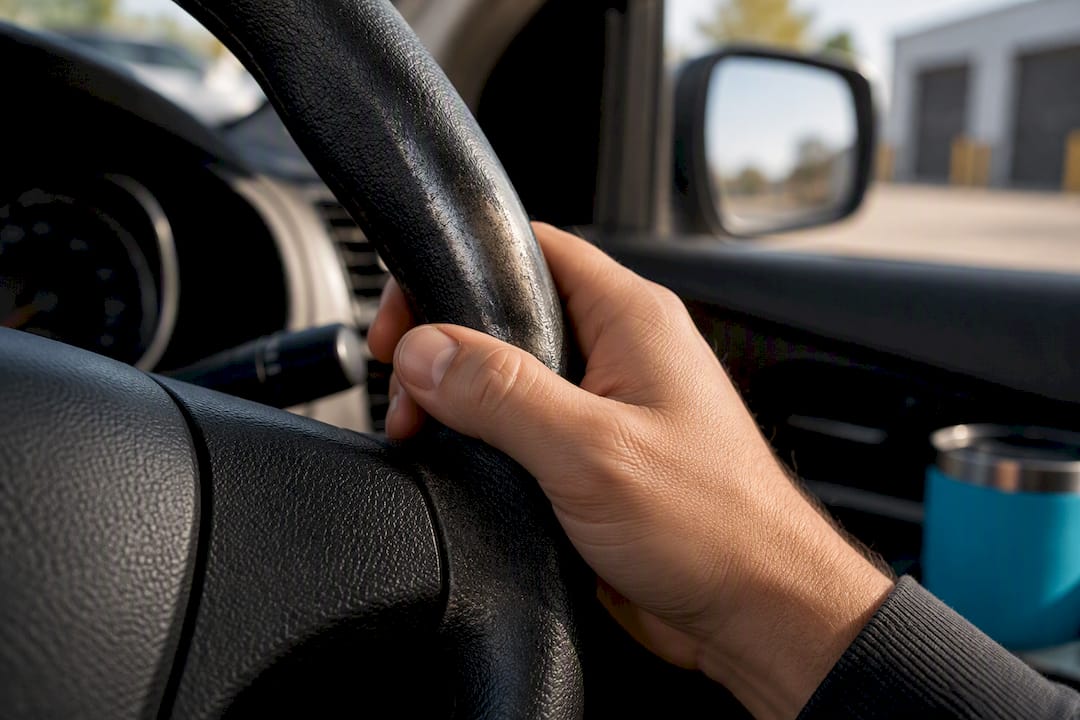
- Steering wheel texture. Shiny, smoothed-down leather or a worn logo badge points to years of hand contact, not a low-mileage car.
- Pedal pad wear. Factory rubber pedal covers wear in a predictable pattern; deep grooves or exposed metal on a “low mileage” car is a mismatch.
- Gear lever and handbrake wear. Same logic. Shiny, worn grips tell you how much the car was actually driven.
- Floor mats and footwell condition. Worn-through carpet under the driver’s mat usually means more miles than a fresh interior would suggest.
- Tire age versus tread. Check the DOT date code on the sidewall against the tread depth; new tires on a claimed low-mileage car aren’t suspicious, but old tires on the same car are.
Watch for cosmetic fixes meant to mask real usage: brand new upholstery, freshly replaced pedal covers, or a suspiciously clean interior on an otherwise tired car. Replacing worn parts isn’t illegal, but a seller who replaced them and didn’t mention it is a seller worth questioning further.
Pro Tip: Sit in the driver’s seat and check where your hand naturally rests on the wheel. If that spot is noticeably shinier or smoother than the rest of the wheel, the car has seen more hours behind it than the odometer admits.
Can a Diagnostic Scan Catch a Rolled-Back Odometer?
Modern cars don’t store mileage in one place, as explained by Supercars, which details how replaced components can affect module mileage storage. It’s logged across multiple electronic control modules, including the instrument cluster, the engine control unit, and sometimes the transmission module. Someone who resets the dashboard display doesn’t necessarily touch every one of those stored values, which is exactly the gap a diagnostic scan is built to expose.
- An OBD-level scan can pull mileage values from several modules at once and flag when they disagree with each other.
- A mismatch between the dashboard reading and a module’s stored value is a strong sign of tampering, though it’s not automatic legal proof.
- A replaced instrument cluster or control module can also explain a mismatch legitimately, which is why the finding needs a human interpretation, not just a scan result.
Industry reporting has tracked a rise in digital tampering as cheap diagnostic tools have made mileage rewriting faster and harder to spot on sight. A professional diagnostic check usually costs a small fraction of what a rolled-back purchase can cost you, which makes it one of the more sensible add-on expenses when a car is otherwise a strong candidate. It’s worth noting that some newer vehicle types are built with tamper-protection and write-protect features required under EU Regulation 2017/1151, but those protections don’t cover every car on Albania’s roads, especially older imports.
How Do You Cross-Check the Title, Service Book, and Inspection Records?
- Line up the mileage figure on the title against the most recent service stamp and the most recent inspection record. All three should sit close together.
- Check for any note of odometer replacement in the vehicle’s official paperwork. A legitimate instrument swap is usually flagged, and in many jurisdictions a sticker on the door frame is required to disclose the last known true mileage. No sticker after an obvious cluster swap is a red flag worth raising with the seller directly.
- Decode the VIN to confirm the model year and factory specification actually match what’s being advertised, then compare that against any import or registration events tied to the same VIN.
What Should You Do if You Suspect Mileage Fraud?
Stop the transaction the moment something doesn’t add up. Don’t sign anything or send a deposit while questions are still open.
- Photograph the odometer, every service book page, and any inconsistency you’ve found.
- Ask the seller in writing for supporting documents and keep their responses on record.
- Book a paid independent inspection or diagnostic scan if the car is otherwise worth pursuing.
- Pull a VIN-based history report if you haven’t already, and compare it against what the seller told you.
- If the evidence points clearly to fraud, NHTSA’s consumer guidance outlines how to report it to the relevant enforcement channel.
Negotiating a lower price makes sense only when the gap is small and disclosed. When the numbers were hidden or actively falsified, walk away instead of trying to negotiate around a lie.
How CarPulse Helps You Verify Before You Buy
CarPulse’s VIN-based listing system pulls factory data directly from the VIN, which cuts down on the vague or inconsistent details that make manipulated listings easy to miss in the first place. Verified-dealer tags flag sellers who’ve gone through an extra layer of checks, and CarPulse’s buyer guides walk through the same verification steps covered above in more local detail.
- Use VIN-based listings to confirm the factory-reported specs match what the seller is claiming.
- Look for verified-dealer tags before you commit to a viewing, especially on higher-mileage imports.
- Read CarPulse’s guide on buying verified cars and its dedicated mileage-check walkthrough before you request records from a seller.
None of these tools replace a physical inspection or a diagnostic scan. They narrow down which cars are worth that extra step.
What I’d Actually Tell a Friend Buying Used
Inspect the records before you even think about the price. Budget for a paid inspection on any car you’re seriously considering, and give real weight to verified listings over ones with no seller history behind them. I’ve seen buyers walk into a deal 30,000 kilometers off from reality simply because they trusted a clean dashboard over a service book that told a different story. Keep every photo and document if something looks wrong. That paper trail is the only thing that protects you afterward.
— Henri
Search Verified Listings Before You Negotiate
An online marketplace can give buyers a faster way to verify what a private seller’s paperwork often can’t confirm on its own. Some platforms build listings through VIN-based autofill pulling factory data from the vehicle identification number, and use verified-dealer tags to flag sellers who have cleared extra layers of checks, cutting down the guesswork a private sale usually carries.
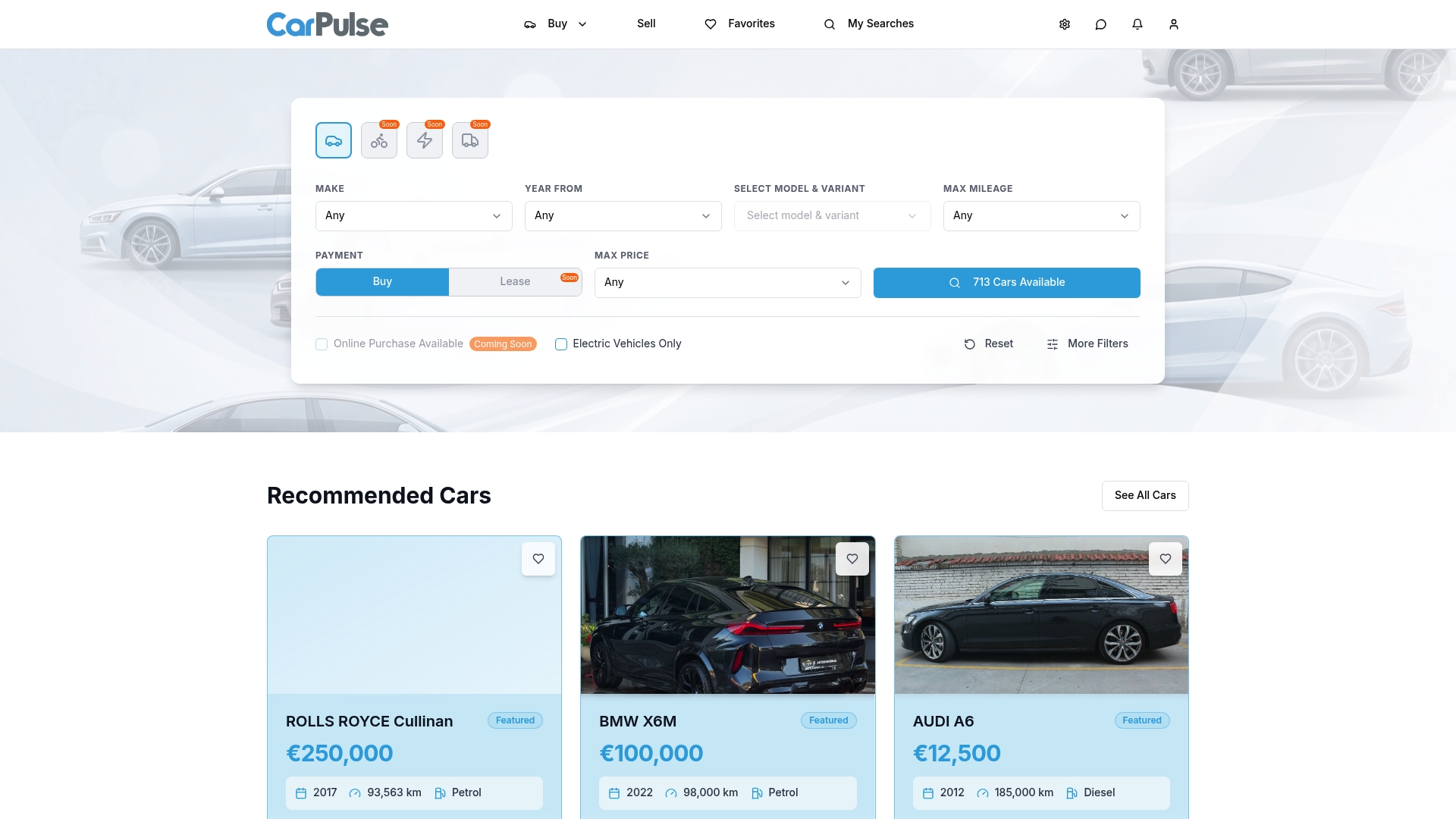
Before you arrange payment on any used car, search Carpulse’s marketplace for verified listings in the make and model you’re after, and request maintenance records directly through the platform. If you’re weighing a specific model, browsing something like the Fiat Tipo listings shows how VIN autofill data lines up against seller claims in practice. Sellers listing through Carpulse can also compare Basic and Premium plans on the pricing page if they want their own vehicle history documented clearly from the start.
Sources
- Odometer manipulation in motor vehicles — European Parliament research (2018)
- Odometer fraud | NHTSA
- Why odometer fraud is rising: digital tools make mileage changes quick and hard to spot — KOMO/Carfax coverage
- Analysis of odometer rollback prevalence and economic impact — GCN
FAQ
What Is Kilometrazh i Manipuluar?
Kilometrazh i manipuluar means a car’s recorded mileage has been deliberately altered, usually lowered, to misrepresent how much it’s actually been driven. It’s known internationally as odometer fraud or odometer rollback, and it spans manual dial spinning to digital tools that rewrite electronic mileage data.
How Common Is Odometer Fraud?
A 2018 European Parliament study estimated it affects 5% to 12% of national used-car sales, rising to 30% to 50% on cross-border sales. Cross-border imports carry higher risk because mileage records are harder to trace once a car changes countries.
Can a Digital Odometer Still Be Rolled Back?
Yes. Digital odometers can be reprogrammed with inexpensive diagnostic tools, and industry reporting shows this method has become more common as those tools got cheaper and easier to use. That’s why cross-checking service records and running a module-level diagnostic scan matters more than trusting the dashboard alone.
Does Carpulse Verify Mileage on Its Listings?
Carpulse uses VIN-based autofill to pull factory data directly into each listing, which helps flag inconsistencies between what a seller claims and what the vehicle identification number confirms. Verified-dealer tags on the platform also indicate sellers who’ve gone through additional checks before listing.
What Should I Do if I Already Bought a Car With a Manipulated Odometer?
Gather every document and photo tied to the sale, including the odometer reading, service book, and any communication with the seller. NHTSA’s guidance outlines reporting steps that apply broadly to suspected odometer fraud, and a consumer-protection consultation is the next practical step for pursuing a remedy.