
Guides
Hidden Defect Claim in Albania: Your Rights After Buying a C
Hidden Defect Claim in Albania: Your Rights After Buying a Car

If a car you bought in Albania turns out to have a fault nobody told you about, you are not stuck with it. When you bought from a professional seller, Albanian consumer law gives you two years to report a lack of conformity, a free repair or replacement as the first remedy, and a price reduction or cancellation when repair fails. When you bought from a private individual, the route is different and you should get legal advice early. This guide explains who is liable, which deadlines matter, what to do in the first days and how to build the evidence file that makes a claim hard to dismiss.
TL;DR
- Law No. 9902/2008 on Consumer Protection covers relationships between traders and consumers. A dealership sale falls under it; a sale between two private individuals is a different situation, so ask a lawyer.
- The seller is liable for a lack of conformity that becomes apparent within two years of delivery. A defect that shows up within six months is presumed to have existed at delivery.
- You can first demand free repair or replacement. If that fails, you can ask for a proportionate price reduction or cancel the contract, unless the defect is minor.
- Report in writing, keep every document and get an independent mechanic’s written assessment before anyone touches the car.
- Unresolved complaints can go to the Consumer Protection Commission (KMK) or to court.
Table of Contents
- What counts as a hidden defect in a car
- Who is responsible: dealership or private seller
- Deadlines that matter
- What to do in the first days
- Evidence that supports a claim
- Remedies: repair, price reduction, cancellation
- New cars, leased vehicles and electric vehicles
- Our perspective
- Find a car with a documented history
- Reduce the risk before you buy
- FAQ
- Sources
What counts as a hidden defect in a car
Albanian law does not use the phrase “hidden defect” the way a mechanic does. The consumer law talks about conformity: the seller must deliver goods that match the contract. According to the Consumer Protection Law, conformity covers matching the seller’s description, any sample or model shown, a particular purpose you stated, normal use, and the quality and performance you can reasonably expect.
In practice, a defect is “hidden” when you could not reasonably have seen it at the viewing and test drive. Typical examples:
- A gearbox or engine fault masked during a short drive.
- Structural repair after a crash that the listing never mentioned.
- A mileage figure that does not match the car’s real history.
- Corrosion or flood damage covered by fresh paint or cleaning.
- A failing hybrid or EV battery when the seller advertised a certain condition.
The law also protects what the seller said. The same statute says goods are presumed to conform if they have the quality normal for goods of the same type and meet reasonable expectations, taking into account public statements by the seller or producer. So the listing text, the advertisement and what the salesperson told you all count. If an ad says “no accidents, full service history” and the car has a repaired frontal impact, that is a lack of conformity even if the fault itself was invisible.
Traders must also give consumers complete and accurate information about the nature, quality and guarantee conditions of what they sell, according to the law’s English text. Silence about a known problem is a weak position for a dealer.
Who is responsible: dealership or private seller
This is the first question to settle, because it decides which rules you rely on.
Buying from a dealership or professional seller
Law No. 9902 applies to relationships between traders and consumers regarding consumer goods and services. A car dealership selling to you as a private person is a trader and you are a consumer. The seller carries the liability for non-conformity, and you do not have to chase the manufacturer or the previous owner.
A dealer cannot simply say “sold as seen” and walk away from a conformity problem. Keep the contract, the invoice and the advertisement, because they define what the car was supposed to be.
Buying from a private individual
A private person is not a trader, so the consumer law may not fit your case. We will not guess at which civil law provisions apply, because the answer depends on your contract, what the seller knew and what was written down. If you bought privately, see a lawyer in Albania quickly, show them the sale contract and any messages or listing text, and ask which deadlines run against you. Do not wait for a long negotiation to pass before you take that step.
One practical point: the seller type should be clear before you buy. On CarPulse, listings come from both private individuals and verified dealerships, so check who you are dealing with and keep the listing page, which records what was promised.
Deadlines that matter
Two time limits shape almost every claim.
| Rule | What it means for you |
|---|---|
| Two years from delivery | The seller is responsible for a lack of conformity that becomes apparent within two years of delivery. |
| Six months | A non-conformity found within six months is presumed to have existed at delivery, unless that is incompatible with the goods or the nature of the defect. |
| Three working days | The seller must decide on your complaint immediately or within three working days. |
| 30 calendar days | Repair or replacement must be completed within a reasonable time, and no later than 30 calendar days. |
The six-month presumption is the most useful part for buyers. In the first six months you do not have to prove the fault was already there; the seller has to show otherwise. After six months, and up to the two-year limit, you can still claim, but the burden of showing that the defect existed at delivery moves toward you. That is why an independent technical report matters more the later you find the problem.
Also note the wording: the defect must become apparent within two years. Report it as soon as you notice it, in writing, rather than waiting to see if it gets worse.
What to do in the first days
- Stop driving if it is unsafe. A brake, steering or engine warning is not worth risking. Safety first, then paperwork.
- Document the fault. Take photos and short videos, note the mileage, the date and the conditions. Keep warning lights visible in the shot.
- Do not repair it yet. Fixing the car at your own garage before the seller has seen it can weaken your claim. If it is dangerous to leave, get the garage to write down the findings and keep the replaced parts.
- Send a written complaint. Under Article 31, the seller must accept complaints at any place where it operates, unless someone else is authorised for repairs, and must decide immediately or within three working days. Deliver the complaint in a way that leaves proof: a signed receipt copy, a registered letter or an email with a confirmed reply.
- State what you want. Ask first for free repair or replacement, name the defect precisely and attach your evidence.
- Set a calendar. Note the date of the complaint, the three-working-day response window and the 30-day repair limit.
- Escalate if ignored. The Consumer Protection Commission says on its official site that it can process online complaints and has powers to stop violations, order redress and consumer compensation, and impose fines. A court claim is the other route, and a lawyer can tell you which one suits the amount at stake.
Evidence that supports a claim
Albanian law does not give a checklist of required documents for a car complaint, so think of it as building a story a third party can verify. The strongest files usually combine the following.
- The sale paperwork. Contract, invoice, payment proof, registration documents and handover record.
- The listing and messages. Screenshots of the ad with the date, the description and photos, plus chats or emails where the seller described the car. These are your proof of what was promised.
- An independent inspection report. A written assessment from a qualified mechanic or inspection service, not connected to the seller, with the diagnosis, the likely cause and whether the fault could have existed at delivery. Ask for photos and an itemised repair estimate.
- Repair and service records. Past invoices, stamped service books and any earlier garage reports show whether the problem is old. Records that contradict the seller’s claims are especially persuasive.
- Vehicle history data. A history check can reveal mileage mismatches or past accidents the seller never disclosed. Our guide on how to check car history before buying explains what to look for.
- Your own timeline. A dated list: delivery, first symptom, first complaint, each reply.
Keep originals and give copies. If the seller disputes the report, a second opinion from another independent expert costs less than losing the argument.
Remedies: repair, price reduction, cancellation
The law sets an order. The statute says the buyer may initially demand free repair or replacement, completed within a reasonable period without significant inconvenience and no later than 30 calendar days. Delivery, labor and material costs are included, and the seller bears all costs of bringing the goods into conformity.
If repair or replacement is impossible, disproportionate, not offered or not finished in time, you can ask for a proportionate price reduction or cancel the contract. Cancellation is not available when the non-conformity is insignificant. So a rattling trim piece will not unwind a sale, while a failed transmission or concealed structural damage is a far better case.
How to choose:
- Repair suits a defined, fixable fault with a trustworthy workshop. Ask for the work in writing and keep the invoice.
- Price reduction suits a car you still want but that is worth less than you paid. Use the independent estimate to put a number on the gap.
- Cancellation suits serious defects or a repeated failure. You return the car and recover the price, so be ready to show the defect is not minor.
The repair does not close the matter. According to the legal text interpreted by Polikum, the guarantee period is extended by the time the goods spend under complaint and repair, and you may ask for replacement if the same defect returns after repair.
New cars, leased vehicles and electric vehicles
New cars. The same conformity rules apply, and new cars usually come with manufacturer terms on top. Read the warranty conditions, since service intervals can affect them, and treat the warranty as an addition to your statutory rights rather than a replacement.
Leased cars. In a financial lease the legal owner is the lessor and you have the economic use. Intesa Sanpaolo Bank Albania notes this on its leasing page and says the supplier must be an official authorised dealer. If your leased car has a defect, read your lease and supply contracts first, and tell the lessor in writing at the same time as the dealer. Who you complain to can depend on how the documents divide responsibility.
Electric vehicles. The test is the same: does the car perform as described? Battery capacity, charging speed and range claims in an advertisement count as public statements. Photograph the dashboard battery-health readout at handover and ask the seller to confirm figures in writing. Because EV problems can need specialist diagnostics, an independent report from a workshop that works on EVs is worth more than a general opinion.

Our perspective
Most hidden-defect disputes we see described by buyers and sellers come down to the same thing: nobody wrote the facts down. The buyer remembers a promise, the seller remembers a different one, and the car has no verifiable history to settle it.
That is why we built CarPulse around structured data. VIN-based listing fills in vehicle details automatically, so a listing starts from the car’s actual identity rather than from a typed guess. Vehicle history checks and AI price evaluation give buyers numbers to compare against what a seller is asking. Our network of verified dealers exists because a seller who can be identified is a seller who can be held to what the listing said.
Our advice to buyers is simple. Treat the listing as a document. Screenshot it, ask for the inspection report, check the history before you pay and keep everything. Our advice to sellers is the mirror image: describe the car honestly, disclose repairs and let the buyer inspect it. A claim you never receive is the cheapest outcome for everyone.
— Henri
Find a car with a documented history
The easiest hidden-defect claim is the one you never need to make. On CarPulse you can browse new and used listings by make, model, year, mileage, price and fuel type, save searches, contact sellers directly and use the vehicle history and AI price tools before you commit. Using the platform is free for buyers. Sellers list through plans: Basic is €14.99 per month and Premium is €29.99 per month, as shown on our pricing page.
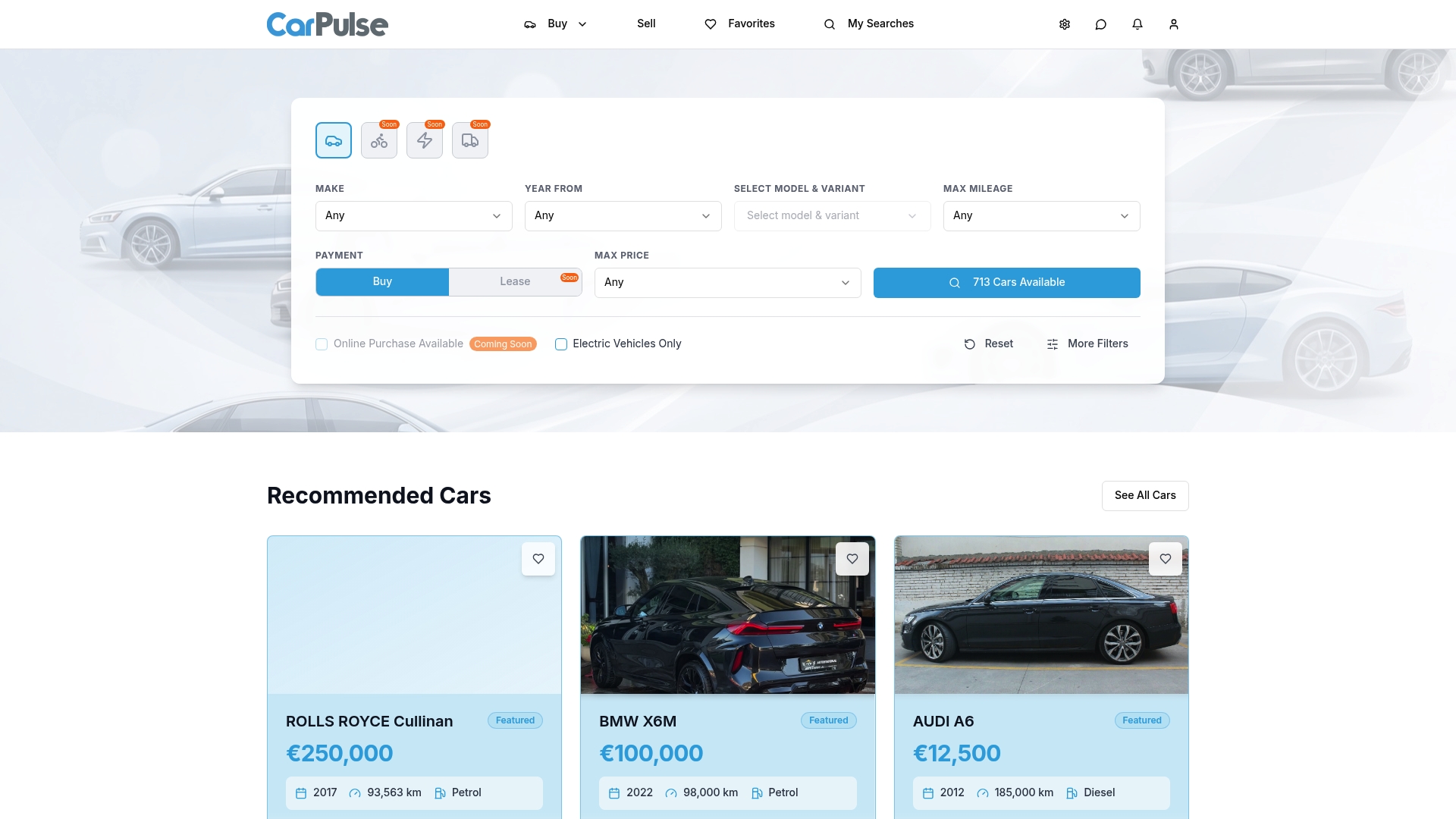
Start on the CarPulse marketplace and filter for cars where the seller is a verified dealership or where the listing includes full details.
Reduce the risk before you buy
A claim is a fallback. These steps cut the odds of needing one:
- Run the VIN through a history check and compare mileage, accidents and ownership with what the seller says. See our step-by-step used car buying guide.
- Pay for an independent inspection before you hand over money. Our article on vehicle inspection in Albania explains what a thorough check covers.
- Read about used car certification in Albania so you know which papers prove what.
- Imported cars deserve extra scrutiny, since parts and service history may come from abroad. A guide on preventive maintenance for imported cars gives practical steps to catch faults early.
- Ask the seller to put key statements, such as no accidents, mileage and service history, in the sales contract.
- Test drive on different roads and at different speeds, with a cold engine at the start.
FAQ
How long do I have to claim a hidden defect on a car in Albania?
For consumer purchases from a trader, the seller is liable for a lack of conformity that becomes apparent within two years of delivery. A defect that shows up within six months is presumed to have existed at delivery. Report it in writing as soon as you notice it.
Can I cancel the purchase because of a hidden defect?
Yes, but not as a first step. You normally ask for free repair or replacement first. If that is impossible, not offered or not completed in time, you can seek a price reduction or cancel the contract, though not for an insignificant defect.
What if I bought the car from a private seller?
The consumer law is built for traders and consumers, so a private sale may not fall under it. Take your contract, the listing and your messages to a lawyer in Albania promptly to check which rules and deadlines apply to you.
Who do I complain to if the dealer ignores me?
Start with a written complaint to the dealer, who must decide within three working days. If that goes nowhere, you can file a complaint with the Consumer Protection Commission (KMK), which can order redress and impose fines, or pursue the matter in court.
Do I need an expert report to make a claim?
The law does not list one as mandatory in the texts we reviewed, but an independent written assessment is the most convincing evidence, especially after the first six months. Get it before any repair work changes the car.
Sources
- Law No. 9902/2008 On Consumer Protection (English version)
- Law on Consumer Protection, Albanian text (People’s Advocate)
- Consumer Protection Commission (KMK)
- Article 31, Law No. 9902/2008 (Polikum)
- Auto leasing, Intesa Sanpaolo Bank Albania