Guides
Used car certification in Albania: a buyer's guide
Used car certification in Albania: a buyer’s guide
TL;DR:
- Certified pre-owned programs involve rigorous inspections, warranties, and vehicle history checks, but are rare in Albania.
- Albania relies on Kontrolli Teknik, a government-mandated EU-standard roadworthiness inspection, instead of formal CPO certifications.
- Buyers should supplement Kontrolli Teknik with vehicle history reports and independent inspections for better safety and transparency.
Buying a used car is stressful enough without the word “certified” clouding your judgment. Many buyers in Albania assume a certified vehicle is automatically safe, thoroughly inspected, and backed by some kind of guarantee. The reality is sharply different. Albania’s used car market is dominated by imports, private sellers, and dealerships that operate outside the formal Certified Pre-Owned (CPO) programs that European and American buyers may be familiar with. This guide breaks down what certification actually means, how it applies locally, and what you should do to protect yourself before signing anything.
Table of Contents
- What does used car certification really mean?
- Certification in Albania: how is it different?
- Comparing CPO and Albania’s Kontrolli Teknik
- What Albania buyers should do for maximum safety
- Why certification isn’t a guarantee in Albania
- Find trusted cars and expert advice in Albania
- Frequently asked questions
Key Takeaways
| Point | Details |
|---|---|
| CPO vs Albania standards | Certified Pre-Owned offers warranty and deep inspection but is rare in Albania; Kontrolli Teknik covers safety only. |
| Personal checks essential | Albania buyers should use independent inspections and verify vehicle history to avoid unsafe or fraudulent cars. |
| Regulatory compliance | All used cars in Albania must pass Kontrolli Teknik, aligning with EU standards even for imported vehicles. |
| Practical safety steps | To maximize safety, arrange a pre-purchase inspection and follow expert guides tailored to Albania. |
What does used car certification really mean?
The term “certified used car” gets thrown around loosely. A seller can label a car “certified” without meeting any internationally recognized standard. So let’s define it properly.
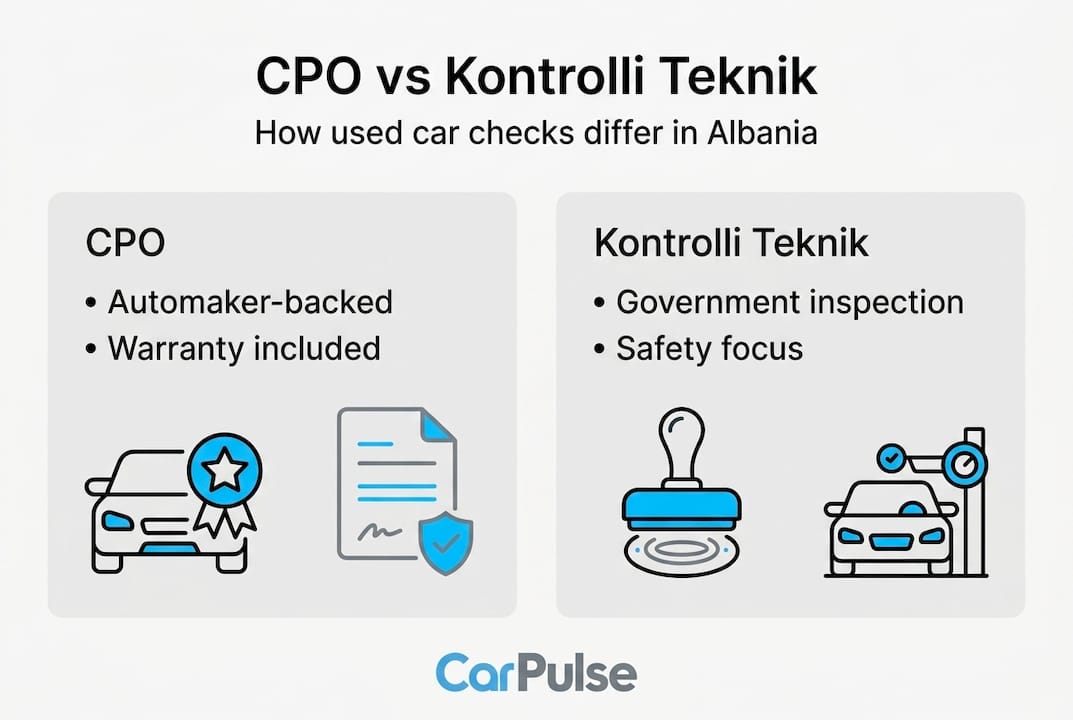
In mature automotive markets, a certified pre-owned (CPO) car is one that has passed a rigorous inspection program backed by the automaker or an authorized dealer. These programs typically involve 125 to 172 inspection points, full vehicle history verification, cosmetic and mechanical reconditioning, and an extended warranty that transfers to the buyer.
What a genuine CPO program includes:
- Multi-point mechanical inspection (engine, transmission, brakes, suspension, electrical systems)
- Vehicle history report from a recognized database
- Cosmetic reconditioning to meet brand standards
- Limited extended warranty, often 1 to 2 years beyond the manufacturer’s original coverage
- Roadside assistance in many cases
- A return or exchange policy in some programs
“Used car certification generally refers to Certified Pre-Owned (CPO) programs offered by automakers or dealers, involving rigorous multi-point inspections of 125 to 172 points, reconditioning, vehicle history checks, and extended warranties to ensure quality and safety.”
Here is a quick comparison of what genuine CPO offers versus a typical “certified by dealer” label:
| Feature | Automaker-backed CPO | Dealer-certified label |
|---|---|---|
| Inspection points | 125 to 172 | Varies, often unverified |
| Warranty | Extended manufacturer warranty | Limited or none |
| History check | Required | Optional |
| Reconditioning standard | Brand-mandated | At dealer’s discretion |
| Price premium | Yes, typically 5 to 15% higher | Minimal |
The price premium on a real CPO car is worth it in markets where these programs exist. But here is the critical problem for Albanian buyers: automaker-backed CPO programs are not available for the vast majority of used cars sold in Albania. Most vehicles are imported, pre-owned in another country, and arrive without any manufacturer certification attached.
That does not mean you are helpless. Following safe used car buying steps before any purchase can fill the gap that formal certification leaves behind. Knowing what a real CPO looks like at least gives you a benchmark to hold local sellers accountable to.
Certification in Albania: how is it different?
Albania does not have a domestic network of automaker-authorized CPO dealers the way Western Europe or the United States does. This is not a criticism of the market; it is just a structural reality. The overwhelming majority of used cars sold locally were originally registered in Germany, Italy, Switzerland, or elsewhere. By the time they reach an Albanian lot or a private seller’s driveway, any original CPO status has long expired.
What Albania does have is the Kontrolli Teknik, a mandatory roadworthiness inspection that aligns with EU technical standards. Every vehicle registered in Albania must pass this inspection periodically, and it becomes required again after a change of ownership, even if the inspection was recently completed.
Key Kontrolli Teknik facts:
- Mandatory for all registered vehicles in Albania
- Aligns with EU roadworthiness directive standards
- Required after ownership transfer regardless of last inspection date
- Triggered again at 160,000 km for high-mileage vehicles
- Electric vehicles (EVs) face separate criteria including age and mileage limits
The rules have also evolved to cover edge cases. Salvage or branded-title vehicles are generally ineligible for standard certification pathways. EVs, for example, face specific criteria such as being under 8 years old and under 100,000 miles to qualify for certain inspection categories, similar to international guidelines like those used by Manheim in the US. Ndryshojnë rregullat e kolaudimit reflects that Albanian authorities are actively updating these standards, which is a positive trend.
| Vehicle type | Kontrolli Teknik frequency | Notes |
|---|---|---|
| Standard passenger car | Every 2 years | Required after ownership transfer |
| High-mileage (160k km+) | More frequent | Re-triggered at mileage threshold |
| Electric vehicles | Separate criteria apply | Age and mileage limits enforced |
| Salvage or branded title | May be restricted | Check with DPSHTRR |
Pro Tip: Before completing any purchase, ask the seller to show you the most recent Kontrolli Teknik certificate and verify the date. If ownership just changed hands, the inspection certificate should be fresh. If it is not, make the new inspection a condition of the sale.
When test driving in Albania, pay attention to sounds, handling, and dashboard warnings that a technical inspection might not catch under controlled conditions. The Kontrolli Teknik is a snapshot, not a guarantee of day-to-day reliability. For a fuller picture of the local market environment, the Albania car market guide explains how pricing, import sourcing, and documentation work in practice.
Comparing CPO and Albania’s Kontrolli Teknik
Now that you understand both systems, let’s put them side by side. This comparison is not about declaring one superior in every situation. It is about helping you understand exactly what protection each one actually provides.
| Category | CPO program | Kontrolli Teknik |
|---|---|---|
| Inspection depth | 100+ detailed points | Safety and emissions focused |
| Warranty included | Yes, extended | No |
| History verification | Required | Not included |
| Backed by | Automaker or authorized dealer | Albanian government (DPSHTRR) |
| Cost to buyer | Built into vehicle price | Paid separately by owner |
| Frequency | One-time at point of sale | Periodic and post-transfer |
| Consumer protection | High | Moderate |
The differences are significant. A CPO car comes with a warranty, meaning if something breaks within the covered period, the manufacturer or dealer pays. Kontrolli Teknik has no such protection. It confirms that the car met safety standards on the day it was inspected, nothing more.
“CPO provides superior quality assurance vs standard used, manufacturer-backed, but is limited in Albania; buyers should rely on Kontrolli Teknik plus an independent mechanic for safety.”
That independent mechanic piece is crucial. Albania’s technical control aligns with EU standards for emissions and basic roadworthiness, but it does not assess wear on components like clutch plates, timing belts, or interior electronics. These are exactly the items that fail on older imported vehicles and generate the biggest repair bills.
Here is a practical step-by-step approach to filling the gap between what Kontrolli Teknik covers and what a buyer actually needs to know:
- Confirm the Kontrolli Teknik certificate is current and not expired.
- Request the full vehicle history using the chassis or VIN number from the country of origin.
- Hire an independent mechanic to do a pre-purchase inspection (PPI) before finalizing any deal.
- Check the odometer reading against service records to spot signs of tampering.
- Verify the vehicle registration documents (lejedrejtimi and librezë) match the seller’s identity.
The buying and selling guide Albania provides detailed documentation checklists that walk you through each of these steps with Albania-specific context. Do not skip any of them just because a seller tells you the car is “already certified.”
What Albania buyers should do for maximum safety
Formal certification tells you something, but it does not tell you everything. In Albania’s import-heavy market, personal verification is not optional. It is essential.
Start with vehicle history. Request a history report from the country where the vehicle was originally registered. German vehicles can be checked through DEKRA or TÜV records. Italian vehicles may have histories traceable through the PRA (Pubblico Registro Automobilistico). This step alone can reveal accident history, major repairs, and whether the odometer has been tampered with.
Get an independent pre-purchase inspection. A qualified mechanic who is not affiliated with the seller will give you an unbiased assessment. This typically costs between $100 and $150, and it is one of the best investments you can make. Consumer Reports consistently recommends that buyers prioritize automaker CPO programs when available, but in markets like Albania where they are not, an independent PPI is the closest substitute.
Statistic to remember: A pre-purchase inspection costing $100 to $150 can uncover hidden faults worth thousands in repairs. Albanian market guides stress personal checks over formal certification specifically because of the fraud risks in import-heavy, unregulated sales environments.
Watch for these warning signs:
- Seller refuses to allow an independent inspection
- Price is significantly below market value without explanation
- VIN plate shows signs of tampering or replacement
- Documents from multiple different countries that do not add up
- Odometer reading inconsistent with vehicle wear (seats, pedals, steering wheel)
- Pressure to close the deal quickly without time to verify
Pro Tip: Always insist on at least one second test drive after an independent mechanic has reviewed the car. The first drive is about feeling; the second is about confirming everything checks out once you know more.
Checklist for maximum buyer safety in Albania:
- Verify Kontrolli Teknik certificate (date, issuing station)
- Obtain original country vehicle history report
- Confirm VIN matches all documents and the car itself
- Get an independent PPI from a trusted mechanic
- Check for outstanding liens or encumbrances on the vehicle
- Confirm seller identity matches registration documents
- Negotiate any issues found during inspection before finalizing price
The fraud risk in Albania’s used car market is real, and it is higher for imported vehicles where documentation can be manipulated before the car even crosses the border. Personal diligence is the only reliable safety net.
Why certification isn’t a guarantee in Albania
Here is an uncomfortable truth: even if a seller hands you a stack of papers labeled “certified,” that means very little without context. Albania’s used car market is dominated by vehicles imported from countries where their original warranties have expired, their histories are not fully traceable, and their condition reflects years of use under different rules and road conditions.

The Kontrolli Teknik is genuinely useful. It is government-backed, EU-aligned, and better than nothing. But calling it a substitute for full CPO certification would be misleading. It does not include a warranty, does not cover component wear beyond safety-relevant thresholds, and does not protect you if the car breaks down two weeks after purchase.
We have seen buyers in Albania pay premium prices for “certified” vehicles that turned out to have hidden structural damage or rolled-back odometers. The certification label gave them false confidence. Your best protection is always your own verification process, not any label a seller applies. Understanding how to spot a reliable listing and what questions to ask when using platforms is also part of the equation. Learning about safe online listing tips helps both buyers and sellers understand what good-faith transparency looks like in this market.
Certification is a starting point, not a finish line. Treat it that way.
Find trusted cars and expert advice in Albania
Navigating used car purchases in Albania does not have to feel like guesswork. CarPulse gives you a structured, transparent starting point.
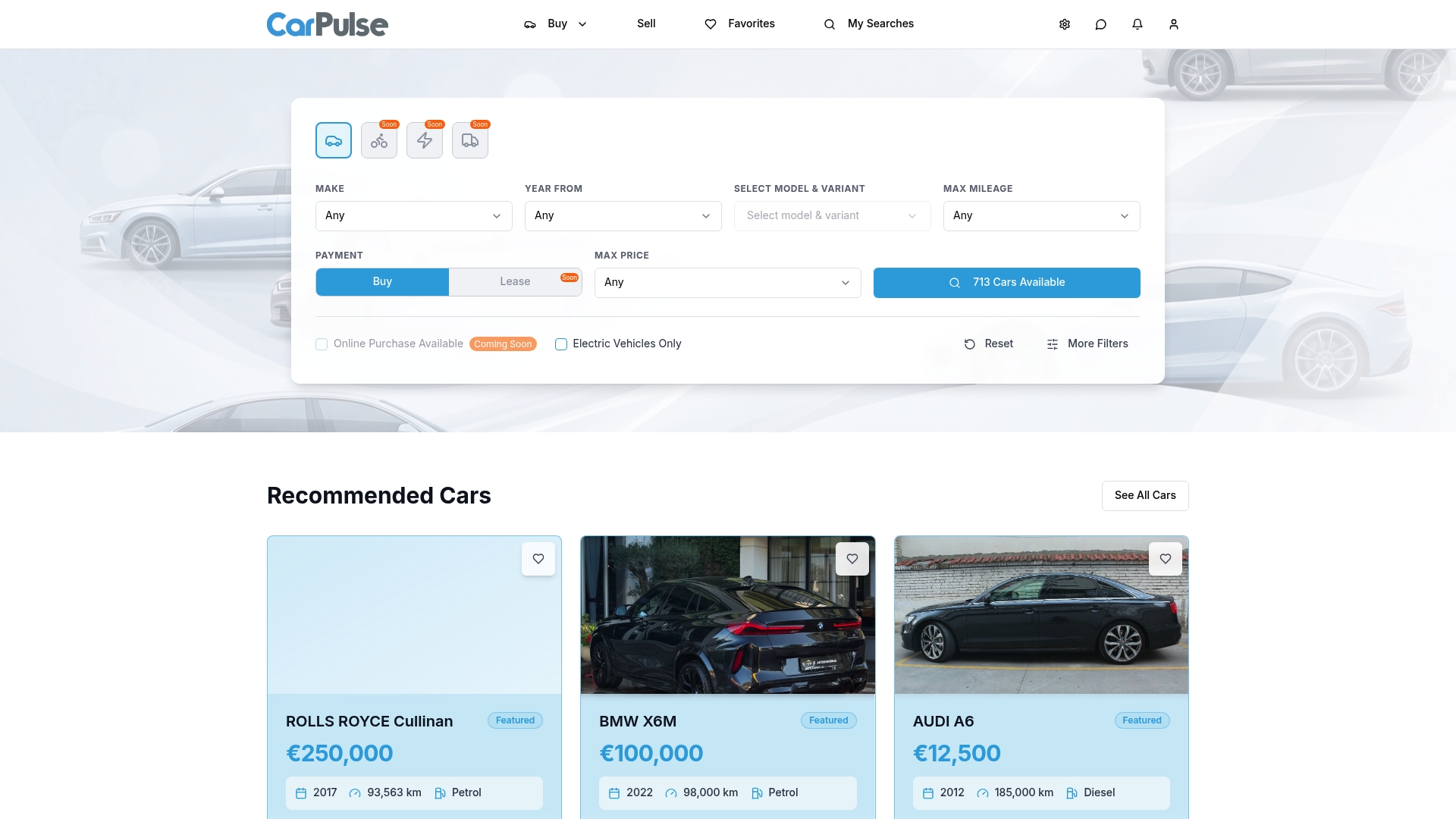
Albania’s largest used car marketplace connects you with verified dealerships and private sellers who list vehicles using VIN-based listings, so the car’s details are populated accurately from the start. You can filter by make, model, year, mileage, price, and fuel type, and bookmark your favorites while you compare. CarPulse also publishes Albania-specific guides and resources that complement every stage of the buying process, from your first search to your final paperwork. Download the CarPulse app on iOS or Android and carry the marketplace with you wherever your car search takes you.
Frequently asked questions
What is the difference between CPO and Kontrolli Teknik in Albania?
CPO includes an extended warranty and a detailed 100+ point inspection backed by the automaker, while Kontrolli Teknik is a mandatory government safety check that aligns with EU standards but provides no warranty or ongoing consumer protection.
Can imported used cars in Albania be Certified Pre-Owned?
Most imported used cars in Albania do not qualify as CPO because their original manufacturer programs have expired or were never applicable. Buyers should rely on Kontrolli Teknik combined with an independent mechanic inspection to verify safety.
How can I verify a used car’s safety beyond certification?
Arrange a pre-purchase inspection with a trusted independent mechanic, request a full vehicle history report from the country of origin, and check that all documents match the VIN. Experts recommend a PPI costing around $100 to $150 as a minimum safeguard.
Does Kontrolli Teknik cover electric vehicles (EVs) in Albania?
Yes, but EVs are subject to separate criteria that include age limits (under 8 years) and mileage thresholds (under 100,000 miles), reflecting the distinct maintenance and battery considerations that electric vehicles require compared to combustion engines.
Recommended
- Udhëzues: Blerja e sigurt e një makine të përdorur në… | CarPulse Albania
- Blej Makina në Shqipëri: Udhëzuesi i Plotë | CarPulse.al | CarPulse Albania
- Makina ne Shitje Shqipëri - Udhëzuesi i Plotë për Blerje | CarPulse Albania
- Provë me Makinë të Përdorur: Udhëzues i Plotë për Shqipërinë | CarPulse Albania