
Guides
VIN Listing Autofill: List Your Car in Albania Faster
VIN Listing Autofill: List Your Car in Albania Faster

VIN listing autofill means you type or scan the 17-character vehicle identification number, and the platform fills in the technical details of the car for you. On CarPulse, VIN-based listing is built to pull those details automatically, so you spend your time on what buyers care about: photos, condition, mileage and a fair price. This guide shows how the process works, what you still have to enter yourself, why a lookup can come back incomplete, and what to check in Albania before you hit publish.
TL;DR
- Enter the VIN and the listing form populates vehicle details, so you avoid retyping specs and the typos that come with it.
- Autofill covers technical data only. Mileage, condition, service history, extras and price are yours to add and check.
- Compare the VIN on the car with the VIN in your documents before you publish. A mismatch will cost you buyers.
- In Albania, check for unpaid road fines and make sure ownership papers are in order before listing.
- A VIN in the listing shows buyers you have nothing to hide, but it does not replace a vehicle history check.
Table of Contents
- What VIN autofill actually does
- Find the VIN and read it correctly
- How to list a car with a VIN, step by step
- What you still have to add yourself
- Why a VIN lookup can come back incomplete
- Before you publish in Albania: the checks that matter
- Does a VIN in the listing prove the car’s history?
- What a VIN does for sellers and buyers
- Our perspective
- List your car with CarPulse
- A pre-publish checklist
- FAQ
- Sources
What VIN autofill actually does
A VIN is a 17-character code assigned to one specific vehicle. A decoder reads the code and returns the data that the manufacturer and registries associate with it: typically make, model, model year, fuel type, transmission, body type and engine details. Without autofill, a seller has to pick each of these from drop-down menus, and that is where mistakes creep in. A wrong engine size or the wrong model year changes which searches your car appears in.

The benefit is practical. A buyer who filters by make, model, year, mileage, price and fuel type only finds your car if those fields are right. When the fields come from the VIN instead of from memory, your listing lands in the right searches the first time.
On CarPulse, this is the core of our listing flow: you enter the VIN and the form fills in the vehicle details automatically, which is why listing is faster and more accurate than filling every field by hand. Private sellers and verified dealerships use the same approach.
Find the VIN and read it correctly
Before you open the listing form, locate the VIN on the car itself. The two usual places are the plate visible at the base of the windshield on the driver’s side and the label on the driver’s door jamb. It is also printed in the registration documents. If you are unsure what the label looks like or where to look on an unusual vehicle, this walkthrough on finding a VIN label shows how labels and part numbers are laid out.
A few habits prevent most entry errors:
- Copy from the car, not from memory. Photograph the plate and read the number from the photo at a normal size.
- Count to 17. A VIN that is shorter or longer is a typo.
- Watch similar characters. Standard VINs do not use the letters I, O and Q, so what looks like an O is almost always a zero.
- Match the plate to your papers. The National Insurance Crime Bureau, a US body, advises comparing the dashboard VIN with the available documents and inspecting the plate and its rivets for scratches or damage, as set out in its vehicle identification inspection guide. That is sound advice for a seller too: if your own paperwork and your own car disagree, fix that before a buyer notices.
How to list a car with a VIN, step by step
- Create your seller account. Buyers browse for free. Sellers list through a dedicated account. Plans are listed on our pricing page.
- Start a new listing and choose the vehicle type. CarPulse covers cars, motorcycles, vans, trucks, trailers, camper vehicles, agricultural and construction vehicles.
- Enter the VIN. Type it carefully or paste it from your notes.
- Review what filled in. Check make, model, year, fuel type and transmission against the car and your registration document.
- Correct anything that is off. Autofill is a starting point. You can complete or change a field if your car differs from the standard record, for example after an engine swap or a conversion.
- Add what only you know. Mileage, colour, plate, condition, number of owners, service records, extras.
- Upload photos and set a price. Our AI price evaluation is there to help you place the car in the market before you commit to a number.
- Publish and manage. Interested buyers contact you through the platform, and they can save your listing or the search that found it.
The whole point is to spend your effort on steps 5 to 7, not on step 4.
What you still have to add yourself
Decoding gives you the car as it left the factory, or close to it. It does not know what happened afterward. Treat these as your job:
- Mileage. The odometer reading today. No VIN carries it.
- Condition. Paint, interior wear, tires, known faults, repairs.
- Trim-specific options. Packages and equipment can vary between cars of the same model, so list what your car really has: parking sensors, leather, a sunroof, a towing hook.
- Plate and colour. Basic identifiers that buyers use to match the car in the photos.
- Service history. Dates, what was done, whether you hold invoices.
- Your reason for selling and your terms. Whether the price is negotiable, whether you accept a trade-in.
This last group is what actually moves buyers to contact you. The VIN gives them confidence in the technical data, and the details above give them a reason to call. Dealers who want to see how listing quality connects to results can look at these dealer listing benchmarks for ideas on which parts of a listing deserve attention.
Why a VIN lookup can come back incomplete
Sometimes the form fills only part of the way. That does not mean you did something wrong. Coverage differs between vehicle types and regions, and cars built for one market can carry variants that a decoder knows only in part. Many cars sold in Albania are imported used from other countries, so you may see this more often than a seller in the country where the car was built.
When it happens:
- Re-check the VIN first. One wrong character is the most common cause.
- Fill blanks from your registration document. It usually states make, model, engine capacity, fuel and first registration.
- Do not guess. If you do not know a detail, leave it out or describe it in the text. A blank is better than a wrong value that makes a buyer feel misled.
- Mention the variant in the description. If your car is a market-specific version, say so in plain words.
Before you publish in Albania: the checks that matter
A correctly filled listing is not the same as a car that is ready to sell. Albanian sellers should run through this short list first.
Unpaid road fines
The State Police run an electronic system where you can check for unpaid road fines using the license plate and the 17-digit chassis number, which is the VIN. Do this before you list. A buyer who finds an open fine during the handover will either demand a discount or walk away.
Registration and ownership papers
Albania’s vehicle registry holds vehicle and ownership data and is accessible only through national authorities. For a vehicle’s entire file, a request to the General Directorate of Road Transport is needed, according to the UNODC directory of registries. If your documents are unclear, sort that out before advertising the car. Our guides explain how to register a car in Albania and the steps for a car ownership transfer, so you know what the buyer will need from you.
Through e-Albania, the DPSHTRR requires vehicle-owner applicants to provide identification, and representatives to provide identification and representation documents, as described on its e-Albania service page. If someone else is selling the car on the owner’s behalf, have those documents ready.
Cars under temporary admission
A vehicle brought into Albania under the temporary admission regime for private vehicles must have permanent registration outside Albania, and it cannot be sold, change ownership or be used commercially, according to Albanian customs guidance. If your car entered that way, do not list it for sale. Ask customs what steps apply to your case.
Inspection, tax and homologation
Buyers ask about these early. Know where your car stands on vehicle inspection in Albania, what the road tax is and how it is calculated, and, for imported cars, whether homologation is complete. Put the answers in the listing and you save yourself a dozen repeat questions.
Does a VIN in the listing prove the car’s history?
No. The VIN identifies the car and unlocks its technical data. It does not by itself confirm who owns it, what condition it is in, or whether the odometer is honest. Those are separate questions, and honest sellers and careful buyers treat them separately.
For history, an Albania-focused report on the DPSHTRR vehicle-history service says buyers can use the vehicle identifier or plate to check technical data, mileage, environmental category, damage, previous use, stolen-vehicle status and number of owners, in this Invest in Albania article from 2019. Service details can change, so confirm the current process on the official DPSHTRR site, which lists technical inspection and document tracking among its services.
The NICB also notes that altered VINs can often be spotted by briefly inspecting the vehicle and its documents, and that altered numbers may be used to disguise stolen or salvage vehicles. For sellers, the lesson is simple: a clean, matching VIN on the car and on the paperwork is the first thing a careful buyer will test.

What a VIN does for sellers and buyers
For sellers:
- A faster listing, because the technical fields are filled for you.
- Fewer data-entry errors, which means fewer wrong-category listings and fewer buyers who feel misled.
- A more credible advert. A buyer sees the exact car, not a rough description.
- More time to improve the parts of the listing that win interest: photos, service history, honest condition notes.
For buyers:
- Specs they can trust enough to compare cars side by side.
- A concrete identifier they can use for fine checks and history checks before they travel to see the car.
- Less back-and-forth about basic questions such as fuel type or transmission.
One point from industry practice is worth keeping in mind: the VIN is the reliable source for technical specs, but what really draws buyers is the merchandising detail, like service history and current condition. That fits how we see it.
Our perspective
We built VIN-based listing because the slowest, least accurate part of selling a car online is retyping specifications. Every manual field is a chance for a mistake, and every mistake costs a seller a buyer who filtered for something slightly different.
Our view is that autofill should do the boring work and leave the seller in control. That is why the data fills in automatically and you remain the one who confirms it. The same logic sits behind our AI price evaluation: it gives private sellers and dealerships a grounded starting point, so the price on the listing is not a guess.
We also think trust in this market comes from verification, not slogans. A network of verified dealers, buyer and seller accounts, and vehicle history checks all point in one direction: fewer surprises at the handover. Buyers use CarPulse for free, and sellers pay to list, which keeps our incentive simple. We want your car listed accurately, seen by the right people and sold.
If you take one habit from this guide, make it this: enter the VIN, check every filled field against your papers, then spend your remaining effort on photos and honest detail. That is what we have seen make a listing work.
Henri
List your car with CarPulse
If you are ready to sell, CarPulse lets private sellers and verified dealerships list cars, motorcycles, vans, trucks, trailers, camper vehicles, agricultural and construction vehicles with VIN autofill. Seller plans are Basic at €14.99 per month and Premium at €29.99 per month; see the pricing page for what each plan covers.
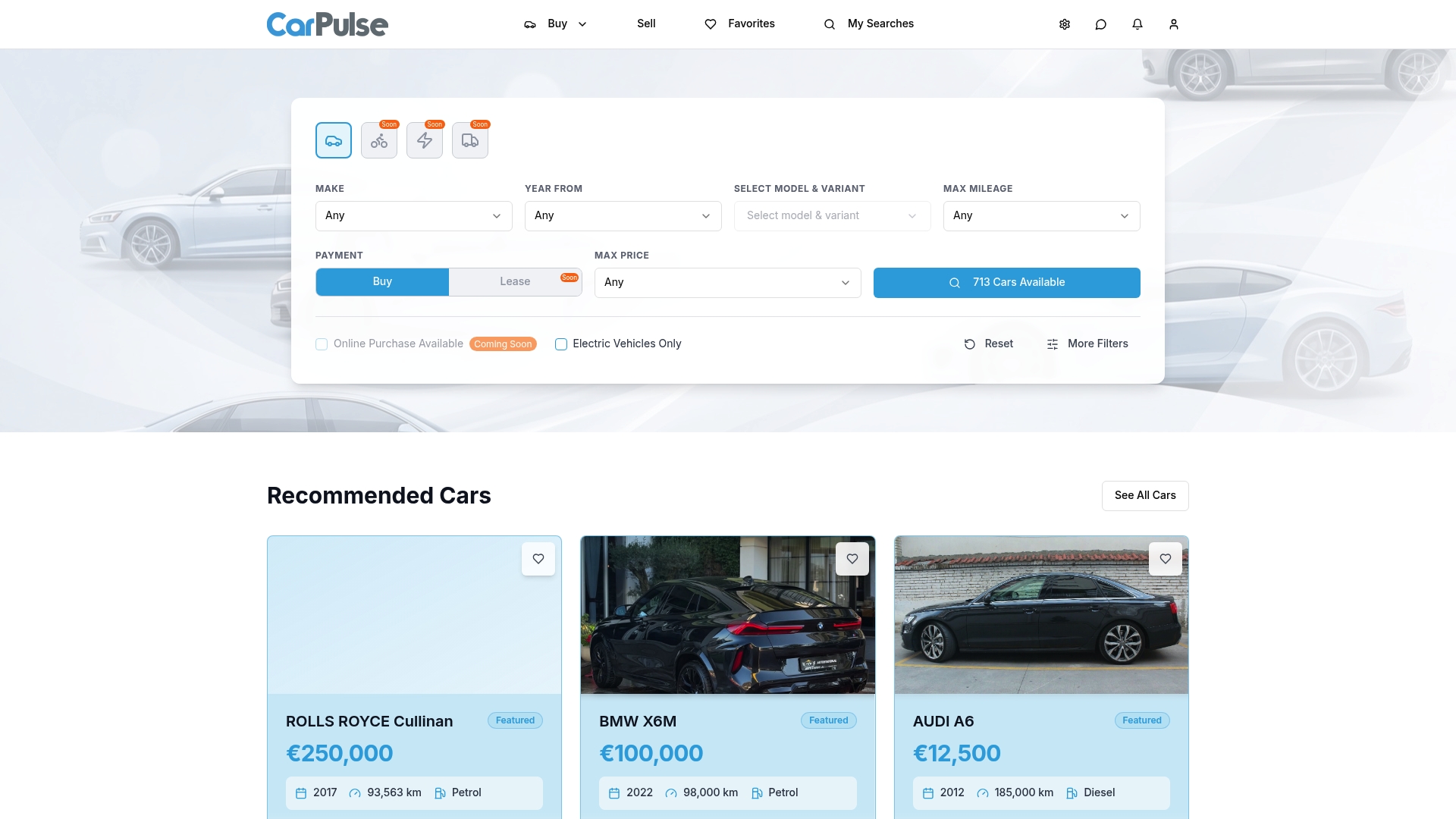
Buyers can browse new and used listings for free, filter by make, model, year, mileage, price and fuel type, save searches and bookmark favorites, on the web or in our iOS and Android app. Start on the CarPulse homepage.
A pre-publish checklist
Run through this once before you press publish:
| Check | Why it matters |
|---|---|
| VIN on the car matches the VIN in your documents | Buyers and officials will compare them |
| Every autofilled field reviewed | Decoded data can be partial or differ from your exact variant |
| Mileage entered from the odometer today | The VIN does not carry it |
| Road fines checked with the State Police system | Open fines slow or kill a sale |
| Ownership papers and registration in order | The transfer cannot proceed without them |
| Inspection, road tax and homologation status known | Buyers ask early |
| Photos taken in daylight, all sides plus interior | Condition is what sells the car |
| Price compared with similar listings and the AI price evaluation | Overpriced listings sit unsold |
FAQ
Can I list a car without a VIN?
It is better not to. The VIN is what makes autofill work, and buyers trust listings that identify the exact car. If you cannot find the number, check the windshield plate, the door jamb label and your registration documents. If none of them match or the plate looks damaged, resolve that before selling, since a buyer will notice too.
Is it safe to show the full VIN in a public listing?
Showing it is common practice, and it lets buyers run fine and history checks. It identifies the car, not you. Do not post your registration documents or ID in photos, though, since those carry personal details. Share papers directly with a serious buyer instead.
What if the autofilled details are wrong?
Correct them before saving. Compare each field with your registration document and the car itself. If the decoder left something blank because of a market-specific variant, fill it in yourself or describe it in the text. Never publish a value you are unsure of.
Does autofill tell buyers the car’s mileage or accident history?
No. Autofill covers technical specifications. Mileage comes from you, and accident or ownership history comes from official checks, such as the DPSHTRR vehicle-history service. Giving buyers the plate and VIN so they can run those checks themselves is a strong trust signal.
Do buyers pay to see VIN-based listings on CarPulse?
No. Buyers browse, save searches, bookmark favorites and contact sellers without paying. Sellers pay to list, with plans starting at €14.99 per month.
Sources
- Kontrollo kundravajtjet rrugore, State Police
- Directory of Open-Source Registries: Albania, UNODC
- Customs clearance of vehicles, Albanian Customs
- e-Albania, DPSHTRR
- DPSHTRR official site
- Buying a Used Car? This is How to Check its History, Invest in Albania
- Vehicle Identification Inspection, NICB
- How to identify an airbag module: label, part number, VIN
- Vehicle listing ads benchmarks for dealers