
Guides
Bill of Sale in Albania: What a Car Sale Needs
Bill of Sale in Albania: What a Car Sale Needs

Albania has no separate document called a “bill of sale” for cars. What proves the sale is a sale-purchase contract (kontratë shitblerje), and the Albanian authorities accept it as one of several valid documents of acquisition of ownership. The buyer then uses that contract to register the change of owner at the road transport directorate (DPSHTRR). This guide explains what the contract should say, who needs which papers, what it costs and what to keep afterward.
TL;DR
- A car sale in Albania is proven by a sale-purchase contract. A plain handwritten receipt is not the document the registration office lists.
- The contract should name both parties, identify the car by chassis number (VIN) and plate, state the price and carry both signatures.
- The buyer files the ownership change at the DPSHTRR office for their place of residence within 30 days. The service fee is 2,500 lekë, plus 1,400 lekë for RBS verification.
- If the buyer delays, the seller can file a declaration of sale (1,500 lekë) to protect themselves.
- Keep a copy of the contract, the payment proof and the new registration papers.
Table of Contents
- Is there a bill of sale in Albania?
- Who signs the contract: notary or DPSHTRR?
- What the sale contract should contain
- Documents each side brings
- Fees, deadline and fines
- Protecting the seller: the declaration of sale
- What buyers should check before signing
- What to keep after the sale
- Our view: the contract is only as good as the listing behind it
- Sell or find your next car on CarPulse
- FAQ
- Sources
Is there a bill of sale in Albania?
If you come from a country where a one-page bill of sale is enough, expect a different system. In Albania, the registered owner is recorded in the vehicle file kept by DPSHTRR. A paper alone does not move ownership in that file. The change has to be filed and recorded.
The official DPSHTRR page on ownership change says a valid document of acquisition may be a sale-purchase contract, a gift contract, an auction sale contract, an inheritance certificate, a court decision or a tax invoice. For an ordinary private sale, that means the sale-purchase contract. A tax invoice applies when the seller is a business selling the car.
So when someone says “bill of sale” in Albania, they usually mean the kontratë shitjeje or kontratë shitblerje. Think of it as your bill of sale, but with a formal structure and a registration step attached.
Who signs the contract: notary or DPSHTRR?
Historically, car sale contracts were signed before a notary. Notaries could check the vehicle file in the DPSHTRR system and sign only if the file was free. In a 2016 instruction reported by Panorama, notaries were given access to see whether a vehicle was pledged to a bank or blocked by penalties or obligations to the transport directorate. If the file was blocked, the notary told the parties the reason.
From 1 March 2019, the contract could also be made at DPSHTRR offices. Media reports at the time put the fee at 1,400 lekë (1,200 for the ownership transfer and 200 for the service window) and said the car was then registered at the same counter in the new owner’s name. The reports presented it as a more practical route, with checks for Interpol issues and file blocks in one place.
Those are past figures. Before you book anything, check the current procedure and fees on the DPSHTRR website or ask at the office. Whichever route you take, the principle is the same: someone checks that the file is free before the contract is signed.
What the sale contract should contain
There is no single universal form that every contract must copy, but a sound car sale contract in Albania covers the same core points. A notary template for vehicle sales follows this logic, and you can use it as a checklist:
- Date and place of signing.
- The seller: full name, address, ID number and a statement that they are the owner and have full legal capacity.
- The buyer: the same details.
- The vehicle: make and type, chassis number (VIN), year of manufacture, fuel, color, plate number and the number of the circulation permit (leja e qarkullimit) that shows the seller as owner.
- The price, in figures and words, and how and when it is paid.
- A statement of transfer: that the seller sells with free will and the buyer becomes the owner on signing.
- A statement on encumbrances: that the car is free of pledges, liens and disputes, as far as the seller declares.
- Signatures of both parties (and the notary or official, where one is involved).
Two details cause most trouble later. The first is the VIN: check it against the circulation permit and against the number stamped on the car itself. The second is the price: write the real price. A contract that understates it can create tax and dispute problems for both sides.
Documents each side brings
The DPSHTRR lists what the buyer must present to change ownership. These come from the official ownership-change page:
| Who | What to bring |
|---|---|
| Buyer | Identification document; valid document of acquisition of ownership (the contract); RBS confirmation; the vehicle’s circulation permit; the certificate of ownership if the permit is the old model |
| Buyer | The vehicle documents and a valid technical inspection certificate |
| Seller | Identification document; the original or certified document of acquisition of ownership (needed if filing a declaration of sale) |
The 2016 instruction reported by Panorama says that, for a car already registered and plated, three documents go to the notary for the sale: the circulation permit, the ownership certificate in the name of the current owner and the identification document. Procedures change, so confirm the current list before the appointment.
An expat-focused guide also lists a request form, a photocopy of the record on the vehicle’s physical condition at the time of sale, and the plates among the documents. It quotes a service fee of ALL 6,000, or ALL 5,500 without plates, for a registered vehicle. That differs from the DPSHTRR figure below, so treat the DPSHTRR page as the reference and confirm the fee at the counter.
If you need to know the technical inspection rules before the sale, read our guide to vehicle inspection in Albania.
Fees, deadline and fines
According to DPSHTRR, the ownership transfer must be filed at the office with jurisdiction over the buyer’s residence, within 30 days of acquiring ownership. The listed costs:
| Item | Fee |
|---|---|
| Ownership-change service | 2,500 lekë |
| RBS verification | 1,400 lekë |
| Seller’s declaration of sale | 1,500 lekë (1,000 for the service, 500 for the certificate) |
If the buyer does not register the change within 30 days of drafting the act, the administrative fine is collected under article 93 of the Road Code, per the same official page.
On RBS: the verification can be paid directly at the DPSHTRR service-office cashiers. A 2019 report said this avoids bank queues and extra commissions of 150 to 300 lekë. Ask at the office whether that is still how it works.

Protecting the seller: the declaration of sale
Signing the contract does not end the seller’s exposure. Until the file shows the new owner, the car may still be recorded under the seller’s name. If the buyer then fails to register the change, the seller can file a declaration of sale (deklarim shitjeje). The seller brings an identification document and the original or certified document of acquisition, and pays 1,500 lekë, per the DPSHTRR declaration page.

The practical lesson for sellers: do not hand over the keys and the permit on a handshake. Sign a proper contract, keep your copy, and agree a date when the buyer will file the change. For the full seller checklist, see the documents you need to sell a car in Albania.
What buyers should check before signing
A contract only records what the parties agree. The checking is yours. Before you pay:
- Match the identity. The seller’s ID should match the owner named on the circulation permit or ownership certificate. If someone sells on behalf of the owner, ask for written authority.
- Match the car. Compare the VIN in the documents with the VIN on the vehicle and look at the plates.
- Check for blocks. The file should be free of pledges, fines and other blocks. A notary or the DPSHTRR office checks this before signing, so do not skip that step.
- Check the mileage. Odometer tampering is a known risk in used-car markets, and this article on odometer fraud checks explains what buyers can look for before paying.
- Check the inspection. You will need a valid technical inspection certificate to register the car in your name.
- Pay traceably. Prefer a bank transfer, and write the payment method and date in the contract.
For a longer list that covers the test drive and the paperwork, use our car buying checklist and the used car buying guide.
What to keep after the sale
Keep these for as long as you own the car, and for the seller for a good while after:
- Your copy of the signed contract.
- Proof of payment (bank transfer receipt or a signed acknowledgment).
- Photocopies of both parties’ IDs as shown in the contract.
- The receipts for the fees paid at DPSHTRR.
- The new circulation permit and ownership certificate in the buyer’s name, or for sellers, the declaration of sale if you filed one.
Buyers who are bringing the car through registration afterwards can follow our guides on car ownership transfer in Albania and how to register a car.
Our view: the contract is only as good as the listing behind it
Most sale disputes we hear about start before the contract, with a listing that was vague about the car. A wrong year, a mistyped VIN or a missing detail ends up copied into the paperwork.
That is why we built CarPulse around VIN-based listing. The seller enters the VIN and the platform fills in the vehicle details automatically, so the data you carry into the contract starts from a consistent source. Our verified dealer network and vehicle history check give buyers more to go on before they even meet the seller.
For sellers, our AI price evaluation is designed to help you set a realistic price, which is the number that ends up in your contract. Buyers use CarPulse for free: browsing, saving searches and contacting sellers cost nothing.
Henri
Sell or find your next car on CarPulse
If you are selling, you can list your car on CarPulse with VIN autofill and reach buyers across Albania. Our plans are Basic at 14.99 € per month and Premium at 29.99 € per month, and you can see what each includes on the pricing page. Buyers can browse new and used cars by make, model, year, mileage, price and fuel type on CarPulse, and use the apps for iOS and Android.
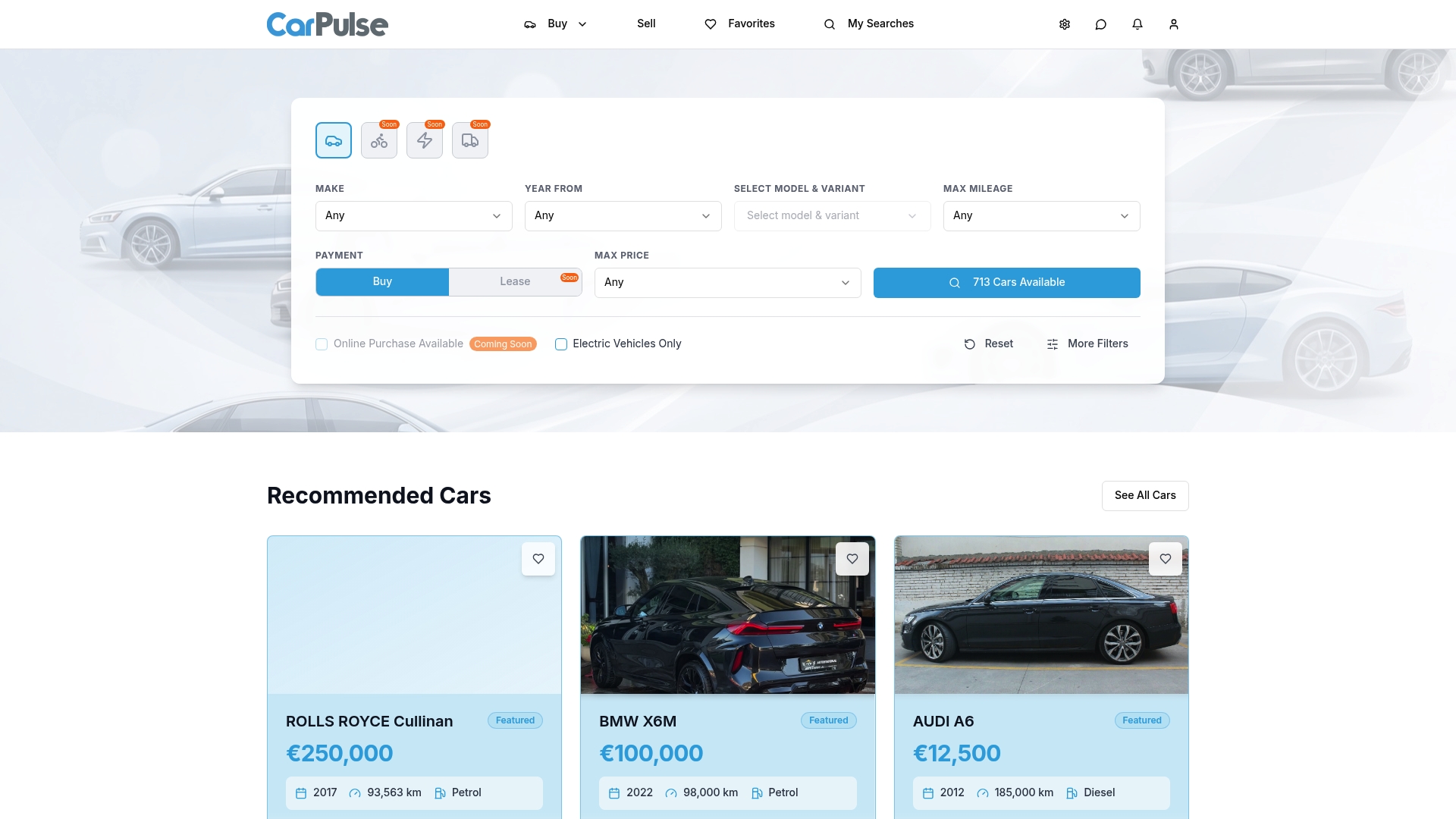
Before you meet a seller, open the listing, check that the VIN and year match the documents you are shown, and bring the checklist from this article.
FAQ
Do I need a notary to sell a car in Albania?
Not necessarily. DPSHTRR’s official page lists the sale-purchase contract as a valid document of acquisition, and since 2019 contracts could also be made at DPSHTRR offices rather than only at a notary. Ask the office which route applies to your case today, since procedures can change.
Can I use a handwritten bill of sale for a car?
A private handwritten note is not what the registration office lists. It names the sale-purchase contract, among other forms, as the document of acquisition. Use a proper contract so the buyer can register the car and the seller is protected.
How long does the buyer have to register the car in their name?
The buyer must file the ownership change within 30 days at the DPSHTRR office for their residence. After that, a fine under article 93 of the Road Code applies, as the official page states.
What if the buyer never transfers ownership?
The seller can file a declaration of sale at DPSHTRR. The fee is 1,500 lekë, and the seller needs an identification document and the original or certified document of acquisition.
How much does an ownership change cost?
The DPSHTRR lists a 2,500 lekë service fee plus 1,400 lekë for RBS verification. Other guides quote different totals, so confirm the amount at the counter before you go.
Sources
- Ndryshimi i Pronësisë së Mjetit, DPSHTRR
- Deklarimi i Shitjes së Mjetit, DPSHTRR
- Udhëzimi i ri, dokumentet për shitjen dhe blerjen e makinave te noteri, Panorama
- Jo më kontratë shit-blerje vetëm tek noteri, Shqiptarja
- Vërtetimi për pronësinë e mjetit pranë arkave të transportit rrugor, ATA
- Avoid 450,000 Odometer Frauds, Nomora