
Guides
Test Drive Insurance in Albania: Who Is Covered and Who Pays
Test Drive Insurance in Albania: Who Is Covered and Who Pays

In Albania there is no separate “test drive insurance” product. The car you test is covered by the owner’s compulsory motor liability policy (TPL), and that policy pays for damage to other people and their property when someone drives with the owner’s consent. It does not pay for damage to the car you are testing, and it does not pay for your own injuries if you cause the accident. That gap is what you need to settle with the seller before you turn the key.
This guide explains what the law says, what TPL covers and excludes, what to check and agree with a private seller or dealership, and what to do if something goes wrong.
TL;DR
- Every vehicle in Albanian traffic must carry compulsory TPL insurance, and the owner is responsible for keeping it valid. A test drive happens under that policy.
- TPL covers damage and injury to third parties when the car is used with the owner’s consent. It does not cover the car being driven or the injuries of the driver who caused the accident.
- Coverage can be lost if the driver has no valid license for the category, is over the alcohol limit, or is under drugs, so bring your license and drive sober.
- Before driving, confirm the policy is valid, who pays for damage to the car, and the route and duration, ideally in a short written note.
- After any accident: help the injured, call the police, notify the insurer, and do not repair anything before the insurer approves.
Table of Contents
- What the law requires on every Albanian road
- What TPL covers when a buyer drives
- What TPL does not cover
- When coverage can be lost
- What to agree with the seller before you drive
- Inspect the car before you drive it
- If an accident or damage happens
- Special cases
- Our perspective
- Find your next car on CarPulse
- FAQ
- Sources
What the law requires on every Albanian road
The basic rule comes from Albania’s law on compulsory insurance in the transport sector. Law No. 10 076 of 12 February 2009 obliges the owner of a means of transport to conclude an insurance contract before using it in traffic and to renew it for as long as the vehicle stays in traffic. A newer text, Law No. 32 of 16 March 2021, regulates compulsory transport insurance today and is the version to look at for current definitions and exclusions.
The road transport authority (DPSHTRR) explains that the TPL contract is concluded for a period of one year and renewed annually while the vehicle is in circulation. The driver must carry the policy or proof of the contract and the European Accident Report, and road control authorities check them along with other vehicle and driver documents.
For a test drive this means one simple thing: a car that is legally on the road has a TPL policy, and the seller can show it to you. If a seller cannot show valid insurance, do not drive the car.
What TPL covers when a buyer drives
TPL is liability insurance. It pays for harm you cause to others, not for harm to the car you drive. Albsig, an Albanian insurer, describes it as mandatory for all motor vehicles used in traffic in Albania, with the insurer assuming the insured’s civil liability toward third parties for material and health damages.
According to the law, the liability insurance covers damage to third parties caused by persons using the vehicle with the owner’s consent. That includes property damage, death, bodily injury, health deterioration and impairment of psychological integrity. DPSHTRR says the same in plain terms: compulsory TPL covers damages caused by other persons using the vehicle with the owner’s approval.
That consent is the key for a test drive. When a seller hands you the keys and agrees you will drive, you are using the car with the owner’s approval, which is the situation the compulsory policy is written for.
What it pays for
Albsig lists the covered items. Material damages include other motor vehicles, shops, houses, trees and animals. Health damages include injuries to various people, passengers among them, divided into temporary disability, permanent disability and death. Insurer INSIG adds that TPL also covers non-material damage to passengers in the vehicle at fault.
Coverage amounts
The consolidated text of Law 10076 sets minimum liability limits. Under Article 26, for other vehicles the minimum is 50,000,000 Albanian leks for death and health damages, and 10,000,000 leks for damage to property. Limits are set by law and can be updated, so ask the seller’s insurer or the policy document for the figures that apply today.

What TPL does not cover
This is the part most buyers miss, and the part that matters most when you are the one at the wheel.
Albsig states that TPL excludes damage to the vehicle responsible for the event and injury suffered by its driver. Probe Insurance makes the same point: TPL does not cover your own car. During a test drive, the “responsible vehicle” is the car you are testing and the “driver” is you.
In practice:
- If you hit a parked car or a wall, TPL pays for the other party’s damage, not for the dents in the car you are testing.
- If you cause a crash and are hurt, you are not entitled to compensation for that accident from the TPL. The law states that the driver who caused the accident is not entitled to compensation for damage from it.
- Damage to the seller’s car is a separate question. It could be covered if the owner has voluntary own-damage cover, and that depends entirely on the policy. Our guide to the types of car insurance in Albania explains how liability and voluntary cover differ.
So the honest answer to “who pays if I damage the car?” is: not the compulsory policy. It is whatever you and the seller agreed, backed by any voluntary cover the owner holds. That is why the conversation before the drive matters.
When coverage can be lost
The 2021 law lists situations in which the insured loses the right to coverage. Under Article 23, these include a driver who has no valid license for the vehicle category, has a suspended license, drives above the permitted alcohol limit or under narcotic or psychoactive substances, causes damage intentionally, or has an accident due to technical defaults they knew about.
For a buyer, this turns into a short list of habits:
- Bring your driving license and make sure it is valid for the category of the vehicle you want to test: a car, a motorcycle, a van or a truck each need their own category.
- Do not drive after drinking, even a little. Test drives are not the moment to find out where the limit sits.
- Report faults you notice to the seller and stop if the car is not safe. Continuing with a defect you know about is one of the listed grounds for losing cover.
- Make sure the owner agrees to you driving. The 2021 law defines an “unauthorized driver” as someone who drives without the owner’s permission and is not employed by the owner, not a family member and not someone to whom the owner delivered the vehicle. A test drive with the seller’s clear consent is the opposite of that.
These rules are why serious sellers ask to see a license before handing over the keys. Treat it as normal, not as an insult.
What to agree with the seller before you drive
The law protects third parties. It leaves the question of the tested car itself to the two of you. Spend five minutes on this before you start the engine.
Check the paperwork
- Ask to see the valid TPL policy or proof of the contract. Policies run for one year, so check the expiry date.
- Check that the plate and vehicle data match the documents. INSIG notes that vehicle data in Albanian insurance comes from DPSHTRR, the road transport authority, so the registration document is the reference.
- Ask whether the car has any voluntary cover for its own damage. If it does, ask what the deductible is.
Agree the terms of the drive
- Who rides along. For private sellers, it is common and sensible that the owner sits in the passenger seat. At a dealership, a salesperson usually does.
- Route and length. A 15 to 30 minute loop that includes city traffic and a stretch of open road shows you most of what you need. Agree it in advance.
- Who pays for damage to the car. Ask directly: “If something happens to this car while I drive, what is the arrangement?” A dealership may have its own terms for this. A private seller may have none, in which case a short written note signed by both of you protects everyone.
- Fuel, tolls and fines. Parking or speeding fines during your drive are yours to pay.
Nobody should feel awkward about any of this. A clear seller will have answers ready, and a clear buyer drives with more peace of mind.
Keep the note simple
A useful written note is only a few lines: both names and ID numbers, the plate number, the date and time, the agreed route, who bears damage to the tested car, and both signatures. Take a photo of it and a photo of the car from all four sides before and after the drive. Photos with timestamps settle most disagreements before they begin.
Inspect the car before you drive it
Walk around the car and note existing scratches and dents with your phone camera. Check the tires, lights and mirrors, and make sure the seller points out any warning lights on the dashboard. This protects you from being blamed for earlier damage, and it also lines up with the rule on technical defaults: if you know about a fault and drive anyway, coverage can be at risk.

If you are still comparing cars, a vehicle history check helps you rule out cars before you ever need to test them. On CarPulse, listings include data pulled from the VIN, which gives you a faster starting point for a conversation with the seller.
If an accident or damage happens
Stay calm and follow the order. The Albanian Insurance Bureau (BSHS) sets out the steps in its guidance on accidents in Albania:
- Help anyone injured and notify the police immediately.
- Get the other party’s details: the plate number of the other vehicle and the driver’s identity.
- Sketch the scene and take photos.
- Do not admit responsibility if you are unsure what happened.
- Notify the insurer immediately. In a test drive, the seller does this through their own insurer, so call them straight away.
- Obtain a scanned copy of the police violation record and, if asked, explain the cause of the damage to complete the Friendly Verification form.
- Do not repair the vehicle before the insurer has been notified and has approved it.
Then go back to what you agreed with the seller about damage to the tested car. This is the moment the written note pays for itself.
If you have a more complex situation, such as injuries, a dispute about who was at fault, or a damaged car with no voluntary cover, speak with the insurer first and, where needed, a lawyer who handles insurance claims in Albania.
Special cases
Dealership test drives
Dealerships that sell many cars often have standing arrangements for test drives, so ask about them. Request the terms in writing if you can, and ask whether the dealership holds voluntary cover on the cars it shows. Verified dealers on CarPulse are a good place to start when you want a professional counterpart with a clear process.
Extended test drives
Some sellers allow a longer trial, such as a full day or a weekend. Treat that as a different situation from a 20 minute loop. Agree the duration, the area you may drive in, the mileage limit, and who pays for damage in writing. Confirm with the owner that their insurer is aware.
Electric vehicles and other categories
The same compulsory liability logic applies to any vehicle in traffic, including electric cars. If you are testing a motorcycle, van or truck, your license must match that category, because coverage depends on it. Ask the seller about charging or fuel and any specific handling points before you leave.
Foreign buyers and visitors
If you are visiting from abroad and want to test a car, the same advice holds: bring your valid license and agree the terms in writing. Insurance for a foreign-registered car entering Albania is a different topic from test driving a local car, and the insurers’ pages cover it.
Our perspective
Most people looking for “test drive insurance” are really asking one question: if something goes wrong, who is responsible? In Albania the honest answer is that compulsory TPL protects other people on the road, and that you and the seller handle the rest by agreement.
We built CarPulse so that buying a car starts with clear information. Listings can be created with VIN-based autofill, so the details you read are tied to the vehicle, and we work with a network of verified dealerships so that you meet a professional counterpart when you want one. The more you know about the car before you visit, the shorter and calmer the test drive.
Our advice is practical. Shortlist two or three cars, call ahead, ask for the insurance and the terms of the drive, then book the visits close together so you can compare them while the memory is fresh. For the insurance side of your purchase, read our guide to car insurance in Albania before you sign anything.
Henri
Find your next car on CarPulse
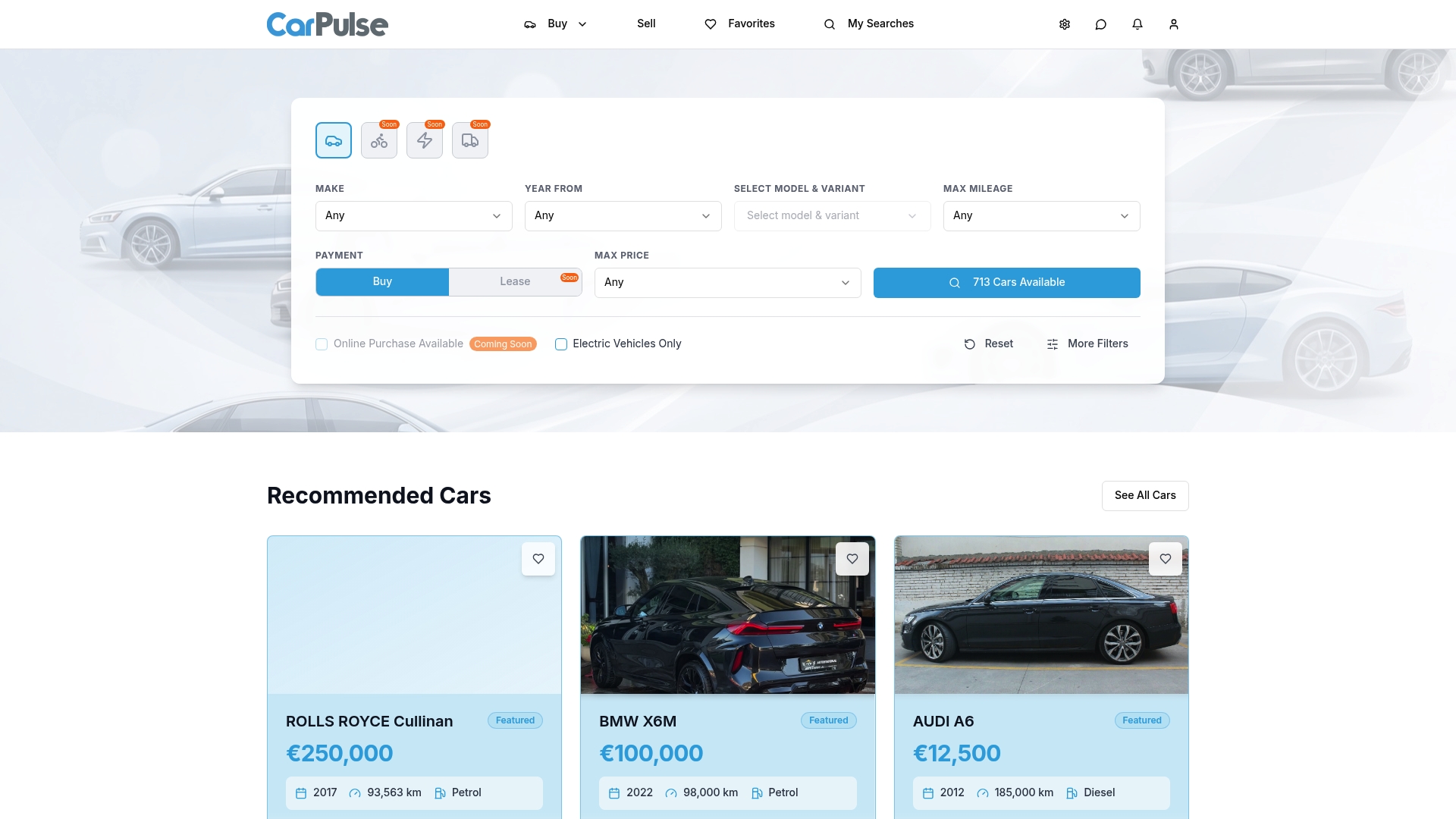
If you are ready to start looking, CarPulse lets you browse new and used vehicles in Albania and filter by make, model, year, mileage, price and fuel type. You can save searches, bookmark favorites and contact sellers directly. It is free for buyers: the platform is paid for by sellers who list vehicles. You can see everything on the CarPulse marketplace.
Selling a car yourself? Our listing plans are Basic at €14.99 per month and Premium at €29.99 per month, and you can compare them on the CarPulse pricing page. With VIN autofill, creating a listing is fast, and a complete listing with your insurance and documents ready makes test drives smoother for the buyers who visit.
FAQ
Do I need my own insurance to test drive a car in Albania?
There is no separate test drive policy required of the buyer. The car is covered by the owner’s compulsory TPL, which applies to damage caused to third parties by people driving with the owner’s approval. That policy does not cover the tested car itself, so agree with the seller who pays if it is damaged. If you hold voluntary cover, ask your insurer whether it extends to a car you do not own.
Does the seller’s insurance cover damage to the car I am testing?
Not the compulsory policy. TPL excludes damage to the vehicle responsible for the event. Damage to the owner’s car may be covered only if the owner has voluntary own-damage cover. Ask about it before you drive, and put the arrangement in a short written note.
What happens if I drive without a valid license or after drinking?
You risk losing the benefit of the insurance. The 2021 law lists driving without a valid license for the category, with a suspended license, above the alcohol limit or under narcotic substances among the situations where the insured loses the right to coverage. Always bring a valid license and never drive after drinking.
What documents should I ask to see before a test drive?
Ask for the valid TPL policy or proof of the contract, and check the expiry date, since the policy runs for one year. Compare the plate and vehicle data with the registration documents. Show your own driving license in return, and ask whether the car has any voluntary cover.
What should I do if I have an accident during a test drive?
Help anyone injured and call the police right away. Collect the other driver’s details, photograph the scene and avoid admitting fault if you are unsure. Tell the seller so they can notify their insurer immediately, and do not repair the car until the insurer approves, as the Albanian Insurance Bureau advises.
Sources
- Law No. 10 076 of 12 February 2009 on compulsory insurance in the transport sector
- Law No. 10076, consolidated text (Parliament of Albania)
- Law No. 32 of 16 March 2021 on compulsory insurance in the transport sector
- DPSHTRR: vehicle insurance and other obligations
- Albsig: motor liability insurance (TPL)
- INSIG: motor insurance
- Albanian Insurance Bureau: accident in Albania