
Guides
Dealer Lead Response Time: How Fast to Reply to Car Buyers
Dealer Lead Response Time: How Fast to Reply to Car Buyers

Dealer lead response time is the time between a buyer sending an enquiry about a car and your dealership making the first real contact. The shorter that gap, the better your odds of a test drive and a sale. The practical way to shorten it is to make every listing complete and accurate before the first message arrives, so your team can answer in minutes instead of researching the car first. On CarPulse, VIN-based listing fills in the vehicle details automatically, so each ad is ready for the buyer’s first question.
TL;DR
- Response time runs from the moment a buyer submits an enquiry to your first human attempt to reach them. An auto-reply should not stop the clock.
- The best-known benchmark is five minutes. Studies in the US, UK and Canada show most dealers miss it by a wide margin, so a fast reply is an edge.
- Measure two timestamps for every enquiry (arrival and first human reply), report the median, and track working hours and clock hours separately.
- The biggest delays come from unclear ownership, out-of-hours enquiries and incomplete ads. Fix those three first.
- A complete listing, a clear owner for each enquiry and a first reply that answers the buyer’s actual question do more than any slogan about speed.
Table of Contents
- What dealer lead response time actually measures
- What the research says about speed
- What typical dealers actually achieve
- Why this matters in the Albanian market
- How to measure your own response time
- What slows replies down
- How to improve response time, step by step
- What the first reply should contain
- Fast replies for EV and leasing enquiries
- Put reply speed to work on CarPulse
- Our perspective
- FAQ
- Sources
What dealer lead response time actually measures
A lead is any buyer who contacts you about a vehicle: a message through a listing, a form, a call or a chat. Response time is the elapsed time between that enquiry arriving and your first genuine attempt to reach the customer. One industry glossary defines it as the timestamp of the first outbound contact attempt minus the timestamp of lead receipt.
Two details decide whether your number means anything.
First, what counts as a response. Automatic acknowledgements are sent by software, not by your people. One CRM vendor warns that in many systems the reported time is the time until the automatic acknowledgement fired, which measures the software rather than the store. A useful definition stops the clock at the first human attempt: a call, a text, an email or a chat reply written by a person.
Second, a related measure called speed-to-lead stops only when a live conversation starts. One dealer-focused analysis points out that a store can auto-respond in seconds yet take 47 minutes to connect a live voice. The buyer experiences the second number, not the first.

What the research says about speed
The five-minute rule comes from a Lead Response Management study led by Professor James Oldroyd at MIT. As summarized by an automotive software publisher, leads contacted within five minutes were about 21 times more likely to qualify than those contacted after 30 minutes. That study covered sales leads in general, not only cars, so treat it as a direction, not a promise.
Car-specific data points the same way:
- A UK analysis of dealer enquiries found that the fastest responders converted 10% of enquiries into test drives, against 6% for slower ones.
- An analysis of more than a million follow-up activities found a 22.5% chance of an appointment when the lead was contacted within five minutes, falling to 13.6% after an hour.
- A 2026 study of 200 North American dealerships grouped stores by time to first live phone call. Stores that called within 60 seconds closed roughly 24% of leads, while those that never made a personal call within 24 hours closed about 6%.
The common thread is not a magic number. Buyers send the same message to several sellers, and the first one to give a useful answer usually holds the conversation.
What typical dealers actually achieve
Most sellers are slower than the benchmark, which is why speed is an advantage you can build.
| Study | Market | What it found |
|---|---|---|
| Impel, 2026 mystery shop | UK | Median time to a tailored first reply was 17 minutes for new cars and 35 minutes for used cars in hours, but over 13 hours out of hours |
| Clearline, April 2026 | Canada | Only 13.2% of 53 dealerships replied within five minutes; 28.3% did not reply within five days |
| Motor Finance Online, 2022 | UK | Average of 50 minutes to respond to an enquiry |
| KFZ Digital, 2026 | Germany | Dealers estimate 4.4 hours for website enquiries, while a mystery shop found an average of 12.5 working hours |
These are not Albanian figures, and we do not claim an Albanian average. They do show a pattern: the gap between what sellers believe they do and what buyers experience is large, and out-of-hours enquiries suffer most. The same UK report found that only about one in four replies answered all three of the shopper’s questions. Speed matters, but a fast reply that ignores the question does not win the buyer.
Why this matters in the Albanian market
Albania’s car market is growing and increasingly organized. In 2024, 99,400 vehicles were registered for the first time, 27% more than in 2023, and 24.4% of them went through dealerships, up from 21.75% a year earlier, according to the same report. Nearly 80% of vehicles first registered that year were over nine years old, so most buyers are comparing several used cars at once.
That is the situation where reply speed counts. A buyer searching used cars in Tirana, Durrës or Vlorë will often message three or four sellers in a single evening. The seller who answers with the mileage, the price and a viewing time while the buyer is still looking at the screen has a real head start. If you are also thinking about the buying side, our step-by-step used car buying guide for Albania shows what buyers check before they contact a seller, which tells you what your first reply should cover.
How to measure your own response time
You cannot improve a number you have never recorded. Here is a routine that works for a single private seller and for a dealership with a team.
Step 1: Record two timestamps
For every enquiry, write down when it arrived and when a person first answered. A spreadsheet is enough for a small lot. The point is that you only learn your own number if you measure, because self-assessment tends to be far kinder than reality.
Step 2: Agree what stops the clock
Decide in writing that the clock stops at the first human attempt on any channel. Opening a message does not count. An automatic text does not count. A call that goes to voicemail does count as an attempt, but track the first real two-way exchange separately, as one set of CRM guidelines advises.
Step 3: Decide how to treat nights and weekends
Measurement can run on clock hours, which shows the buyer’s real experience, or on business hours, which shows how your staff perform. Most teams track both. A message arriving at 8 pm is a business-hours delay of a few minutes the next morning, but a 12-hour wait for the buyer. Report both numbers.
Step 4: Use the median, not the average
A few enquiries that nobody touched for days will drag an average up and hide how well you handle the rest. The median tells you what a typical buyer experienced.
Step 5: Set a target you can keep
Templates for dealership service levels give illustrative targets such as a human reply within 15 minutes for marketplace messages and 30 minutes for web forms during working hours. Pick a target your team can meet on a normal Saturday, then tighten it. A realistic 30 minutes that you hit every time beats a five-minute promise you break.
What slows replies down
Three causes show up repeatedly.
No one owns the enquiry. When a message lands in a shared inbox, everyone assumes someone else has it. Name one person per day, with a backup. One dealership system documents a default alert to the rep after five minutes and optional reassignment after 15, using rules that count only configured business hours. You can copy the logic with a phone alarm and a rota.
Enquiries outside working hours. A Polish case model estimated that 61% of weekly enquiries arrived outside office hours. That is a modelled scenario, not Albanian data, but evening browsing is common in every market. Salespeople are also on test drives or off shift. As one industry executive puts it, consistently answering within a minute is nearly impossible with people alone, which is why a prepared answer matters.
Incomplete listings. When an ad leaves out the mileage, the number of owners or the fuel type, the first message from the buyer is a question you have to look up. The reply then takes longer and the buyer has already moved on. This cause is the easiest to remove, because it sits in your control before any enquiry arrives.
Giving up too early. The UK report found that a third of dealers stopped contact after one tailored attempt. A Dutch study recommends three to five contact attempts per lead. Speed gets the first conversation, persistence gets the visit.

How to improve response time, step by step
1. Build a complete listing first
The fastest reply is one that needs no research. On CarPulse, sellers, both private individuals and verified dealerships, list vehicles through VIN-based listing, which fills in the vehicle details from the VIN number. That cuts the time spent typing specifications and reduces mistakes, so the ad already answers the questions buyers ask first. The platform also offers an AI price evaluation and a vehicle history check, so you can quote a price and speak about the car’s record with confidence.
2. Prepare answers to the ten usual questions
Buyers ask the same things: Is it still available? What is the final price? Has it had accidents? How many owners? Can I see it Saturday? Write short answers for each car and keep them in a note on your phone. Then a reply takes a minute, not ten.
3. Give each enquiry an owner and a deadline
One name, one target time. If the owner is on a test drive, the backup answers. Use your clock-hour and working-hour numbers from the measurement routine to see whether this holds.
4. Cover the evening
Check messages at fixed points, for example at opening, midday, close and a short evening window. If the shop closes at 6 pm, a message sent at 9 pm should still get a reply early the next morning, before the buyer contacts someone else. Make that morning check the first job of the day.
5. Use the buyer’s channel
A national dealer guide recommends that the first personal response use the customer’s preferred channel and answer the actual question rather than a stock reply. If the buyer wrote in a message, reply in the message. If they called, call back.
6. Keep following up
One industry benchmark report found that 60% of leads that end up buying close within three days of the first enquiry, leaving a meaningful share after day three. When a buyer wants time to think, agree the next contact moment immediately and offer a choice, as the Dutch study suggests: “Shall I call you Thursday morning or afternoon?”
What the first reply should contain
A good first reply is short and does four things:
- Confirms the car is available today.
- Answers the exact question the buyer asked, with a figure where there is one (price, mileage, year).
- Offers two concrete viewing or call times.
- Names who the buyer is dealing with and how to reach them.
That last point matters more than it seems. A message signed by a person, with a direct number, is the opposite of a stock auto-reply. An auto-reply can still help if it tells the buyer what to expect next, such as a personal answer within a stated time, but it never replaces the human message.
Here is an example for a used hatchback: “Hello Arben, yes, the 2016 diesel hatchback is still available. The price in the ad is final for cash, and the history report is ready to show. Can you come Saturday at 11:00 or 15:00? I am Besa, and you can call me on this number.” It is four lines, it answers the question and it ends with a choice.
Fast replies for EV and leasing enquiries
Buyers interested in electric vehicles tend to ask different questions: battery details, charging and range. Keep a prepared answer for those on every electric listing. Leasing customers will want to know what monthly figure applies and what the contract includes. If you do not have that in front of you, say when you will have it and give a time. A specific promise to come back within the hour is better than silence. For the buyer’s side of the EV question, see our article on online car buying in Albania and the EV surge.
Put reply speed to work on CarPulse
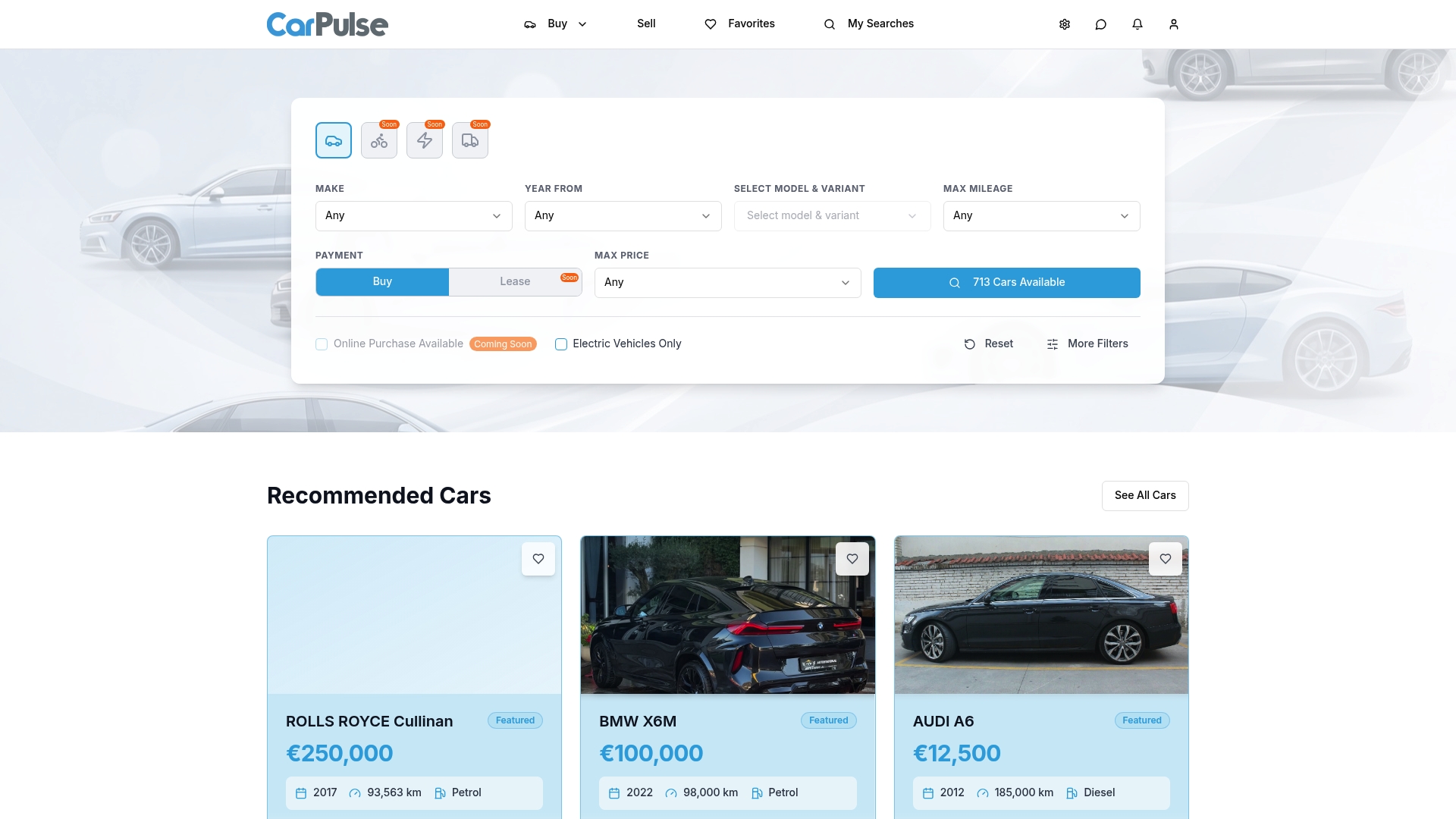
On CarPulse, buyers filter by make, model, year, mileage, price and fuel type, save searches, bookmark favorites and contact sellers directly. They do not pay to use the platform. Sellers pay to list: the Basic plan is €14.99 per month and the Premium plan is €29.99 per month, as published on the pricing page. There are separate categories for cars, motorcycles, vans, trucks, trailers, camper vehicles, agricultural and construction vehicles, all on the CarPulse homepage. The mobile app for iOS and Android keeps the marketplace in your pocket, which suits a seller who has to answer from the lot or on the road.
If you run a dealership and are thinking about the bigger picture, our guide to buying and selling cars in Albania covers how the process looks from both sides.
Our perspective
Speed gets attention, but preparation gets the sale. When a buyer writes to a seller, the seller who answers in five minutes with the right facts wins over the seller who answers in five hours with “call me.”
That is why we built CarPulse around the listing. VIN-based listing populates the vehicle details automatically, so an ad is fast to create and accurate. AI price evaluation helps a seller set a price that makes sense for the market. A vehicle history check gives buyer and seller the same facts to talk about. And a verified dealer network means buyers know who they are writing to.
Our aim is a marketplace where a buyer finds the car, contacts the seller and gets a useful answer without friction. For sellers, that means every enquiry arrives at a listing that is ready to answer it. Measure your own reply time, set a target you can meet every day, and keep your listings complete. The rest follows.
Henri
FAQ
What is a good lead response time for a car dealer?
The commonly cited goal is within five minutes, and top performers aim for about a minute. Most dealers are much slower, so a reply within 15 to 30 minutes during working hours already puts you ahead. Choose a target your team can meet consistently, then tighten it.
What is the five-minute rule for leads?
It is the finding from an MIT-led study that leads contacted within five minutes were far more likely to be reached and to qualify than leads contacted after 30 minutes. It describes how quickly buyer interest fades. It is a guide to priorities, not a guarantee of a sale.
Does an automatic reply count as a response?
No, not for measurement. Count the first attempt made by a person. An automatic message is useful if it sets expectations for what happens next, but your response time should stop only at a human call, text, email or chat reply.
How do I handle enquiries that arrive at night?
Track them separately as clock-hour and business-hour numbers. Check messages first thing every morning and answer the overnight ones before anything else. A prepared set of answers lets you do that quickly.
Sources
- Lead response time, VentaVid glossary
- CRM Lead Response Tracking, LeadLocate
- Lead Response Time vs Speed-to-Lead, Ringlead
- Speed to Lead for Car Dealers: The 5-Minute Rule
- Dealers take average of 50 mins to respond to enquiries, Motor Finance Online
- Quick Lead Follow-Up, TrackBack
- Dealer Lead Response Index, Ringlead
- After the Lead Lands, Impel
- Dealership lead response mystery shop 2026, Clearline
- Wie schnell muss ein Autohaus auf eine Anfrage antworten?, KFZ Digital
- New vehicle market growth, CNA Albania
- Lead Response Time: Benchmarks, Speed-to-Lead SLA and Template
- A Lead Response SLA Template for Dealerships, PostToMarket
- Leads, Dealersway Docs
- Enquiry handling: from 6 hr 40 min to 4 min
- Why Speed-to-Lead Is Still the Most Undervalued Revenue Lever, CallRevu
- Multi-Value, how to drive customer experience in automotive
- Acura Information Center, Lead Response
- 2025 Automotive Dealer Benchmarks Report, Foureyes