
Guides
Online Car Sales Workflow: A 2026 Guide for Dealers
Online Car Sales Workflow: A 2026 Guide for Dealers

The most effective workflow for online car sales is a hybrid process. Research, financing pre-approval, and trade-in valuation happen online; final signatures and registration close in person. That split is not a compromise. It is the optimal structure for maintaining compliance while delivering the digital convenience buyers now expect.
The core elements of a high-performing digital sales process:
- Lead capture across multiple contact paths: form fills, click-to-call, chat, and appointment requests
- CRM and DMS integration that moves deal data automatically between departments, eliminating manual re-entry
- Automated documentation that cuts paperwork time from 35 minutes to about 8 minutes per deal
- Structured CRM escalation so no lead goes cold due to a missed follow-up
- Event-based digital campaigns with hard deadlines that create real buyer urgency rather than passive browsing
Table of Contents
- What does the online car sales workflow look like stage by stage?
- How are dealerships adapting their traditional processes for online sales?
- What CRM workflow practices actually improve lead conversion?
- Carpulse gives Albanian dealers a structured path to online sales
- Key Takeaways
What does the online car sales workflow look like stage by stage?
Every deal moves through eight distinct operational stages, each with a clear owner and predictable failure points. Knowing where deals stall is how you fix the process before it costs you gross profit.
- Lead capture and qualification: Multiple contact options must be visible without scrolling. Form fill, text, chat, and appointment request all serve different buyer preferences. Incomplete data capture here creates problems downstream.
- Vehicle matching and data-driven pricing: Buyers arrive having researched pricing across multiple sites. Present trade values with supporting market data and explain your methodology. Transparency at this stage reduces negotiation friction later.
- Sales-to-F&I handoff: This is where deals most often stall. A connected pipeline transfers complete customer information, vehicle details, and sales notes automatically, so F&I knows what is coming before the physical handoff happens.
- Credit application and lender submissions: Submit applications to multiple lenders simultaneously rather than sequentially. Parallel submissions reduce wait time and surface better financing options for the customer.
- Lender decision tracking: Real-time dashboards show current approval status, pending stipulations, and expiration deadlines. Managers can intervene before an approval lapses.
- F&I product presentation: Video conferencing for remote F&I presentations retains the effectiveness of in-person product pitches. Static digital forms do not.
- Documentation and compliance: Automated contract generation triggers the moment lender approval arrives, not when an F&I manager gets around to it. Digital signatures eliminate paperwork delays.
- Funding and delivery coordination: Stipulation tracking with deadline alerts prevents lost deals from expired approvals. Automated stipulation tasks cut daily tracking time from 10–15 minutes to a few minutes.
Post-sale follow-up shortly after closing closes the loop, reinforces the buyer’s decision, and opens the door to service department introductions.
How are dealerships adapting their traditional processes for online sales?
The biggest misconception in digital retailing is that the process must be fully online. The dealerships consistently closing more units run a hybrid sales model where digital tools handle research, financing, and trade valuation, while the physical location handles the final experience and paperwork.
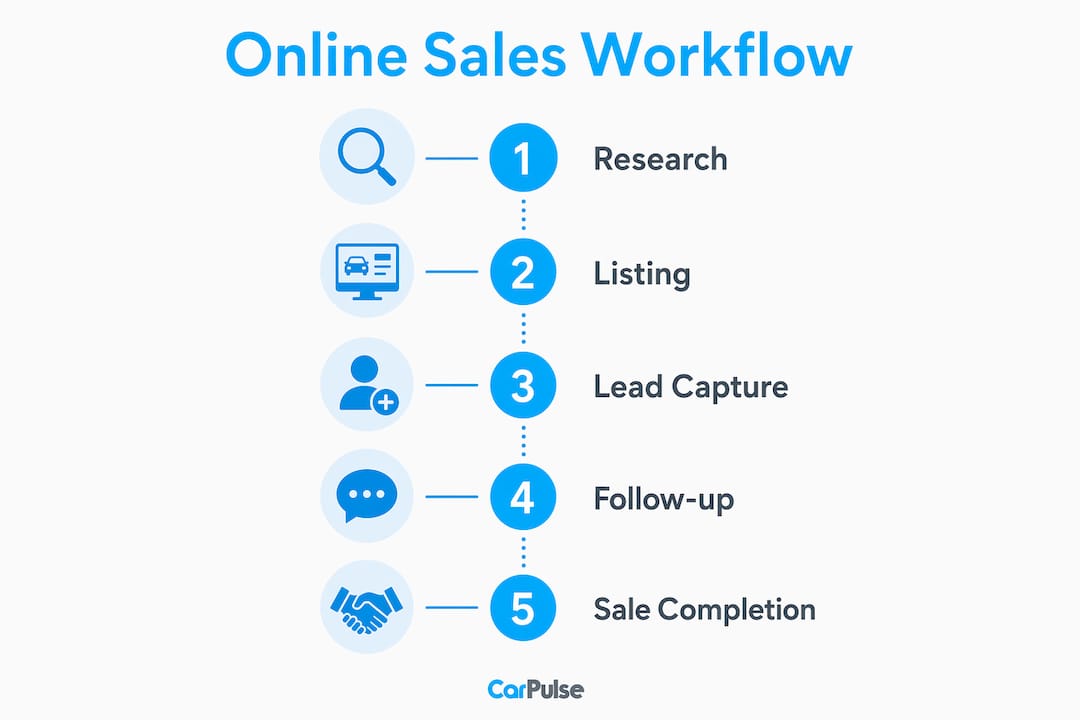
Legacy software stacks are the main operational drag. Dealerships moving to AI-native unified platforms for CRM, DMS, and F&I achieve better visibility and reduce lost leads caused by data silos between departments. When sales, F&I, and management all read from the same record, deals progress faster.

Digital marketing strategy has shifted accordingly. Always-on social advertising generates passive interest. Event-based campaigns with hard deadlines generate committed buyers. A shopper who submits a form on Saturday morning is a warm lead. That same lead reached for the first time Monday afternoon is a different conversation entirely.
Customer journey mapping now starts before the showroom visit. When a buyer has used your online trade tool, watched inventory videos, or built a payment scenario on your site, your BDC should reference that activity on the first call. It signals preparation and advances the conversation past the basics.
Pro Tip: Set up your vehicle detail pages (VDPs) with transparent pricing, benefit-driven descriptions, strong photo coverage, and at least four contact paths. A buyer who trusts your listing arrives warmer and negotiates less aggressively.

Secure payment processing and online transaction handling require the same attention as in-store compliance. Digital signature platforms, encrypted financing applications, and automated insurance verification all reduce friction without creating regulatory exposure.
What CRM workflow practices actually improve lead conversion?
CRM consistency beats speed alone, though speed still matters. Structured escalation protocols ensure no prospect is missed because a salesperson forgot to follow up. The system handles the reminder; the person handles the conversation.
The follow-up sequence is where most stores leave money on the table:
- A lead that does not answer the first call needs a text within minutes, an email referencing the specific vehicle, and a second call before the end of that shift.
- Multi-day sequences keep the store top of mind without crossing into harassment.
- Referencing the specific vehicle, the payment range discussed, and an event deadline turns a generic follow-up into a relevant conversation. That specificity separates a 20% appointment show rate from one above 70%.
BDC coverage must match lead generation timing. A lead submitted at 9 PM on a Friday needs a response that night, not Monday morning. Operating BDC coverage across a 14-hour daily window specifically addresses the gap between when leads arrive and when stores typically staff for follow-up.
Pro Tip: Never rely on salesperson memory for follow-up timing. Configure your CRM to auto-escalate any lead without a response after a defined window, and assign it to a manager or BDC rep automatically.
Connected CRM and inventory systems create a single source of truth that prevents double-bookings and eliminates manual re-entry between platforms. When a vehicle sells, every active lead tied to that unit should receive an automatic update and an alternative suggestion. That is the kind of workflow consistency that compounds over time.
Event deadlines improve appointment show rates in a measurable way. Buyers with a reason to commit to a specific time slot show up. Buyers with a soft “I’ll think about it” do not. Build hard deadlines into your campaigns and reference them explicitly in every follow-up touch.
Carpulse gives Albanian dealers a structured path to online sales
Dealers who want a structured, verified online sales channel without rebuilding their entire tech stack have a direct option in Carpulse. Albania’s largest automotive marketplace connects verified dealerships with in-market buyers through a platform built for the full online car sales process, from listing to lead contact.
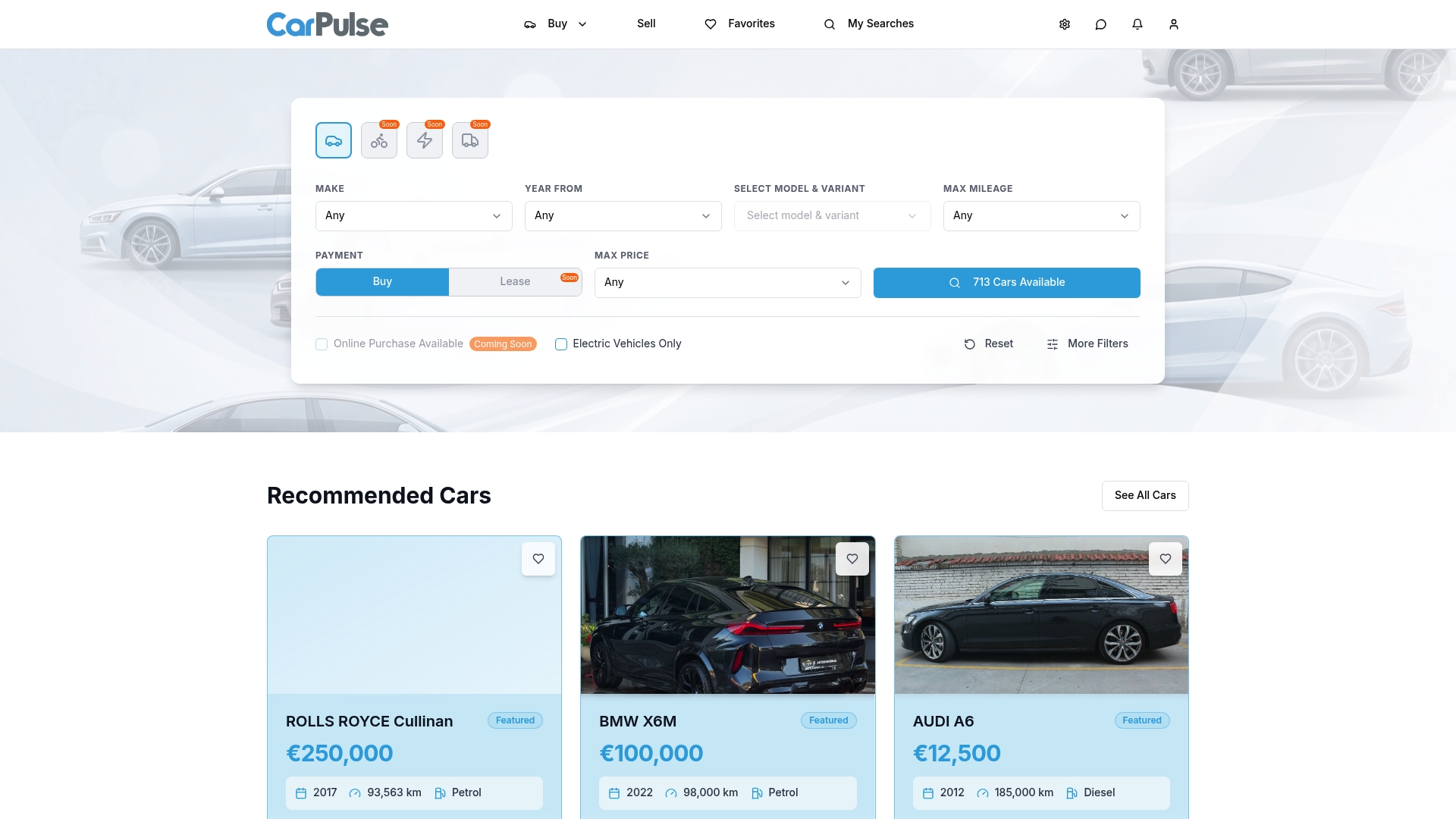
VIN-based listing automatically populates vehicle details, so inventory goes live accurately and fast. Buyers filter by make, model, year, mileage, price, and fuel type, which means the leads arriving at your dealership are already pre-qualified by intent. The mobile app extends that reach beyond desktop, matching the browsing behavior of today’s buyers. For dealerships looking to grow their digital presence in Albania, Carpulse’s marketplace is the starting point. List your inventory, connect with verified buyers, and put a structured digital workflow behind every inquiry.
Key Takeaways
A structured, hybrid workflow for online car sales consistently outperforms fully digital or fully in-person approaches by combining automation, CRM discipline, and timely human follow-up.
| Point | Details |
|---|---|
| Hybrid model wins | Online research and financing pair with in-person finalization for compliance and customer trust. |
| Automation cuts deal time | Document preparation drops from 35 minutes to about 8 minutes per deal with connected platforms. |
| CRM escalation prevents lost leads | Structured auto-escalation rules remove reliance on salesperson memory for follow-up timing, improving consistency. |
| Event campaigns lift show rates | Personalized, deadline-driven follow-up sequences can increase appointment show rates from 20% to above 70%. |
| Carpulse for Albanian dealers | VIN-based listing and verified buyer traffic give dealerships a ready-made digital sales channel. |