Guides
How to Write Car Descriptions That Sell Fast

How to Write Car Descriptions That Sell Fast

TL;DR:
- Writing honest, detailed descriptions that highlight key facts and benefits quickly converts browsers into buyers. Structuring listings with a clear introduction, key features, and a direct call to action enhances readability across platforms. Including verified history and transparent disclosures builds trust, increasing inquiries and faster sales.
A compelling car description is the single most powerful tool a seller has for turning a casual browser into a serious buyer. Knowing how to write car descriptions that convert means front-loading the right details, writing honestly, and speaking directly to what buyers care about. Platforms like Carpulse, Facebook Marketplace, and Craigslist each reward listings that are clear, specific, and easy to scan. Tools like Grammarly help you polish the copy, while a Carfax report gives you verified facts to back every claim. Get this right, and your listing works like a top salesperson around the clock.
How to write car descriptions that actually convert
Effective vehicle copy, the industry term for persuasive automotive listing text, starts with one principle: give buyers what they need to decide in the first two sentences. Leading with key facts like year, make, model, trim, exterior color, interior color, and mileage grabs attention and improves search visibility at the same time. Buyers scan listings quickly, and a strong opening line does double duty as both a hook and an SEO signal.

Think of your description as a silent sales rep. It cannot answer questions in real time, so it must anticipate them. A listing that opens with “2021 Toyota Camry XSE, Midnight Black exterior, Black leather interior, 34,000 miles” tells a buyer almost everything they need to decide whether to keep reading. That specificity builds immediate credibility.
The goal is not to impress buyers with vocabulary. It is to remove friction. Every sentence that makes a buyer pause, re-read, or wonder about a missing detail is a sentence that costs you a lead.
What details must every car listing include?
The non-negotiable core of any listing covers year, make, model, trim level, exterior color, interior color, and current mileage. Beyond those basics, condition and history details like ownership count, accident history, and service records are the details used-car buyers value most. A one-owner vehicle with a clean Carfax report and documented oil changes is worth more in copy than a vague “well maintained.”
Here is a checklist of what to include:
- Year, make, model, and trim (e.g., 2020 Honda CR-V EX-L)
- Exterior and interior color with material (e.g., Pearl White, black leather)
- Current mileage stated clearly
- Ownership history (one owner, two owners)
- Accident history (clean title, minor fender repair disclosed)
- Service records (dealer serviced, oil changes on schedule)
- Key features (sunroof, heated seats, Apple CarPlay, backup camera)
- Tire condition and recent repairs if relevant
- Asking price and reason for selling when appropriate
Including keywords naturally, such as “fuel-efficient SUV” or “low-mileage sedan,” also improves how your listing ranks in platform search results. You are not stuffing keywords. You are describing the car the way a buyer would search for it.
Pro Tip: If you have a Carfax or AutoCheck report, mention it explicitly. Phrases like “clean Carfax, available on request” signal transparency and filter out low-intent buyers before they even contact you.
How to structure your car listing for maximum readability
Structure determines whether buyers read your description or skip it. Concise, scannable descriptions with bullet points and short paragraphs hold buyer attention far better than dense walls of text. On mobile, which is where most buyers browse, a five-sentence paragraph looks like a wall. Three short paragraphs with a bullet list in the middle reads like a conversation.
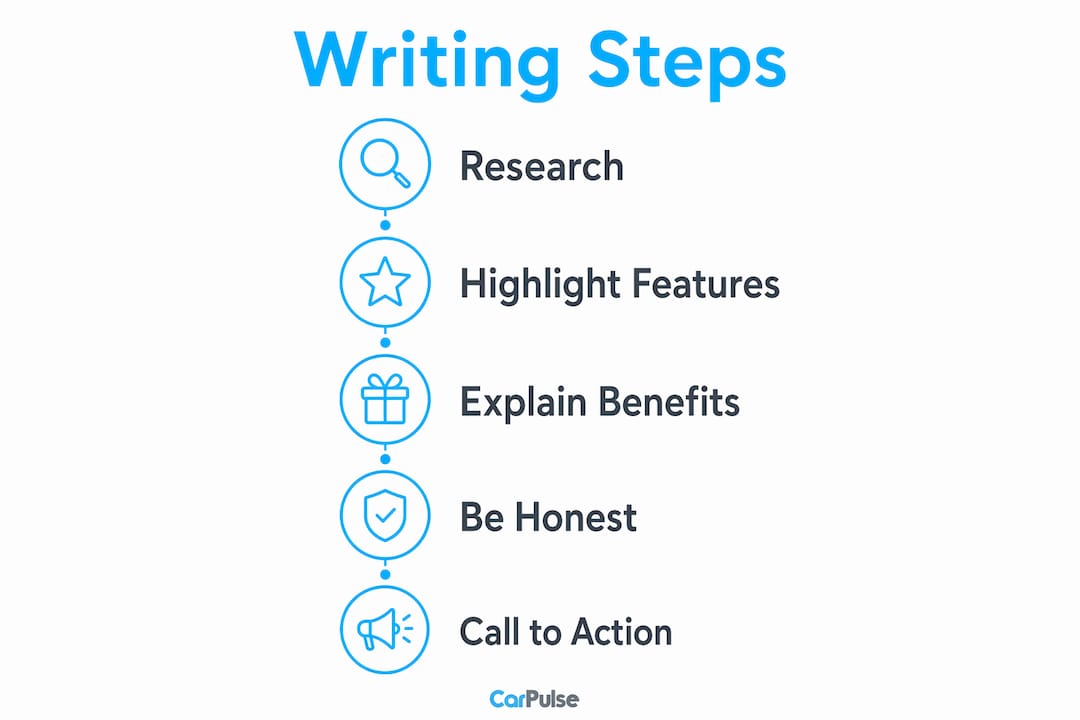
A proven three-paragraph structure works like this:
- Opening paragraph: Year, make, model, trim, color, mileage, and one sentence on overall condition or standout quality.
- Middle section: Bullet list of key features, recent service, and any disclosed issues. This is where scanners get their facts.
- Closing paragraph: Interior condition, ownership experience, and a direct call to action.
Honesty belongs in every section. Disclosing negatives like a repaired scratch or a replaced windshield builds trust and saves both parties time. Buyers who discover undisclosed issues during inspection walk away, and they rarely come back. Mentioning a minor flaw upfront actually increases perceived credibility.
End every description with a specific call to action. Phrases like “Message us to schedule a test drive” outperform vague closings like “serious inquiries only.” A direct CTA tells the buyer exactly what to do next and increases the likelihood they act.
Pro Tip: Read your description out loud before posting. If you stumble over a sentence, a buyer will too. Cut anything that sounds like a brochure and replace it with plain speech.
How do you turn car features into buyer benefits?
Features describe what a car has. Benefits explain why that matters to the person buying it. Connecting features to tangible advantages is what separates persuasive copy from a spec sheet, and it is the difference between a listing that generates inquiries and one that sits for weeks.
Here are concrete examples of the feature-to-benefit shift:
- Heated seats → “Stay warm on cold Albanian winter mornings without waiting for the cabin to heat up.”
- 35 MPG highway → “Spend less at the pump on your daily Tirana commute.”
- Backup camera with parking sensors → “Park confidently in tight city spots without stress.”
- Apple CarPlay and Android Auto → “Use your phone’s navigation and music without touching the screen.”
- One-owner, dealer serviced → “Know exactly where this car has been and how it was treated.”
Storytelling that connects vehicle history to the buyer’s experience improves conversions because it helps buyers imagine ownership. A sentence like “This CR-V spent its life on highway commutes and weekend family trips, never off-road, always garaged” paints a picture that a spec list cannot. Sensory and situational language triggers the emotional side of a buying decision, which is where most purchases are actually made.
Think about who is most likely to buy your specific vehicle. A family SUV with third-row seating should emphasize cargo space and safety ratings. A sporty coupe should lead with performance and driving feel. Matching your language to your likely buyer’s priorities makes the description feel personal rather than generic.
Pro Tip: Write one sentence that answers this question: “Why would someone love driving this car every day?” If you can answer it honestly and specifically, that sentence belongs in your description.
Platform-specific writing: Facebook Marketplace vs. Craigslist vs. Carpulse
Not every platform rewards the same style. Facebook favors shorter descriptions of 150 to 300 words with a strong hook in the first line and a clear CTA at the end. Craigslist buyers expect more technical depth, including VIN, full options list, and detailed condition notes. Carpulse listings benefit from complete, structured data because the platform’s search filters reward specificity in make, model, year, mileage, and fuel type.
The table below shows how to adapt the same vehicle listing across three platforms:
| Platform | Ideal length | Style | Must-have elements |
|---|---|---|---|
| Facebook Marketplace | 150 to 300 words | Hook-driven, punchy, emotional | Strong opener, 3 to 5 features, honest condition, CTA |
| Craigslist | 300 to 500 words | Technical, detailed, thorough | Full specs, VIN, price justification, contact info |
| Carpulse | 200 to 400 words | Structured, keyword-rich, clear | All filter fields completed, service history, photos |
For social platforms, leading with a hook like “One owner, zero accidents, priced to sell this week” grabs attention in a feed where buyers are scrolling fast. On classified sites, the same buyer is already in research mode and wants every detail you can provide. On Carpulse, completing every available field, including fuel type, transmission, and color, directly improves how often your listing appears in filtered searches.
Local keywords also matter. Mentioning “registered in Tirana” or “serviced at authorized dealer in Albania” adds geographic relevance and builds trust with local buyers who want to verify the car’s history. If you are selling through a dealership, include any perks like warranty coverage or financing options, since those details convert fence-sitters into buyers.
For sellers navigating the specifics of title status, the guide on selling rebuilt title cars offers platform-specific advice on disclosing history transparently while still writing a compelling listing.
Key takeaways
Writing effective car descriptions requires leading with verified facts, structuring for scannability, and connecting features to real buyer benefits on every platform.
| Point | Details |
|---|---|
| Front-load the essentials | Open with year, make, model, trim, color, and mileage in the first sentence. |
| Disclose honestly | Mention minor flaws upfront to build trust and reduce wasted inquiries. |
| Use feature-to-benefit language | Translate every spec into a reason the buyer’s life gets better. |
| Adapt to the platform | Match description length and style to Facebook, Craigslist, or Carpulse norms. |
| End with a direct CTA | Tell buyers exactly what to do next to increase contact rates. |
What I’ve learned from watching listings succeed and fail
After reviewing hundreds of vehicle listings across different platforms, the pattern is consistent. The listings that generate fast, serious inquiries share three qualities: they are honest, they are specific, and they treat the buyer like an intelligent adult. The ones that sit for weeks are usually vague, overly positive, or written as if the seller is afraid to commit to any real claim.
The biggest mistake I see is sellers writing dry feature lists and calling it a description. “Power windows, power locks, cruise control” tells a buyer nothing they could not find in a spec sheet. What it does not tell them is why this particular car, at this price, from this seller, is worth their time. Effective descriptions act like top salespeople by starting conversations, building trust, and painting vivid ownership pictures. A spec list does none of those things.
Honesty about negatives is the counterintuitive move that most sellers avoid and most buyers reward. I have seen listings with disclosed minor scratches or a replaced part generate more inquiries than polished listings that say nothing negative. Buyers know used cars are not perfect. When you acknowledge a flaw, you signal that everything else you say is also true.
Photos and descriptions work together, not independently. Clean, detailed photo galleries significantly improve buyer responses, but only when the description confirms what the photos show. If your photos show a beige interior and your description says “tan leather,” that small inconsistency plants doubt. Match every visual detail in your copy.
The sellers who move cars fastest are the ones who write as if they are having a conversation with the buyer, not filing a form. That mindset shift, from listing to selling, is the single most practical change you can make today.
— Henri
List your car on Carpulse and reach serious buyers faster
If you are ready to put these techniques to work, Carpulse gives you the tools to do it right from the start. Albania’s largest car marketplace lets you list your car with VIN-based auto-fill that populates your vehicle’s core details instantly, so you spend your time writing a compelling description rather than entering specs manually. The platform’s search filters reward complete, accurate listings with better visibility across make, model, year, mileage, and fuel type.
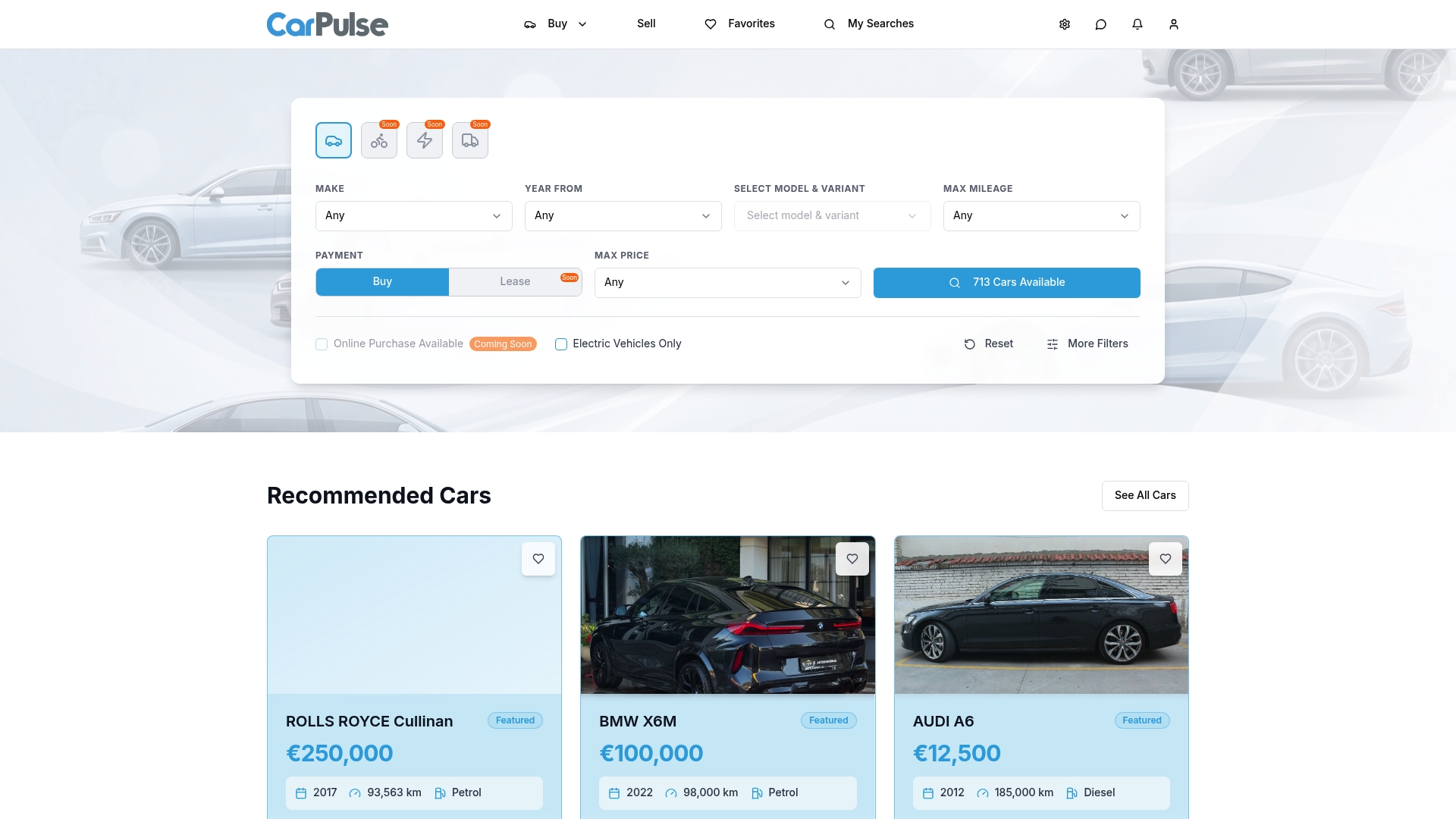
Whether you are a private seller or a verified dealership, Carpulse connects you with buyers who are actively searching. Visit Carpulse to create your listing today and put your car in front of the right audience.
FAQ
What should the first line of a car description say?
The first line should state the year, make, model, trim, exterior color, and mileage. This combination grabs buyer attention and improves search visibility on any platform.
How long should a car description be?
Length depends on the platform. Facebook Marketplace performs best with 150 to 300 words, while Craigslist and structured marketplaces like Carpulse support 300 to 500 words with full technical detail.
Should I mention problems in my car listing?
Yes. Disclosing known issues builds buyer trust, reduces wasted time during inspection, and signals that your other claims are credible. Buyers expect imperfections in used cars.
What is the difference between a feature and a benefit in car copy?
A feature is what the car has, such as heated seats. A benefit is why it matters to the buyer, such as staying warm on cold winter commutes. Tying features to advantages makes descriptions more persuasive and buyer-focused.
How do I write a car description for Facebook Marketplace specifically?
Lead with a strong hook, list three to five standout features, note condition honestly, and close with a direct call to action like “Message me to arrange a viewing.” Keep the total under 300 words and write in a conversational tone.