
Guides
How to Contact a Car Seller Online in Albania Safely
How to Contact a Car Seller Online in Albania Safely
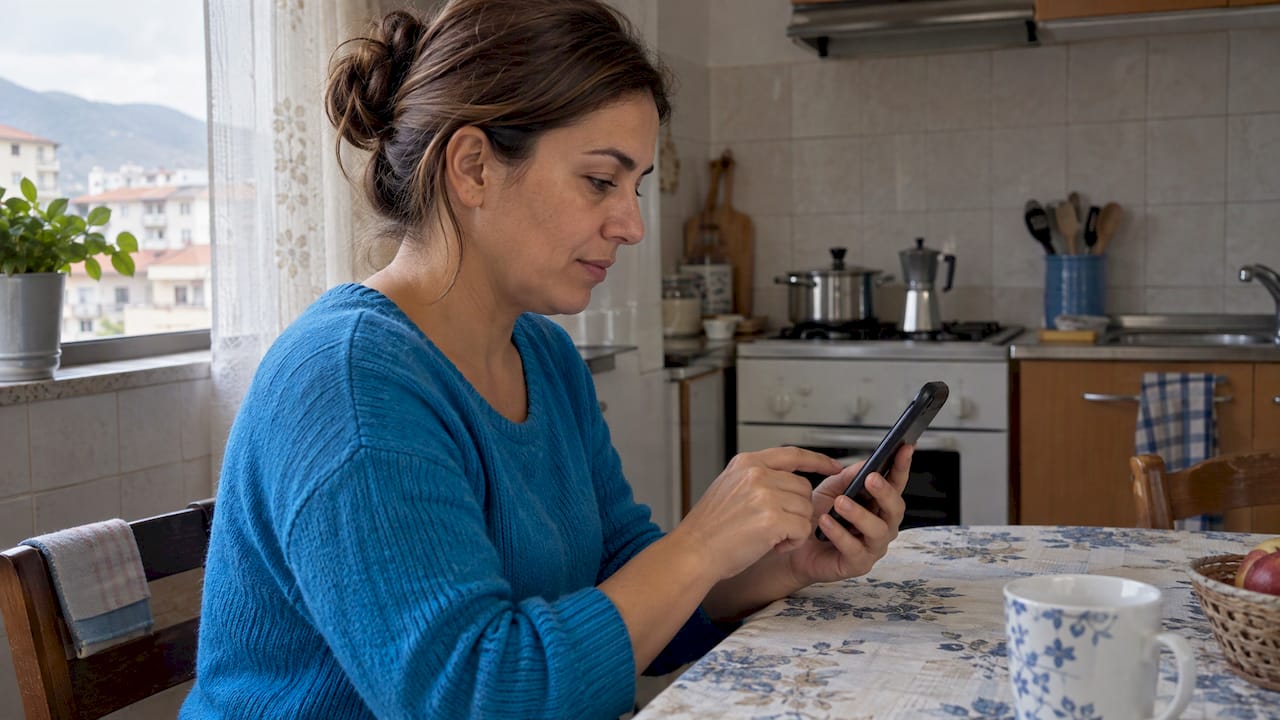
The best way to contact a car seller online is to message them from the listing itself, name the exact car, ask one question the ad does not answer (the VIN is the best choice) and offer two times you can see it. Do that on a platform where sellers are identified and the vehicle data is already attached to the ad, and you skip most of the guessing. On CarPulse you browse, save searches and contact sellers for free, and listings built from a VIN arrive with the vehicle’s details already filled in, so your first message can be short and specific.
TL;DR
- Write from the listing, name the car, ask one verifiable question (the VIN) and propose two viewing windows. Leave out price offers and long lists of questions.
- Check who the seller is before you send money or documents: identity, address, ownership papers, and whether they answer plainly.
- Be suspicious of a bargain price combined with a “reservation” deposit, a foreign bank account or an email that claims to come from a platform.
- View the car in daylight at a public or well-known place, bring someone, and finish the sale in the proper legal way, with traceable payment.
- From 11 May 2027, Albania’s new consumer law makes marketplaces say whether a seller declares itself a trader, which will make this check easier.
Table of Contents
- Which channel to use for the first message
- What a good first message contains
- Check the seller before you invest time
- Warning signs of an online car-sale scam
- Arrange a safe viewing
- What the law says about listings and sellers
- Why a verified marketplace makes first contact easier
- Our perspective
- Ready to sell or list a car?
- FAQ
- Sources
Which channel to use for the first message
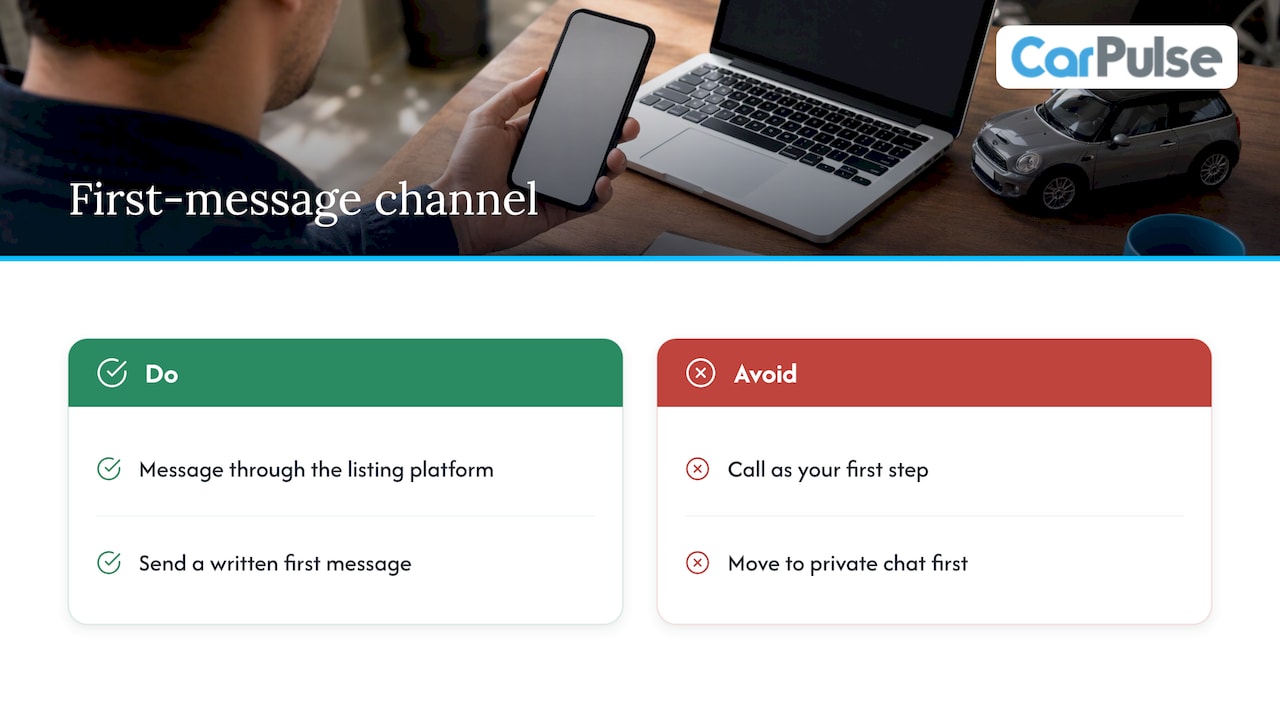
In Albania a used car is advertised in many places at once: classified sites, social media groups, dealer pages and messaging apps. The channel matters less than one principle: start where there is a record. A message sent through the platform where the ad lives is tied to a specific listing, a specific account and a specific date. If the seller later changes the price, denies the details or disappears, you still have the original ad and your exchange.
A phone call or a chat on a private messaging app is fine for the second step, once the seller has answered your first question sensibly. It is a poor first step. A call forces you to decide on the spot, and a seller who is also fielding ten other calls will answer vaguely. A written first message lets you think, lets the seller reply when they have the papers in hand, and leaves you with something to compare against the ad.
On CarPulse, buyers have a dedicated account where they can save searches, bookmark favorites and contact sellers from the listing. Buyers do not pay to use the platform. That matters in practice: you can shortlist five cars, message all five with the same structure, and compare answers side by side instead of juggling five phone numbers.
What a good first message contains
Sellers who list a car receive many messages that say only “Is it available?” or open with a low offer. Those are the ones that get ignored. A message that shows you read the ad and are able to come and see the car gets answered. A good one has three parts.
- The specific car. Name the make, model, year and one detail from the ad, such as the engine or the mileage shown. This proves you read it.
- One question the ad does not answer. The best question is the VIN, the 17-character vehicle identification number that identifies that one car. It is the only answer you can verify without trusting the seller, because the number can be checked against the documents and a history report.
- A time proposal. Offer two specific windows, for example “Thursday after 5 pm or Saturday morning”. It tells the seller you are serious and moves the deal toward a meeting rather than a week of messages.
A sample message in practice:
Hello, I am interested in the 2017 Volkswagen Golf 1.6 TDI in your listing. Could you send me the VIN so I can check the history before I come? I can see the car on Thursday after 5 pm or Saturday morning in Tirana. Which suits you?
Three things to leave out of the first message: a price offer (negotiate once you have seen the car), a wall of ten questions (ask the second round after the seller replies), and a request to call you. Keep your questions few and your tone plain.
Watch the reply as closely as you wrote the message. There is no good reason for a genuine owner to hide a VIN. A seller who ignores the question, changes the subject or says you can have it “at the viewing” is telling you something about the car or about themselves. You can end the conversation there and move to the next listing.
If the car was listed with VIN-based listing on CarPulse, the make, model, year and technical details come from the VIN itself, so there is less to ask and fewer chances for typing mistakes in the ad. Your question can go straight to the things only the owner knows: service history, number of owners, why they are selling.
Check the seller before you invest time
Most buyers focus on price and photos. The consumer-protection bodies of the European Union found in a joint report on cross-border car purchases that consumers are mainly interested in price and very few check the identity of the trader, even though it is often not difficult. Fraudsters rely on that. The same report recommends a set of simple checks that work just as well for a car in Durrës or Shkodër as for one abroad.
Identity and address
If the seller presents as a dealership or company, look the business up in the public company register and confirm the name matches the one in the ad. Check the address on a map. A showroom that turns out to be a residential building with no signage deserves a second look. If the seller is a private person, expect to see their ID at the meeting and to compare the name with the one on the ownership papers.
On CarPulse, dealerships can be verified, and the listing shows who you are dealing with. Our guide on three checks to verify an online car seller in Albania walks through the VIN, the documents and the seller profile in more detail.
Documents and the answers you get
The EU consumer centres advise asking the seller for the serial number, a copy of the ownership title, the odometer reading and the purchase invoice, and avoiding any seller who answers superficially or evasively. In Albania, an Albanian-language guide on buying a car online adds the same kind of routine: read the comments and look at the photos, check the history, check the seller’s reputation, ask for extra photos and video, and be wary of prices that seem too good to be true. It also recommends an independent inspection before you commit.
Two things worth doing at this stage:
- Compare the VIN on the ownership document with the VIN in the ad and, at the viewing, with the one on the car itself.
- Run a vehicle history check. It should show whether the car has been reported stolen, has a damaged-vehicle record or a rolled-back odometer. CarPulse offers vehicle history checks, and our article on how to check car history before buying in Albania explains what you need before you start and how to read the report step by step.
If the car was imported, ask when and from where. An imported car’s past before arrival is exactly what a history report is for.
Does the price make sense
A price far below similar cars is the oldest bait there is. Compare the asking price with similar listings by make, model, year, mileage and fuel type. Filtering on those same fields in CarPulse gives you a quick picture of the range. CarPulse also has an AI price evaluation, which helps you see whether a price sits where it should.
Warning signs of an online car-sale scam
The most common scam is the sale of a car that does not exist. The EU consumer centres’ report describes the pattern clearly:
- a bargain-priced listing with attractive photos;
- a deposit demanded to “reserve” the car before you have seen it;
- payment requested to a foreign account in the name of a private person or an unknown company;
- emails that imitate the platform or a shipping company;
- scans of identity documents sent to make you feel safe.
The report also notes that genuine intermediary platforms do not contact buyers to step into a transaction or to recommend how to pay. If you get a message like that, treat it as a red flag, not as help.
A quick table to keep beside you:
| What you see | What it can mean | What to do |
|---|---|---|
| Price far below similar cars | Bait for a deposit | Compare with similar listings, ask for the VIN |
| Seller refuses to share the VIN | Hidden history | End the conversation |
| “Reserve it now” with a transfer | Non-existent car | Pay nothing before you have seen the car and the papers |
| Seller abroad, “agent” will deliver | Fake seller and fake shipper | Do not proceed without an in-person check |
| Pressure to decide today | Pushing you past your checks | Slow down |
| Evasive answers on papers | Ownership or fines problem | Ask again in writing, then walk away if it continues |
Arrange a safe viewing
Once the seller has answered your first message and the VIN checks out, move to a meeting. Treat it as the main checkpoint, not a formality.
- Choose the place and time. Meet in daylight at a busy, known spot or at the seller’s registered premises. Tell someone where you are going, and bring a person who can look at the car with you.
- Match the papers to the car. Compare the VIN on the car with the VIN on the documents and in the ad. Check the seller’s ID against the name on the ownership papers.
- Inspect the car cold. Ask that the engine not be warmed up before you arrive, so you can hear a cold start. Look at the paint for signs of repair and check that the warning lights light up at key-on and then go off.
- Drive it. A test drive of 20 minutes or more, including some faster road, shows problems a short loop around the block hides.
- Have it inspected independently. A seller who refuses an inspection by your own mechanic is giving you an answer. Our guide to vehicle inspection in Albania explains what the inspection covers.
- Check for unpaid fines. The road transport authority DPSHTRR can confirm whether the vehicle has outstanding fines. Settle that question before the transfer, not after.
A short note on money: do not hand over cash in a parking lot. The transfer of ownership is completed before a notary, who is also the point at which the seller’s tax obligations are verified. Pay by a traceable method such as a bank transfer, and only against signed papers.
Those are guidelines for a private buyer. If the car is from a dealership, you gain extra protections, which brings us to the law.
What the law says about listings and sellers
Albania’s Consumer Protection Law No. 9902 of 17 April 2008 obliges traders to give consumers complete, accurate and clear information on the characteristics, risks and contract terms of goods, and it prohibits misleading commercial practices. For you, that means a dealership cannot hide key facts about a car in the listing, and a misleading ad is more than a nuisance.
The law is changing. According to a law firm’s summary of Consumer Protection Law No. 116/2026, from 11 May 2027 online marketplaces must identify whether a third-party seller declares itself to be a trader, explain when consumer law does not apply to sales between non-traders, and describe how contractual responsibilities are divided. In plain terms: the platform will have to tell you whether you are buying from a business, which carries consumer-law protections, or from a private person, where those protections are limited. Until then, ask the seller directly and look at how the account is presented.
Why a verified marketplace makes first contact easier
The steps above are the same on any channel, but they are faster when the platform helps. The reasons are practical:
- The listing carries the data. With VIN-based listing, details are populated automatically from the VIN, so the facts you ask about are already tied to the car.
- Sellers are identifiable. Private individuals and verified dealerships list through accounts, and you contact them from the ad.
- Your searching is organized. Saved searches and bookmarked favorites let you compare several cars and message them in the same way.
- History and price are in reach. Vehicle history checks and AI price evaluation help you test the VIN and the price before you drive anywhere.
- It costs buyers nothing. Buyers and people browsing do not pay to use the platform.
The app for iOS and Android means you can reply to a seller and review your saved cars on the phone, which suits the way most people arrange viewings.
Our perspective
Most of the bad experiences people describe after buying a car online begin the same way: a good-looking price, a quick chat on a private app, and a decision made before anyone asked for the VIN. The channel was never the problem. The missing record was.
That is why we built CarPulse around the car’s data rather than around the conversation. When a seller lists with the VIN, the vehicle details come from the number itself, so the buyer’s first question can be about the car’s story and not about whether the ad is accurate. When dealers are verified and buyers can run a history check and see an AI price evaluation, the first message becomes a short, confident one.
Our advice to buyers is simple. Write from the listing. Ask for the VIN. Offer two times to see the car. Then check what you are told before you spend an evening or a euro. Sellers who are serious welcome that, because it shows they are dealing with a serious buyer. Buyers do not pay to use CarPulse, so there is no cost to being careful, and no reason to skip a step.
Henri
Ready to sell or list a car?
If you are on the other side of the conversation, the same logic works for you. A listing built from the VIN, with accurate details and a verified profile, gets the better messages: buyers who name the car, ask one clear question and propose a time. CarPulse lets private sellers and dealerships list directly, and the plans are published at CarPulse pricing: Basic at €14.99 per month and Premium at €29.99 per month. Buyers can browse every category, from cars and motorcycles to vans, trucks, trailers, camper vans, farm and construction vehicles, on the CarPulse marketplace.
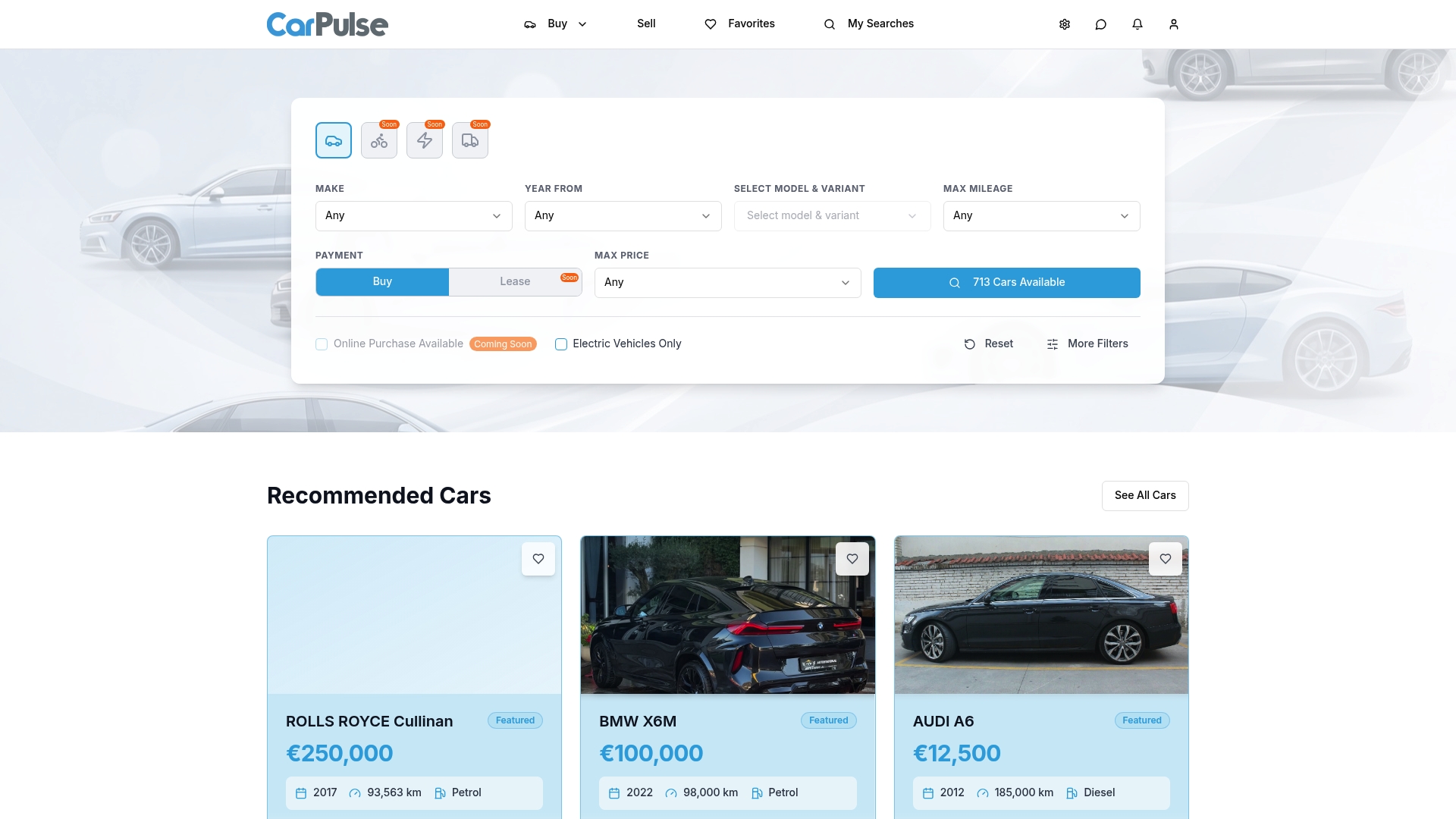
If you are buying, start by browsing and saving your searches. Everything on the buyer side is free to use.
FAQ
What is the best way to contact a car seller online?
Use the contact option on the listing itself, so your message is tied to the ad. Name the car, ask for the VIN and offer two times to view it. Move to a call only after the seller has answered sensibly.
Should I ask for the VIN in the first message?
Yes. It is the one answer you can verify without trusting the seller, and a genuine owner has no reason to hide it. If the seller avoids the question, you can drop that listing and move on to the next one.
Is it safe to pay a deposit to reserve a car I have not seen?
No. A deposit to reserve a car, especially to a foreign account or a private name, is the classic sign of a sale of a car that does not exist. Pay only after you have seen the car and the papers, and by a traceable method.
How do I know whether I am dealing with a dealer or a private seller?
Look at how the account is presented and ask directly. From 11 May 2027, Albania’s new consumer law requires marketplaces to say whether a seller declares itself a trader, which will make the answer visible on the listing.
Do buyers pay to contact sellers on CarPulse?
No. Buyers and users who browse listings and contact sellers do not pay to use the platform. The fees are paid by sellers who list vehicles.
Sources
- ECC-Net report on cross-border car purchases
- Albania Consumer Protection Law No. 9902 (2008), ERRU
- Albania Consumer Protection Law 116/2026, Tridens
- Si të blini veturë në internet pa u mashtruar, Botasot