
Guides
Car Sale Liability in Albania: What Sellers and Buyers Owe
Car Sale Liability in Albania: What Sellers and Buyers Owe

In Albania, selling a car does not end your responsibility for it until the ownership change is recorded. If the car stays registered in your name and the new owner skips taxes or collects fines, the burden can fall on you as the registered owner. The buyer, in turn, must register the car within 30 days or face fines of 10,000 to 40,000 lek. Both sides are protected by the same two things: a dated written contract and a quick transfer at the vehicle registration office.
This guide explains who is responsible for what before and after a sale, which deadlines and fines apply, and what to keep so a dispute can be settled in a single document.
TL;DR
- Until the transfer is registered, the seller stays the registered owner and can be pulled into the buyer’s unpaid taxes and fines.
- The buyer must register the change at the DPSHTRR office (the road transport directorate) within 30 days of the sale contract. Late registration costs 10,000 to 40,000 lek for cars.
- A seller who is worried can declare the sale act at DPSHTRR and release themselves from the vehicle without the buyer’s cooperation.
- Compulsory liability insurance passes to the new owner with the car and stays valid until the policy expires.
- Keep the dated sale contract, a record of the car’s condition and proof of the transfer. They settle most disputes about who owed what and when.
Table of Contents
- Who is liable the day after a car is sold
- The 30-day rule and what late registration costs
- What the seller is still on the hook for
- How a seller gets released
- What the buyer must do, and what to check first
- A worked example: a fine that predates the sale
- Records worth keeping
- Why listing the car properly helps both sides
- Selling with CarPulse
- Our perspective
- FAQ
- Sources
Who is liable the day after a car is sold
The key idea is simple: the state’s vehicle register decides who is responsible, not the handshake or the payment. A car has a registered owner. Fines, tax obligations and road incidents attach to that name until the register says otherwise.
That is why the road transport directorate, DPSHTRR, explains its rules the way it does. When it began offering ownership transfer directly at its counters without a notary, it said the purpose was to protect the seller, who must be released from responsibility for the vehicle and not burdened with the consequences of incidents or fines. It also calls updating the data after every sale a Road Code duty.
In practice that gives two different positions:
- The seller is exposed during the gap between handing over the keys and the registration of the new owner. The longer the gap, the longer the exposure.
- The buyer is responsible for closing the gap. The duty to register the car in their own name, as an individual or a company, lies with them.
The 30-day rule and what late registration costs
The buyer must register the ownership change at the DRSHTRR office for their place of residence within 30 days. The 30 days run from the sale contract. DPSHTRR’s ownership-change page lists the fines under Article 93 of the Road Code for cars, motorcycles and trailers:
| Delay after the 30 days | Fine for cars, motorcycles, trailers |
|---|---|
| Over 30 days up to 90 days | 10,000 lek |
| Over 90 days up to one year | 20,000 lek |
| Over one year | 40,000 lek |
Agricultural machines follow a shorter schedule under Article 109: 2,500, 5,000 and 10,000 lek for the same three stages, counted from 10 days. A December 2025 notice reported by Ekofin confirms the same split: 30 calendar days for cars, motorcycles and trailers, and 10 days for agricultural machines.
For a seller, these fines are not the main point. They matter because they show how long a car can sit in the register under the wrong name. A buyer who waits a year has also left the seller exposed for a year.

What the seller is still on the hook for
Three kinds of obligation can follow a car after it leaves your driveway if the register still shows you.
Taxes and fines
DPSHTRR has warned that a sold vehicle remaining in the seller’s name may burden the seller if the buyer fails to pay taxes or fines, as reported by the Tax Administration. Speeding and parking fines are issued to the registered owner, so a camera does not know the car has been sold.
Insurance
Under Law No. 32/2021 on compulsory insurance in the transport sector, the owner of a vehicle must hold a liability contract and renew it as long as the vehicle stays in circulation. The cover pays for third-party damage regardless of who was driving, including other people using the car with the owner’s approval.
The handover is simpler than many sellers fear. DPSHTRR states that on a change of ownership the rights and responsibilities under the insurance contract pass to the new owner and remain valid until the policy expires, according to Article 15 of the same law. The policy is a one-year contract that must be renewed annually while the car circulates. The buyer therefore does not need a new policy on day one, but must renew on time.
Incidents
The protection DPSHTRR describes is meant to cover the consequences of possible incidents as well as fines. If the car is involved in something after you sold it and the register still lists you, you will be the first name anyone sees. A dated contract and a completed transfer are the answer.
How a seller gets released
A seller does not have to wait for a slow buyer. According to the Tax Administration’s report on DPSHTRR’s guidance, the seller has the right to declare the sale act among the documents at DRSHTRR and release themselves from the sold vehicle, while the buyer keeps the duty to register the car in their own name.
A practical sequence for sellers:
- Check the car before you sell. The car needs to be active in the system, with no DPSHTRR debts or blocks, so that it can legally be sold. Our guide to checking sales penalties before you sell walks through it.
- Write a dated contract. Include both parties’ full names and ID numbers, the VIN, plate number, price, the date, and the odometer reading.
- Hand over the documents you owe the buyer. The list is in our article on the documents you need to sell a car.
- Record the condition of the car at handover, with photos and a signed note. This covers disputes about damage or later incidents.
- Do the transfer together at the DPSHTRR counter whenever you can. Since December 2023 it can be done there directly, without a notary.
- If the buyer will not show up, declare the sale act at DRSHTRR yourself, as described above, and keep the receipt.
What the buyer must do, and what to check first
Buyers carry the registration duty, but they also inherit problems if they do not check. The documents DPSHTRR asks for at the ownership change are:
- your ID (a power of attorney for a representative, and for company representatives the business registry confirmation and an authorization)
- a valid document proving you acquired the car, such as the sale contract
- confirmation from the Insured Assets Register
- the circulation permit and, for old-format permits, the ownership certificate
The December 2025 notice adds insurance and proof that the seller has no unpaid vehicle tax, technical-control fines or other blocks. DPSHTRR’s online services page lists the identity documents required for each type of owner, including a valid residence permit for foreign residents.
Before paying, ask the seller to show the car’s status on e-Albania. Unpaid obligations can block the transfer, so a car with debts is a car you may not be able to register in your name. For the whole procedure see our guide to car ownership transfer in Albania, and if the car is newly imported, how to register a car in Albania.
Two more rules affect buyers on the road:
- The owner or user must carry the insurance policy, or other proof of the compulsory contract, and the European Accident Report in the vehicle.
- A vehicle without compulsory liability insurance cannot pass technical inspection, and entities cannot get temporary plates without it, according to DPSHTRR. If you need to drive the car before final plates, read about the Targim Provizor.
A worked example: a fine that predates the sale
A 2024 report by the news outlet CNA shows how the dates work. A buyer purchased a car in October 2023 and changed ownership in November. Later he received a fine of 300,000 old lek dated July 10, 2023, in a place he had never been. The expert quoted in the case, Artur Sulçe, argued that the fine belonged in the previous owner’s name and that the fines commission can undo the decision and pass it to the first owner.
What proved it? The sale contract dated October 18, 2023, and the new traffic permit issued in November. Together they show that the offense came before the buyer owned the car.
The same expert noted something that matters for timing: the delay in registration also costs the fined person the Road Code’s right to pay half within 15 days. Prompt transfer protects the buyer’s wallet as well as the seller’s name.
The lesson works in both directions:
- Sellers: a fine dated after your contract should not be yours. Your contract and the transfer date are the evidence.
- Buyers: a fine dated before your contract should not be yours. Do not pay it. Contest it with the contract.
Records worth keeping
Keep these for as long as the car could produce a bill, which in practice means at least until the transfer is complete and for a sensible period afterward:
- the signed sale contract with the date and the VIN
- ID copies exchanged between the parties
- the handover note with odometer reading and photos
- proof of payment (bank transfer rather than cash where you can)
- the DPSHTRR receipt or confirmation of the transfer or sale declaration
- the insurance policy and any notice about the change of owner
A record like this turns a dispute over who owned the car on a given date into a matter of reading a page.
Why listing the car properly helps both sides
Many liability disputes start with unclear facts about the car itself: the wrong year, a trim that does not match, a mileage no one can verify. A VIN-based listing reduces that. On CarPulse, sellers enter the VIN and the vehicle’s details are filled in automatically, so the listing begins with accurate data rather than retyped guesses. Buyers can then compare that data with the car’s papers before meeting.
It is also worth knowing who pays on a marketplace like ours. Browsing and contacting sellers costs buyers nothing. Sellers, private or dealers, pay to list.
Selling with CarPulse
If you are about to sell, put the car in front of buyers on a platform built for Albanian sellers and verified dealers. Listing plans are €14.99 per month (Basic) and €29.99 per month (Premium). Our tools include VIN autofill, AI price evaluation and a vehicle history check, so the price and the facts in the ad match what you will later write in the contract. See the plans on the pricing page or browse the marketplace.
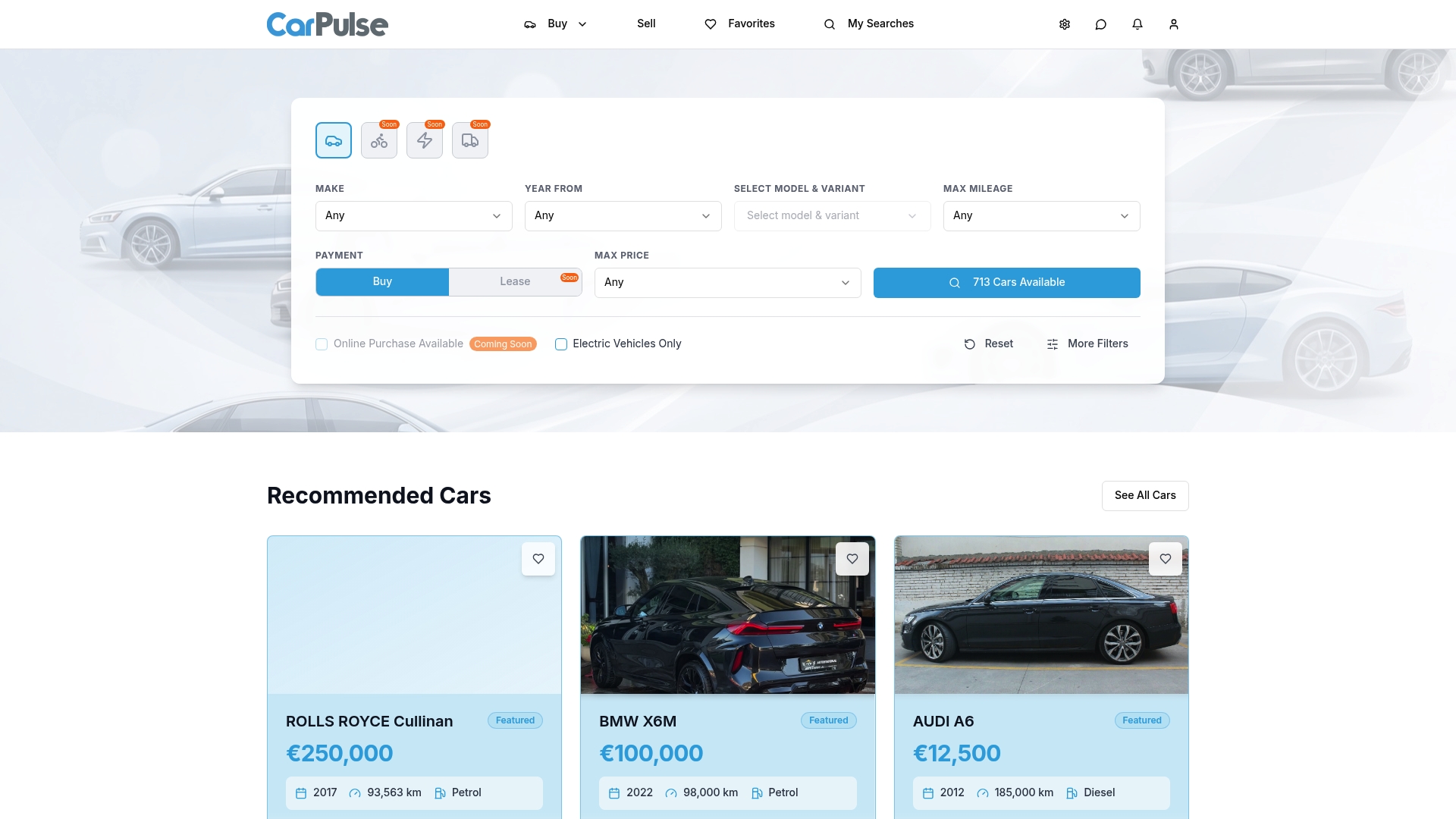
Dealerships get the same listing flow, in a network of verified dealers, which matters when many cars change hands each month and every one needs a clean paper trail.
Our perspective
Most liability problems we hear about are not about the law. They are about time. A car is sold on a Saturday, the buyer promises to go to the office next week, and three months later a fine arrives in the seller’s name.
Our view is that the sale should be treated as two events: the agreement and the transfer. The agreement is easy to make. The transfer is what ends your responsibility, so schedule it before you hand over the keys, ideally with both parties at the counter.
This is also why we built the listing around accurate vehicle data. When the VIN fills in the details, when the price is checked against an AI evaluation and the history is visible, the buyer and seller start from the same facts. A deal that starts from the same facts is much easier to finish cleanly.
For dealers, we would add that a verified profile and a repeatable routine (contract, handover note, same-week transfer) protect your name across dozens of sales.
Henri
FAQ
Am I still responsible for a car after I sell it in Albania?
Yes, until the ownership change is registered, you remain the registered owner. DPSHTRR warns that a sold car left in the seller’s name can burden the seller if the buyer does not pay taxes or fines. You can release yourself by declaring the sale act at DRSHTRR.
How long does the buyer have to transfer the car?
Thirty calendar days from the sale contract for cars, motorcycles and trailers, and 10 days for agricultural machines. For cars, the fine is 10,000 lek after 30 days, 20,000 lek after 90 days and 40,000 lek after one year of delay.
Does the insurance stay with the car or the seller?
It stays with the car. On a change of ownership, the rights and duties under the compulsory insurance contract pass to the new owner until the policy expires. The buyer must then renew it each year while the car is in circulation.
What if I get a fine for a date before I bought the car?
Contest it with your sale contract and the date of the transfer. In a 2024 case reported by CNA, a contract dated October 18, 2023 showed that a July 2023 fine predated the buyer’s ownership, and an expert said it should return to the previous owner.
Sources
- Ownership change, penalties and obligations (Tax Administration, 2023)
- Law No. 32/2021 on compulsory insurance in the transport sector (AMF)
- Vehicle insurance and other obligations (DPSHTRR)
- Change of vehicle ownership (DPSHTRR)
- e-Albania services (DPSHTRR)
- Ownership transfer at DPSHTRR counters without a notary (DPSHTRR, 2023)
- Change of ownership of purchased vehicles and deadlines (Ekofin, 2025)
- Buys a car, gets a fine in Maliq without ever being there (CNA, 2024)