
Guides
Former Rental Cars in Albania: 6 Checks Before You Buy
Former Rental Cars in Albania: 6 Checks Before You Buy

For most budget-minded buyers, a former rental can be a smart way to get a newer car at a lower price, as long as you verify its maintenance and have it inspected. Consumer Reports notes that rental sellers often add a limited warranty. The main caution is hidden damage and heavy cumulative mileage. Here is how we would weigh it at CarPulse.
TL;DR:
- Rental companies may insure themselves, so clean history reports can miss damage; pair VIN checks with an independent body, frame, and mechanical inspection.
- Ask for service logs, recall repairs, remaining factory coverage, seller warranty limits, and return terms in writing before paying; verbal promises offer little protection.
- Compare the same model year and mileage with private listings, then deduct imminent tire, brake, or major service costs from your offer.
- Tell insurers about the rental history and request quotes for the exact VIN; get financing preapproval because higher mileage can limit lender options or increase rates.
Table of Contents
- 1. Why former rental cars can be a good value
- 2. Realistic downsides and what they cost you later
- 3. How to evaluate a specific ex-rental: step-by-step checklist
- 4. Paperwork, warranty and return policies to confirm
- 5. Price and negotiation: turning findings into a fair offer
- 6. What rental use gives you that other used cars may not
- 7. How rental use can affect insurance and financing
- 8. Ex-rental vs. personal and fleet vehicles
- 9. Our perspective: why a VIN-first marketplace lowers your risk
- 10. Find well-documented former rentals with CarPulse
- FAQ
- Sources
1. Why former rental cars can be a good value
Fleet cars tend to be recent models, so you get current safety and tech features without the price of a new car. Rental operators also sell on a schedule, which usually means the discount is built into the asking price rather than something you have to chase.
- Lower price: ex-rentals commonly list below comparable privately owned used cars, because buyers worry about fleet history.
- Newer models: fleets cycle vehicles out early, so inventory skews recent.
- Scheduled maintenance: many fleets follow manufacturer service intervals and keep records.
- Seller protections: some sellers include a limited warranty or a short return window.
Worth knowing: major rental companies sell former fleet vehicles through online inventory with haggle-free pricing, and some pair them with short return periods and limited warranty coverage.
That combination is rare in the used market. A private seller almost never offers a return window, and a small lot may not offer a warranty at all.
2. Realistic downsides and what they cost you later
A discount always has a reason. With ex-rentals, the reasons are predictable, and you can price them in before you buy.
- Higher cumulative mileage: rental cars rack up miles quickly, and many of those miles are short trips with cold starts that are harder on engines and brakes.
- Cosmetic wear: stained seats, scuffed trim and door dings pile up when many drivers share a car, and they can drag down resale value.
- Unreported damage: fleets frequently self-insure, so an incident may never reach a history report.
- Held past the fleet cycle: a car kept longer than normal may be due for tires, brakes or major service soon after you buy it.
Pro Tip: A clean history report is not proof of a clean car. Always pair it with a hands-on body and frame inspection.
Interior problems are fixable if you catch them early. Persistent odors or damp smells, for example, can point to moisture trapped in the cabin, and safe interior mould removal is worth researching before you commit to a car that smells off.

3. How to evaluate a specific ex-rental: step-by-step checklist
Follow these steps in order. Most can be done remotely before you ever visit the car.
- Get the VIN and run a vehicle history report. If you can, compare more than one provider, since coverage differs.
- Ask for service logs and recent receipts, and confirm recall repairs by VIN.
- Order an independent pre-purchase inspection that covers frame and body, suspension, tires and, on an electric car, battery health.
- Check tire date codes and look for uneven wear that hints at alignment or suspension trouble.
- Test drive on varied roads and listen for clunks, pulling, harsh shifts or vibration.
- If the report is suspiciously empty, insist on a deeper inspection rather than reading silence as good news.
Consumer Reports advises independent inspections and VIN-based history reports because fleets may self-insure and not every event appears in history services. Our own pre-purchase checklist covers the inspection items in more depth, and our guide to checking real mileage helps you confirm the odometer reading.
| Check | Where to do it | What a red flag looks like |
|---|---|---|
| VIN history report | Online, before visiting | Gaps in records or mismatched details |
| Service records | Ask the seller | No receipts for routine servicing |
| Tire date codes | In person | Mismatched or very old tires |
| Frame and body | Independent inspection | Uneven panel gaps or repaint signs |
| Test drive | In person | Pulling, clunking or rough shifting |
4. Paperwork, warranty and return policies to confirm
Promises only help if they are written down. Before you pay, confirm these items in writing.
- Factory warranty: some models may carry years of remaining coverage, so check the in-service date and what time or mileage is left.
- Recall and maintenance receipts: ask for proof that open recalls were repaired and routine servicing was done.
- Seller warranty: get the duration, mileage cap and exclusions in writing, because “limited” can mean very different things.
- Return or buyback policy: request the terms in writing, plus any roadside assistance details if offered.
A written policy beats a verbal one every time. If a seller does not put a promise on paper, treat that as part of the price.
5. Price and negotiation: turning findings into a fair offer
Start with comparables: the same model, year and similar mileage from non-fleet sellers. That gives you a target price and a clear walk-away number.
- Add the near-term costs: if the car needs tires, brakes or a major service soon, subtract that from your offer.
- Use gaps as leverage: missing service records, visible wear or inspection findings are legitimate reasons to ask for less.
- Value the protections: a warranty or trial period has real worth, so compare final prices with that in mind.
Stay calm and specific. Showing a seller a written inspection report is far more persuasive than saying the car “feels pricey.” Our guide to negotiating a used car price walks through tactics that work.
6. What rental use gives you that other used cars may not
Beyond price, ex-rentals can carry advantages that are easy to overlook. Rental companies have a financial reason to keep cars running reliably, because a car in the shop earns nothing. That pushes many operators toward on-time oil changes, tire rotations and recall work, often done at set intervals regardless of how the car feels.
Fleet cars are also typically bought in volume at current trim levels, so you often get a recent model year with up-to-date infotainment and driver-assistance features. Many have had a professionally managed life, rather than a string of owners with different habits.
There is a caveat, and it is the same one we keep returning to. Industry reporting describes fleet operators managing vehicle lifecycle and remarketing closely, and points to inconsistent documentation and operator practices as a concern for the industry itself. In plain terms, good maintenance is likely, not guaranteed. The benefit becomes real only when you can see the service log. A car with a thick folder of receipts is a much better bet than one with the same badge and no paperwork.
7. How rental use can affect insurance and financing
Rental history can touch your costs in ways buyers rarely ask about, so raise these questions early.
On insurance, tell your insurer the vehicle was a former rental when you request a quote. Some insurers treat a car’s past use as a rating detail, and an accurate disclosure avoids surprises if you ever file a claim. Compare quotes for the exact VIN rather than assuming it will match a similar privately owned car.
On financing, lenders usually care about age, mileage and value, and a higher odometer reading can narrow your options or raise the rate on older cars. A seller’s limited warranty can help the lender’s confidence, but it does not change their rules. Get a pre-approval before you shop, so you know your budget and can compare it with the price.
Keep one more point in mind: the title and registration should show the car’s current legal status clearly. Ask the seller to confirm the car has been properly transferred out of fleet ownership, and keep copies of every document. We cannot tell you how a specific insurer or lender will treat your case, so confirm the details with them directly before you sign.
8. Ex-rental vs. personal and fleet vehicles
Each type of used car has a different risk profile, and the right one depends on how much documentation you can get.
Ex-rental cars usually have newer model years and professional servicing, but many drivers, shorter trips and possible unreported damage. Personally owned cars often have gentler use and a single owner who can tell you the car’s story, yet records can be patchy and wear depends entirely on the owner. Other fleet vehicles, such as company cars or delivery vans, tend to follow a regular maintenance schedule, though they can be driven hard and carry heavy mileage.

The practical difference is how much you can verify. A personally owned car with a full service folder can beat an ex-rental. An ex-rental with VIN-verified records and a clean inspection can beat a personal car with no history at all. Price is only the starting point.
If you are also weighing near-new options, our comparison of new, km 0 and used cars shows where a recent ex-rental fits in the value picture.
9. Our perspective: why a VIN-first marketplace lowers your risk
The biggest mistake we see is buying on price and photos alone. Ex-rentals reward the opposite habit: start with the VIN and let the paperwork decide.
That is the approach we take at CarPulse. Sellers can list through VIN-based listing, which autofills vehicle details from the VIN so the specifications are accurate rather than typed from memory, and verified dealerships list alongside private sellers. A listing built on VIN data is simply easier to check against a history report and a service log.
Use filters for year, mileage and price, save your searches, and shortlist cars where the seller shows records. Then do the one thing no website can do for you: book an independent inspection before you pay.
— Henri
10. Find well-documented former rentals with CarPulse
If you want a newer car at a lower price, we make it easier to browse cars. We offer VIN-based listings, a network of verified dealers, AI price evaluation to help you judge whether an asking price is fair, and a mobile app for iOS and Android so you can search anywhere.
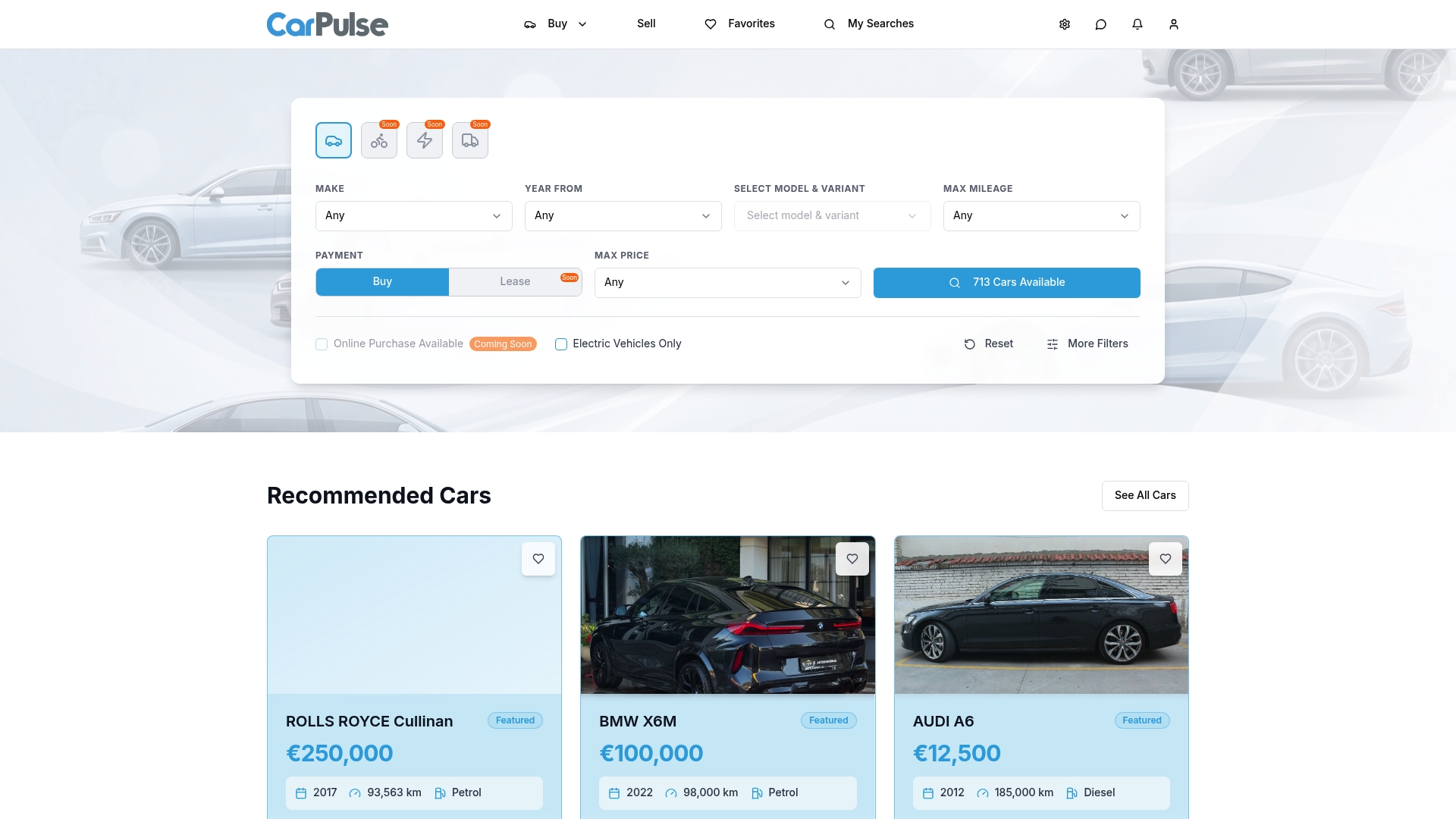
Start by browsing current listings and filtering by year, mileage and price. If you plan to sell your own car, see our pricing plans for listing options.
FAQ
Is a former rental car a good buy?
It can be, if the car has documented maintenance and passes an independent inspection. The discount and newer model year are real advantages, but unreported damage and high mileage are the risks to check.
Should I buy a demo car or a former rental car?
A demo car usually has fewer drivers and lower mileage, while an ex-rental often costs less. Compare both using the same checks: VIN history, service records and an independent inspection.
Do history reports show damage on rental cars?
Not always. Fleets often self-insure, so incidents may never be reported, which is why an independent body and frame inspection matters.
What should I ask before buying an ex-rental?
Ask for service records, recall repair proof, the remaining factory warranty and any seller warranty or return policy in writing. A seller who hesitates to share these is giving you useful information.
Sources
- Should You Buy a Used Rental Car? - Consumer Reports
- Buying a rental car? Here’s everything you need to know - Autoblog