
Guides
Checklist: Everything to Inspect Before Buying a Used Car in Italy
Checklist: Everything to Inspect Before Buying a Used Car in Italy
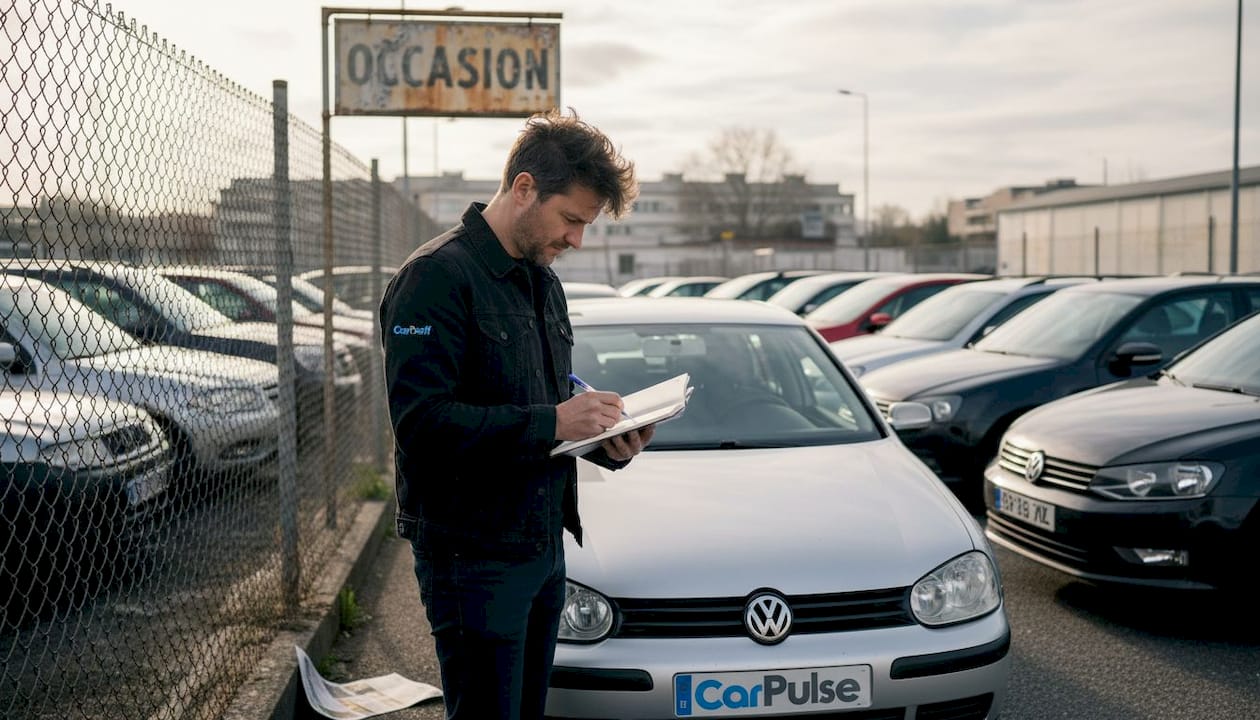
Summary:
- Always verify the official documents first — carta di circolazione, Certificato di Proprietà Digitale, and a PRA search — to rule out liens and administrative holds.
- Inspect bodywork, engine, interior and tyres methodically: one overlooked defect can mean hundreds of euros in repairs.
- Always take a test drive and, if you have any doubts, commission an independent mechanic inspection before signing anything.
Buying a used car in Italy can be a great deal — or a costly nightmare — depending entirely on how thoroughly you inspect the vehicle before committing. Thousands of buyers every year discover expensive faults only after the paperwork is signed. With the right checklist, you can reduce that risk to almost nothing. This guide walks you through every check in logical order: paperwork, bodywork, mechanics, interior, tyres and brakes, test drive and mileage verification. You can start your search by browsing verified used cars on CarPulse.it, where vehicle history is already available to help you shortlist the best candidates before you even book an appointment.
Documents: What to Check First
Before you look at the car itself, ask the seller to produce the original documents. Missing paperwork is an immediate red flag.
- Carta di circolazione (vehicle registration certificate): verify that the plate number, chassis (VIN) and technical data match the car in front of you exactly. Check that the roadworthiness stamp (revisione) is still valid.
- Certificato di Proprietà Digitale (CdPd): since 2020, this digital certificate replaces the paper vehicle title. The seller must hand it over as part of the ownership transfer. Confirm that the seller's name on the document matches the person you are dealing with.
- PRA search (visura PRA): essential and cheap. A search at the ACI (Italy's national automobile authority) reveals outstanding finance (ipoteche), administrative holds (fermo amministrativo), seizures and previous owners. Never skip this step.
- Valid roadworthiness test (revisione): mandatory every four years from first registration, then every two years. A car with an expired revisione cannot legally be driven on public roads — factor this into your negotiation.
- Service history (tagliandi): a full, stamped service history shows the car has been properly maintained. Gaps are a warning sign.
Bodywork: Spotting Rust and Resprays
Carry out the external inspection in good light — daylight or a well-lit forecourt.
- Rust: check inside the wheel arches, along door sills, under the boot mat and around the door edges. Structural rust — not just surface oxidation — is expensive to repair and often indicates undeclared previous damage.
- Panel gaps: open and close every door, the bonnet and the boot lid. Gaps should be even and consistent; uneven joins point to previous accident repairs.
- Paint and resprays: in sunlight, look along the panels at a low angle. Ripples in the surface or slight colour differences between panels reveal repainted sections. A paint-thickness meter is the most reliable tool.
- Glass and seals: cracks in the windscreen or swollen rubber seals can indicate water ingress into the cabin or roof damage from a previous collision.
Mechanics: Cold Start and Fluid Checks
Mechanical issues are where a bad purchase hurts most. Here are the key checks.
- Cold start: ask to see the car before it has been warmed up. A healthy engine starts cleanly and immediately. Metallic clanks or hesitation on a cold start are serious warning signs.
- Exhaust smoke: blue smoke signals oil burning; persistent white smoke suggests a blown head gasket; black smoke indicates a fuelling problem. A brief white puff on a cold morning is normal.
- Unusual noises: with the engine running, listen for ticking, rattles or knocking. Rev the engine in neutral to identify load-dependent sounds.
- Oil level and condition: pull the dipstick. Oil should sit between MIN and MAX, and be amber (petrol) or dark (diesel, normal). A creamy, milky appearance means water contamination — likely a head gasket failure.
- Coolant: should be at the correct level with no oily film on the surface.
- Brake fluid and power steering fluid: check levels and look for any leaks underneath the car.
- Timing belt or chain: ask when it was last replaced. On belt-driven engines, exceeding the replacement interval risks catastrophic engine failure.
Interior and Electronics
The interior tells you a great deal about how the car has been driven.
- Seat and steering wheel wear: compare wear on the seat bolsters, steering wheel and pedal rubbers against the declared mileage. Heavy wear on a claimed low-mileage car is suspicious.
- Smells: damp, mould or a burning odour should not be masked by air fresheners. Lift the floor mats and check for moisture underneath.
- All controls: test every switch and button — windows, mirrors, lights, climate control, heated seats, parking sensors. Verify that the engine warning light (MIL) does not remain illuminated after start-up.
- Infotainment: check CarPlay/Android Auto, Bluetooth and radio. A replacement touchscreen can cost anywhere from €300 to over €1,000.
- Airbags and seatbelts: no airbag warning light should be lit. Check that seatbelts retract smoothly.
Tyres and Brakes
- Tread depth: the legal minimum is 1.6 mm, but braking performance on wet roads drops significantly below 3 mm. Check for even wear across the tyre — uneven wear signals alignment or brake problems.
- Alloy wheels: deep kerbing marks or buckles suggest aggressive driving.
- Brake discs: looking through the wheel spokes, the disc surface should be free of deep grooves. Deeply scored discs need replacement.
- Handbrake: it should hold the car on a gentle incline without excessive ratchet clicks. Poor holding ability indicates worn rear brakes or cable.
Test Drive: What to Evaluate on the Road
Never buy a used car without a test drive. An ideal test includes a mix of town driving and a stretch of faster road.
- Steering: the wheel should not pull to one side. Vibration or excessive play indicates suspension or alignment issues.
- Gearbox: every gear should engage cleanly. On automatics, gear changes should be smooth and lag-free.
- Brakes: apply firm pressure in a safe place. The car should stop straight, with no pulsing or grinding. ABS activation in an emergency stop is normal.
- Suspension: over speed bumps or potholes, listen for clunks or squeaks that indicate worn bushes or dampers.
- Engine response: the engine should pull smoothly through the rev range with no hesitation or stuttering under acceleration.
Before you agree a price, use the free car valuation tool on CarPulse.it to benchmark what the market is actually paying for that model, year and mileage — it takes seconds and can save you thousands in negotiation.
Verifying the Real Mileage
Odometer tampering is still present in the used-car market. Here is how to protect yourself.
- Cross-reference the service history: each service entry records the mileage at the time. A suspicious jump between two consecutive services is a clear manipulation signal.
- PRA search and revisione records: the periodic roadworthiness test also records the mileage at the time of inspection — compare it with the service book entries.
- Physical wear: a car claiming 200,000 km with showroom-fresh pedal rubbers is suspicious; equally, worn pedal rubbers and a tired steering wheel on a claimed 80,000 km car suggest a rolled-back odometer.
- European mileage databases: some cross-border history services can flag discrepancies between odometer readings recorded in different EU countries.
Independent Mechanic Inspection
If the car is worth more than €5,000–6,000, it is money well spent to pay €80–150 for a professional inspection at a workshop of your choice — not one recommended by the seller. A proper inspection includes:
- A ramp inspection of the underside: chassis, exhaust, brakes, suspension joints
- OBD diagnostic scan for stored or cleared fault codes
- Paint-thickness measurements to detect filler and resprayed panels
A written report is also a powerful negotiation tool: any faults found give you a justified basis to request a price reduction proportional to the cost of repairs. CarPulse.it brings together listings with transparent vehicle information, making it easier to identify the best candidates before you invest in an independent inspection.
Frequently Asked Questions
What is a visura PRA and where do I get one?
A visura PRA is a document issued by the ACI (Automobile Club d'Italia) showing the official registered owner of the vehicle and any outstanding finance, administrative holds, or seizures. You can request it online through the ACI website, at any ACI or STA counter, or at a car-paperwork agency (agenzia pratiche auto) for a small fee. It is the single most important check when buying from a private seller.
Do I have to pay for a new revisione if it has expired?
Yes. A car with an expired revisione cannot legally be driven on public roads in Italy. You can use this as a negotiating point to reduce the asking price, but bear in mind that you will need to budget for the test itself (around €50–80 at an authorised centre) and for any repairs needed to pass it.
Is a test drive mandatory?
It is not required by law, but it is strongly advisable. A test drive reveals problems that no static inspection can: steering pull, brake vibration, gearbox behaviour, suspension noises. A seller who refuses a test drive is a significant red flag.
How can I tell if the mileage has been tampered with?
Cross-reference multiple sources: mileage entries in the service book, the mileage recorded at each revisione, the physical wear on the pedals, steering wheel and seat bolsters. If the data is inconsistent across sources, treat it as strong evidence of tampering. In that case, walk away or demand a significant price reduction.
Conclusion
Buying a used car does not have to be a gamble. With this checklist — documents, bodywork, mechanics, interior, tyres, test drive and mileage verification — you have everything you need to make an informed decision. Invest thirty minutes in each inspection: it can save you thousands in unexpected repair bills. When you are ready to find your next car, browse verified used car listings on CarPulse.it — transparent prices, vehicle history and trusted sellers, all in one place.