
Guides
AdBlue System Problems: Warnings, Causes and Fixes
AdBlue System Problems: Warnings, Causes and Fixes

An AdBlue problem usually starts as a yellow warning or a “top up” message, then turns into a countdown of starts or kilometers. If the countdown reaches zero and you switch the engine off, the car can refuse to start until the fault is repaired and the system is reset. So the warning is not something to postpone. Most faults come from a few places: low or poor-quality fluid, crystallized urea, a sensor, a pump, a heater, or a wiring fault. This guide explains how to tell them apart, what a reset really does, and what to check if you are buying a used diesel in Albania.
TL;DR
- A yellow AdBlue or engine light, then a countdown, is the normal escalation. At zero, the car can be blocked from restarting.
- Topping up fixes a low-level warning only. A sensor, pump, heater or dosing fault needs diagnosis, not just a refill.
- Clearing codes with a basic reader often brings the warning back, because the fault is still there.
- Never put AdBlue in contact with copper, zinc or aluminum parts, and keep containers and funnels clean.
- Buying used? Ask for a diagnostic scan that reads the SCR system and check the service history for NOx sensor work.
Table of Contents
- What AdBlue does and why the car cares so much
- Warning lights and the countdown, step by step
- What usually causes AdBlue faults
- Symptoms and likely causes at a glance
- What happens if you ignore the warning
- Diagnosis: why a proper scan matters
- How to reset an AdBlue warning (and why it comes back)
- Buying a used diesel in Albania: the AdBlue checklist
- Perspective
- Find your next diesel on CarPulse
- Preventing AdBlue trouble
- FAQ
- Sources
What AdBlue does and why the car cares so much
AdBlue is the urea solution that modern diesel cars inject into the exhaust to cut nitrogen oxide emissions. The system around it is called SCR (selective catalytic reduction). It has a tank, a level sensor, a heater, a pump, a dosing injector, and NOx sensors that check whether the exhaust is clean enough.

Because the car is legally expected to keep its emissions in check, the control unit does not treat a failing system as a comfort issue. It warns you, counts down, and finally blocks restarting. That is why a small defect, such as a dirty sensor or an empty tank, can look dramatic on the dashboard.
If you are choosing between diesel generations, our guide on what Euro 6 means for a used diesel explains why many newer diesels carry this equipment in the first place.
Warning lights and the countdown, step by step
The sequence is similar across most brands, though the wording differs. Reports on vehicles in the Balkans describe a progression from a yellow warning or “top up” message to a red warning with a countdown of remaining kilometers or engine starts. When it reaches zero and the engine is switched off, starting is blocked until the fault is cleared and the control unit is reset.
In practice you will see some of these stages:
- Low fluid alert. A yellow light or message asking you to add AdBlue, often with a remaining range.
- System fault message. The car reports an SCR or emissions fault, not just a low level. A refill will not clear it.
- Countdown. Kilometers or starts remaining, shown at each start-up.
- Next-restart warning. The car tells you it will not start again after the engine is turned off.
- No-start. The engine cranks or does not respond, and the car needs a proper repair and reset.
Other signs can appear before or alongside the lights. A UK diagnostics workshop lists power loss, higher fuel consumption, engine management lights and visible crystallization on the engine casing as typical indicators of an AdBlue fault.
If the countdown has started
Do not switch the engine off at a spot where you cannot get help. Drive to a place where you can refill or have the car checked, and treat the remaining distance as a hard limit, not a suggestion. If the message shows a low level only, buy genuine AdBlue and top up. If the message names a fault, a refill alone will not solve it.
What usually causes AdBlue faults
The warning is a symptom, not a diagnosis. Practitioners describe the same short list of root causes, and understanding it saves you from paying for the wrong part.
Crystallized urea
Urea can dry out and form crystals that block the injector or the lines. Common causes of AdBlue faults include crystallization, failing NOx or quality sensors, pumps, dosing injectors, heaters and catalysts. Crystals on the engine casing or near the dosing unit are a visible clue, and short trips with a cold system make the problem more likely.

Poor or wrong fluid
Old, contaminated, diluted or incorrect fluid can trigger concentration-related faults. A UK diagnostic guide notes that a warning right after topping up may point to contaminated or incorrect fluid, or to a level-sensing problem. Fluid from open containers, shared funnels or unlabeled bottles is a typical source. Buy sealed, branded AdBlue and keep the filler neck clean.
Materials matter too. A manufacturer technical circular states that AdBlue must never touch copper, zinc, their alloys or aluminum. In everyday terms: do not use random metal containers or improvised fittings to transfer it.
Frozen fluid
AdBlue can freeze in a cold tank, and partial freezing can make the level sensor misread. A US safety regulator’s technical bulletin says that if the fluid is frozen, the manufacturer recommends leaving the vehicle in a warm place overnight and rechecking. In Albania this matters mainly in the mountain regions and on cold winter mornings, since the coast rarely stays frozen for long. Most cars have a tank heater, so a persistent freeze warning on a mild day suggests a heater fault.
Sensors, pumps and heaters
The NOx sensors, the tank level sensor, the pump and the heater all wear out. These are the parts most often named in fault reports, and they are the parts a buyer should ask about on a used car.
Wiring and connectors
Water, road salt and heat attack connectors. A diagnostic guide points out that wiring and connector faults are frequently misdiagnosed as component failures. Another UK source adds that for some codes, such as P20E8 or U029D/E, the code alone does not prove a part has failed; the supply system, power feed, connectors and wiring need to be checked first. The practical lesson: a good workshop tests before it replaces.
Symptoms and likely causes at a glance
| What you see | Likely cause | First step |
|---|---|---|
| Yellow light, low-level message | Tank nearly empty | Top up with sealed, correct AdBlue |
| Warning persists after topping up | Wrong or contaminated fluid, level sensor issue | Check the fluid and have the level sensor tested |
| Fault message with countdown | Sensor, pump, heater or dosing fault | Diagnostic scan with SCR data |
| Crystals near the dosing unit | Dried urea, blocked injector or line | Professional cleaning and inspection |
| Warning only on cold mornings | Frozen fluid or weak heater | Warm the car, then recheck; test the heater if it repeats |
| Power loss, higher consumption | SCR or NOx sensor fault, related engine faults | Scan the codes before replacing parts |
What happens if you ignore the warning
The lockout is the obvious consequence, but it is not the only one. A UK specialist describes the path from a low-fluid warning to a kilometer countdown, a next-restart warning and a no-start condition once the countdown hits zero and the car is switched off. The same source warns that a system fault left alone can lead to SCR catalyst contamination, crystallization that blocks the dosing pump and costly secondary failures.
Translation: a cheap early repair can turn into a tow, a locked car and a larger bill. If you see a fault message, book a diagnosis the same week.
Diagnosis: why a proper scan matters
A warning light tells you where to start looking, nothing more. One UK service describes the right order: fault codes, live SCR and NOx data, and dosing or pressure readings before any part or programming is recommended.
The tool matters. Professional diagnostic software offers functions that a basic reader does not. For example, Snap-on describes SCR functions for dosing tests, injector and pump actuation, tank-level resets and heater activation. These let a technician test the part directly instead of guessing.
When you hand over the car, ask the workshop:
- Which codes did you find, and were they stored, pending or active?
- What live values did you read (NOx, pressure, tank temperature, heater status)?
- Did you test wiring and connectors before quoting a part?
- Will you run the guided reset or adaptation after the repair?
A shop that can answer these is likely to fix the cause. A shop that only says “we cleared it” may send you back in a week.
How to reset an AdBlue warning (and why it comes back)
The honest answer to “how do I reset it” depends on what triggered it.
Low level only. Top up with the right fluid. In many cars the message clears after a short drive or after the ignition is cycled. Follow the owner’s manual for your model, since the number of liters needed and the waiting time differ.
System fault. A refill will not resolve a separate SCR, pressure or sensor fault, and clearing codes without the required procedure may let the warning return. A UK repair specialist explains the pattern: if the warning reappears after a code clear, the SCR monitor may have detected that the underlying fault remains, such as a bad sensor reading, a dosing fault or a pressure problem.
No-start countdown. This means the fault has gone beyond a minor stored event, so the reset has to follow the maker’s procedure after the repair.
There is another trap: generic OBD2 readers can clear codes but, according to the same specialist, cannot reset SCR adaptation values or run the guided procedures needed after a genuine fault. A cheap reader may make the light disappear for a day, then the car locks you out anyway.
Two habits that help:
- Fix first, reset second. Resetting without a repair only hides the fault.
- Keep the invoice. It documents which parts were changed, which matters when you sell.
A word on “AdBlue off” and software tricks
You will see offers online to switch the system off or emulate it. These change how the car controls its emissions, and the car will no longer meet the standard it was sold under. They can also cause trouble at inspection or at resale, and a buyer who runs a diagnostic scan may spot it. Repairing the real fault is the safer route.
Buying a used diesel in Albania: the AdBlue checklist
An AdBlue repair can be a significant bill, so check the system before you pay, not after. The advice below is built around what buyers in the region report.
- Arrange a diagnostic inspection before purchase. A Bosnian workshop recommends a pre-purchase diagnostic, and checking whether the service history records NOx sensor replacements or SCR software updates. Ask for the SCR module to be read, not just the engine.
- Ask what the tool reads. The same source says a good tool reads fluid pressure, tank temperature, heater status, NOx values, dosing, catalyst efficiency and the countdown to lockout.
- Look for crystals. White, crusty deposits around the dosing unit or exhaust are a signal to ask more questions.
- Watch the dashboard at start-up. Turn the ignition on and confirm that all warnings go out. A seller who “just topped it up” and cannot show the receipt deserves a second look.
- Ask about the car’s history. Imported cars may have had parts changed abroad. Check the documents and the mileage story. Our guide on the VIN-based owner check shows how to spot short ownership periods that can hide recurring faults.
- Use an independent mechanic. Bring someone who works for you, not for the seller. We cover what an independent inspection costs and what it covers.
- Drive it properly. A long test drive with a warm engine gives the system time to show faults. Use our test drive checklist for used cars.
If the car has a known AdBlue issue, treat that as a negotiation point and get a written repair estimate before you agree on a price. Our guide to free car valuation explains what moves a car’s value, which helps when you adjust an offer for a pending repair.
Still deciding whether diesel fits your use? Read whether a used diesel is still worth buying, and see how Euro 7 may affect the used market.
Perspective
We see the same pattern in used-car listings: a diesel looks like a bargain, and the AdBlue system is the one thing nobody checked. The fault is rarely mysterious. It is a sensor, a pump, a heater or a connector, and it was simply never diagnosed properly.
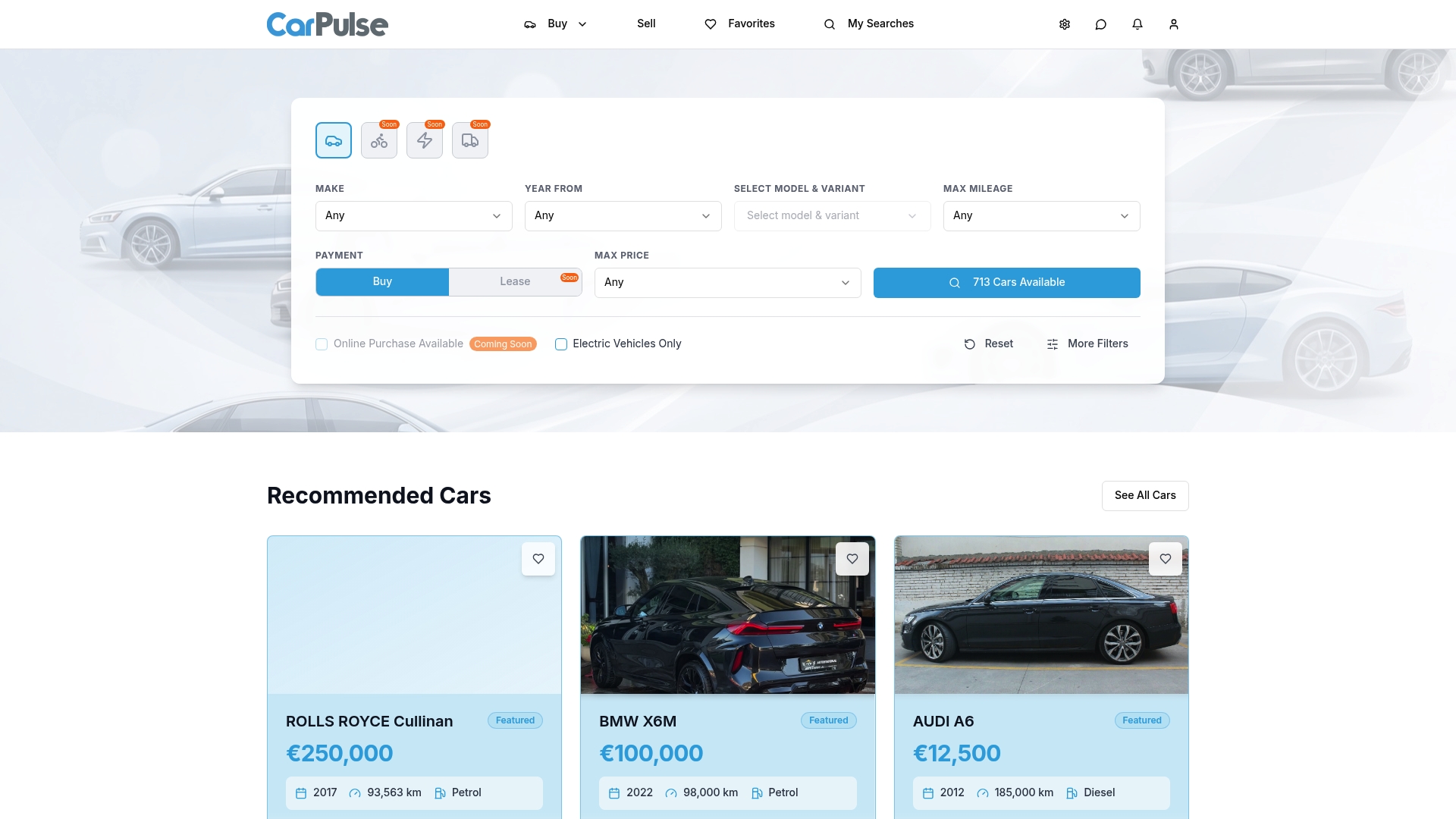
That is why CarPulse is built around information before the first phone call. Listings can be filtered by make, model, year, mileage, price and fuel type, so you can compare diesels like for like. Sellers can use VIN-based listing, which fills in vehicle details automatically, and our verified dealer network is meant to make it easier to know who you are dealing with. Our vehicle history check and AI price evaluation are designed to help you walk into a negotiation with facts.
Our advice is simple: pick the car on the data, then confirm it with a scan of the SCR system and a written service history. A seller with nothing to hide will agree.
Henri
Find your next diesel on CarPulse
If you are searching for a used or new diesel, you can browse listings by fuel type, mileage and price on CarPulse and contact sellers directly. Buyers do not pay to use the platform.
Selling a car with a clean service history? Private sellers and dealers list on CarPulse with Basic at 14.99 € per month or Premium at 29.99 € per month. A VIN-based listing fills in the vehicle details for you, so you can spend your time on photos and documents, such as the invoice for any AdBlue repair.
Preventing AdBlue trouble
A few habits cut the risk:
- Top up before the warning. Do not wait for the yellow light; add fluid when the range gets short.
- Buy sealed, correct AdBlue. Avoid open containers and unlabeled bottles, and never use dirty funnels.
- Keep metals out. As the maker’s circular says, no copper, zinc or aluminum contact.
- Do not ignore early messages. A fault message is the cheapest moment to fix a fault.
- Take longer drives now and then. A system that never warms up is more prone to crystals.
- Keep records. Receipts for fluid, sensor replacements and software updates raise buyer confidence.
FAQ
Can I drive with the AdBlue warning light on?
Yes, for a limited distance. The warning escalates to a countdown of kilometers or starts, and at zero the car may refuse to restart after you switch it off. Use the remaining range to refill or reach a workshop.
Why does the AdBlue warning stay on after I topped up?
The cause may not be the level. Contaminated or incorrect fluid, a level sensor problem, or a separate SCR, pressure or sensor fault can keep the warning active. A diagnostic scan can show which one it is.
Can I reset the AdBlue warning myself?
For a low-level warning, refilling often clears the message after a short drive. For a real fault, a basic OBD2 reader can clear codes but cannot reset SCR adaptation values, so the warning tends to return. Repair the cause first, then reset with the proper procedure.
Can AdBlue freeze?
Yes. Frozen or partly frozen fluid can make the level sensor misread. If the fluid is frozen, one manufacturer recommends leaving the vehicle in a warm place overnight and rechecking.
What should I check on a used diesel in Albania?
Order a diagnostic inspection that reads the SCR system, review the service history for NOx sensor replacements or SCR software updates, and look for crystals around the dosing unit. An independent mechanic should do the check.
Sources
- AdBlue Warning Light On? Repair Costs in BiH (2026)
- What are the signs you have an AdBlue problem?
- AdBlue & SCR Repair, FixBox
- AdBlue System Fault Diagnosis Explained
- Technical Circular on AdBlue materials
- Technical service bulletin on AdBlue warnings and fault codes
- AdBlue Fault Codes & Diagnosis
- What Happens If You Ignore Your AdBlue Warning Light?
- AdBlue Warning Light: Meaning, Faults & Next Steps
- Mastering SCR and AdBlue System Diagnostics
- How to Reset an AdBlue System Fault