Guides
Test drive checklist: what to verify before buying a used car in Italy
Test drive checklist: what to verify before buying a used car in Italy
Summary:
- The test drive is the single most important check before buying a used car: it reveals mechanical defects, electronic faults and hidden wear that no static visual inspection can catch.
- The engine must be started cold, without pre-warming: persistent white smoke, hard starting and unusual smells are the most reliable warning signs for uncovering serious problems.
- A test route of at least 20–30 minutes combining urban streets and a faster road lets you evaluate gearbox, brakes, steering, suspension and electronics under real-world conditions.
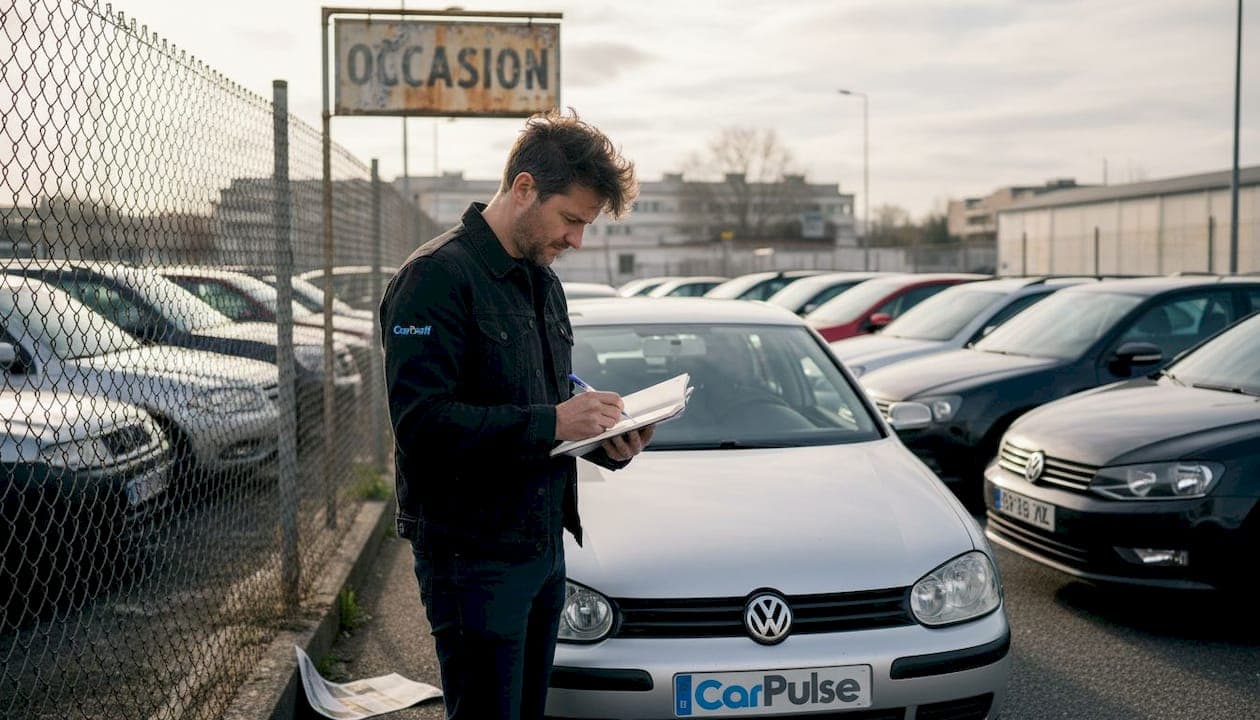
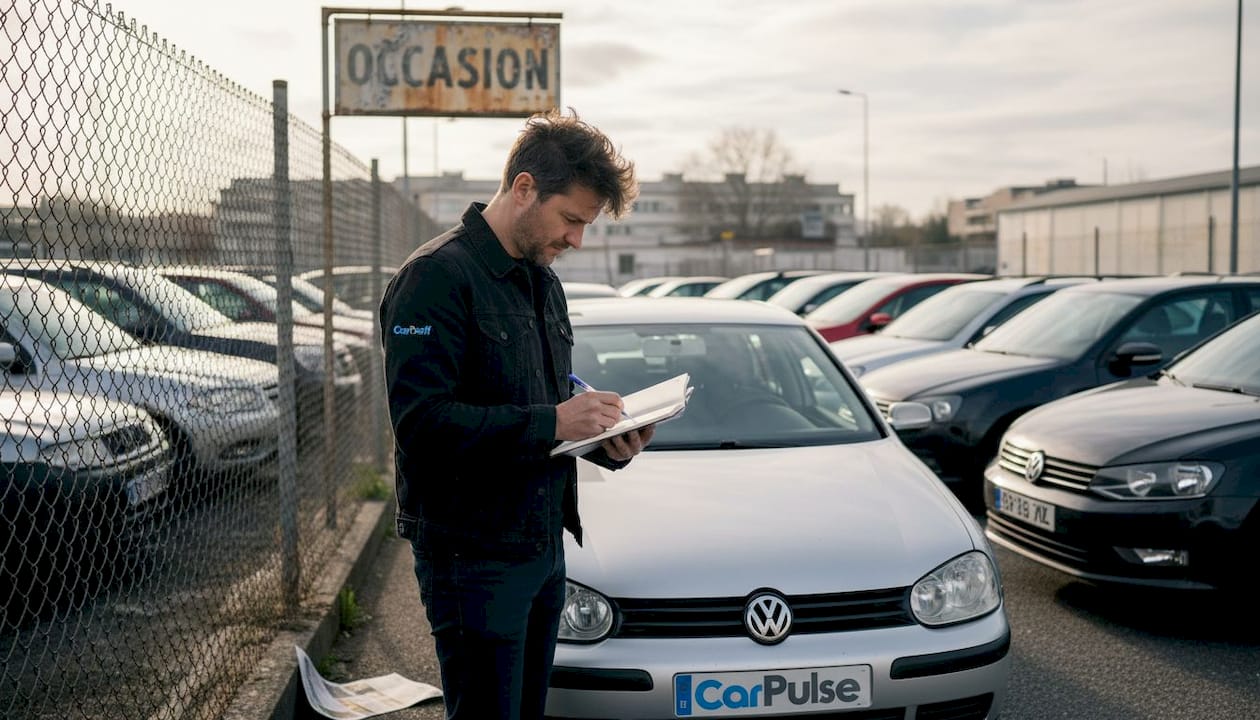
Buying a used car without a proper test drive is like renting an apartment without visiting it first. Yet many buyers settle for ten minutes around the block, distracted by the seller's chatter or their own eagerness to close the deal. The result? Thousands of euros spent on a vehicle hiding problems discovered only weeks later. Before browsing the listings on CarPulse.it and booking an appointment, read this guide: we'll show you exactly what to check, how to structure your route and which mistakes to avoid.
Cold engine start: the most revealing test
The golden rule is to arrive at the appointment before the seller — or, better still, agree that the car has been parked for at least three hours. A pre-warmed engine conceals faults that only emerge at a cold start: hard ignition, irregular idling in the first few seconds, abnormal exhaust smoke.
Once you've turned the key, watch the exhaust for at least 30 seconds. A white puff that disappears within 20–30 seconds is normal condensation, especially in cold weather. White smoke that persists after the engine is warm indicates water in the cylinders — a classic head gasket failure, a repair costing €800 to €2,500. Blue smoke is worse: oil burning in the combustion chamber, pointing to worn piston rings or valve guides. Black smoke on a diesel signals dirty injectors or a faulty turbocharger.
Listen for cold-start noises: a regular metallic ticking that fades after a few minutes may be the timing chain tensioner or hydraulic lifters priming with oil. If the noise persists when the engine is warm, it's more concerning. Keep your nose open too: a burning smell from the engine bay or the cabin may betray oil leaking onto hot parts, overheating wiring or a clutch problem.
Gearbox and clutch: signals that don't lie
A manual gearbox is assessed throughout the drive. Slot each gear deliberately: the lever should engage with smooth, consistent resistance — no grinding, sticking or excessive force. A gear that grinds occasionally may mean worn synchromesh rings, a repair costing €500 to €1,500 per gear. Excessive lever play (loose spring) is less serious but reveals poor maintenance history.
Test the clutch on a hill: find a slope and pull away in second gear without revving hard. If the car moves off cleanly, the clutch has life left. Slipping (revs rising without a proportional increase in speed) is the classic sign of a worn clutch — replacement costing €400 to €900 on small cars, double that on mid-size saloons and SUVs. The clutch bite point should be consistent: if it varies or sits very high (near the end of pedal travel), the clutch is almost done.
An automatic gearbox needs different attention. With the car stationary and foot on the brake, shift slowly from P to D and from D to R: each engagement should produce a single soft thud with no delay over one second. Harsh shifts, speed surges or "hunting" (the car can't decide which gear to hold) indicate gearbox problems — expensive repairs, ranging from €1,000 to €4,000 depending on type. Also check the automatic transmission fluid: it should be red or pink, never brown or foul-smelling.
Brakes and steering: safety above all
Test the brakes on a clear road at around 60 km/h with a firm (not emergency) stop. The car must decelerate in a straight line without pulling left or right. Any pull suggests unevenly worn pads or a braking system fault. Steering wheel vibration under braking points to warped discs — common on cars that have suffered repeated heavy stops. Disc and pad replacement: €200–€600 per axle, depending on model.
Press the pedal firmly before moving off: it should feel solid, not spongy. A pedal that sinks to the floor with little resistance may indicate air in the system or a failed brake servo — safety-critical issues requiring immediate attention. During low-speed braking, listen for squealing or scraping: worn pads produce a sharp metallic squeal (wear indicator) and a harsh grating sound when they're completely spent.
Assess the steering on a straight road at 80–100 km/h: let go of the wheel for one second (in safe conditions). The car should track straight without correction. A car that pulls to one side suggests incorrect wheel alignment or uneven tyre wear — an alignment costs €50–€150 but should be checked immediately. Turn the wheel slowly lock to lock with the car stationary and engine running: there must be no grinding, clunking or zones of unusual resistance, which would point to a worn rack or damaged CV joints. Steering play should be minimal: more than 2–3 cm of free movement at the rim is a concern.
Noises and suspension: the car's secret language
Test the suspension on a road with potholes, speed bumps or tram tracks — easy to find in any Italian city. Slow to 20–30 km/h and deliberately drive over the irregularities. A single dull thud is normal absorption. Sharp metallic sounds — clonk, clank — point to worn bushings, end-of-life shock absorbers or broken anti-roll bar drop links. Creaks or plastic rattles suggest loose body trim or damaged wheel arch liners, less serious but worth checking.
Take at least one tight low-speed turn (in a car park or roundabout) with full steering lock applied: a rhythmic clack-clack from the outside of the turn is the near-certain sign of a worn constant-velocity (CV) joint — replacement from €200 to €600 per side. This noise is routinely glossed over by sellers but is one of the most common faults on used cars above 100,000 km.
On a fast road or motorway (if possible), check for steering wheel vibrations at 90–110 km/h. Vibrations that appear and disappear at a specific speed band suggest unbalanced wheels — wheel balancing costs just €10–€20 per wheel. Continuous vibrations indicate deformed tyres or bent alloys, more expensive to resolve.
Electronics and dashboard: don't ignore warning lights
Before starting the engine, turn the key to the "on" position without cranking: the dashboard should light up with a set of warning lights that all extinguish within a few seconds of the engine running. If any light stays on — check engine (MIL), ABS, ESP, airbag, oil pressure — you have a declared fault the seller cannot dismiss. Some lights (such as the brake warning) can trigger for minor reasons, but the engine light and the airbag light deserve an OBD scan before you commit. A portable OBD-II reader costs €15–€30 and can reveal dozens of stored fault codes invisible to the naked eye.
Test every feature: all four electric windows, air conditioning (both cold and hot), heated seats if fitted, reversing camera, parking sensors. Windows that descend slowly on one side indicate a weakening window motor — replacement €80–€250. An air conditioning system that doesn't cool on a used car often just needs a refrigerant recharge (€30–€80), but may hide more serious leaks. Also check the stereo: not for quality, but to confirm the electrical system has no anomalies.
The ideal test route
An effective test lasts at least 20–30 minutes and covers three types of road:
- Urban area (10 min): slow traffic, pulling away from stops, low-speed manoeuvres. Used to evaluate gearbox, clutch, full steering lock, suspension over cobblestones and potholes.
- Extra-urban or provincial road (10 min): 70–90 km/h, bends, hills and descents. Assesses engine pick-up, road holding, firm braking, steering at sustained speed.
- Fast road or motorway (10 min, if possible): cruising at 110–130 km/h. Reveals high-speed vibrations, abnormal wind noise, automatic gearbox behaviour during overtaking.
Bring a trusted companion: while you drive, they listen for noises from the passenger seat — often easier to hear there than from the driver's position. If you're alone, record the drive on your phone and play it back afterwards: you'll catch things you missed in real time. You can also request a vehicle appraisal on CarPulse.it before booking the test drive.
Common mistakes to avoid during the test drive
The first mistake is letting the seller distract you. Some people — consciously or not — talk non-stop during the test: they explain the car's history, mention the previous owner, ask questions. The buyer loses focus and stops listening to the car. Be direct: "I need quiet while I drive so I can hear the car." An honest seller will understand.
The second mistake is choosing a route that's too short or too flat. Hills expose worn clutches, misbehaving gearboxes and struggling engines. A five-minute flat loop around a car park tells you almost nothing useful.
The third mistake is not driving yourself. "The seller took me for a spin and it seemed fine" is worthless. Behind the wheel you feel the vibrations, the steering response, the brake pedal firmness — sensations that are undetectable from the passenger seat. Always insist on driving.
The fourth mistake is dismissing warning lights. "He says it's just a sensor" is the most common phrase in this situation. Every warning light is a problem to diagnose: it might cost €20 or €2,000, but you won't know until you scan the car. Find the right car on CarPulse.it — the test drive is what gives you final confidence before signing.
Frequently asked questions about the test drive
Can I walk away after the test drive without consequences?
Yes, absolutely. Until you have signed a contract or paid a deposit (caparra confirmatoria in Italian law), you are free to walk away with no obligation. If you have paid a deposit, check the terms: if the car has undisclosed faults, you can request a full refund. It's always advisable not to hand over any money before completing the test drive and, ideally, an independent mechanical inspection.
How long should a thorough test drive last?
A serious test requires at least 20–30 minutes on a mixed route including urban, extra-urban and, if possible, a short stretch at higher speeds. Ten minutes in town are not enough to assess gearbox behaviour under load, suspension on rough surfaces and high-speed stability. If the seller won't allow a test of this length, treat it as a red flag.
What should I bring to the test drive?
Your driving licence (mandatory to drive the seller's car). Ideally: a portable OBD-II reader (€15–€30 online) to scan for fault codes, a white cloth to wipe the exhaust tip (checks for oil in the exhaust gases), a torch to inspect the underside. If you're not mechanically confident, consider bringing a trusted mechanic or arranging an independent inspection before signing.
Can the seller refuse to let me test drive the car?
A private seller or dealership has no legal obligation to allow a test drive, but refusing is almost always a red flag. Honest sellers know the test drive is a normal part of the process and accommodate it readily. If it's refused with excuses (insurance, no trade plates, in a hurry), seriously consider looking elsewhere. On CarPulse.it you'll find verified listings from sellers who are open to proper test drives.
Conclusion
The test drive is the most worthwhile time investment you can make before buying a used car. Twenty minutes of attentive driving tells you far more than hours spent reading reviews or comparing prices online: it's the moment when a car stops being a spec sheet and becomes a mechanical reality with its own history, quirks and strengths. Cold engine, every gear engaged, firm braking, tight turn, fast road — each element tells you something. Learn to listen and you'll save thousands of euros in unexpected repair bills. When you're ready to search for your next car, CarPulse.it is the place to start: verified listings, detailed filters and sellers accustomed to dealing with informed buyers.