Guides
Why Trust Verified Sellers: A Buyer's Checklist
Why Trust Verified Sellers: A Buyer’s Checklist
TL;DR:
- A verified seller badge indicates identity checks but does not guarantee the authenticity or condition of an item. Transaction behavior and platform protections are more reliable signals of safety, especially when paying off-platform or bypassing official checkout. Verification raises the cost for scammers and improves buyer confidence but requires careful review of platform policies and actual listing details.
Verified sellers are generally safer to buy from than unverified ones, but a badge is a risk-reduction signal, not a warranty. Before you pay, three things determine how much that badge actually protects you:
- Badge scope varies. Some platforms confirm only a phone number; others run government ID checks, selfie matching, and business license reviews. Check what the badge actually means on that specific site.
- Platform protections matter more than the icon. Buyer-protection programs and escrow options are what give you real recourse if something goes wrong.
- Transaction behavior is the real tell. Any request to pay outside the platform, switch to a different app, or skip the official checkout is a red flag regardless of the seller’s badge status.
Run through the checklist in Section 6 before you send money to anyone.
Table of Contents
- Why trust verified sellers? What the badge actually signals
- How seller verification reduces fraud and builds buyer confidence
- What a verified badge does NOT guarantee
- Why badge meanings differ by platform and what to check
- How to verify a seller and a listing beyond the badge
- When verification matters most and when to add extra protection
- Key Takeaways
- A note on how Carpulse approaches verification
- Carpulse: browse verified car listings with confidence
- Useful sources and further reading
Why trust verified sellers? What the badge actually signals
A verified seller badge confirms that a platform completed specific account-level identity checks on the person or business behind the profile. It does not endorse any individual listing.
Common verification methods include:
| Check type | What it confirms |
|---|---|
| Government ID validation | A real person with a matching legal identity |
| Selfie / face match | The person presenting the ID is the account holder |
| Phone / email confirmation | A reachable contact point exists |
| Business registration | A registered legal entity is behind the account |
| Tax ID verification | The seller has a verifiable tax identity |
| Bank / payment account check | A real financial account is linked |
The gap between “phone confirmed” and “government ID + business license reviewed” is enormous. Marketplace badges are not standardized: a badge on one platform may mean continuous monitoring and credential checks, while the same-looking icon on another site means only that the seller clicked a verification email. That distinction changes how much weight you should give the badge when deciding to buy.
Pro Tip: Before trusting any badge, search the platform’s help center for the exact phrase “verified seller” or “seller verification.” The definition page tells you which checks were actually run.
How seller verification reduces fraud and builds buyer confidence
Identity-linked checks create accountability. When a scammer knows the platform has their government ID, selfie, and bank account on file, the cost of running a fraud scheme rises sharply. That deterrence effect is the core benefit of Know Your Seller (KYS) programs that many marketplaces now implement at onboarding.
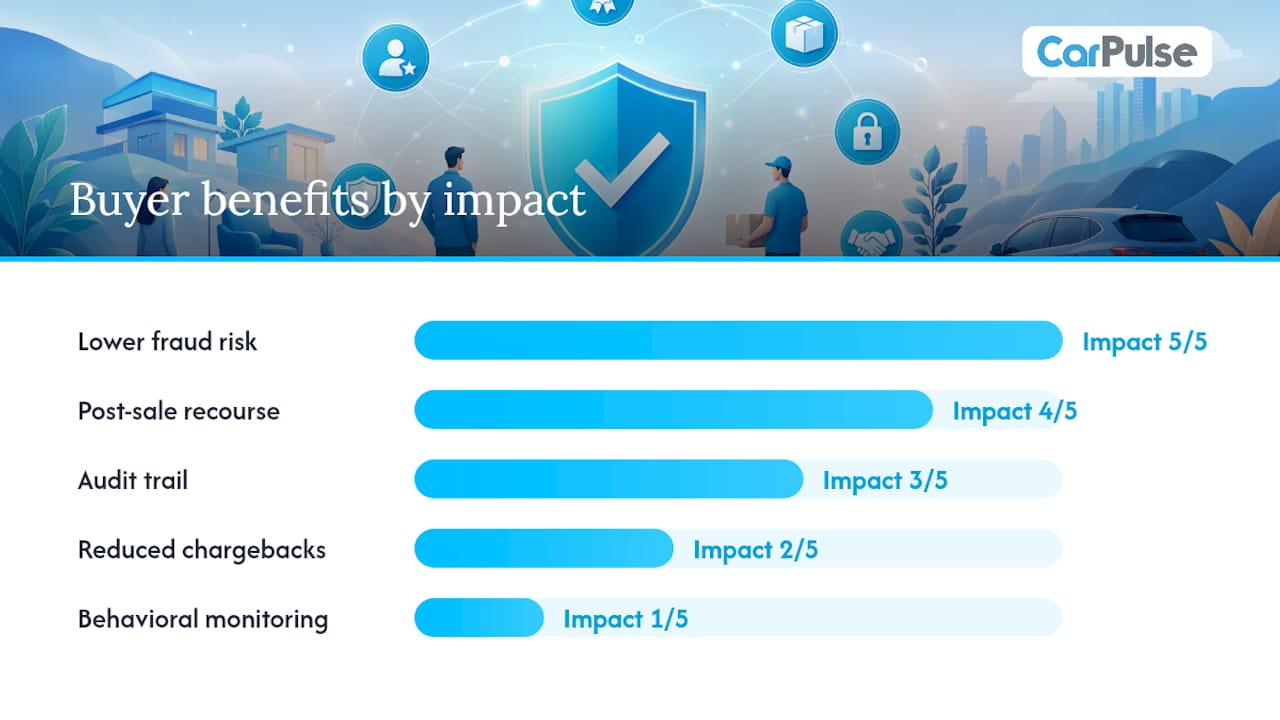
The practical benefits for buyers, ranked from highest to lowest impact:
- Lower fraud probability. Verified sellers have a documented identity, which deters most opportunistic scammers from signing up in the first place.
- Better post-sale recourse. If a dispute arises, the platform has real contact and identity data to act on, making chargebacks and refunds easier to process.
- Clearer audit trail. Every transaction tied to a verified account is traceable, which matters if you need to escalate to the platform or to U.S. authorities.
- Reduced chargeback loops. Two-sided verification — confirming both buyer and seller identity — cuts the identity-fraud cycles that plague high-volume marketplaces.
- Ongoing behavioral monitoring. The strongest platforms don’t stop at onboarding. Continuous monitoring and behavioral risk signals catch sophisticated bad actors who pass initial checks but show suspicious patterns later.
The INFORM Consumers Act has pushed this further in the U.S., requiring marketplaces to verify and disclose the identities of high-volume third-party sellers. Verification is no longer just a trust feature — for many platforms, it is a legal compliance requirement.
What a verified badge does NOT guarantee
A badge does not mean the item is authentic, accurately described, or in the condition shown. Verification happens at the account level. The listing is a separate matter entirely.
The single most important limit of any verification badge: A seller can pass every identity check a platform runs and still post a fraudulent listing, misrepresent a product’s condition, or request payment through a channel that strips you of all buyer protections. Transaction behavior matters more than the icon next to a seller’s name.
Watch for these scam behaviors that occur even with verified accounts:
- Fake or copied listings. Verified accounts can post listings with stolen photos or inflated descriptions.
- Off-platform payment requests. Any push toward Zelle, Venmo, wire transfer, or gift cards voids your platform protections immediately.
- Account takeovers. A legitimate seller’s account can be compromised. If a previously reliable seller suddenly changes payment instructions or pushes urgency, treat it as a new risk.
- Badge graphic copying. On social platforms and classifieds, scammers sometimes paste a badge image into a profile photo to fake verification status.
The DailyGenius buyer guide makes the point plainly: badges calm buyers emotionally but do not prove item authenticity. The payment flow is where fraud actually happens.
Why badge meanings differ by platform and what to check
Not all marketplaces are built the same, and their verification programs reflect that gap.
Social classifieds (Facebook Marketplace, Craigslist) typically confirm only that a real person is behind the account. Facebook recently launched a “Verified” badge to signal a real person behind a profile, which is a step forward, but it does not include business credential checks or continuous transaction monitoring.
Large retail marketplaces (Amazon, eBay, Walmart Marketplace) run more structured seller onboarding, including business registration, tax ID, and bank account verification. The INFORM Consumers Act now requires these platforms to collect and disclose seller identity for high-volume accounts, raising the floor for what “verified” means in a U.S. retail context.
Specialist marketplaces (automotive, real estate, collectibles) often go deepest, requiring business licenses, VIN-level data, or professional credentials because the transaction values are higher and the fraud risk is more specific.
Before trusting any badge, check these things on the seller’s profile page:
- Which specific checks the platform ran (look for a “verification details” link or tooltip on the badge itself)
- How long the seller account has been active
- Total transaction count and average rating across recent reviews
- Whether the platform offers a buyer-protection program and whether it covers this transaction type
- Whether the checkout flow stays on-platform from start to finish
Pro Tip: Search “[platform name] seller verification policy” before your first purchase on any new marketplace. The help center page usually lists exactly which documents were required.
How to verify a seller and a listing beyond the badge
Run this checklist before you pay, regardless of badge status.
- Check profile age and transaction history. A verified account created last week with zero reviews is a different risk than one with 200 completed sales over two years.
- Read recent reviews carefully. Look for patterns: multiple buyers mentioning slow shipping, item-not-as-described, or communication problems are more reliable signals than a single five-star rating.
- Request original, time-stamped photos. Ask the seller to send a photo of the specific item with today’s date written on a piece of paper next to it. Scammers using stock or stolen images cannot do this.
- For high-value items, ask for documentation. A vehicle VIN, original receipt, or serial number can be independently verified. Never skip this step for purchases over a few hundred dollars.
- Reverse-image search the listing photos. Drag the main listing photo into Google Images or TinEye. If the same image appears on dozens of other listings or stock photo sites, walk away.
- Confirm the payment and shipping flow stays on-platform. Any request to move the transaction to a personal payment app, email, or external site is a hard stop.
- Verify the return and refund policy before paying. Know exactly what the platform covers and under what conditions before money changes hands.
- Report suspicious behavior immediately. Use the platform’s “report seller” or “report listing” function. For confirmed fraud, file a complaint with the FTC at ReportFraud.ftc.gov and with the FBI’s Internet Crime Complaint Center (IC3) at ic3.gov.
Pro Tip: For used vehicles or electronics, ask the seller to provide the VIN or serial number before you agree to meet or pay. Run it through a free history check tool. A legitimate seller will not hesitate.
When verification matters most and when to add extra protection
Verification changes the risk calculation most in these situations:
High-value purchases. A $5,000 used car or a $1,200 laptop is worth every extra step in the checklist above. The dollar amount makes fraud worth a scammer’s effort, and it makes your due diligence worth your time.
Used vehicles and electronics. These categories combine high value with condition ambiguity. A verified dealer listing a car with VIN-based documentation is meaningfully safer than an unverified private seller with only photos. Carpulse’s guide to buying verified cars covers exactly why that documentation layer matters.
First-time sellers. A verified badge on a brand-new account with no transaction history is weaker protection than the same badge on an account with 500 completed sales. Treat new verified accounts with the same caution you would apply to any unknown seller.
Cross-border transactions. When a seller is in another country, your recourse options narrow significantly. Stick to platforms with explicit cross-border buyer-protection programs.
Where verification helps less: Local cash meetups without platform involvement, peer-to-peer transactions that skip the official checkout, and any deal where the seller insists on bypassing the platform’s payment system. In those cases, the badge is irrelevant because the protections it connects to are no longer active. If a seller pushes you off-platform, that is your signal to walk away.
Key Takeaways
A verified seller badge reduces fraud risk by confirming account identity, but transaction behavior, platform protections, and your own pre-purchase checks determine whether a deal is actually safe.
| Point | Details |
|---|---|
| Badge scope varies widely | Check each platform’s definition; some confirm only email, others run ID and business credential checks. |
| Verification deters but doesn’t prevent fraud | Identity-linked checks raise the cost of scamming but don’t guarantee item authenticity or condition. |
| Transaction behavior is the real signal | Off-platform payment requests void buyer protections regardless of badge status. |
| U.S. law is raising the floor | The INFORM Consumers Act now requires identity disclosure for high-volume sellers on major U.S. marketplaces. |
| Carpulse uses verified dealers and VIN-based listings | Carpulse’s verified dealer network and VIN auto-population add a documentation layer that goes beyond a badge alone. |
A note on how Carpulse approaches verification
Verification only works when the platform builds it into the listing process, not just the account signup. On Carpulse, dealerships go through a verification process before they can list vehicles, and every listing uses VIN-based auto-population to pull accurate vehicle data directly from the VIN. That means the make, model, year, and mileage in a listing come from a verifiable source, not just whatever a seller types in.
For buyers, that combination of a verified dealer network and structured vehicle data is a meaningful step beyond a badge on a general classifieds site. You can browse listings knowing the dealer behind them has been confirmed and that the core vehicle details are tied to a real VIN record.
Carpulse: browse verified car listings with confidence
If you are shopping for a used or new vehicle and want the verification layer built into the listing itself, Carpulse is worth a direct look. Every dealership on the platform is verified before listing, and VIN-based listing means the vehicle data you see is pulled from the actual record, not self-reported. You are not relying on a badge alone.
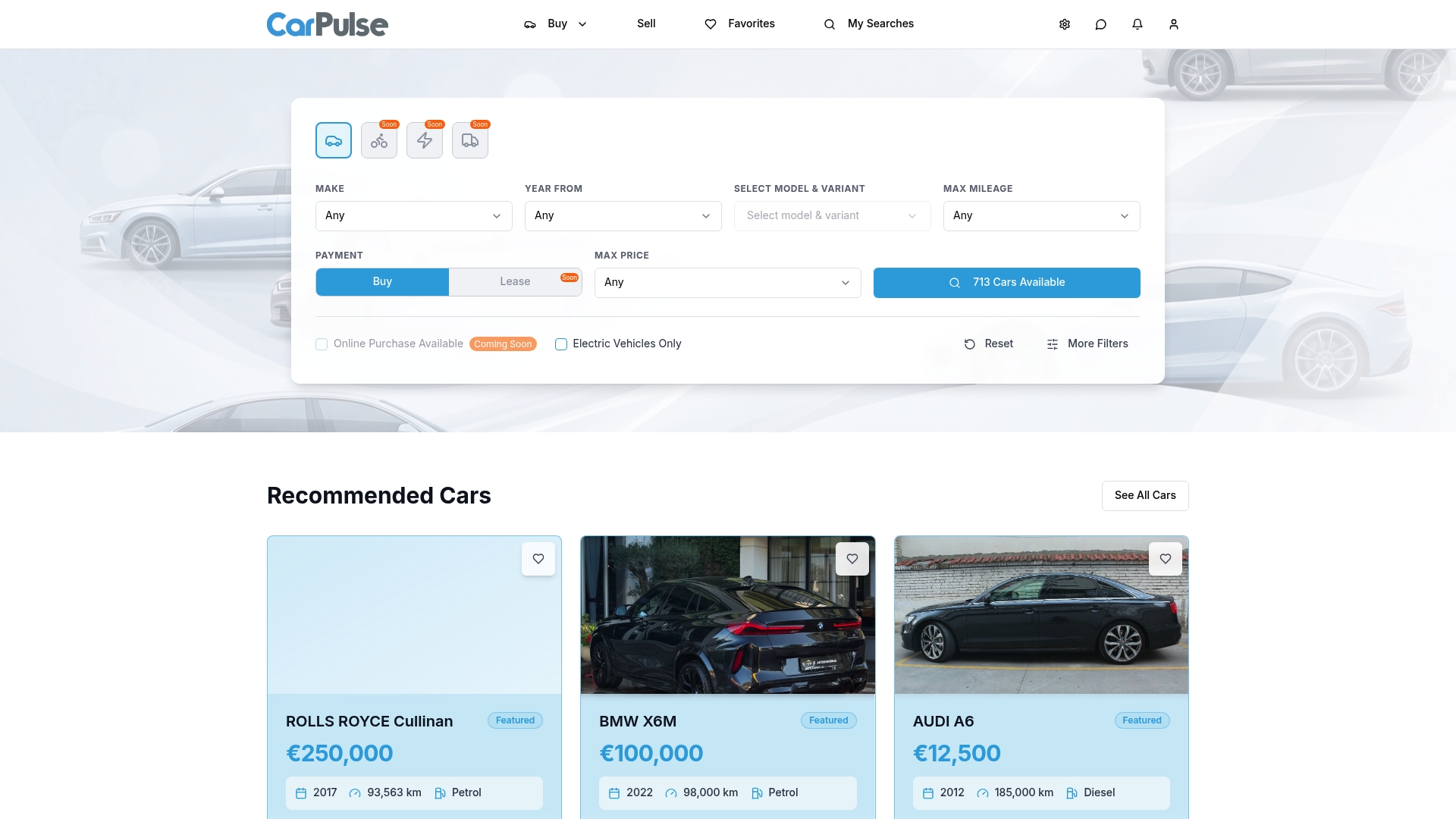
Browse verified dealer listings, filter by make, model, year, mileage, and fuel type, and contact sellers directly through the platform’s protected checkout flow. The mobile app for iOS and Android keeps the full marketplace experience available wherever you are shopping.
Start browsing verified listings on Carpulse and find vehicles backed by real documentation, not just a profile icon.
Useful sources and further reading
- FTC — INFORM Consumers Act guidance: The official FTC page explaining what U.S. marketplaces must now do to verify and disclose high-volume seller identities.
- Middesk — Know Your Seller overview: Explains the KYS process and how it differs from standard KYB (Know Your Business) checks.
- Amazon — trustworthy shopping experience report: Amazon’s own account of how it layers onboarding checks with continuous behavioral monitoring.
- Carpulse — why buy verified cars: Carpulse’s own guide to the reliability and peace-of-mind benefits of buying from verified dealers on the platform.
- Carpulse — safe used car buying guide: Step-by-step buying guide for used vehicles on Carpulse, including how to use VIN-based listing data to verify a vehicle before purchase.