Guides
What influences used car prices in Albania? Key factors
What influences used car prices in Albania? Key factors
TL;DR:
- Used car prices in Albania are influenced by factors like age, mileage, brand reputation, and documentation. Demand for SUVs and fuel-efficient vehicles remains high, with seasonal timing and economic conditions also affecting prices. Being well-informed about market trends and documentation can lead to better buying and selling outcomes.
Used car prices in Albania are far less predictable than most buyers and sellers expect. A car sitting on a lot in Tirana can be priced thousands of dollars higher than an identical model just a few kilometers away, and the difference rarely comes down to luck. Factors like service history, import documentation, fuel type, and even the time of year all push prices up or down in ways that catch unprepared buyers off guard. Whether you are looking to buy your next vehicle or get top value for one you are selling, knowing what actually drives pricing gives you a real edge in every negotiation.
Table of Contents
- Core factors shaping used car prices
- The role of vehicle type and market demand
- How timing and the broader economy affect prices
- The impact of fuel economy and regulations
- A perspective on smart buying and selling in the Albanian market
- Find your next car or maximize your sale with CarPulse
- Frequently asked questions
Key Takeaways
| Point | Details |
|---|---|
| Multiple price drivers | Age, mileage, brand, and vehicle type all significantly affect used car prices in Albania. |
| Market trends matter | Demand surges for SUVs, EVs, and fuel-efficient cars can boost resale value. |
| Timing influences deals | Seasonality and economic shifts impact when to buy or sell for the best outcome. |
| Regulations impact value | Fuel economy and compliance with new standards increasingly shape buyer willingness to pay. |
| Knowledge is power | Understanding price factors helps Albanian buyers and sellers negotiate smarter and secure better deals. |
Core factors shaping used car prices
Most people start by looking at the year of manufacture and the odometer reading, and those two numbers do matter a lot. But they are just the beginning. Age, mileage, and brand reputation are among the most significant variables affecting used car market value, and each one interacts with the others in ways that can surprise you.
A five-year-old car with 180,000 kilometers on it will sell for noticeably less than the same model with 80,000 kilometers, even if both look identical from the outside. Brand reputation adds another layer. German brands like BMW, Mercedes, and Volkswagen tend to hold their value better in Albania because buyers trust their engineering and parts availability. A lesser-known brand might depreciate faster even with low mileage.
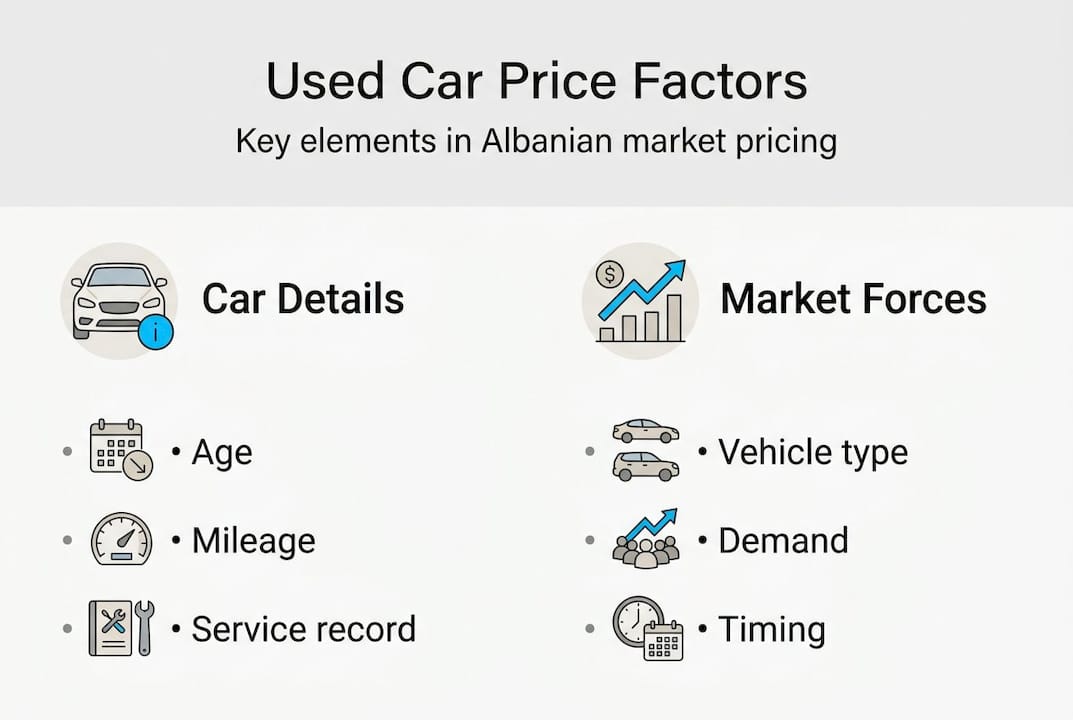
Here is a quick look at how each core factor typically affects price:
| Factor | Impact on price | Notes |
|---|---|---|
| Age (years) | High | Older vehicles depreciate steadily |
| Mileage | High | High mileage significantly reduces value |
| Brand reputation | High | Premium brands retain value longer |
| Condition (interior/exterior) | Medium | Visible wear lowers buyer confidence |
| Engine size and type | Medium | Diesel and hybrid often command premiums |
| Color | Low | Neutral colors are easier to resell |
Beyond the obvious, several hidden factors also move the needle:
- Accident history: Even a repaired vehicle can lose 10 to 20 percent of its value if accident records are discoverable.
- Ownership documentation: Clean paperwork and a clear chain of ownership builds trust and justifies higher asking prices.
- Import status: Cars imported from Germany or Italy often carry a premium over those from less favored markets.
- Number of previous owners: Fewer owners generally signals better care.
- Outstanding fines or liens: These can make a car nearly unsellable until resolved.
Pro Tip: Ask for the full service history booklet before negotiating. If a seller can show consistent maintenance at authorized service centers, that documentation alone can justify a higher price. If they cannot, use the gap as a negotiating point to bring the price down.
For a deeper look at how to approach the full transaction, the complete buying and selling guide covers each step in detail.
The role of vehicle type and market demand
Not all cars are created equal when it comes to resale value, and the type of vehicle you are buying or selling plays a major role in what the market will bear. Demand shifts constantly, and what was a slow seller two years ago might be the hottest segment today.
SUVs and fuel-efficient hatchbacks have been increasingly popular and command higher prices in the Albanian market. This is partly practical: Albanian roads vary widely in quality, and families value the extra space and ground clearance of an SUV. Hatchbacks win on fuel costs and urban maneuverability.
Here is how different vehicle types generally compare in the Albanian used car market:
| Vehicle type | Resale value | Market demand | Notes |
|---|---|---|---|
| SUV | High | High | Strong demand across all regions |
| Sedan | Medium | Medium | Stable but losing ground to SUVs |
| Hatchback | Medium | High | Popular for city driving and fuel savings |
| Electric vehicle (EV) | Growing | Growing | Premium pricing, limited charging infrastructure |
| Minivan | Low to medium | Low | Niche demand, mostly families |
| Sports car | Variable | Low | Limited buyer pool, harder to sell |
Electric vehicles deserve special attention right now. While EV infrastructure in Albania is still developing, buyer interest is climbing, and early adopters are often willing to pay a premium for well-maintained electric models. Checking out fuel-efficient models can help you identify which ones hold value best.
Features also drive demand independent of vehicle type. Buyers consistently prioritize:
- Automatic gearbox
- Air conditioning (especially dual-zone climate control)
- Reverse camera or parking sensors
- Infotainment with Apple CarPlay or Android Auto
- Leather seats
- Low fuel consumption rating
If your car has most of these, you can price it confidently above comparable listings without them. Specific models also carry strong reputations. For example, Mercedes price trends show consistent demand, and the Audi A4 buying tips guide illustrates why certain German models stay in high demand year after year.
How timing and the broader economy affect prices
Beyond car features, timing your transaction and understanding the broader market can put real money in your pocket. Prices are not static. They breathe with the calendar and the economy.

Seasonal patterns are real. In Albania, demand typically rises in spring and early summer as people prepare for travel and the warmer months. Prices tend to soften in late autumn and winter when fewer buyers are actively shopping. If you are selling, listing in March or April often gets you better offers. If you are buying, December can be a good time to negotiate.
New model launches also push down prices on older versions. When a manufacturer releases an updated model, dealers discount existing stock and private sellers often drop prices to compete. Watching release calendars for popular brands can help you time a purchase.
Key stat: Interest in electric vehicles saw a 12% surge during 2026, which influenced overall market prices, including used combustion engine vehicles as buyers began weighing alternatives.
The broader economy shapes prices in ways that are less visible but just as powerful. Here are the main economic forces to watch:
- Fuel prices: When fuel costs spike, demand for fuel-efficient cars rises fast, pushing up their used prices while large-engine vehicles lose value.
- Import policies: Changes in customs duties or import restrictions can suddenly make certain vehicle categories more or less affordable, shifting the entire supply picture.
- Interest rates and financing conditions: When borrowing gets more expensive, fewer buyers can afford higher-priced vehicles, which softens prices at the upper end of the market.
- Currency fluctuations: Since many Albanian car imports are priced in euros, shifts in the lek-to-euro exchange rate can raise or lower effective import costs overnight.
- Global supply chain events: Semiconductor shortages or factory disruptions abroad reduce the supply of new cars, which pushes buyers into the used market and lifts prices there.
Understanding these forces helps you recognize when the market is temporarily distorted and when a price is genuinely fair.
The impact of fuel economy and regulations
With the market context explained, it is worth focusing on how regulations and running costs shape what buyers are actually willing to pay. This is an area where the market is shifting faster than many sellers realize.
Fuel efficiency is increasingly important for Albanian buyers, boosting the value of economical models. A car that costs significantly less to run each month is simply worth more to a buyer who is thinking practically. And most Albanian buyers are.
Regulatory changes are adding another layer of pressure. Here is how current and upcoming rules are affecting used car values:
- Emission limits: Stricter emissions standards make older, high-polluting vehicles harder to sell and register, lowering their value.
- Fuel type restrictions: Some urban areas are beginning to restrict older diesel vehicles during high-pollution periods, reducing buyer appetite for those models.
- Registration requirements: Vehicles that do not meet updated safety or emissions standards may face higher registration fees or outright rejection.
- Urban access rules: As Albanian cities grow and adopt cleaner air policies, cars with poor environmental ratings may eventually face access restrictions in city centers.
- Incentives for EVs and hybrids: Government interest in cleaner transport is gradually making hybrid and electric options more attractive, pulling demand away from older combustion models.
Hybrids sit in an interesting middle ground right now. They offer better fuel economy than traditional combustion engines without the range anxiety of a full EV, making them appealing to buyers who are not yet ready to go fully electric. Demand for well-maintained hybrids is growing, and prices reflect that.
Pro Tip: If you are selling a car that has recently passed an emissions check or had its catalytic converter serviced, include that documentation in your listing. It directly addresses a buyer concern and can justify a higher asking price.
Browsing top fuel-efficient picks gives you a clear picture of which models are gaining ground in buyer preference right now.
A perspective on smart buying and selling in the Albanian market
Here is something most car pricing guides will not tell you: chasing the lowest sticker price is often the most expensive strategy in the long run. A cheap car with poor fuel economy, no service history, and uncertain import documentation can cost you far more over two years of ownership than a slightly pricier, well-documented alternative.
The Albanian market is changing faster than many buyers and sellers recognize. Regulatory tightening, rising EV interest, and shifting fuel prices are all compressing the window in which certain vehicle types hold their value. A diesel SUV that seems like a bargain today may face registration headaches in three years.
“The buyer who understands what drives value does not just get a better price. They get a better car.”
Our view is that the smartest move in this market is to treat every transaction as a research project. Use the detailed negotiations guide to prepare before you walk into any deal. Know the factors, check the documentation, and think two years ahead. Sellers who present their vehicles with full transparency consistently close faster and at better prices. Buyers who do their homework avoid costly surprises. That is not luck. That is preparation.
Find your next car or maximize your sale with CarPulse
Now that you understand what moves used car prices in Albania, the next step is putting that knowledge to work in a real transaction.
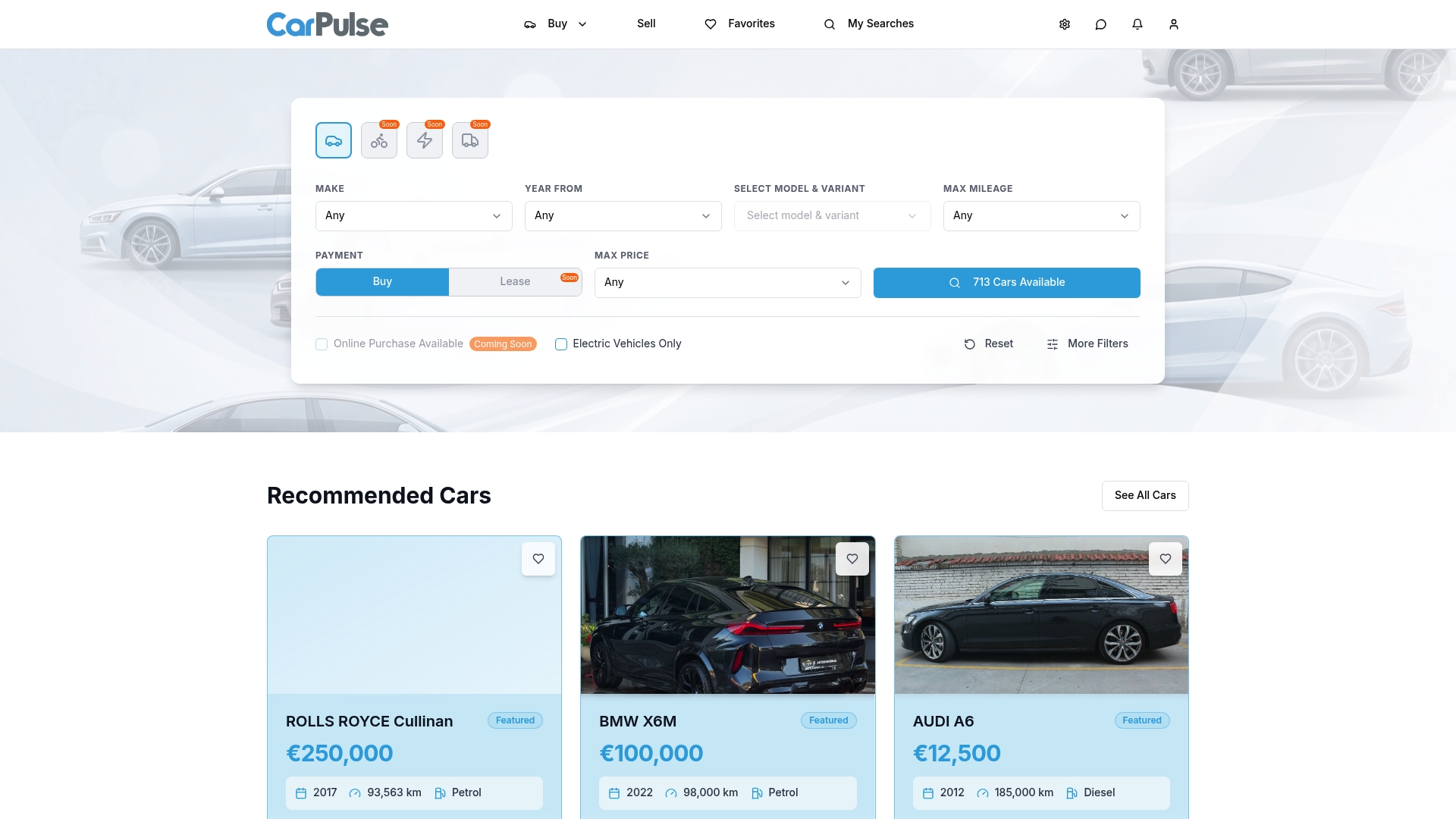
CarPulse is Albania’s largest online car marketplace, giving you access to thousands of verified listings filtered by make, model, year, mileage, price, and fuel type. Whether you are browsing used cars to find the best value or listing your own vehicle with VIN-based accuracy, the platform is built to make the process faster and more transparent. Pair your search with the selling and buying advice available on the CarPulse blog, and you walk into every deal with the confidence of someone who actually knows the market.
Frequently asked questions
Which factor reduces a used car’s value the most in Albania?
High mileage and aging substantially decrease used car prices, making these the two biggest value killers in the Albanian market. Poor overall condition compounds the effect further.
Are SUVs more expensive than sedans in the Albanian used market?
SUVs achieve higher values and stronger market demand than sedans, largely because buyers prioritize versatility, road clearance, and interior space. Expect to pay a noticeable premium for a comparable SUV over a sedan of the same age and mileage.
How does fuel economy impact used car prices?
High fuel economy models are increasingly favored and achieve better resale prices, as buyers factor in monthly running costs alongside the purchase price. This trend is accelerating as fuel prices remain volatile.
Does the time of year influence used car prices?
Market seasonality and key events can shift used car prices noticeably, with spring and early summer typically seeing stronger demand and higher prices. Late autumn and winter often offer buyers more negotiating room.
Recommended
- Blerja Online e Makinave në Shqipëri: Rritje EV 12% në 2026 | CarPulse Albania
- Blerja e Makinave Online në Shqipëri: Rritja e EV-ve 2026 | CarPulse Albania
- Blerja e makinave online në Shqipëri: Rritje 12% e EV në… | CarPulse Albania
- Blerja online e makinave në Shqipëri: 12% rritje e EV në… | CarPulse Albania
- How accident records affect used car value and safety | Vektracer - Vektracer