
Guides
Top Vehicle Features 2026: What's Actually Worth Your Attent
Top Vehicle Features 2026: What’s Actually Worth Your Attention
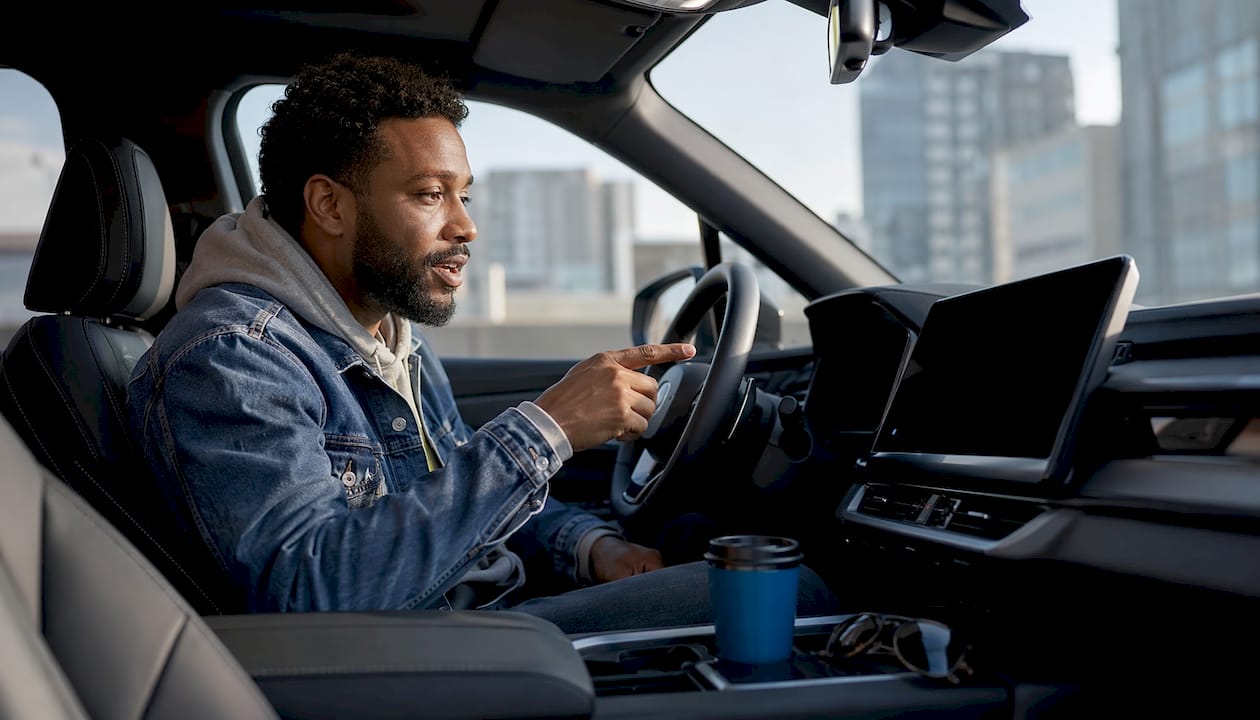
The best car features 2026 models bring to the table aren’t just bigger screens or shinier trim. They’re systems that change how a vehicle behaves, how safe you are, and how little you have to fight the car to get where you’re going. Here’s what’s genuinely new this year:
- AI-powered in-car assistants with real conversational understanding
- Mostly hands-free driving via improved Level-2 ADAS
- Steer-by-wire replacing mechanical steering linkages
- High-resolution projector headlights with adaptive beam shaping
- Heated seatbelts and next-level comfort features
- Mandatory safety systems including AEB, Lane Keeping Assist, and Adaptive Cruise Control
- V2X communication linking your car to traffic infrastructure
- AR dashboards and personalized infotainment
- Enhanced cybersecurity for connected vehicles
- Recycled materials and sustainable manufacturing
- Battery technology advances beyond raw range numbers
As automotive journalist Josh Max puts it, the biggest 2026 shifts focus on systems that change vehicle behavior fundamentally, not just bigger displays.
Table of Contents
- 1. How 2026 AI assistants actually understand what you say
- 2. Hands-free driving in 2026 is better, but still not autonomous
- 3. Steer-by-wire removes the mechanical link between you and the road
- 4. High-resolution projector headlights see more without blinding anyone
- 5. Heated seatbelts and comfort features that actually matter
- 6. Safety features you should require on any 2026 vehicle
- 7. V2X communication connects your car to the road itself
- 8. AR dashboards and infotainment that knows you
- 9. Cybersecurity is now a vehicle specification, not an afterthought
- 10. Sustainable materials are changing what “premium” means inside
- 11. Battery technology in 2026 goes beyond range numbers
- Key Takeaways
1. How 2026 AI assistants actually understand what you say
Most 2026 vehicles integrate AI-powered assistants that handle natural language commands, not rigid voice menus. Tell the car “it’s getting cold back here” and the climate adjusts. Ask for a coffee stop on the route and navigation updates without a tap.
Key capabilities worth verifying before you buy:
- Contextual follow-up: The assistant remembers what you just said, so “make it warmer” after a climate request actually works
- Infotainment control: Music, podcasts, and calls managed entirely by voice
- Navigation updates: Real-time rerouting triggered by spoken requests
One honest caveat: interfaces that bury physical controls entirely behind voice or touch create real distraction risk. The value of tactile controls for volume and climate hasn’t disappeared just because AI got smarter.
2. Hands-free driving in 2026 is better, but still not autonomous
Level-2 Advanced Driver Assistance Systems are the standard to know. They combine multiple active aids into a coordinated suite, and 2026 models are meaningfully more accurate than their predecessors.
The core trio:
- Automatic Emergency Braking (AEB): Now detects obstacles up to 62 mph and includes pedestrian detection at night. AEB helps reduce rear-end crashes significantly and is standard on virtually every 2026 model sold in the US.
- Lane Keeping Assist (LKA): Applies gentle steering correction when you drift. Verify you’re getting LKA, not just Lane Departure Warning, which only alerts.
- Adaptive Cruise Control (ACC): Maintains speed and following distance, with full stop-and-go capability on the better systems.
AAA experts stress that ADAS technologies should never replace driver attention, particularly in heavy rain or snow where sensors can be confused.
Pro Tip: When test-driving, confirm that adaptive cruise control brings the car to a complete stop in slow traffic, not just slows to 20 mph. Full stop-and-go is the version that actually reduces fatigue during a gridlock commute.
3. Steer-by-wire removes the mechanical link between you and the road
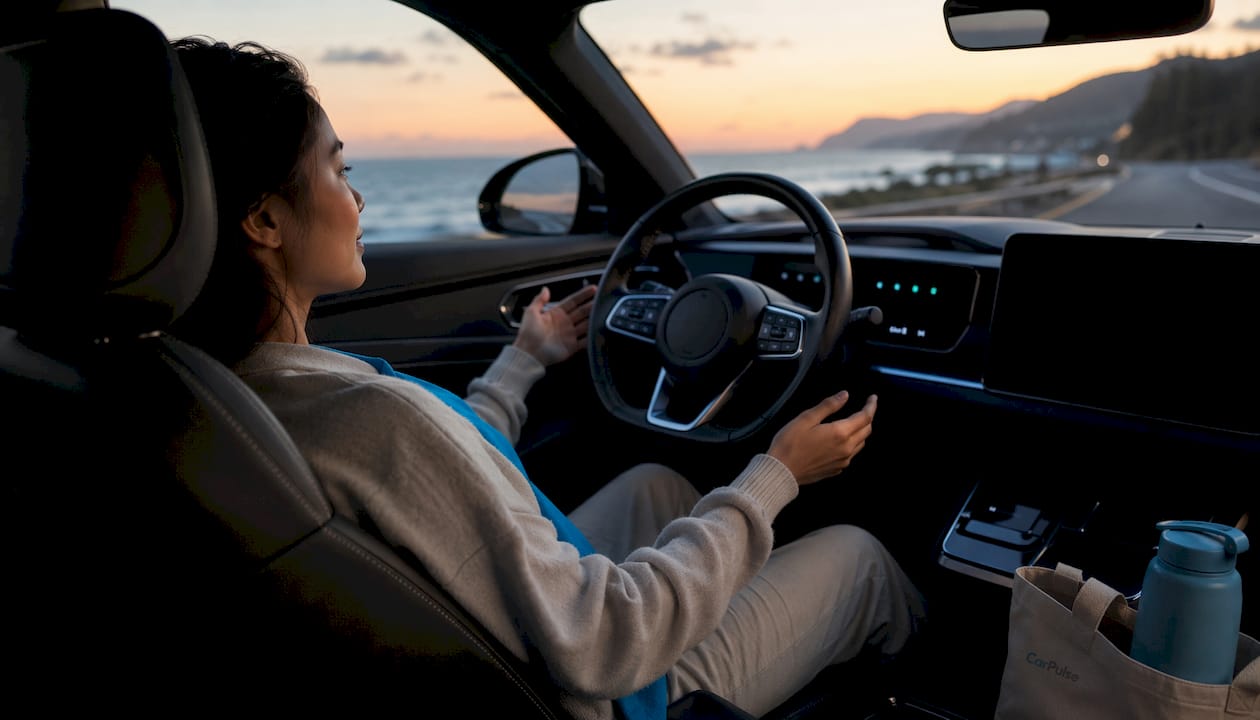
Traditional steering columns connect your hands to the wheels through a physical shaft. Steer-by-wire eliminates that linkage entirely, replacing it with electronic signals. The result is speed-variable steering ratios: light and responsive at low speeds, more stable at highway pace.
Steer-by-wire lets engineers tune the steering feel independently of the mechanical constraints that have defined vehicle dynamics for a century. That’s not an incremental improvement — it’s a different category of control.
Practical advantages:
- Precision: Steering response can be calibrated per driver profile
- Design freedom: No steering column means new cabin layout possibilities
- Reduced road vibration: Bumps don’t travel directly through the wheel
Pro Tip: If a 2026 model you’re considering offers steer-by-wire, ask the dealer for a low-speed parking lot test and a highway run back-to-back. The difference in feel between the two modes is the feature’s whole value proposition.
4. High-resolution projector headlights see more without blinding anyone
Halogen bulbs throw light in a cone. Modern high-resolution projector headlights use adaptive beam technology to shape exactly where light goes, illuminating the road ahead while cutting brightness precisely where oncoming drivers’ eyes would be.
- Adaptive beams track curves and adjust horizontally
- Glare reduction works in real time using camera data
- Pedestrian and road sign illumination improves without a full high-beam switch
For nighttime driving safety, this is one of the most underappreciated upgrades on 2026 vehicles.
5. Heated seatbelts and comfort features that actually matter
Heated seatbelts are emerging as a genuine cold-weather comfort feature, warming the belt webbing itself rather than relying solely on seat heat. Combined with ventilated seats, multi-zone climate control, and over-the-air software updates that can unlock new comfort settings remotely, the 2026 cabin experience is a step up.
Worth checking on your trim level:
- Heated and ventilated front and rear seats
- Adjustable lumbar with memory settings per driver profile
- Wireless charging pads with enough wattage to actually charge quickly
These features tend to appear in mid and upper trims. Confirm before signing.
6. Safety features you should require on any 2026 vehicle
The minimum safety checklist for a 2026 purchase includes multiple airbags, Electronic Stability Control, and a full Level-2 ADAS suite. For EVs, industry standards now point to a practical baseline driving range exceeding 300 miles and the ability to charge from low to high capacity within 20–30 minutes. More detail on EV-specific considerations is worth reviewing before committing to a battery-electric model.
Non-negotiable features per the AAA 2026 safety guide:
- AEB with pedestrian detection (federally required, standard on all 2026 models)
- Blind Spot Monitoring
- Lane Keeping Assist
- Adaptive Cruise Control with full stop-and-go
- Rear Cross-Traffic Alert
Pro Tip: Pull the IIHS rating for any vehicle on your shortlist before negotiating. Confirm which safety features are standard versus locked behind a higher trim — dealers rarely volunteer that information.
7. V2X communication connects your car to the road itself
Vehicle-to-everything (V2X) communication lets a car exchange data with traffic lights, other vehicles, and city infrastructure in real time. Signal phase and timing alerts warn you of upcoming red lights before you can see them. Cooperative adaptive cruise control synchronizes speed with nearby equipped vehicles, smoothing traffic flow. Smart parking guidance directs you to open spots.
The safety and efficiency gains compound as more V2X-equipped vehicles share the road.
8. AR dashboards and infotainment that knows you
Augmented reality head-up displays project navigation cues, speed limits, and hazard alerts directly onto the windshield in your line of sight. The result is fewer eye movements away from the road. Personalized infotainment profiles, tied to driver recognition, load your preferred apps, climate settings, and seat position automatically.
Wireless Apple CarPlay and Android Auto are table stakes now. The differentiator in 2026 is how well the system learns your habits and reduces the decisions you have to make while moving.
9. Cybersecurity is now a vehicle specification, not an afterthought
Connected vehicles are attack surfaces. Over-the-air update capability, while valuable for long-term vehicle performance, also requires robust encryption and authentication to prevent unauthorized access. Manufacturers in 2026 are implementing layered security architectures, intrusion detection systems, and regular security patch delivery through OTA channels. When evaluating a connected vehicle, ask specifically about the manufacturer’s security update commitment and track record.
10. Sustainable materials are changing what “premium” means inside
Recycled plastics, plant-based leathers, and upcycled textiles are appearing in cabins that previously used only virgin materials. Some manufacturers are sourcing interior fabrics from reclaimed fishing nets and post-consumer plastics. Energy-efficient manufacturing processes are reducing the carbon footprint of production itself. For buyers who factor environmental impact into purchase decisions, these details are now findable in model spec sheets, not just press releases.
11. Battery technology in 2026 goes beyond range numbers
Raw range figures get the headlines, but the more meaningful advances are in charging speed and longevity. Faster charging architecture means less time at a station on a long trip. Improved battery chemistry extends the number of charge cycles before capacity degrades, protecting the vehicle’s long-term value. AI-driven battery health monitoring, available on several 2026 platforms, forecasts range loss before it becomes noticeable and schedules service at optimal intervals.
For anyone browsing 2026 vehicle listings and weighing EV options, these battery specs deserve as much attention as the range number on the window sticker.
Key Takeaways
The top vehicle features 2026 models deliver are behavior-changing, not cosmetic: AEB, steer-by-wire, AI assistants, and V2X communication each alter how a car operates at a fundamental level.
| Point | Details |
|---|---|
| AEB is now standard | AEB detects obstacles at highway speeds, including pedestrians at night, and helps reduce crash risk. |
| Level-2 ADAS requires driver attention | AAA experts confirm ADAS assists but cannot replace vigilance, especially in rain or snow. |
| EV baseline has shifted | Industry standards now point to a driving range exceeding 300 miles and the ability to charge from low to high capacity within 20–30 minutes. |
| Steer-by-wire changes the feel | Speed-variable steering ratios improve precision and open new cabin design possibilities. |
| Cybersecurity is a spec to verify | OTA update capability requires strong encryption; ask manufacturers about their security patch commitment. |