Guides
How to Write a Car Listing Title That Gets Clicks

How to Write a Car Listing Title That Gets Clicks

The strongest listing title you can paste into Carpulse right now looks like this: 2019 Toyota Corolla LE — One Owner, 58K Mi, Accident-Free. It works because it front-loads the three facts buyers filter by first (year, make, model), adds a trust signal that narrows the field, and closes with proof. Buyers scanning on mobile see all of that before the title cuts off.
Use this template every time: [Year] [Make] [Model] [Trim] — [Key Selling Point] — [Mileage or Condition].
Carpulse’s VIN autofill handles the technical specs, so your title can stay tight and buyer-focused. “Low miles” and “one owner” are the phrases buyers actually type. Put them in the title, not buried in the description.
Key Takeaways
A strong car listing title follows the formula Year + Make + Model + Trim + Trust Signal + Proof, front-loaded within 60 characters so mobile buyers see every critical fact before the title cuts off.
| Point | Details |
|---|---|
| Front-load the essentials | Year, make, model, and trim must appear first — buyers filter by these before reading anything else. |
| Add one honest trust signal | “One Owner,” “Accident-Free,” or “CPO” lifts click-through rates more than vague adjectives. |
| Stay within 60 characters | Mobile cards truncate titles early; pack your strongest facts into the first 60 characters. |
| Test and update after 48–72 hours | Swap one element (trust signal or proof point) and compare inquiry volume to find what works. |
| Use Carpulse VIN autofill and valuation | Let structured fields carry technical specs so your title stays short, buyer-focused, and accurate. |
Table of Contents
- What every car listing title must include
- Ready-to-use templates and good-vs-bad examples
- How long should a car listing title be?
- Which search phrases do buyers actually use?
- How titles should differ for private sellers vs. dealerships
- Accuracy and compliance checklist
- How Carpulse features change what you put in the title
- Build a strong title in 30 seconds
- What buyers actually look for in titles
- List your car on Carpulse and get a free valuation first
- Sources
What every car listing title must include
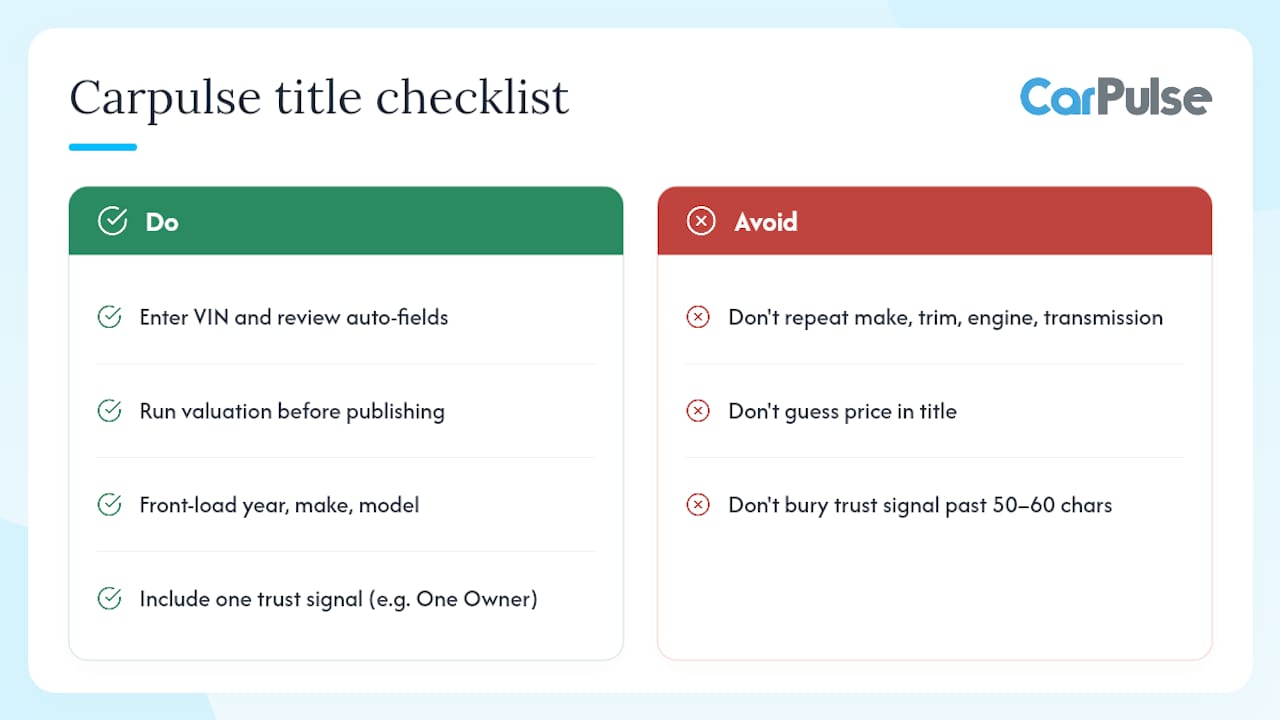
A high-converting title formula follows a strict priority order because buyers use these fields as filters before they ever read a description. Miss one and your listing disappears from search results.
- Year — Always first. “2021” beats “late model” every time because buyers filter by year, not adjectives.
- Make — Second position. Write it out fully: “Toyota,” not “Toy.” Abbreviations confuse search indexing.
- Model — Third. Use the exact model name as it appears on the vehicle: “Corolla,” not “sedan.”
- Trim or body type — Fourth, and worth including when space allows. “LE,” “XSE,” or “Hatchback” narrows the buyer pool to people who actually want your car. Avoid VIN-decoder gibberish like “1NXBR32E” — that belongs in the structured fields Carpulse fills automatically.
- One trust signal — Fifth. A single honest proof point (“Clean title,” “One owner,” “Low miles”) does more work than three vague adjectives. Per CurbSold’s listing guide, the title must do real work: include year, make, model, trim, and one hook.
Pro Tip: If you are unsure which trim to list, scan your VIN in Carpulse’s autofill field. It pulls the exact trim designation from the manufacturer database, so you never guess.
Ready-to-use templates and good-vs-bad examples
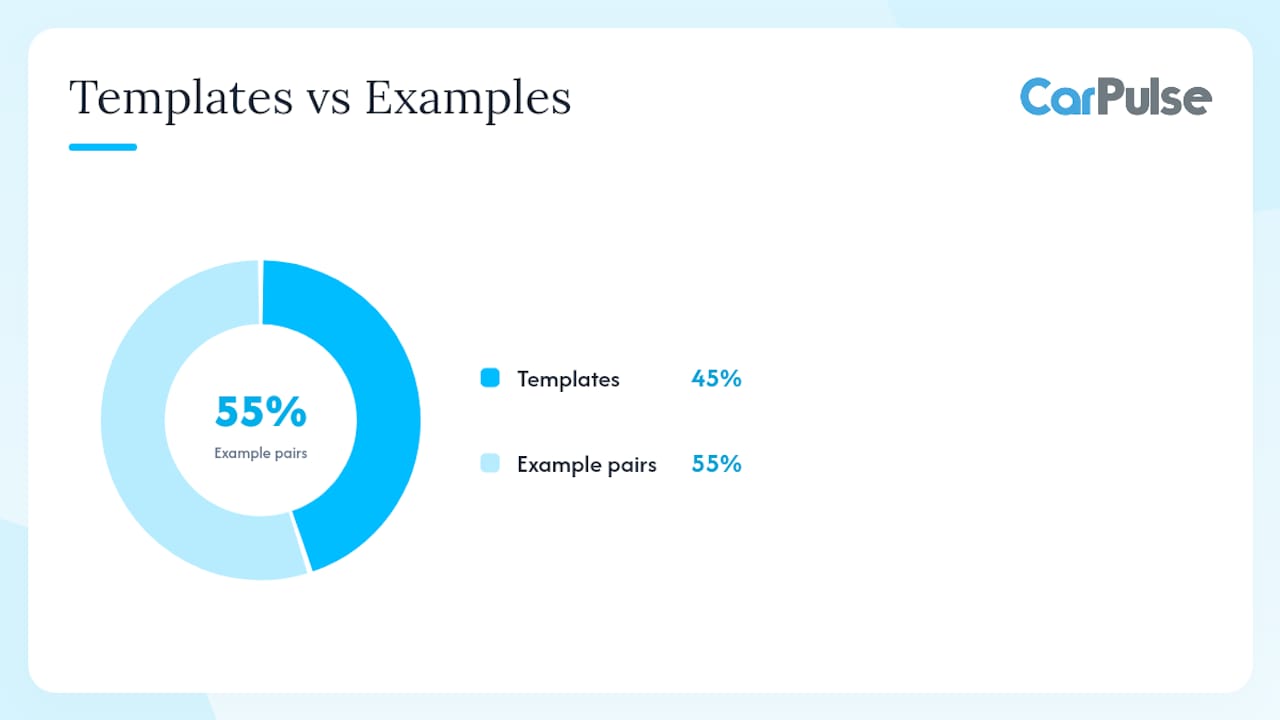
Car classifieds research consistently shows that Year + Make + Model + Trim + Proof + Hook outperforms vague or generic headlines across every platform. Here are five templates and six side-by-side comparisons you can adapt immediately.
| Template type | Structure | When to use | Example |
|---|---|---|---|
| Private seller (short) | Year Make Model — Trust signal | Single vehicle, fast sale | 2018 Honda Civic — One Owner |
| Private seller (long) | Year Make Model Trim — Signal — Condition | Buyers who want detail | 2020 Ford F-150 XLT — Clean Title |
| Dealer inventory | Year Make Model Trim — Certified — Dealer warranty | Verified dealership accounts | 2022 BMW 3 Series — CPO, 2-Yr Warranty |
| EV-focused | Year Make Model — Range/Battery — Miles | Electric vehicle buyers | Tesla Model 3 — Full Range Battery |
| Trade-in friendly | Year Make Model — Service Records — Priced to Sell | Motivated seller | Subaru Outback — Full Service History — Priced to Move |
Six paired examples:
- Bad: “Nice Toyota for sale” / Good: “2019 Toyota Camry SE — One Owner, 52K Mi”
- Bad: “Ford truck great condition” / Good: “2021 Ford F-150 XLT 4WD — Clean Title, 38K Mi”
- Bad: “Electric car low price!!!” / Good: “2022 Chevrolet Bolt EV — 28K Mi, Full Charge Range”
- Bad: “BMW luxury sedan must see” / Good: “2020 BMW 5 Series 530i — CPO Certified, 41K Mi”
- Bad: “Selling my car ASAP” / Good: “2016 Honda Accord EX — Accident-Free, 88K Mi”
- Bad: “2018 Corolla good car clean” / Good: “2018 Toyota Corolla LE — One Owner, Clean Carfax”
To paste any template into Carpulse: open your listing draft, click the title field, paste your adapted title, and confirm the VIN autofill has populated the structured fields below it. The title stays short; the details live in the structured data.
How long should a car listing title be?
Mobile-first behavior shapes everything here. Platform character limits vary significantly, and preparing platform-specific variants saves you from invisible truncation.
Front-load the most searchable facts so the first 60 characters carry the full weight of the listing. “2021 Honda CR-V EX — One Owner” fits inside every platform’s visible window. “One Owner — 2021 Honda CR-V EX” buries the year and make behind a phrase buyers do not search by.
Capitalization: use title case for make and model names, sentence case for everything else. Avoid ALL CAPS entirely. “MUST SELL TODAY!!!” reads as desperation and gets scrolled past. Skip exclamation points, slashes, and ellipses — they eat characters without adding meaning.
Which search phrases do buyers actually use?
Phrases like “Low Mileage,” “Clean Carfax,” and “One Owner” measurably increase click-through rates, and localizing titles can raise local search relevance on marketplace platforms.
High-value phrases to include when accurate:
- “Low miles” or “Low mileage” — the single most searched qualifier after year/make/model
- “One owner” — signals lower wear and cleaner history
- “Accident-free” or “Clean Carfax” — addresses the buyer’s biggest fear upfront
- “CPO” (Certified Pre-Owned) — for dealer listings with manufacturer backing
- “EV” or “Electric” — buyers searching for electric vehicles use both terms
- “4WD” or “AWD” — drivetrain matters in regions with winter weather
Place year, make, and model first. Then add your hook phrase. Then close with proof (mileage or condition). That order matches how buyers scan and how marketplace search algorithms weight title tokens.
Avoid keyword stuffing. “2019 Toyota Corolla LE Low Miles One Owner Clean Title Accident Free Best Price” is a wall of text that reads as spam. Pick your two strongest signals and stop there.
How titles should differ for private sellers vs. dealerships
The structure stays the same. The trust cues shift.
Private seller: “2020 Mazda CX-5 Touring — One Owner, Full Service Records, 61K Mi” Dealership: “2020 Mazda CX-5 Touring — Dealer Certified, 2-Yr Warranty, 61K Mi”
Private sellers build trust through personal history: single ownership, documented maintenance, and accident-free records. Dealers build trust through institutional signals: certification, warranty coverage, and verified dealer accounts on Carpulse.
When to add a city or region: if you are listing on Carpulse and your vehicle is in a specific city, adding the location in the title (“Tirana — 2021 VW Golf”) can lift local search relevance. Keep it to one city name and place it at the start or end, never in the middle where it breaks the year-make-model sequence.
Dealers should abbreviate cleanly: “CPO” instead of “Certified Pre-Owned,” “2-Yr Warr” if space is tight. Private sellers should spell out “One Owner” and “Full Service Records” because those phrases carry more weight than abbreviations buyers may not recognize.
Accuracy and compliance checklist
False claims in a listing title create disputes, damage your seller reputation, and can expose you to legal liability. Keep every word verifiable.
- Do include: “Clean title — no accidents” when you have documentation to back it.
- Do include: “Rebuilt title — see photos” when applicable. Hiding title status is the fastest way to lose a buyer’s trust after contact.
- Avoid: “Perfect condition” when you know of any damage. Buyers will see the car.
- Avoid: Understating mileage. Odometer fraud carries federal penalties under the Truth in Mileage Act.
- Avoid: “Runs great” as a substitute for factual claims. It signals you have nothing specific to say.
Move longer disclosures into the listing body. If the car has a salvage history, write “Rebuilt title” in the title and add full detail in the description. A brief title flag plus a thorough body explanation is the right split.
How Carpulse features change what you put in the title
Carpulse’s VIN-based listing autofills make, model, trim, engine, and transmission into structured fields the moment you enter your VIN. That means your title does not need to carry those technical details. Use the title for what buyers scan; let the structured fields handle what buyers filter.
The free valuation tool gives you a market-based price estimate before you publish. Run it first. If you plan to mention price in your title or first description line, the valuation gives you a defensible number rather than a guess.
On the Carpulse mobile app (iOS and Android), listing cards show roughly the first 50–60 characters of the title before truncating. That reinforces the front-loading rule: year, make, model, and your strongest trust signal all need to land inside that window.
Pro Tip: After entering your VIN in Carpulse, review the auto-populated fields before writing your title. If the trim, engine, and mileage are already in the structured data, your title only needs to add the one trust signal and proof point that structured fields cannot capture, like “One Owner” or “Accident-Free.”
Build a strong title in 30 seconds
A repeatable four-step process removes the guesswork at listing time.
- Select year, make, model, and trim from the Carpulse VIN autofill results. Confirm they match your registration documents.
- Choose one trust signal from this list: One Owner, Clean Title, Accident-Free, CPO, Full Service Records. Pick the one that is both true and most relevant to your buyer.
- Add proof — mileage or condition — in the final position: “58K Mi” or “Like New.”
- Count characters. If the title exceeds 60 characters, cut the trim abbreviation or shorten mileage to “58K Mi” instead of “58,000 Miles.”
Final example from the steps: 2021 Subaru Forester Premium — One Owner, 47K Mi.
After 48–72 hours, check your inquiry count in the Carpulse dashboard. If it is low, swap the trust signal for a different one (“Accident-Free” instead of “One Owner”) and give it another 48 hours. That single-variable swap is the fastest way to learn what your specific buyer pool responds to.
What buyers actually look for in titles
Most sellers spend their energy on photos and price, then dash off a title in ten seconds. That is backwards. The title is the first filter. A buyer searching “2021 Subaru Forester one owner” on Carpulse will never see your listing if those words are not in the title, no matter how good the photos are.
The sellers who get the most inquiries are not the ones with the lowest prices. They are the ones whose titles match exactly what buyers type into the search bar. VIN autofill and the valuation tool on Carpulse handle the mechanical work. The title is the one place where your judgment as a seller adds something the platform cannot generate for you.
Use it deliberately.
List your car on Carpulse and get a free valuation first
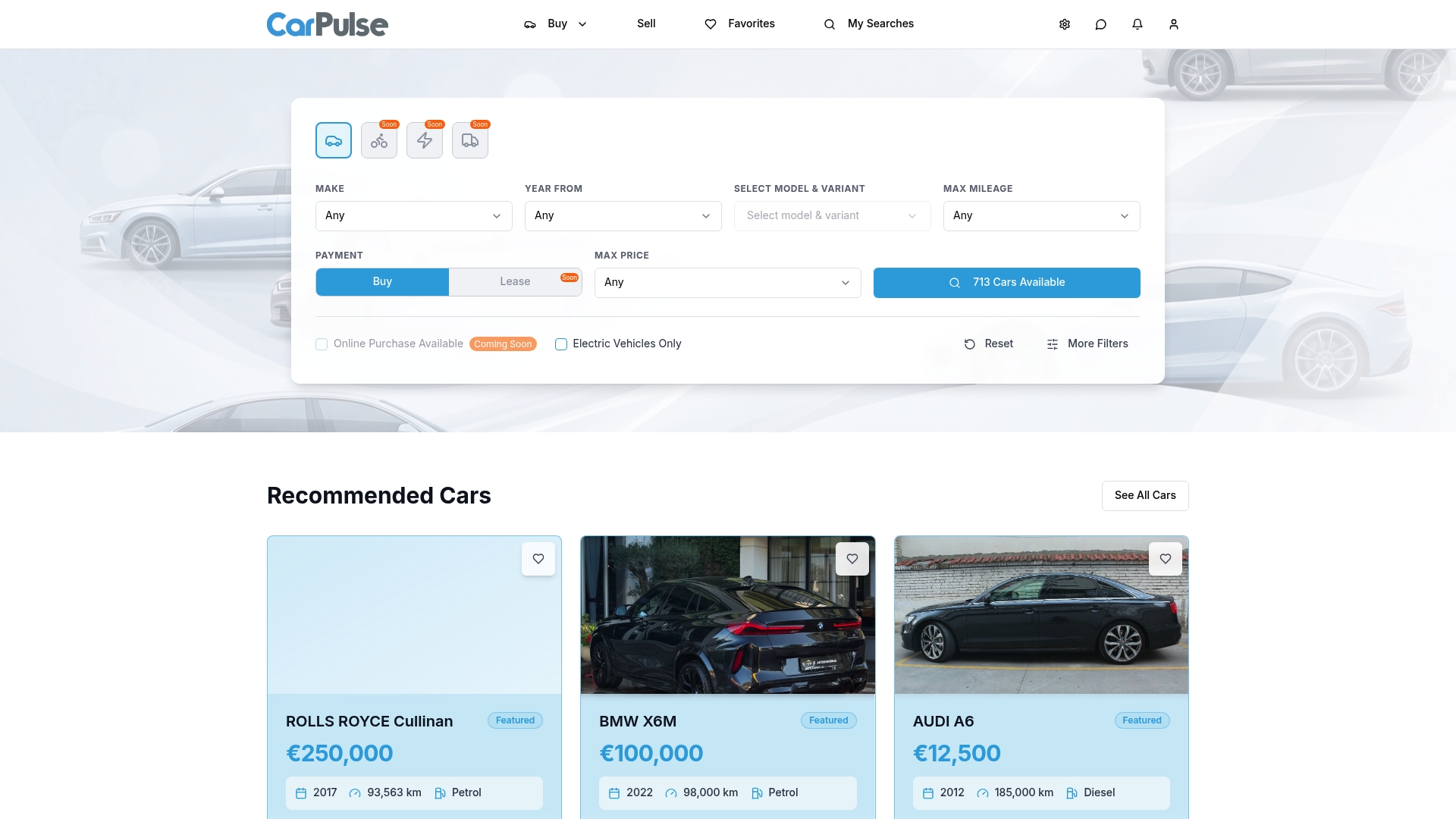
Carpulse gives private sellers and dealerships a faster path from “ready to sell” to “listing live.” Enter your VIN and the platform fills make, model, trim, and specs automatically, so your title stays focused on what buyers care about. Before you set a price, run the free AI valuation to get a market-based estimate that holds up to buyer scrutiny. The Carpulse mobile app for iOS and Android lets you manage inquiries and update your listing from anywhere. When you are ready for more visibility, optional paid promotion features push your listing to the top of search results. Start your listing on Carpulse and publish in minutes.
Sources
- How to Optimize Car Listings for AutoTrader, Cars.com & Facebook Marketplace | CarPixAI
- How to Write a Car Listing That Actually Sells | CurbSold
- listing title phrases with proven phrases
- How to Write Car Classifieds That Sell
- Car Ad Title Generator - Sell Car Advisor