Guides
The Role of Fuel Efficiency in Cars for Albanian Buyers
The Role of Fuel Efficiency in Cars for Albanian Buyers
TL;DR:
- Modern vehicles combine turbocharging and direct injection to deliver higher power with lower fuel consumption, debunking the myth that efficiency sacrifices performance.
- Driver behavior, maintenance, and driving conditions significantly influence real-world fuel economy, with smooth driving and proper car upkeep offering substantial savings.
- Hybrids present a practical efficiency solution for Albanian drivers, balancing fuel savings and environmental benefits without relying on extensive charging infrastructure.
Today’s cars are more powerful than ever, yet they also sip fuel at rates that would have seemed impossible two decades ago. That apparent contradiction sits at the heart of the role of fuel efficiency in cars: it is not a compromise on performance, but a sign of smarter engineering. For Albanian drivers juggling rising fuel prices and increasingly congested roads, understanding how fuel economy works, what actually affects it, and how to use that knowledge when buying a car can mean saving thousands of lekë every year while also driving cleaner.
Table of Contents
- Key Takeaways
- The role of fuel efficiency in cars: how the technology works
- Behavioral and environmental factors that affect real-world efficiency
- Comparing fuel efficiency across vehicle types and fuels
- Practical tips for buying and driving efficiently in Albania
- My take: why Albanians still underestimate fuel efficiency
- Find your most fuel-efficient car on Carpulse
- FAQ
Key Takeaways
| Point | Details |
|---|---|
| Efficiency does not sacrifice power | Modern turbocharging and fuel injection deliver more horsepower with less fuel consumed per kilometer. |
| Driving style matters as much as the car | Aggressive acceleration and hard braking can reduce fuel economy by up to 40% in city conditions. |
| Maintenance protects efficiency gains | Correct tire pressure and engine tuning can together improve fuel economy by more than 4%. |
| Hybrids offer the strongest middle ground | Hybrid powertrains extend fuel savings in stop-and-go traffic without the range anxiety of full EVs. |
| Upfront cost vs. long-term savings | A more fuel-efficient car often pays back its price premium within two to three years of normal driving. |
The role of fuel efficiency in cars: how the technology works
The biggest myth in automotive culture is that a fuel-efficient car must be slow or boring. That trade-off largely no longer exists. Turbocharging, precise injection, and smarter gearboxes now allow engineers to extract far more energy from every liter of fuel, so you get higher output and lower consumption at the same time.
Here is how the most impactful technologies actually work together:
- Engine downsizing with turbocharging. A small-displacement turbocharged engine, say a 1.0-liter or 1.5-liter unit, produces power comparable to a naturally aspirated 1.8 or 2.0-liter engine by forcing more air into each combustion cycle. At light loads, the engine behaves like a tiny, thrifty motor. Under acceleration, the turbo wakes up and delivers the punch you expect.
- Direct fuel injection and combustion control. Modern injectors fire fuel at extremely high pressure directly into the combustion chamber at precisely timed intervals. This reduces waste, lowers exhaust temperatures, and improves the completeness of combustion, all of which translate into more kilometers per liter.
- Multi-speed and dual-clutch transmissions. Eight, nine, and ten-speed automatics keep the engine in its most efficient rev range longer than older four or five-speed units ever could. Dual-clutch gearboxes add near-instant shifts that reduce power interruptions.
- Lightweight materials and aerodynamics. High-strength steel, aluminum, and composite panels reduce the weight a car must carry. At the same time, active grille shutters, underbody panels, and sloped rooflines cut aerodynamic drag, which matters enormously at highway speeds.
- Start-stop systems and regenerative braking. Start-stop cuts the engine at traffic lights, eliminating idle fuel burn. In hybrids and EVs, regenerative braking can increase driving range by up to 30% by converting kinetic energy back into stored electricity rather than wasting it as heat.
Pro Tip: When comparing two turbocharged engines of different displacements, look at the official fuel consumption figure at highway speeds, not just the city figure. A smaller engine may work harder and drink more on long Albanian highway runs than a slightly larger, less stressed unit.
Behavioral and environmental factors that affect real-world efficiency
Technology sets the ceiling on how efficient your car can be. Your behavior and daily conditions determine how close you actually get to that ceiling.
The single most controllable variable is how hard you press the pedals. Rapid acceleration and hard braking reduce fuel economy by 10 to 40% in city driving and by 15 to 30% on highways, which translates to an estimated $149 to $595 in extra fuel costs per year. For Albanian commuters dealing with Tirana’s peak-hour traffic or the winding mountain roads between cities, this is not an abstract number. It adds up quickly at the pump.
Speed compounds the problem fast. Every 5 mph over 50 mph adds roughly $0.24 per gallon to your effective fuel cost. On a long drive from Tirana to Shkodër, those extra kilometers per hour of cruising speed noticeably raise your fuel bill. Smooth, moderate-speed driving is one of the cheapest improvements any driver can make.
Here are the most effective maintenance and behavioral steps, ranked by impact:
- Maintain correct tire pressure. Underinflated tires reduce fuel economy by about 0.2% per PSI below the recommended level. Check pressures monthly and especially before long trips.
- Keep up with engine servicing. A properly tuned engine can improve fuel economy by up to 4% compared to a neglected one. Follow manufacturer service intervals and use the correct oil grade.
- Remove roof racks and cargo carriers when not in use. Roof racks reduce highway fuel economy by 6 to 17% by increasing aerodynamic drag. An empty rack you forgot to remove is costing you money every kilometer.
- Use air conditioning selectively. A/C can cut city fuel economy by up to 25%. On cooler Albanian mornings or at speeds below 60 km/h, open windows are almost always more efficient.
- Avoid unnecessary weight. Every extra 45 kilograms in the car reduces fuel economy by roughly 1 to 2%. Clear out the trunk of items you do not need on every trip.
Cold weather is one factor that cannot be avoided entirely. Cold engines run richer fuel mixtures until they reach operating temperature, and cold air is denser, increasing aerodynamic resistance. Short winter trips in cities like Korçë or Gjirokastër will show noticeably higher fuel consumption than the same trips in summer. Warming the car by driving gently, rather than sitting and idling, reaches operating temperature faster and wastes less fuel.
Pro Tip: Plan your route before you leave. Stop-and-go navigation corrections and unexpected detours add both distance and braking events. On familiar routes, predictive coasting toward red lights saves more fuel than any gadget you could install.

Comparing fuel efficiency across vehicle types and fuels
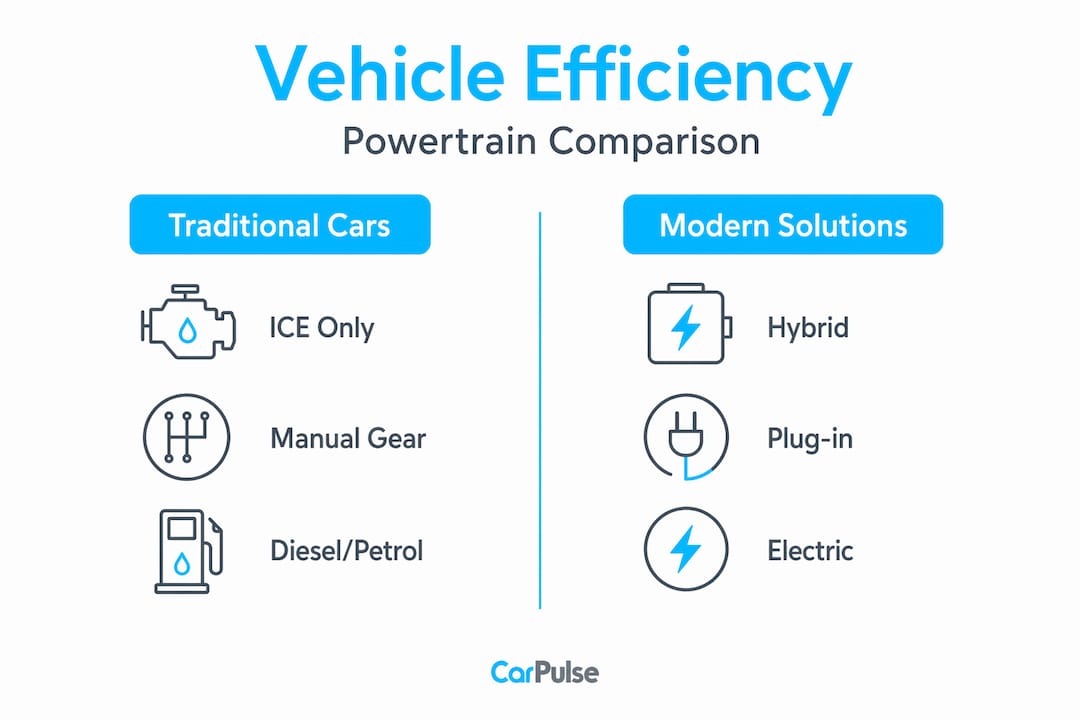
Not all powertrains approach efficiency the same way. Understanding the differences helps you make a better decision at purchase time, especially given Albania’s current fuel infrastructure and driving patterns.
| Vehicle type | Typical efficiency | Best suited for | Key limitation |
|---|---|---|---|
| Conventional ICE (petrol/diesel) | 10-18 km/l depending on class | Long highway drives, rural areas | Efficiency gains from ICE improvements are slowing to about 0.7-0.8% annually |
| Full hybrid (HEV) | 18-25 km/l in mixed driving | Urban commuting, city traffic | Higher purchase price; no plug-in charging option |
| Plug-in hybrid (PHEV) | 25+ km/l with regular charging | Mixed urban and highway use | Needs charging infrastructure; heavier battery pack |
| Battery electric (BEV) | Equivalent to 30+ km/l | Urban and suburban daily driving | Range and charging network still developing in Albania |
The raw efficiency gap between powertrains is stark. EVs convert about 67% of battery energy into motion, while conventional petrol engines convert only around 25%. That gap is real and it matters for running costs. However, Albania’s EV charging network remains thin outside major cities, which means a full EV carries practical risks for drivers who regularly travel between regions.
Hybridization remains the most practical efficiency bridge for most Albanian buyers right now. Vehicles like the Toyota Corolla Hybrid or the Yaris Hybrid recover energy in Tirana’s stop-and-go traffic without requiring any charging infrastructure. The fuel savings are real, the range anxiety is zero, and the environmental benefit over a conventional car is significant. For a more detailed look at comparing two popular SUV options side by side, the RAV4 vs. Tiguan comparison on Carpulse breaks down efficiency and running costs in practical terms.
Practical tips for buying and driving efficiently in Albania
Choosing a fuel-efficient car in Albania is more than reading a spec sheet. Here is what actually moves the needle when you are shopping and when you are on the road.
- Filter by fuel type before you browse. On Carpulse, you can filter listings by fuel type, which immediately narrows results to hybrids, diesels, or petrols based on your preference. This saves hours of manual comparison.
- Prioritize models with strong used-market availability. The Toyota Yaris Hybrid, Volkswagen Polo TDI, and Renault Clio TCe are all popular in Albania for good reason: parts are available, mechanics know them, and resale values hold up well. Lower depreciation is itself a form of long-term efficiency. Check the top fuel-efficient picks for Albanian drivers for a curated starting point.
- Calculate the total cost of ownership, not just the sticker price. A car that costs 500,000 lekë more upfront but saves you 8,000 lekë per month in fuel pays for itself in about five years. That math changes dramatically if you drive more than the average.
- Ask for real-world consumption figures, not WLTP ratings. Official fuel consumption tests rarely match Albanian driving conditions, which include mountainous terrain, inconsistent road surfaces, and summer heat. Ask sellers or owners in forums for their actual figures.
- Use the Carpulse mobile app to save and compare. Bookmarking multiple listings and comparing fuel types side by side keeps your decision organized, especially when you are deciding between a diesel and a hybrid at similar price points.
The environmental argument reinforces the financial one. Lower fuel consumption means fewer CO2 emissions per kilometer, which benefits not just your wallet but Albania’s increasingly visible air quality challenges in urban centers.
My take: why Albanians still underestimate fuel efficiency
I have watched the Albanian car market closely for years, and one pattern stands out. Buyers consistently overweight horsepower and underweight running costs when they evaluate a vehicle. A 150-horsepower petrol sedan feels more exciting in a test drive than a 116-horsepower hybrid. But six months into ownership, the driver of that sedan is spending 35 to 40% more at the pump while the hybrid owner has already started pocketing the difference.
What I find equally interesting is that behavioral factors often erase the efficiency advantage that a better car provides. I have seen drivers buy an efficient diesel, then floor it off every traffic light in Tirana, and end up with worse consumption than their neighbor’s older petrol car driven smoothly. The car is only half the equation.
My honest recommendation: treat fuel efficiency as a financial decision first and an environmental one second. Not because the environment matters less, but because the financial argument tends to stick longer and influence behavior more consistently. When you see the monthly savings in your budget, you start driving more smoothly, maintaining your car better, and choosing smarter on your next purchase. The environmental benefit follows naturally.
The future is clearly heading toward electrification, but Albania needs a few more years of charging infrastructure before a full EV makes sense outside Tirana for most buyers. Hybrids are the move right now. They reward you immediately, require nothing from the infrastructure around you, and prepare your expectations for what fully electric ownership will eventually feel like.
— Henri
Find your most fuel-efficient car on Carpulse
If this article helped clarify what to look for, the next step is finding the right car. Carpulse is Albania’s largest online car marketplace, and its search filters make it straightforward to compare vehicles by fuel type, mileage, and price in one place.
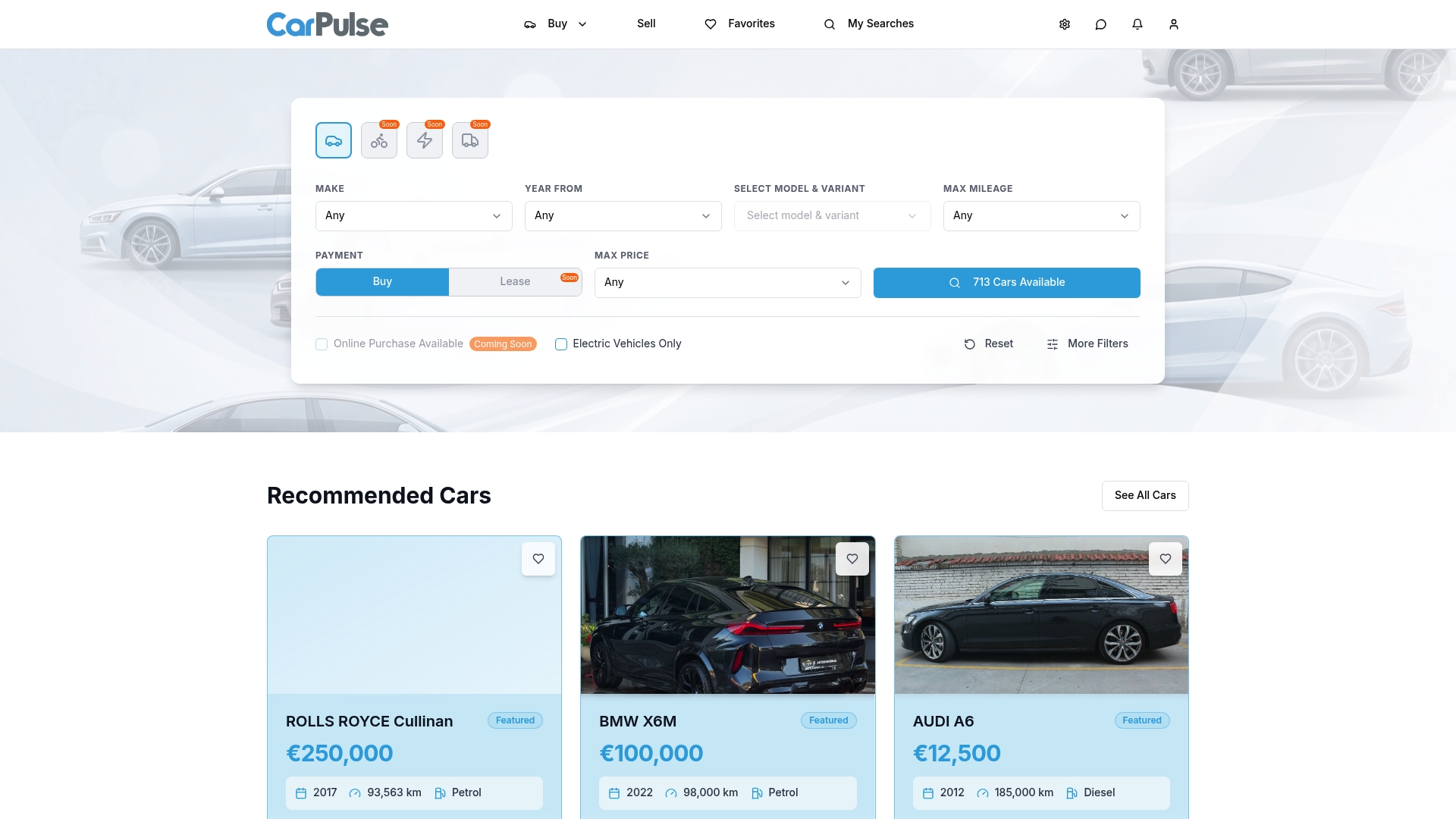
Whether you are looking for a proven hybrid, a modern turbocharged petrol, or an efficient diesel for long regional drives, browse the full listings on Carpulse and filter by what matters to you. The platform includes both private sellers and verified dealerships, so you can compare your options with confidence. Save your searches, bookmark your favorites, and use the Carpulse mobile app to stay on top of new listings as they appear. Your next fuel-efficient car is already listed.
FAQ
What is the role of fuel efficiency in cars?
Fuel efficiency determines how far a car travels on a given amount of fuel. It directly affects running costs, CO2 emissions, and how long you can drive between refueling stops.
Does a more fuel-efficient car always mean less power?
Not anymore. Modern turbocharging and direct injection allow smaller engines to produce power comparable to larger naturally aspirated engines while using significantly less fuel per kilometer.
How much can driving habits affect fuel economy?
Quite a lot. Aggressive driving can reduce fuel economy by 10 to 40% in city conditions, adding hundreds of dollars per year in unnecessary fuel expenses.
Are hybrid cars worth it for Albanian drivers?
Yes, particularly for urban and mixed driving. Hybrids recover energy during braking, work best in stop-and-go traffic, and require no charging infrastructure, making them practical throughout Albania right now.
What maintenance steps protect fuel efficiency the most?
Keeping tires inflated to the recommended pressure and following the engine service schedule are the two highest-impact steps, together capable of improving fuel economy by more than 4%.
Recommended
- Lista e makinave ekonomike: Zgjedhjet kryesore për… | CarPulse Albania
- Blerja e Makinave Online në Shqipëri: Rritja e EV-ve 2026 | CarPulse Albania
- Blerja e makinave online në Shqipëri: Rritje 12% e EV në… | CarPulse Albania
- Çmimet e Makinave të Përdorura në Shqipëri: Faktorët Kyç… | CarPulse Albania