
Guides
How to Sell Your Car Online Safely and Fast
How to Sell Your Car Online Safely and Fast
List your car on a trusted, VIN-enabled marketplace, price it against at least 10 comparable listings, upload multiple sharp photos, and answer buyer messages within 30 minutes. That combination is what actually moves a car off your hands quickly. Everything below breaks each step into the exact fields, photos, and documents you need.
TL;DR:
- Listing on a dedicated car marketplace with VIN auto-fill and verified dealer badges speeds up sales and reduces buyer questions.
- Preparing high-quality photos showing six or more angles and fixing small issues significantly increases listing attractiveness and speeds up the sale.
- Responding to inquiries within 30 minutes, setting a clear minimum price, and verifying payments promptly prevent scams and facilitate negotiations.
- Using a well-structured title, accurate description, and competitive pricing based on at least 10 comparable listings improves response rates and reduces time on market.
Table of Contents
- Where should you list your car for sale?
- What should you prepare before you list the car?
- How do you create a listing that actually gets responses?
- How do you handle inquiries and negotiate without getting burned?
- What scams should you watch for when selling online?
- Why VIN auto-fill and verified dealers speed up sales
- A realistic timeline for selling your car online
- Start your listing with CarPulse today
- Helpful links and resources
Where should you list your car for sale?
Not every platform attracts the same buyer. General classifieds pull in bargain hunters comparing dozens of categories at once. Social media groups get you local reach but almost no filtering or trust signals. A dedicated car marketplace, by contrast, brings buyers who are already shopping specifically for a vehicle, filtering by make, model, mileage, and price the moment they land on the page.
That distinction changes how fast your listing gets serious attention. A buyer scrolling through a mixed classifieds feed might glance past your car in two seconds. A buyer on a car-specific marketplace already has a budget and a shortlist in mind, which means fewer wasted inquiries and more offers that go somewhere.
Before you commit to a platform, run it through a short checklist:
- Audience size: Does the platform have enough active buyers browsing your car’s category and price range?
- Trust features: Does it support VIN-based auto-fill and show verified dealer badges, or is every listing anonymous and unverifiable?
- Mobile access: Can you manage inquiries, edit photos, and reply to messages from a phone app, not just a desktop browser?
- Listing costs: What does it charge to list, and are there paid boosts worth the extra cost for your situation?
- Search filters: Can buyers actually narrow results by fuel type, year, and mileage, or will your car get buried in an unsorted feed?
VIN auto-fill matters more than most first-time sellers expect. When a buyer sees a listing with verified technical specs pulled straight from the vehicle identification number, they skip the “is this accurate?” question entirely. Marketplace apps that integrate VIN data cut down on the back-and-forth that usually stalls a sale in its first 48 hours. Verified dealer presence on the same platform adds another layer of credibility. Buyers who see a mix of private sellers and vetted dealerships tend to trust the marketplace itself more, which spills over to your listing even if you’re selling privately.
Pro Tip: If a platform lets you preview how your listing appears on mobile before publishing, always check it. More than half of car shoppers browse listings on their phones first, and a photo that looks great on a desktop can crop awkwardly on a small screen.
What should you prepare before you list the car?
A clean car photographs better and negotiates better. Wash it, vacuum the interior, wipe down the dashboard, and pull out anything you don’t want photographed in the trunk or back seat. Small fixes matter more than big ones here: replace a burned-out bulb, top off fluids, fix a cracked windshield wiper. Skip cosmetic repairs like a full repaint or new upholstery unless the damage is severe. Detailing and minor fixes raise perceived value without costing you the extra profit a full repair job would eat into.
Follow this order when preparing your listing package:
- Wash and detail the exterior and interior, including the trunk and engine bay if it’s visibly dirty.
- Fix small issues like bulbs, wiper blades, or a low tire, since these are the first things a buyer notices in person.
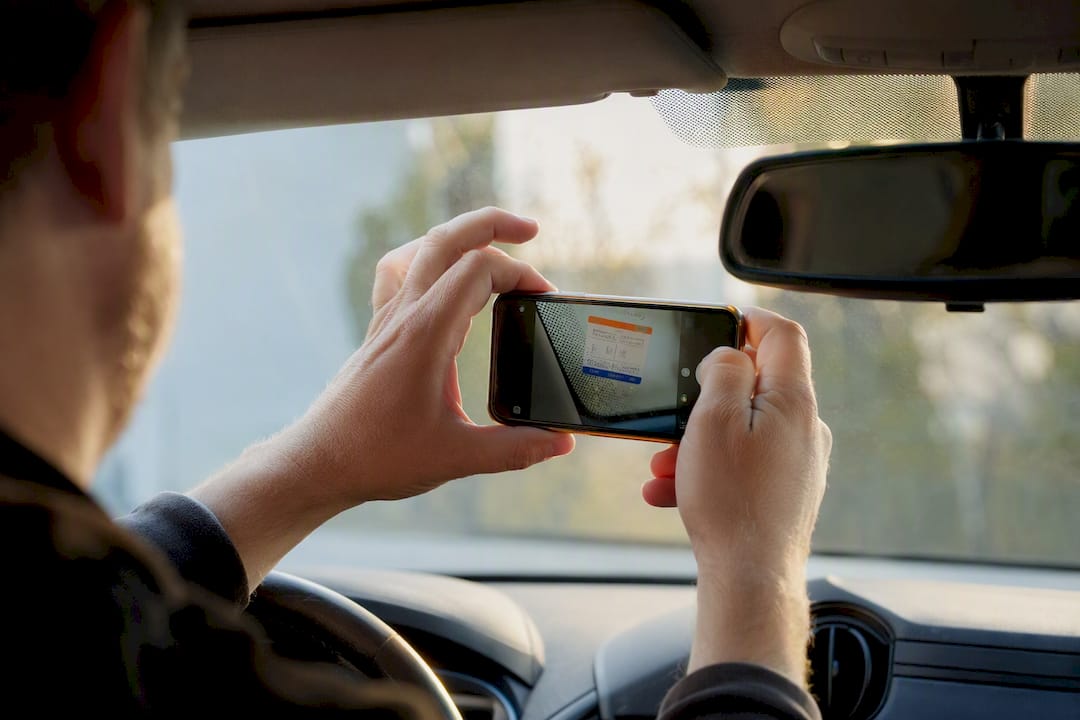
- Take at least six photos: front, back, both side profiles, the dashboard and odometer, and the engine bay.
- Gather your documents: title or ownership certificate, registration, service records, inspection or emissions certificate, and your ID.
- Confirm your VIN against your registration paperwork so the number you enter into the listing matches exactly.
Statistic Callout: Listings with six or more high-quality photos sell noticeably faster than listings with two or three grainy shots. Photos aren’t decoration here. They’re the main reason a buyer clicks through instead of scrolling past.
Odometer and service-sticker photos deserve their own shot, not a quick zoom from the dashboard picture. Buyers specifically look for these because they confirm mileage claims and maintenance history without having to ask.
How do you create a listing that actually gets responses?
Your title does most of the early work. Skip generic phrases like “car for sale” and lead with the specifics a buyer searches for: year, make, model, and one standout detail (low mileage, single owner, recent service). The first two lines of your description need to answer the questions a buyer types into search bars before they even click your listing, things like fuel type, transmission, and condition.
Pricing is where most sellers guess and lose money either way. Pull up at least 10 similar listings for your car’s year, mileage, and trim, then set your asking price slightly above the minimum you’d actually accept. That buffer gives you room to negotiate down without going below your floor, and it keeps your listing from looking desperate or overpriced compared to the market.
Use VIN-based auto-fill wherever your platform supports it. Typing in engine size, trim level, and factory options by hand invites typos, and a single wrong spec can trigger a wave of “is this accurate?” messages that eat your evenings. Auto-filled technical data from the VIN removes that friction before a buyer even reaches out.
When you upload photos, order matters:
- Lead with your best exterior three-quarter shot, taken in daylight against a plain background.
- Follow with the opposite side profile, then the front and rear.
- Include the dashboard with a clear odometer reading.
- Add the engine bay and any service stickers or maintenance records.
- Close with interior seats and trunk space, especially if they’re clean and roomy.
Write captions that answer a question, not just label the photo. “Odometer at time of listing, 84,000 km” tells a buyer more than “dashboard.”
Pro Tip: Photograph your car at the same time of day you’d want to meet a buyer for a test drive. Morning or late afternoon light is softer and shows the paint’s true color better than harsh midday sun.
CarPulse’s own listing guidance for private sellers walks through similar field-by-field setup if you want a second pass before publishing.
How do you handle inquiries and negotiate without getting burned?
Speed wins here more than charm. Replying within 30 minutes puts you ahead of sellers who check messages once a day, because buyers browsing multiple listings usually book a viewing with whoever answers first. A short qualifying message works better than a wall of text: “Thanks for reaching out. The car is still available. Are you looking to view it this week, and do you have financing already sorted?”
Set your absolute minimum price before you start negotiating, not during a conversation with a buyer standing in front of you. Write it down somewhere private. If a buyer offers a deposit to hold the car, get it in writing and confirm it clears before you take the listing down elsewhere. Stay upfront about any defects. A buyer who finds an undisclosed issue during inspection will either walk away or renegotiate the whole price downward, and either outcome costs you more time than honesty would have.
For meetings and test drives, follow a simple sequence:
- Meet in a public location with good lighting and other people around, ideally during daylight hours.
- Verify the buyer’s ID before handing over keys for a test drive, and note the license plate of any car they arrive in.
- Ride along on the test drive and set the route in advance rather than letting the buyer pick it.
- Confirm payment method before the drive, so you’re not negotiating logistics after they’ve already fallen in love with the car.
- Complete paperwork (bill of sale, title transfer, release of liability) before or immediately after funds clear, never after the buyer has driven off.
Pro Tip: Never hand over the only set of keys until payment has fully cleared in your account. A “pending” transfer is not the same as cleared funds, and scammers know exactly how long that gap lasts.
What scams should you watch for when selling online?
Overpayment scams are the most common trick in online car sales. A buyer sends a check or transfer for more than the asking price and asks you to refund the difference, usually right before their original payment bounces. Fake escrow services are a close second: a “buyer” insists on using an escrow site you’ve never heard of, which turns out to be a page they control entirely. Watch for remote buyers who want to purchase sight unseen and arrange third-party shipping. That setup lets a scammer disappear the moment your car is loaded onto a truck you never verified.
Before you accept any payment, run through these checks:
- Confirm a bank transfer has actually cleared by calling your bank directly, not by trusting a screenshot the buyer sent you.
- Avoid accepting cashier’s checks or money orders unless you can verify them with the issuing bank in person.
- Be wary of any buyer who overcommunicates urgency, especially pressure to skip a test drive or meet outside a public place.
- Never share sensitive documents like your ID or bank details over chat before a deal is confirmed and you’ve met the buyer.
Transparent communication paired with complete documentation cuts your dispute risk sharply, because a buyer with nothing to hide won’t push back on basic verification steps. If a deal starts feeling wrong, pause it. Report suspicious behavior to your platform’s support team immediately rather than trying to handle it yourself. Most marketplaces would rather flag a bad actor early than deal with a fraud complaint after the fact.
Why VIN auto-fill and verified dealers speed up sales
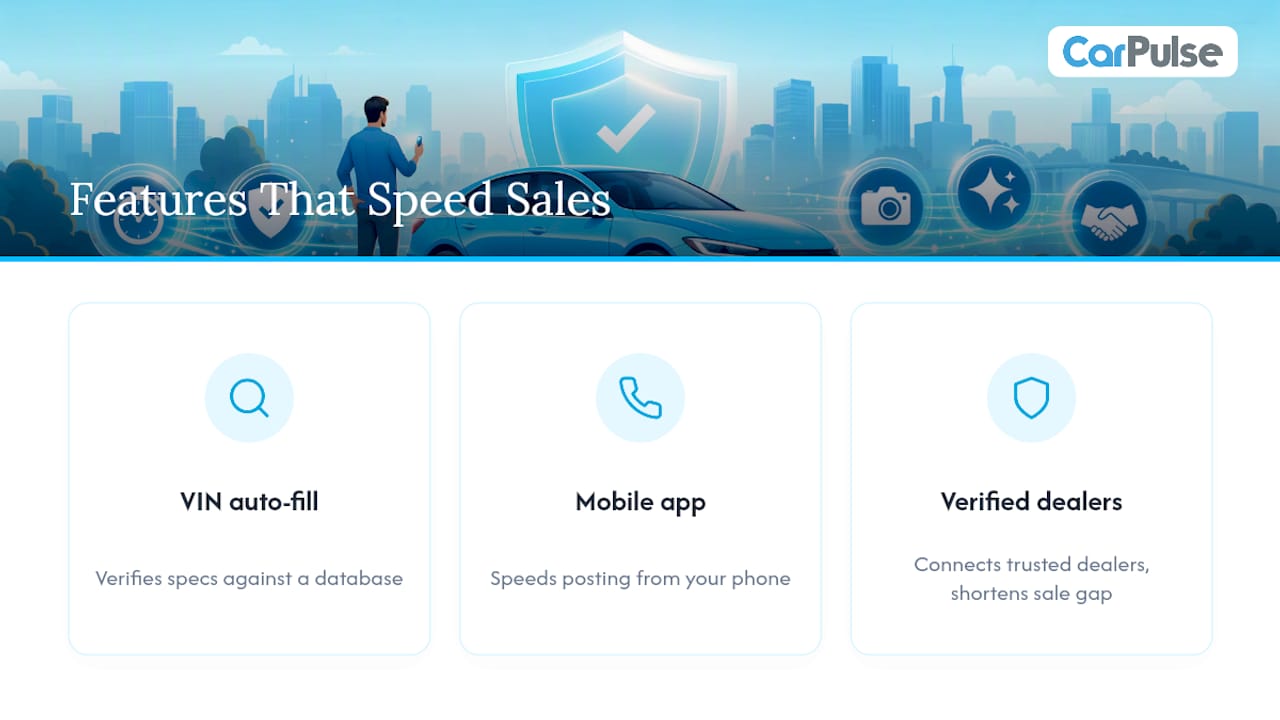
VIN-based listing removes the guesswork buyers usually push back on, since technical specs are verified against a real database instead of typed from memory. CarPulse’s VIN-based listing tools, mobile app, and verified dealer network exist specifically to shorten that gap between posting a car and closing a sale, mirroring every step covered above.
A realistic timeline for selling your car online
Expect your first inquiries within 48 hours of a well-priced, well-photographed listing going live. Viewings typically cluster in week one. Negotiation and closing can stretch up to 30 days depending on your price flexibility. Save time with canned replies for common questions, block off set viewing windows instead of scheduling one at a time, and consider a price cut if you haven’t had a serious offer after two weeks.
— Henri
Start your listing with CarPulse today
Every step in this guide, pricing against comparables, uploading clean photos, replying fast, gets easier when your platform handles the technical heavy lifting for you. CarPulse pulls your car’s specs directly from the VIN, so you skip the manual data entry that causes typos and buyer confusion, and your listing goes live with accurate details from the first click.
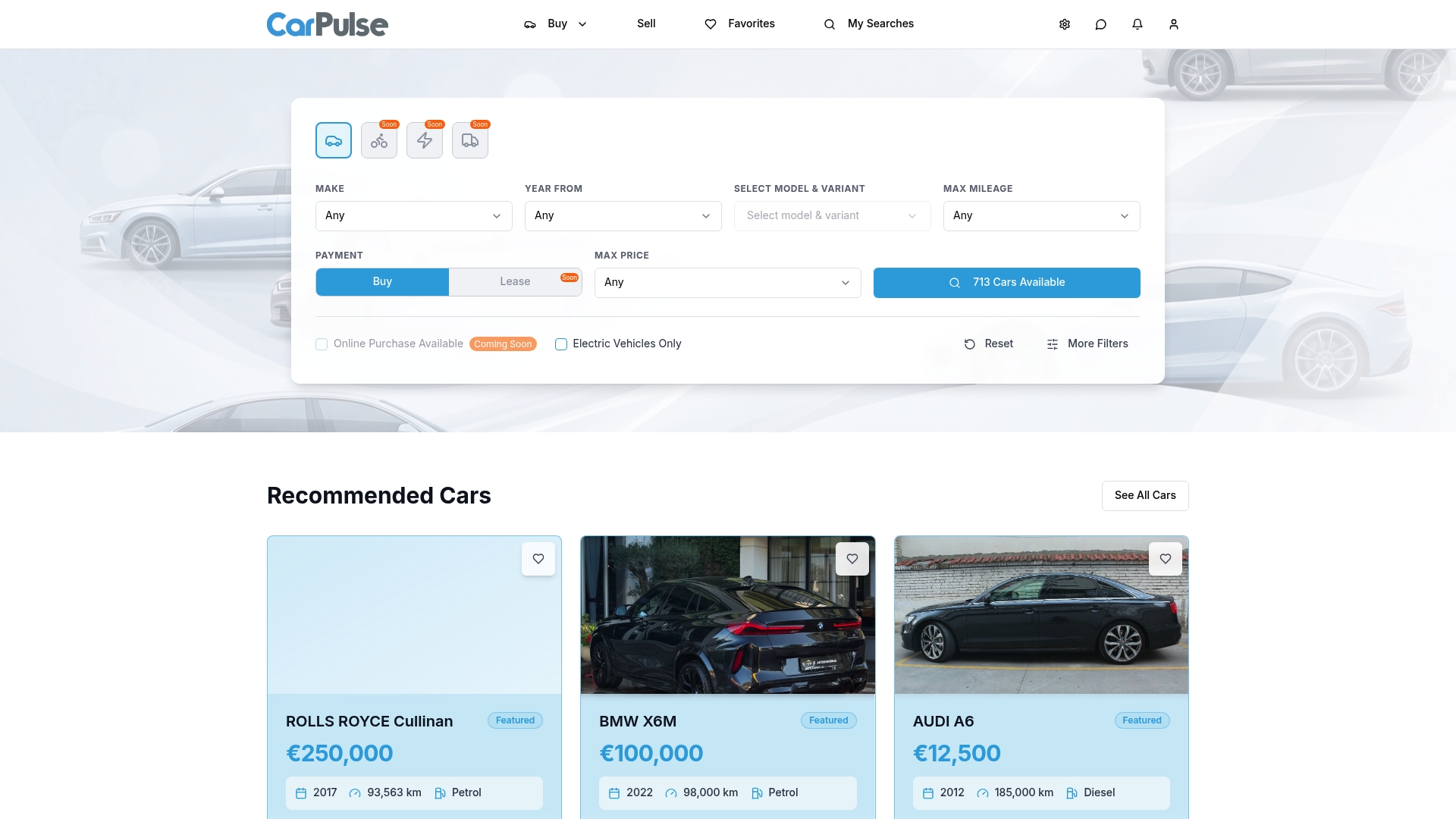
You also get access to a marketplace where private listings sit alongside a verified dealer network, which means buyers already trust the platform before they ever land on your ad. The mobile app lets you manage inquiries, upload photos, and adjust your price from wherever you are, so a 30-minute reply window is realistic even on a busy day. If you’re ready to move your car, start a listing on CarPulse and let the VIN auto-fill do the tedious part while you focus on closing the deal.
Helpful links and resources
- CarPulse’s step-by-step listing guide for extra field-by-field examples.
- A buyer-side inspection guide so you know what buyers will check.
- Motorway’s dealer-sale walkthrough for comparing transparent payment practices.