
Guides
Thursday Evening or Friday Morning: List on CarPulse for...
Thursday Evening or Friday Morning: List on CarPulse for Buyers

Publish your listing Thursday evening or Friday morning, with every field filled and the VIN already pulling in full specs. That timing catches buyers planning weekend test drives, and it gives the algorithm two full days of fresh-listing visibility before the highest-traffic browsing window hits. Get your photos, price, and description locked before you schedule anything.
TL;DR:
- Publishing on Thursday evening or Friday morning ensures your listing appears fresh for weekend buyers planning test drives and boosts algorithmic visibility.
- Listing during weekday mornings or evenings targets serious research-minded buyers or casual mobile browsers, respectively, depending on your buyer profile.
- Spring, from late March to May, provides a sales boost due to tax refunds, better weather, and families preparing for summer trips, often outweighing optimal weekly timing.
- Fully completing your listing with VIN auto-fill, high-quality photos, accurate pricing, and a prompt response plan is essential, as incomplete or delayed listings lose visibility fast.
- Scheduling your listing for peak local buyer activity, considering time zone and platform audience behavior, maximizes exposure rather than relying on a universal timing rule.
Table of Contents
- What Is the Best Time to List a Car for Sale?
- Recommended Posting Schedule by Day and Time
- When During the Year Should You List a Car?
- How to Prepare a Listing Before You Publish
- How to Keep a Listing Visible After Publishing
- Does Time Zone Change the Best Time to Post?
- Does Posting Time Matter Differently Across Marketplaces?
- How Do Buyer Demographics Shape the Best Posting Time?
- A CarPulse-Informed Take on Listing Timing
- List Your Car on CarPulse and Time It Right
- Sources
What Is the Best Time to List a Car for Sale?
There’s no single magic hour, but there is a pattern. Buyers browse car listings in bursts tied to their week, not randomly throughout the day, and matching your publish time to those bursts is what “orari më i mirë për listim,” or the best listing schedule, actually means in practice. The goal isn’t finding one perfect minute. It’s understanding the windows when the most serious eyeballs are looking, and stacking your listing’s freshness against that traffic.
Thursday evening through Friday morning wins for one simple reason: it sits right before the weekend, when most private buyers actually have time to call, visit, and test drive. A 2015 study of nearly 7,200 eBay Motors listings found that midday posting correlated with higher realized selling prices in that dataset, a signal that time-of-day genuinely moves outcomes, not just impressions. Dealerships chasing volume care about a different metric: inquiry velocity in the first 48 hours. Both groups benefit from the same underlying rule. Fresh listings get algorithmic priority, and priority fades fast.
Recommended Posting Schedule by Day and Time
Here’s the practical breakdown, ranked by who should use each window and why it works.
- Thursday evening (6 PM to 9 PM) or Friday morning (8 AM to 11 AM): the primary pick for most sellers. This window lets buyers plan a Saturday test drive while your listing still shows as new for the entire weekend scroll.
- Monday through Wednesday mornings (9 AM to noon): best for serious, research-driven buyers who are comparing specs and financing options on a work break rather than killing time. Dealers moving higher-value inventory often see stronger qualified leads here.
- Weekday evenings (6 PM to 9 PM): the mobile and social browsing peak. If your buyer profile skews toward casual, phone-first shoppers, this slot puts you in front of them while they’re relaxed and scrolling.
- Lunch hours (noon to 1:30 PM): a shorter secondary window, useful for a quick midday visibility bump without committing a full evening slot.
Private sellers with one car and no urgency should default to the Thursday/Friday window. It requires no special tools, just planning your prep days ahead. Dealerships juggling multiple listings should stagger publish times across the week, hitting weekday mornings for the serious-buyer segment and reserving Thursday evening for the strongest unit in inventory, the one most likely to convert a weekend visit into a sale. If you’re under pressure to sell in the next 72 hours, don’t wait for the ideal slot. Publish now, complete every field, and lean on a paid boost instead of a perfect calendar day.
When During the Year Should You List a Car?
Weekly timing matters, but the calendar matters more if you have flexibility on when to sell. Selling in the right season can outweigh a perfect day-of-week choice by a wide margin.
Late March through May is consistently identified as the strongest window to sell a used car, with detailed insights available on the Best Time of Year to Sell a Car in Canada, and the reasons stack on top of each other. Tax refunds land in buyers’ accounts, weather improves enough for comfortable test drives, and families start shopping ahead of summer road trips. If your car sits in a garage through winter with no urgency, spring is when it should surface.
Late summer brings a second, narrower spike tied to back-to-school shopping. College-bound buyers and their parents look for reliable, lower-mileage used cars in July and August, and families relocating for new jobs or school districts add to that pool. Early fall shifts demand toward AWD and 4x4 vehicles as buyers start thinking about winter roads, while interest in EVs tends to track industry news cycles rather than a fixed calendar month, so watching for announcement-driven spikes pays off if you’re selling an electric vehicle.
The decision rule is simple:
- If you can wait a few weeks and land in a matching seasonal window, do it. The demand lift is real and doesn’t cost you anything.
- If you need to sell now, don’t force a seasonal wait. Apply the weekly schedule above and lean harder on the lifecycle tactics covered later in this guide.
How to Prepare a Listing Before You Publish
Perfect timing on an incomplete listing accomplishes nothing. Marketplace algorithms reward completeness, and buyers bounce fast from anything that looks unfinished. AutoTrader’s own guidance is blunt about this: full feature representation and quickly replacing placeholder images directly improve how often a listing surfaces in search and feeds.
Work through this before you hit publish:
- Enter the VIN first. VIN-based listing tools auto-populate trim, engine, mileage history, and factory specs, cutting out the back-and-forth buyer questions that kill momentum in the first hour.
- Shoot 15 to 20 photos in daylight. Cover every exterior angle, the full interior, the engine bay, the odometer reading, and any service receipts you have on hand. Buyers screen out listings with fewer than ten photos almost automatically.
- Write a title with year, make, model, and trim up front. Follow it with three genuine selling points in the description, honest mileage and condition notes, and a straight summary of service history.
- Price against real local comparisons, not what you hope to get. A small, deliberate price adjustment later can also re-trigger visibility, so don’t box yourself into a number you’ll be embarrassed to move.
- Block out the first 48 hours to respond fast. Early inquiries convert at a much higher rate, and a slow reply on day one often loses a buyer who’s already moved on to the next listing.
Pro Tip: Shoot your photos and gather paperwork on Monday or Tuesday, write the description Wednesday, then schedule the listing to go live Thursday evening. That staging rhythm means nothing is rushed when the best posting window actually arrives.
Sellers using CarPulse’s listing workflow can knock out most of this checklist in one sitting, since VIN entry handles the specs automatically and leaves more time for photos and pricing research.

How to Keep a Listing Visible After Publishing
Publishing well is half the job. The other half is watching what happens next and knowing when to intervene.
Set a firm 14-day audit point. If you’re not seeing meaningful views or inquiries by then, something needs to change, whether that’s your price, your photos, or your description. Dealer playbooks built around weekly listing reviews show that regular, targeted adjustments shorten time-to-sale far more reliably than leaving a stale listing untouched and hoping.
When the two-week mark hits with no traction, try one of these:
- Re-sequence your photos, putting a stronger exterior shot or a feature buyers care about (sunroof, low mileage, new tires) first.
- Rewrite the title and lead sentence of your description to highlight something you buried the first time.
- Make a real price adjustment. Even a modest drop can trigger a marketplace’s “price drop” signal, which often surfaces the listing to buyers who saw it before and passed.
- Run a short paid boost, 48 to 72 hours, timed to your highest-traffic window rather than spread thin across a whole week.
A modest price tweak or title rewrite usually preserves your listing’s history and inquiry thread, while a full relist regains “freshness” at the cost of starting your engagement count from zero. Save the relist option for listings that have gone stale for a month or longer, not ones that just missed their first push. And don’t wait until day 20 to act. The first 48 to 72 hours of a listing’s life capture a disproportionate share of total views, so front-load any paid promotion instead of saving it for later.
Does Time Zone Change the Best Time to Post?
Yes, and it trips up more sellers than you’d expect. A listing scheduled for “6 PM” means nothing if you don’t know whose 6 PM you’re targeting. Buyer traffic follows local clock time, not the seller’s location, so a listing published at 6 PM in one region hits mailboxes and feeds at a completely different hour for buyers checking from elsewhere.
For most sellers this is a non-issue since buyers and sellers share a region. It matters more for dealerships selling to a wider radius, or in any market where remote buyers regularly drive or fly in for a purchase. If your listing pulls interest from outside your immediate area, mid-morning to early evening local buyer time, not seller time, is the safer target. Platforms that let you schedule a publish time rather than posting live in the moment make this far easier to manage, since you can set it once and stop thinking about the clock.
Does Posting Time Matter Differently Across Marketplaces?
It does, and the difference comes down to how each platform’s audience actually behaves. Search-driven marketplaces where buyers type in a make and model and filter by price tend to reward completeness and keyword-optimized titles overprecise clock timing. Platform guidance from listing optimization services points to posting your best inventory first and using clear title formulas, since buyers arrive already searching rather than casually scrolling.
Feed-based and social marketplaces work differently. Buyers there scroll passively, so evening hours between 6 and 9 PM and weekend mornings draw noticeably higher traffic, because that’s when casual, mobile-first browsing peaks. A listing published at 10 AM on a Tuesday might sit buried by the time evening scrollers log on.
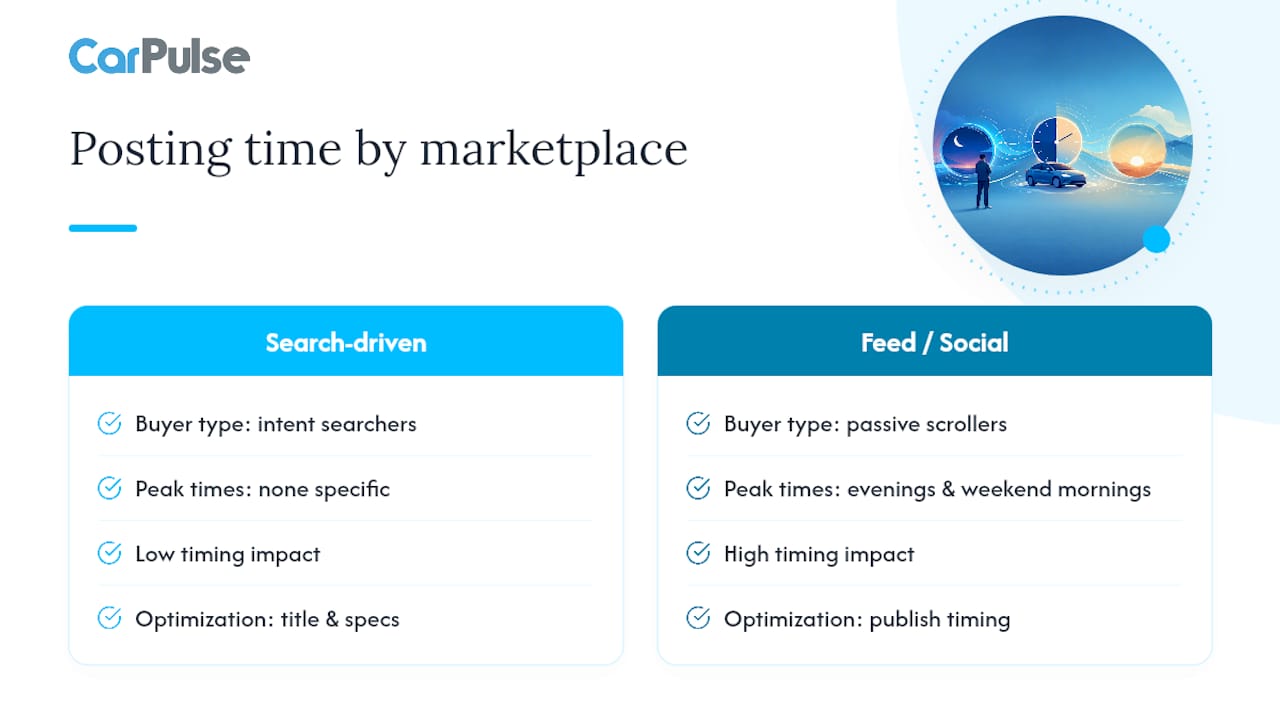
The practical takeaway: don’t apply one universal schedule across every place you list. If a platform’s traffic is search-driven, prioritize your title and specs over exact timing. If it’s feed-driven and social, timing carries more weight, and evening or weekend publishing earns real, measurable visibility gains.
How Do Buyer Demographics Shape the Best Posting Time?
The buyer you’re trying to reach changes the calculus more than most sellers assume. Evening and weekend browsing tends to attract casual shoppers still comparing options, still deciding whether they’re ready to buy at all. Weekday morning traffic skews toward people already deep in the process, comparing financing, ready to move fast on the right car.
If you’re selling a practical family vehicle or a budget commuter car, weekday mornings put you in front of buyers actively narrowing down choices right now. If you’re selling something aspirational (a sports coupe, a restored classic, a higher-trim SUV) evening and weekend windows often work better, since those buyers are browsing more for enjoyment before they commit to a serious inquiry.
Younger buyers and first-time car shoppers lean heavily toward mobile, evening browsing. Buyers financing through a dealership or trading in an existing vehicle often research during work hours, comparing listings the way they’d compare any other major purchase. Reading your likely buyer correctly, and picking a window that matches how they actually shop, usually beats blindly following a generic “best time” recommendation.
A CarPulse-Informed Take on Listing Timing
Timing advice only works if the platform underneath it cooperates. That’s the piece most generic guides skip. VIN-based listing removes the single biggest reason buyers hesitate: incomplete or vague specs. On CarPulse, entering a VIN auto-populates the details that usually take sellers twenty minutes to type out by hand, which means you can actually hit that Thursday evening window instead of still fumbling with trim codes at 9 PM.
Moderation matters more than sellers give it credit for. A listing that clears review quickly keeps its freshness intact instead of losing a full day to approval delays right when you needed weekend visibility most.
My practical recommendation for anyone selling on CarPulse: schedule your listing to publish per the windows above, and if the sale is time-sensitive, pair that with a premium listing placement during the first 48 hours rather than after the fact. Then hold yourself to the 14-day audit. If a well-timed, fully populated listing still isn’t drawing inquiries by day 14, the problem probably isn’t the clock. It’s the price, the photos, or the description underneath it.
— Henri
List Your Car on CarPulse and Time It Right
CarPulse is built around the exact workflow this guide recommends: VIN-based listing that auto-fills your specs in seconds, moderation that clears listings fast so you don’t lose your best posting window to a review queue, and premium listing options when you want extra visibility during that critical first 48 hours.
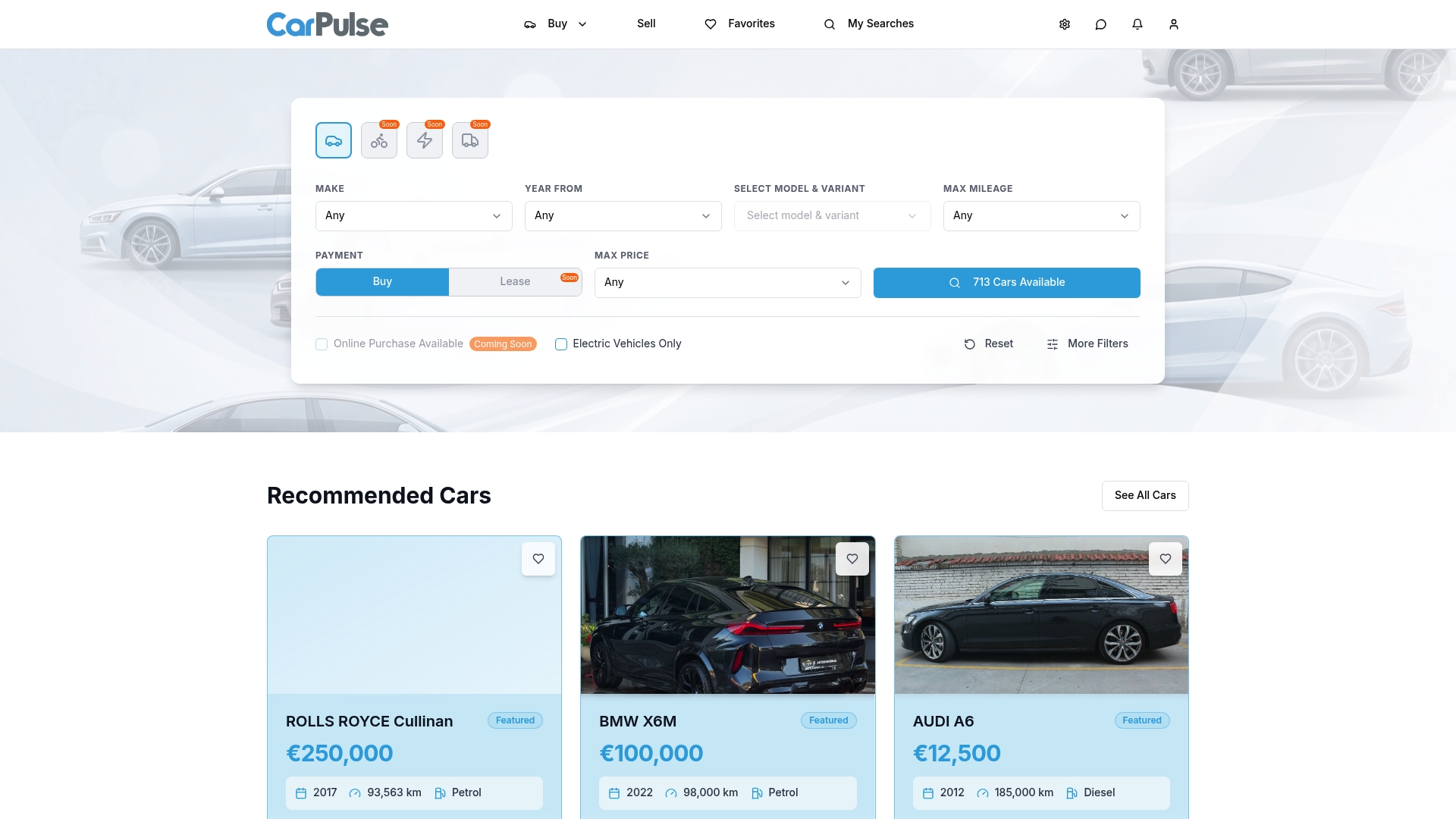
If you’ve read this far, you already know your target window, whether that’s Thursday evening for weekend traffic or a weekday morning for serious researchers. The next step is straightforward: head to CarPulse’s sell page, enter your VIN, load your photos, and schedule the listing to go live at the window you picked. Everything on CarPulse is built to make that fifteen-minute setup turn into a listing that’s ready the moment your ideal buyers start looking.
Sources
- How auction timing affected sale outcomes on eBay Motors (Claremont thesis)
- The importance of optimizing your VDP (AutoTrader B2B)
- Don’t Miss Out! Discover the Best Time to Sell Your Car (Instant VIN Reports)
- How to optimize car listings for AutoTrader, Cars.com & Facebook Marketplace (CarPixAI)