Guides
How to Manage Buyer Inquiries When Buying a Car in the U.S.
How to Manage Buyer Inquiries When Buying a Car in the U.S.
The fastest way to get clear answers from any seller: ask for the VIN in your first message, request a vehicle-history report, and confirm title status before you agree to anything else. Here is what to do right now:
- Ask the seller for the full 17-digit VIN
- Run a Carfax or AutoCheck report on that VIN
- Confirm the title is clean and free of liens
- Schedule a pre-purchase inspection with an independent mechanic
- Save every message thread in one place (email folder, notes app, or spreadsheet)
Carpulse’s VIN-based listing system auto-fills vehicle details the moment a seller enters the VIN, which means buyers browsing Carpulse listings often already have the core data they need before sending a single message.
Key Takeaways
Managing buyer inquiries well means leading with the VIN, confirming title status, and tracking every conversation in writing before you commit to anything.
| Point | Details |
|---|---|
| VIN first, always | Request the 17-digit VIN in your first message and run Carfax or AutoCheck before visiting. |
| Confirm title and lien status | A clean title with no open lien is non-negotiable before any payment changes hands. |
| Use the four-part message structure | Direct question, brief context, specific detail request, and a clear next step get faster replies. |
| Track every inquiry in a spreadsheet | Log seller name, VIN, contact dates, outstanding questions, and status to avoid losing leads. |
| Budget a reasonable amount for inspection | An independent mechanic check before signing protects you from hidden damage the history report missed. |
Table of Contents
- How should you structure each inquiry message to sellers?
- What questions must you get answered before moving forward?
- How do you tell a trustworthy seller from a risky one?
- Why does the VIN matter so much for U.S. vehicle history?
- How do you track multiple inquiries without losing anything?
- What should you check during the test drive and before you pay?
- Ready-to-send follow-up and negotiation scripts
- How long does the full process take, from first message to closing?
- An honest marketplace perspective on what actually reduces friction
- Sources
How should you structure each inquiry message to sellers?
The most effective message format follows a simple four-part pattern: direct question, brief context, specific detail request, and a clear next step. Research on marketplace Q&A confirms that specific, technical questions get faster and more precise answers than vague ones, and that including attributes like VIN or model year reduces back-and-forth significantly.
Albanian template — initial inquiry:
English variant for U.S. sellers:
Albanian template — follow-up VIN request:
The structure works because it answers the seller’s implicit question (“Is this buyer serious?”) while giving them a concrete, easy task. Sellers who receive vague messages like “Is it still available?” have no reason to prioritize your reply. A message that includes a direct question about the VIN and history report, and clearly proposes a next step signals a qualified buyer.
Pro Tip: Include your available times for a test drive in the first message. Sellers respond faster when they see the buyer is ready to move, not just browsing.
What questions must you get answered before moving forward?
Pre-purchase hesitation almost always traces back to unanswered questions about condition, payment, and compatibility. For car buyers, the stakes are higher than most online purchases. Prioritize your questions this way:
Must-get answers (non-negotiable):
- VIN — without it, you cannot verify anything else
- Title status — clean, salvage, rebuilt, or flood-branded?
- Lien status — is there an outstanding loan on the vehicle?
- Odometer reading — does it match the listing and the history report?
- Accident history — any reported collisions? Frame damage?
- Service records — oil changes, timing belt, major repairs?
Nice-to-have (affects price, not deal-breakers):
- Number of previous owners
- Reason for sale
- Spare key availability
- Recent repairs or upcoming maintenance needs
Each must-get answer directly affects either the price or what your mechanic needs to check. A reported accident, for example, means your inspector should specifically look for frame straightness and hidden rust at repair seams. Log every answer the seller gives you next to the question, with the date. When you run the history report, compare their answers against what the report shows.
How do you tell a trustworthy seller from a risky one?
Verify before you visit. Most scams and wasted trips share the same early warning signs:
- No VIN provided — a legitimate seller has nothing to hide from a history check
- Pressure to pay off-platform — wire transfers, Zelle, or gift cards before inspection are red flags
- Inconsistent answers — the mileage changes between messages, or the accident story shifts
- Unusual urgency — “I’m leaving the country tomorrow, decide now”
- Listing photos that look stock or watermarked — reverse-image-search them
Verification steps to take before meeting:
- Ask for the VIN and a photo of the physical title (front and back)
- For dealer claims, ask for the dealer license number and verify it with your state’s DMV
- Check the listing history on Carpulse — verified dealer badges and listing age matter
- Ask: “Who else is involved in the sale?” and “What’s your preferred payment timeline?” Evasive answers here are telling
Pro Tip: Before any in-person meeting, request a short video call walkaround. A seller who refuses to show the car live on camera is worth questioning. If you do meet in person, choose a public parking lot, bring a friend, and never hand over cash before the mechanic signs off.
Why does the VIN matter so much for U.S. vehicle history?
Always request the VIN and pull a report yourself — do not rely on the seller’s summary of the vehicle’s history. In the United States, Carfax and AutoCheck are the two main vehicle-history report providers. Both pull from title records, insurance claims, odometer disclosures, and auction data.
What to look for on any vehicle-history report:
- Title brands: salvage, flood, lemon-law buyback, or rebuilt titles reduce value and insurability
- Odometer inconsistencies: a reading that drops between reports is a rollback flag
- Owner count: many short-term owners in quick succession often signals a problem vehicle
- Accident records: note whether airbags deployed — that indicates a significant impact
- Open recalls: check the NHTSA database at safercar.gov with the same VIN
Inspection documentation from a qualified mechanic, combined with a clean history report, gives you the two-sided picture a report alone cannot provide. A report shows what was reported; a mechanic finds what was hidden.
How do you track multiple inquiries without losing anything?
When you are messaging five or more sellers at once, a simple spreadsheet beats memory every time. Auto-assignment and follow-up reminders in CRM tools exist for exactly this reason: without a system, leads fall through the inbox.
| Column | What to record |
|---|---|
| Seller name | Full name or dealer name |
| Listing URL | Direct link to the Carpulse or other listing |
| VIN | 17-digit VIN once provided |
| First contact date | Date you sent the first message |
| Last reply date | Date of most recent seller response |
| Outstanding questions | Which must-get answers are still missing |
| Inspection scheduled | Date/time or “pending” |
| Status | Active / Stalled / Archived |
Deduplicating contacts matters when the same vehicle appears on multiple platforms. If you have two rows for the same VIN, merge them. Set a 24–72 hour follow-up reminder for any seller who has not replied. After two unanswered follow-ups, archive the lead and move on.
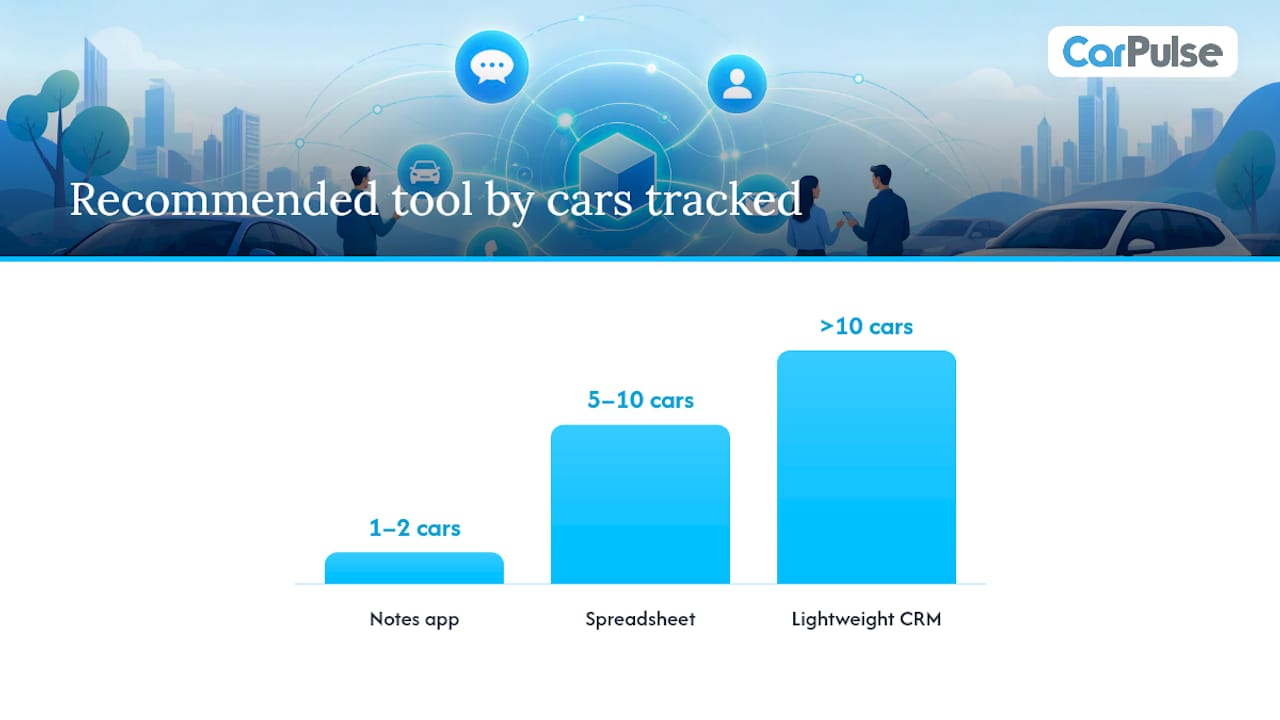
A notes app works for one or two cars. A spreadsheet handles five to ten. If you are tracking more than ten simultaneously, a lightweight CRM like HubSpot’s free tier adds auto-reminders without complexity.
What should you check during the test drive and before you pay?
Test drive and inspection checklist:
- Brakes: feel for pulsing, pulling, or grinding under firm pressure
- Steering: any vibration, drift, or looseness at highway speed
- Leaks: check under the car after parking for 10 minutes
- Electronics: test every window, lock, AC, heat, and infotainment screen
- Frame evidence: look for uneven panel gaps, mismatched paint, or overspray
- Engine: listen for ticking, knocking, or rough idle
Have an independent mechanic perform a pre-purchase inspection before you pay. Inspection fees are typically charged by independent shops and represent a worthwhile investment before purchase. That cost is worth it on any vehicle priced above a few thousand dollars.
Before signing anything, confirm:
- The title is in the seller’s name (not a third party)
- Any lien is released in writing before funds transfer
- You receive a signed Bill of Sale with price, VIN, date, and both parties’ names
- You understand your state’s sales tax and registration fees — these vary by state and are paid to the DMV, not the seller
For vehicle transport or pickup logistics, clarify in writing who covers delivery costs if the car is not local. This is not legal advice; confirm title-transfer requirements with your state’s DMV.
Ready-to-send follow-up and negotiation scripts
Use these after the initial inquiry. The goal is to keep the conversation moving without pressure.
Quick follow-up (Albanian): English variant: Firm inspection request (Albanian): Conditional offer (Albanian): Suggested follow-up timetable:
- Day 1: Send initial inquiry with VIN request
- Day 2–3: Follow up if no reply
- Day 5: Send firm inspection request or walk away
- After inspection: Submit conditional offer within 24 hours of results
How long does the full process take, from first message to closing?
A realistic timeline for a private-party purchase generally spans several days to a few weeks from first contact to signed title, while dealer purchases may close faster due to internal financing and paperwork handling.
The typical breakdown: two to three days of messaging and VIN verification, one to two days to schedule and complete the inspection, one to two days to negotiate and agree on price, and then one to three days for title transfer and DMV paperwork. Delays almost always come from one of three places: a seller who is slow to provide the VIN, an inspection that reveals problems requiring re-negotiation, or a title with a lien that takes time to clear.
Budget the full three weeks if you are buying from a private seller across state lines.
An honest marketplace perspective on what actually reduces friction
Transparency in a listing cuts buyer questions by more than half. When a seller includes the VIN, service history, clear photos, and title status upfront, buyers arrive at the conversation already informed. They ask sharper questions, move faster, and waste less of everyone’s time.
The answer-first FAQ structure applies here directly: a listing that answers the top five buyer questions in the description eliminates the most common back-and-forth before it starts. Sellers on Carpulse who use VIN-based auto-fill get this for free — the system populates make, model, trim, and engine specs the moment the VIN is entered, which means buyers see verified data rather than seller-typed guesses.
From a platform perspective, the buyers who close deals fastest are the ones who treat every question as a qualification step. They are not just gathering information; they are deciding whether this seller is worth their time. A seller who cannot answer “Is the title clean?” in one sentence has already told you something important.
Sources
These resources support the steps covered above:
- Master How to Ask Question in Amazon for Quick Answers 2026 | Headline Amazon Agency
- What Customers Ask Most Before Buying Online (2026)
- B2B Inquiry Conversion Solution - SaleWisely
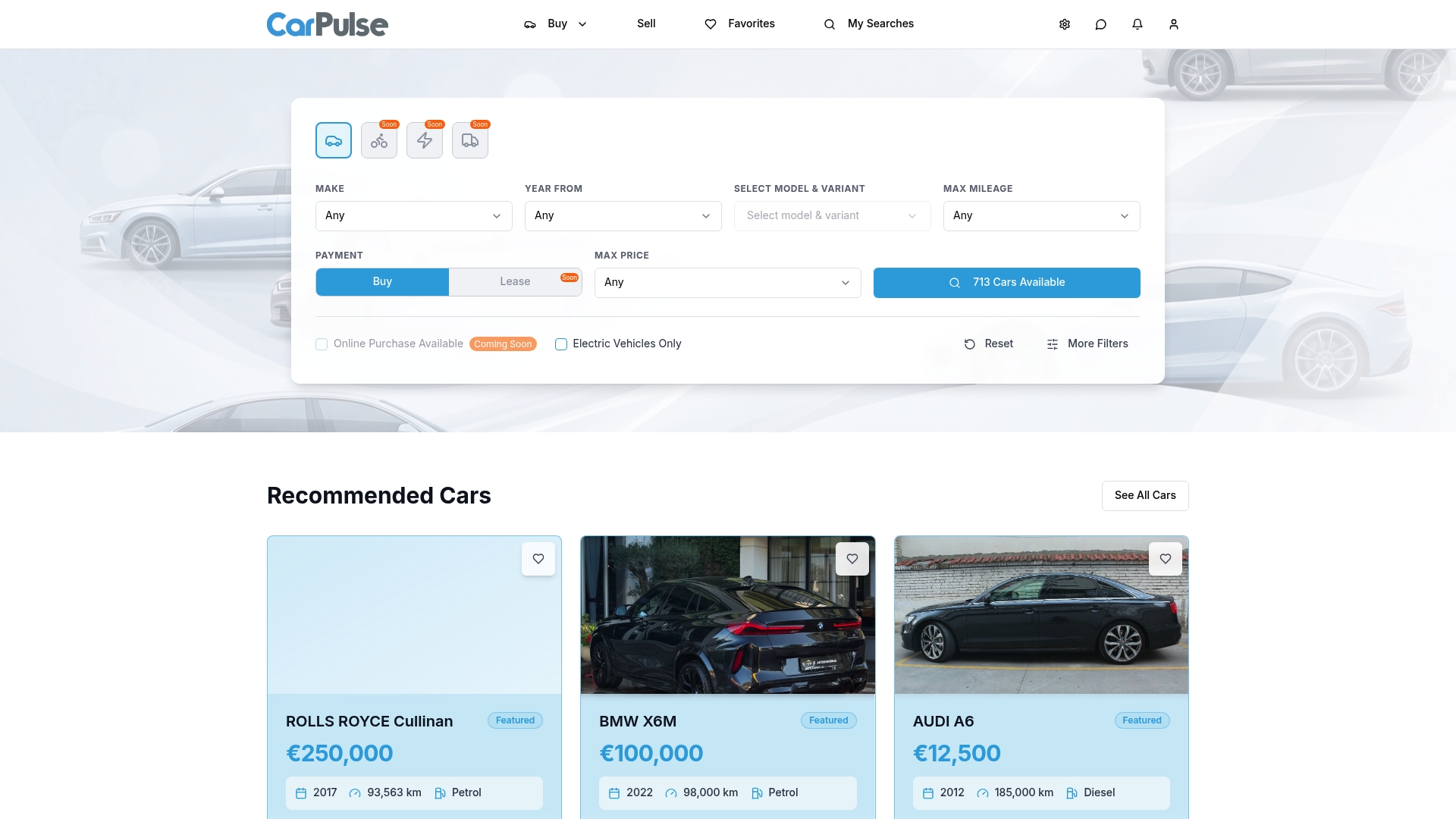
Ready to find your next vehicle? Browse verified listings on Carpulse where VIN-based auto-fill, verified dealer badges, and direct seller messaging are all in one place.
This article is general information, not a substitute for advice from a qualified lawyer. Consult a qualified legal professional about your own circumstances before acting on anything here.
Recommended
- Makina në Shitje: Udhëzuesi i Plotë Blerje/Shitje në… | CarPulse Albania
- Blej Makina në Shqipëri: Udhëzuesi i Plotë | CarPulse.al | CarPulse Albania
- Makina ne Shitje Shqipëri - Udhëzuesi i Plotë për Blerje | CarPulse Albania
- Golf në Shitje Shqipëri: Udhëzues Blerje, Modele & Çmime | CarPulse Albania