
Guides
Avoid the Six Month Trap: Confirm CoC Before Importing to Al
Avoid the Six Month Trap: Confirm CoC Before Importing to Albania
Yes, importing a used or new car into Albania is legal, but it hinges on one step most buyers skip until it’s too late: confirming the vehicle’s Certificate of Conformity and environmental category before you pay for it. Get that wrong, and customs clearance stalls or the car never gets registered. Verify the CoC, register your ID in Asycuda World, and check both Dogana and DPSHTRR before you commit money to a purchase.
TL;DR:
- Confirm the vehicle’s Certificate of Conformity and environmental category before paying to avoid customs or registration delays.
- Used cars must meet age and emissions standards, with additional scrutiny for heavily modified, salvage, or undocumented vehicles.
- Proper documentation required includes a CoC, sales invoice with full details, foreign registration, and notarized translations, verified before shipment.
- Customs clearance needs an active Asycuda World ID and accurate declaration of value, with common mistakes including late ID requests and mismatched paperwork.
- For temporary import, vehicles can stay up to six months in any 12 months, but crossing borders does not reset the limit, and violations can lead to confiscation or penalties.
Table of Contents
- Kufizimet e Importit të Makinave: Which Vehicles Qualify and Which Don’t
- Documents You Need for Customs Clearance and Registration
- Customs Clearance (Zhdoganimi): Steps, Taxes, and Common Errors
- The Temporary Import Rule: 6 Months, One 12-Month Window
- Confirming Euro Emissions Class and Passing Technical Verification
- From the Port to the Plate: What Happens After Arrival
- Are There Quotas Limiting How Many Cars You Can Import?
- What’s Changed Recently in Albania’s Vehicle Import Rules
- What Happens If You Break the Import Rules
- New Cars vs. Used Cars: How the Rules Actually Differ
- CarPulse’s Take: The Mistakes That Cost Importers the Most
- Find Verified Listings Before You Deal With Customs
- Sources
Kufizimet e Importit të Makinave: Which Vehicles Qualify and Which Don’t
Albania doesn’t ban used cars outright, but the vehicle has to clear two filters before it can be registered: age condition and emissions compliance. DPSHTRR sets the rules on which vehicles may enter and be registered according to environmental standards, and it’s the agency that checks a car’s Certificate of Conformity against those standards. Specific age and emission thresholds are written into government decrees published through the Fletore Zyrtare, so the exact cutoff for a given year or Euro class comes from that legal text rather than from a dealer’s word.
Some categories draw extra scrutiny regardless of age: heavily modified vehicles, cars missing original chassis documentation, and vehicles previously written off or salvage-titled abroad. These almost always trigger a manual technical review before DPSHTRR will process registration.
Before you buy, run a few quick checks on any listing:
- Does the seller have the original CoC or an equivalent document from the manufacturer?
- Is the Euro emissions class stated clearly, and does it match the production year?
- Was the vehicle previously registered as salvage, flood-damaged, or rebuilt?
- Does the VIN match across the invoice, registration, and CoC?
Documents You Need for Customs Clearance and Registration
Every import folder needs the same core paperwork, but the details trip people up more than the list itself.
The Certificate of Conformity (CoC) is the document that proves a vehicle meets the technical and environmental standards required for its category. DPSHTRR accepts the manufacturer’s original CoC in most cases; where it’s missing, an alternative technical verification through DPSHTRR’s own process is sometimes accepted, but it takes longer and isn’t guaranteed to pass.
Beyond the CoC, gather these before shipping:
- Sales invoice or bill of sale with the buyer’s and seller’s full legal information
- Foreign registration certificate (proof of prior ownership and deregistration where applicable)
- Valid identification for the buyer (ID card or passport)
- Any technical inspection reports from the country of origin
- Translated and notarized copies of foreign-language documents
Pro Tip: Ask the seller for a scanned copy of every document before you wire any money. A missing CoC or a mismatched VIN is far cheaper to catch from your living room than at the port after the car has already shipped.
If you’re buying privately rather than through a dealer, cross-check the paperwork against a pre-purchase documentation checklist so nothing gets missed between the seller’s promises and what customs actually requires.
Customs Clearance (Zhdoganimi): Steps, Taxes, and Common Errors
Before customs will touch your file, you need an Asycuda World ID, the identification number tied to Albania’s electronic customs declaration system. Registration typically happens by sending a scanned ID card to the customs helpdesk, and it needs to be done before you can move forward with any declaration for a passenger vehicle under HS heading 8703.
Customs value isn’t just whatever the invoice says. Officials assess declared value against comparable transactions, and VAT plus applicable duties get calculated on that assessed base, not on a number you or the seller pick out of convenience. Rates and thresholds change periodically, so check the Ministry of Finance directly rather than relying on a figure from last year’s forum post.
Delays usually trace back to a short list of avoidable mistakes:
- Asycuda ID requested after the vehicle has already arrived, instead of before
- Invoice value that doesn’t match the CoC or bank transfer records
- Missing translations on foreign-language ownership documents
- No appointed customs agent for buyers unfamiliar with the declaration process
The Temporary Import Rule: 6 Months, One 12-Month Window
If you’re driving a foreign-plated car into Albania rather than formally importing it, you fall under the temporary import regime, and the terms are stricter than most first-time drivers expect. A vehicle with permanent registration outside Albania can stay under temporary import for up to six months within any 12-month period. Once that window closes, the car either leaves the country or goes through full customs clearance.
The restrictions inside that window matter as much as the deadline itself:
- The vehicle can’t be sold, transferred, or lent to someone else to drive while under the regime
- Popping across the border and back does not reset the clock. Authorities don’t treat a short trip abroad as a fresh 6 or 12-month cycle
- Failing to declare the vehicle on entry, or ignoring the exit deadline, can be treated as smuggling under customs rules
A tourist visiting for three weeks with their own car is squarely inside the rules. Someone who leaves a foreign-plated car with a relative in Tirana for eight months, hoping nobody checks, is not.
Confirming Euro Emissions Class and Passing Technical Verification
Environmental category isn’t a formality bolted onto registration. It’s the number that determines whether DPSHTRR will let the car onto Albanian roads at all. Verification requests go through DPSHTRR’s own channels, including the online reservation portal for booking an appointment.
Acceptable evidence usually includes the manufacturer’s CoC, the foreign registration certificate showing emissions class, or a technical inspection report from the country of origin. When documentation is incomplete, DPSHTRR can require a physical technical check instead of accepting paperwork alone.
- Book the environmental verification appointment early. Wait times build up during peak import season
- Bring every emissions-related document you have, even if you think one is redundant
- If the car fails verification, expect either a repair-and-recheck cycle or outright refusal to register
Pro Tip: Request the environmental verification before you finalize a purchase abroad, not after the car lands in Albania. A failed check post-shipping means you’re paying storage fees while you sort it out.
From the Port to the Plate: What Happens After Arrival
Getting the car into the country is only half the process. Registration follows a fairly fixed sequence:
- Present the full document set (invoice, CoC, foreign registration, ID) to customs
- Confirm your Asycuda World ID is active and linked to the declaration
- Pay the assessed duties and VAT based on customs valuation
- Complete the technical and environmental inspection through DPSHTRR
- Receive your registration certificate and license plates
Most first-time importers benefit from a licensed customs agent for step one through three. The paperwork sequencing matters more than people expect, and an agent who handles this daily moves through it in days rather than weeks. Keep digital copies of every stamped document. You’ll need them again if you ever export, sell, or transfer the vehicle. Our step-by-step import guide walks through timing expectations in more detail for a specific origin country.
Are There Quotas Limiting How Many Cars You Can Import?
Albania doesn’t operate a numeric quota system that caps how many passenger vehicles an individual or business can bring in over a given period. There’s no annual cap on private imports the way some countries restrict, say, agricultural goods or protected commodities.
That said, volume changes the category you fall into. A private buyer bringing in one car for personal use goes through a straightforward customs and registration path. A business or individual importing multiple vehicles in a short window gets treated differently: customs and tax authorities look more closely at whether the activity constitutes commercial import, which carries its own registration obligations, potential VAT treatment as a business activity, and closer scrutiny of each vehicle’s documentation.
If you’re a dealer or plan to resell vehicles rather than keep them, that’s a distinct legal and tax category from personal import, and it typically requires business registration before customs will process repeated vehicle declarations under a commercial framework. Trying to route commercial-volume imports through the personal-use process is one of the faster ways to draw an audit or a customs hold.
For most readers bringing in a single car for personal use, quotas simply aren’t the constraint. Age limits, emissions compliance, and documentation completeness are the real gatekeepers, and those apply per vehicle regardless of how many you import in a year.
What’s Changed Recently in Albania’s Vehicle Import Rules
Vehicle import rules in Albania aren’t static, and the practical effect of recent tightening has been a shift in what gets imported, not just how it’s processed. Stricter age and emissions filters applied across the region in recent years have measurably reduced the flow of older vehicles into secondhand markets, while pushing demand toward newer, Euro-compliant cars that clear verification without a fight.
For importers, that shift shows up in a few concrete ways. Vehicles that would have sailed through environmental verification five years ago now sometimes require additional technical documentation or repairs before DPSHTRR will register them. Buyers shopping in source markets like Germany or Italy have adjusted by prioritizing listings with complete CoC documentation upfront, since a car without it is a much riskier bet than it used to be.
The core lesson from these updates isn’t any single rule change. It’s that the legal text in the Fletore Zyrtare is the actual source of truth, and it can shift ahead of what dealer forums, secondhand advice, or last year’s blog posts tell you. If you’re planning an import, check the current decree text rather than assuming last year’s age cutoff or emissions requirement still applies unchanged. Regulations tend to move toward stricter environmental thresholds over time, rarely looser ones, so the safer planning assumption is that requirements will tighten rather than relax.
What Happens If You Break the Import Rules
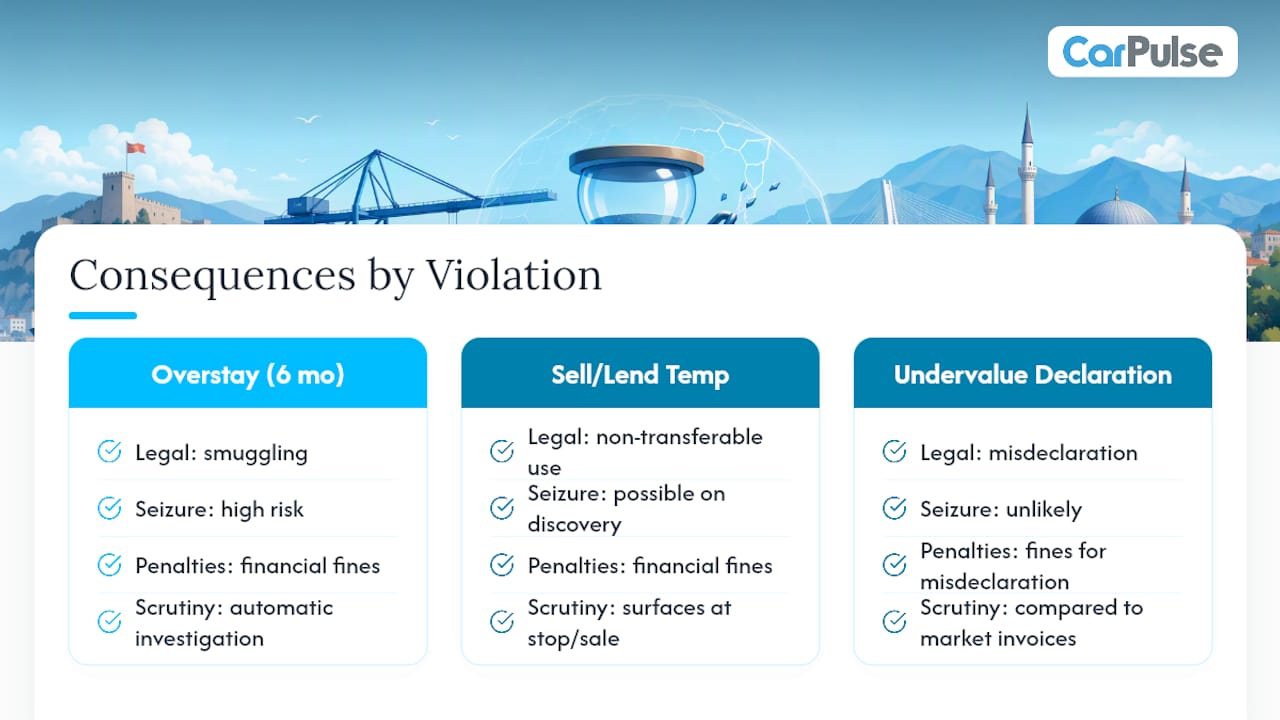
The consequences for ignoring Albania’s import and customs rules range from financial penalties to outright confiscation, depending on how serious the violation is.
The most common failure point is the temporary import regime. Driving a foreign-plated car past its 6-month allowance, or failing to declare it on entry in the first place, can be treated as smuggling under Albanian customs law. That’s not a parking-ticket-level infraction. Smuggling classifications carry the possibility of vehicle seizure on top of financial penalties, and resolving the situation after the fact is far more expensive and time-consuming than doing the paperwork correctly at entry.
Selling or lending a vehicle that’s still under temporary import status is another common violation. The regime is explicitly non-transferable, and using it as a workaround to avoid full customs clearance on a car you actually intend to keep in Albania long-term tends to surface eventually, usually at the worst possible moment: during a routine police stop or an attempt to sell the car formally.
Undervaluing a vehicle on the customs declaration to reduce VAT and duties is a separate risk. Customs doesn’t take the invoice figure at face value. It’s assessed against comparable transactions, and a declared value that looks artificially low invites closer scrutiny, additional fees, and potential penalties for misdeclaration rather than the savings the importer was hoping for.
The safest posture is straightforward: declare accurately, respect the temporary import deadline, and treat every document requirement as non-negotiable rather than as a box to work around.
New Cars vs. Used Cars: How the Rules Actually Differ
New and used vehicles both go through the same basic framework: CoC verification, Asycuda registration, customs valuation, VAT, and DPSHTRR registration. But the practical friction is almost entirely concentrated on the used side.
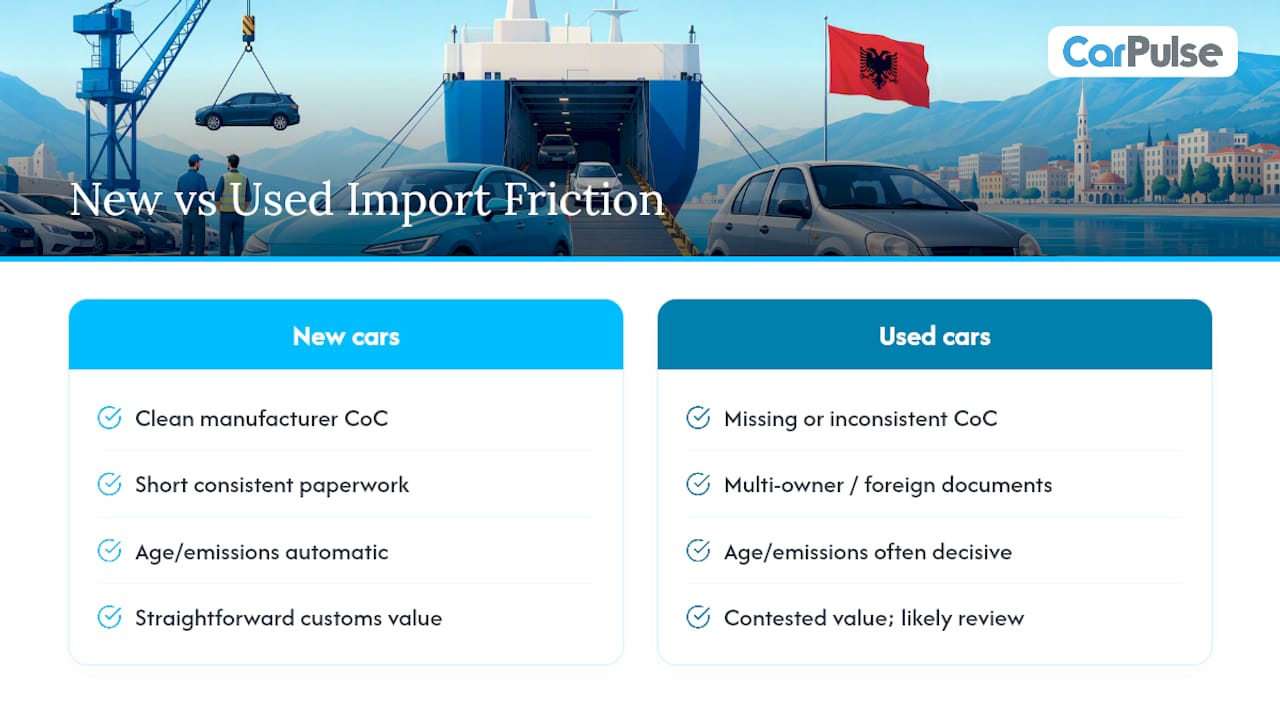
A new car arriving through an authorized dealer typically comes with a clean, manufacturer-issued CoC and no history to question. Environmental category verification is close to automatic because the vehicle was built to current standards and the paperwork trail is short and consistent.
A used car is a different animal. The CoC might be missing, damaged, or issued under a standard that’s since changed. The vehicle may have passed through multiple owners or countries, each one adding a document that needs translation, notarization, or reconciliation with the VIN. Age and emissions class checks that are a formality for a new car become the actual decision point for a used one, since older vehicles are exactly where Euro-class thresholds start excluding candidates.
Taxation follows the same divide in spirit, even though the VAT and duty mechanics apply to both: a new car’s customs value is straightforward because there’s a clean invoice and a recognizable market price. A used car’s assessed value is more contested, more likely to draw a customs review, and more likely to result in a different number than what the seller and buyer originally agreed on.
If you’re weighing new against used purely on import friction, used cars demand more upfront diligence. New cars trade that diligence for a higher purchase price.
CarPulse’s Take: The Mistakes That Cost Importers the Most
The mistakes we see repeat aren’t exotic: missing CoC documentation, a customs value that doesn’t match reality, and treating temporary import as a loophole instead of a strict 6-month window. Verify the CoC before you pay, ask sellers for export documentation up front, and budget for VAT rather than treating it as a surprise. Working with a licensed customs agent isn’t a luxury for a first import. Checking listings with VIN-verified data before you commit saves far more than it costs.
— Henri
Find Verified Listings Before You Deal With Customs
Carpulse gives you a way to shop for a vehicle where the documentation question gets answered before you ever contact a seller, not after you’ve already sent a deposit. Every listing on the marketplace uses VIN-based data that pulls in verified vehicle details automatically, and dealer listings come from a vetted network rather than anonymous private ads with no paper trail.
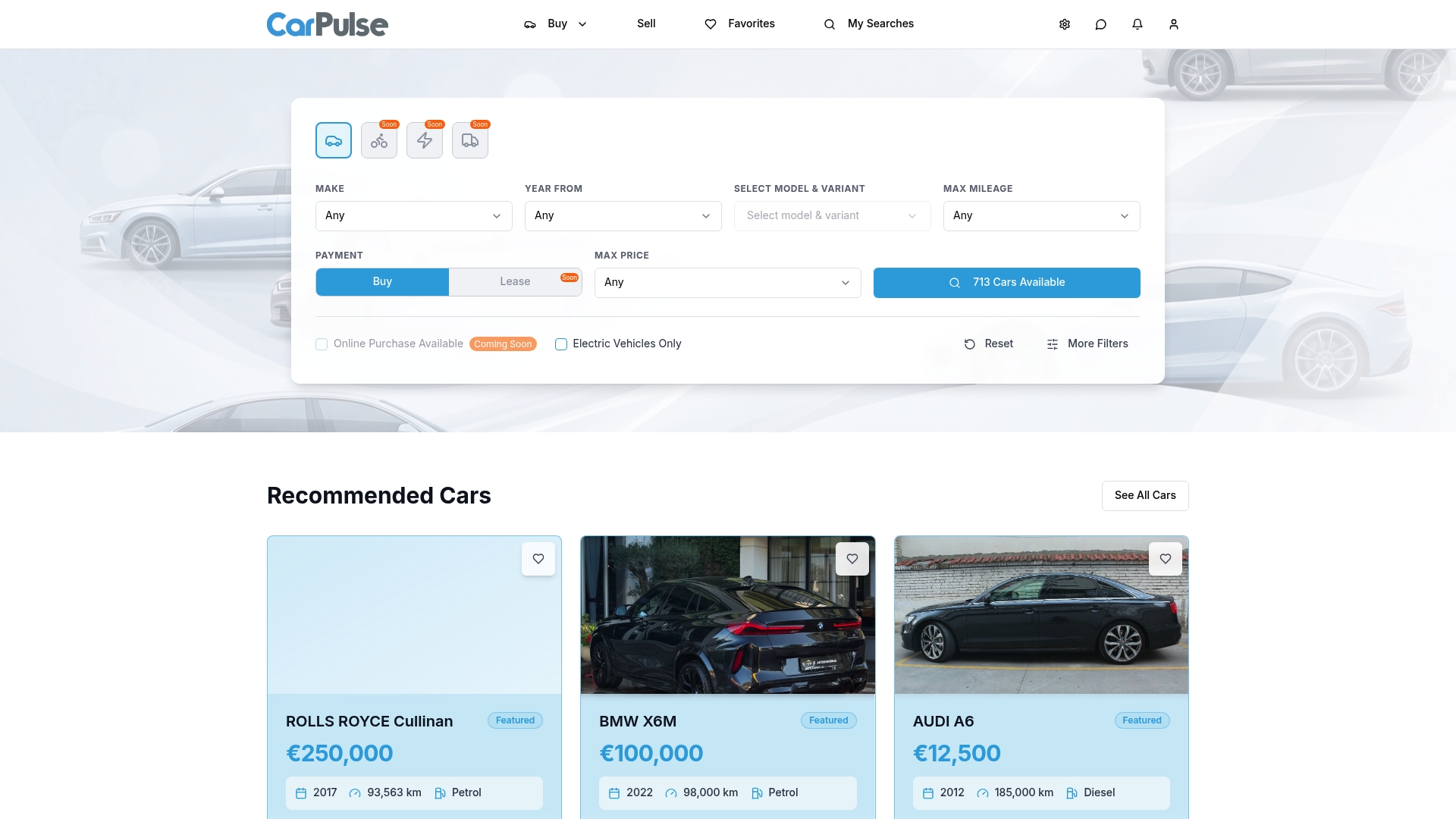
That matters more for imports than for a local purchase. A seller who can’t produce a Certificate of Conformity or clear ownership history is a red flag you want to catch while browsing, not one you discover at the border. Filtering by make, model, year, and fuel type on CarPulse’s marketplace lets you narrow in on vehicles more likely to clear DPSHTRR’s environmental checks without a fight. If you’re on the other side of the transaction and preparing to sell a vehicle you’ve already imported and registered, the listing tools walk you through presenting your documentation clearly to the next buyer. Browse current listings and start narrowing down a vehicle that won’t cause you customs headaches later.
This article is general information, not a substitute for advice from a qualified lawyer. Consult a qualified legal professional about your own circumstances before acting on anything here.
Sources
- Zhdoganimi i automjeteve
- Importi i Mjetit
- Fletore Zyrtare (example decree PDF)
- Aplikimi për verifikim (DPSHTRR reservation portal)