
Guides
What Photos Matter When You Buy a Car in Albania?
What Photos Matter When You Buy a Car in Albania?
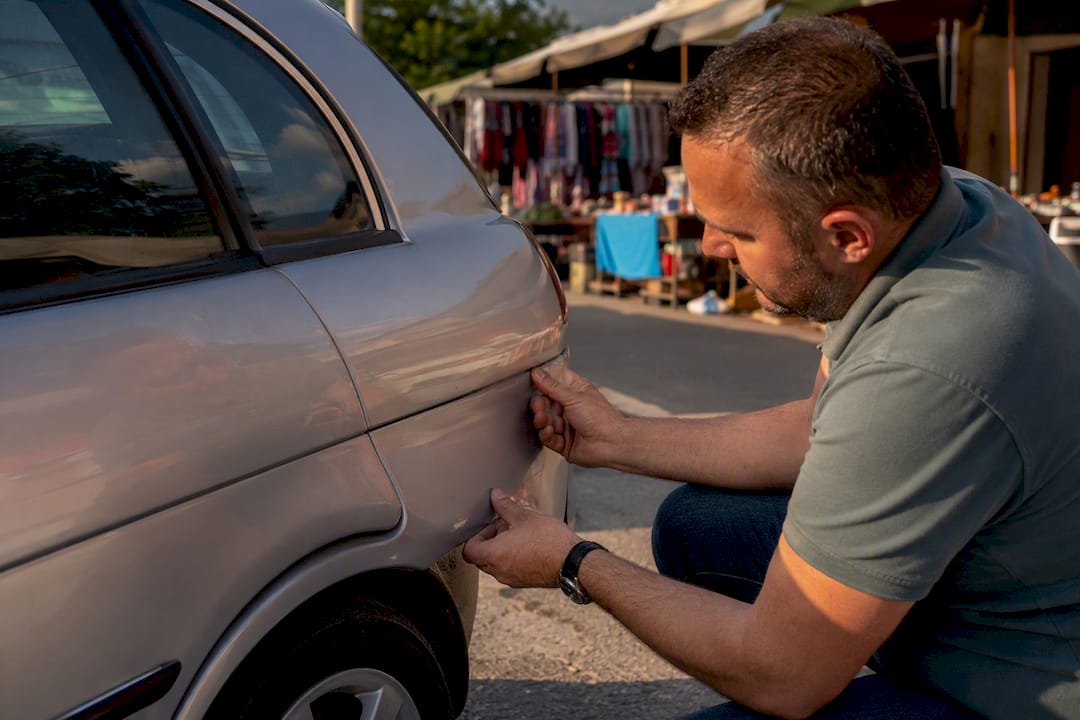
Look for six photos before you message anyone: front and rear exterior, both sides, the odometer, and the VIN plate. If a listing is missing any of these, ask for them. Once you have them, do not stop there. Verify the VIN against DPSHTRR and request the service history or an independent inspection before you agree on a price. Marketplaces like CarPulse auto-populate VIN details from verified dealer listings, which cuts down on the guesswork photos alone leave behind.
- Front and rear exterior (full car, not cropped)
- Left and right side profiles
- Odometer reading, clearly lit
- VIN or chassis plate, in focus
- Engine bay
- At least one interior shot showing the dashboard
Pro Tip: A listing with six sharp, unedited photos and a visible VIN tells you more in ten seconds than three paragraphs of seller description.
Key Takeaways
Verifying the VIN and requesting documented service history matters more than judging a car by its photo gallery alone.
| Point | Details |
|---|---|
| Six essential photos | Front, rear, both sides, odometer, and VIN plate are the minimum before you contact a seller. |
| Watch for coverage gaps | Missing angles, mismatched paint, or blurred VIN shots usually signal hidden damage, not bad photography. |
| Verify before you visit | Check the VIN against DPSHTRR records and request service-book pages showing sequential stamps. |
| Expect a fast close | Purchases in Albania typically finalize in 1 to 3 working days once documentation is complete. |
| Choose platforms with VIN data | CarPulse auto-populates listing details from the VIN, reducing the gaps photos alone leave open. |
Guides and Tools for Safer Car Buying
Table of Contents
- How Do You Spot Red Flags in Car Sale Photos?
- Photo Checklist: What to Ask For When a Listing Falls Short
- How Do You Confirm the VIN and History Behind the Photos?
- Quick Checklist Before You Contact the Seller
- Find Listings With Real VIN Data and Full Photo Galleries
- Sources
How Do You Spot Red Flags in Car Sale Photos?
Photos lie by omission more often than they lie outright. A seller who wants to hide a repaired panel does not usually fake damage; they just never photograph that corner of the car. That is the pattern to watch for: gaps in coverage, not obvious tampering.
Mismatched paint tone between adjacent panels, uneven gaps around doors or the hood, and a trunk or wheel arch that never appears in the gallery are the classic signals of undisclosed bodywork. So is a blurred or conveniently angled odometer shot. If every photo of the front bumper is taken from three feet away in low light while the rest of the car gets clean, close shots, ask why.
Stock or repeated images are another problem. Some classifieds sites carry listings with dozens of photos, but a chunk of those can be generic dealer stock rather than the actual car for sale. If the background, weather, or even the license plate visibly changes between what should be the same photo shoot, you are likely looking at recycled images.
Lighting and angle matter more than people assume. A seller photographing at midday in direct sun, from a slight distance, can hide scratches and dents that show up instantly under an evening walkaround with a phone flashlight. If every exterior shot is taken from the same three-quarter angle, ask for a straight side profile instead. That angle exposes panel misalignment better than anything else.
When photos raise more questions than they answer, do not try to solve it by squinting at the screen. Ask for:
- Close-ups of any suspected repair area, taken in daylight
- Service-book pages showing stamps and mileage entries, not just a summary
- A fresh, unedited VIN photo taken specifically for you, with a timestamp or a note visible if the seller can manage it
Buyers who rely on aesthetics alone tend to overpay or, worse, discover a structural issue after the sale. Photos should earn your interest. Documents and inspections should earn your money.
Photo Checklist: What to Ask For When a Listing Falls Short
A thin gallery is not automatically a scam, but it is a reason to ask before you drive across town. Use this order when requesting photos from a seller:
- Front, rear, and both side profiles — full car, no cropping, ideally in daylight.
- Wheels and wheel arches — corrosion, mismatched tires, or curb damage often shows up here first.
- Trunk, open — check for water stains, spare tire condition, and frame welds.
- Dashboard and odometer — confirms mileage matches the listing text.
- Front and rear seats — wear patterns can reveal actual usage versus the stated mileage.
- Roof and headliner — sagging or staining suggests water damage or a past flood.
- Infotainment cluster or gauge panel — dead pixels or error codes are cheap to spot, expensive to fix.
- Engine bay — leaks, mismatched hose colors, or an unusually clean bay on an older car deserve a second look.
- VIN or chassis plate, sharp and legible, not a screenshot of a screenshot.
- Service-book pages or repair invoices, if the seller has them, photographed page by page.
If a seller balks at all ten or claims the car “doesn’t need that,” treat it as information, not an inconvenience. A short walkaround video closes most remaining gaps: it catches uneven idle sounds, smoke on startup, and body panel gaps a still photo compresses into invisibility. Fifteen seconds of video from a phone often tells you more than five extra photos.
How Do You Confirm the VIN and History Behind the Photos?
Photos show you what a car looks like. They tell you almost nothing about what a car has been through. Confirming that gap is a separate step, and it is the one buyers skip most often.
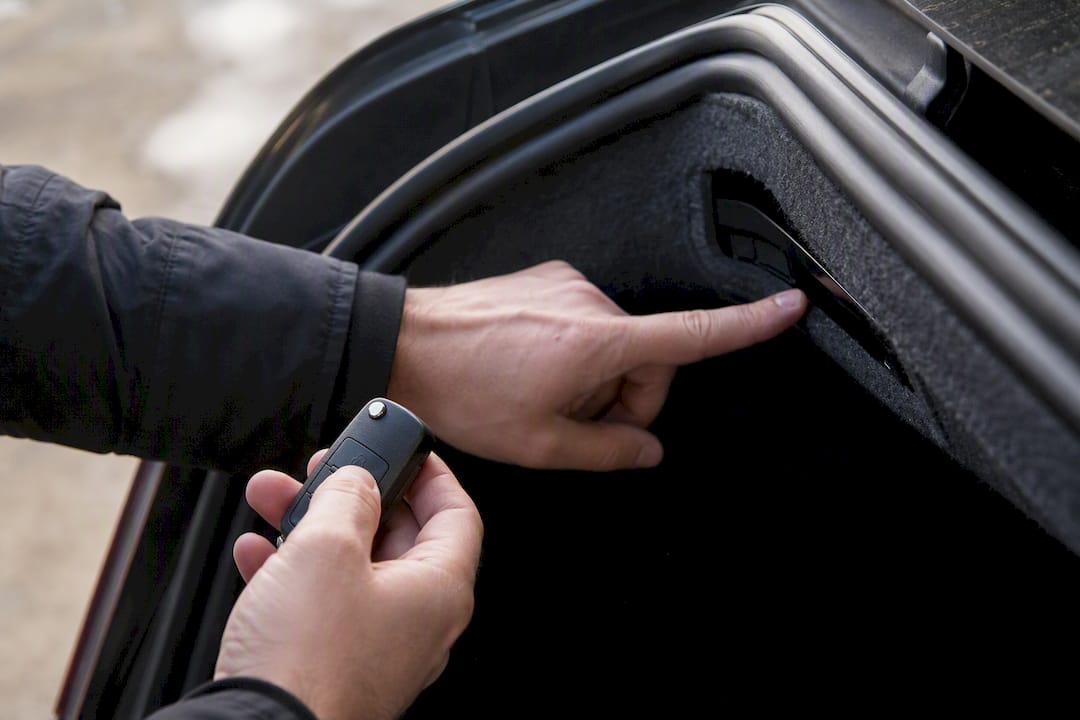
Start with the VIN plate photo itself. It is usually stamped on the dashboard near the windshield, inside the driver’s door frame, or under the hood near the firewall. Match the number across all three locations if the seller can provide them; a mismatch is a serious red flag on its own. Once you have a clean VIN, run it against DPSHTRR’s records to check for theft reports or undisclosed structural changes. Photos alone cannot tell you whether a car was stolen, rebuilt from a salvage title, or reregistered after an accident abroad.
Documents come next, and they need to match the photos, not just exist. Ask for:
- The vehicle registration certificate, with the VIN visible
- The current owner’s sales contract or proof of prior ownership
- Service-book pages showing sequential stamps and mileage, which tend to be a stronger signal than a single loose invoice
An independent pre-purchase inspection is a modest cost against the risk of buying a car with hidden frame damage or a failing transmission. Inspectors typically check compression, frame alignment, fluid condition, and electronics that a photo gallery simply cannot show. If a seller refuses to allow one, that refusal is itself useful information.
Quick Checklist Before You Contact the Seller
Before you send a message, run through this in under two minutes:
- Confirm the gallery includes a clear odometer photo and a legible VIN shot.
- Check that the listing price, mileage, and description match what the photos actually show.
- If the service history is missing from the listing, ask for it upfront rather than after you have already arranged a viewing.
- Note whether the seller is a private individual or a verified dealer; verified dealer listings tend to carry more consistent documentation.
If everything lines up, the administrative side of a purchase in Albania typically takes one to three working days once you have the sales contract, registration, and a valid technical inspection ready. Delays almost always trace back to missing paperwork, not the car itself.
Pro Tip: Save the two minutes of cross-checking for every listing you consider. It filters out half the sellers who would have wasted your afternoon.
A Buyer’s Perspective on Photos Versus Paperwork
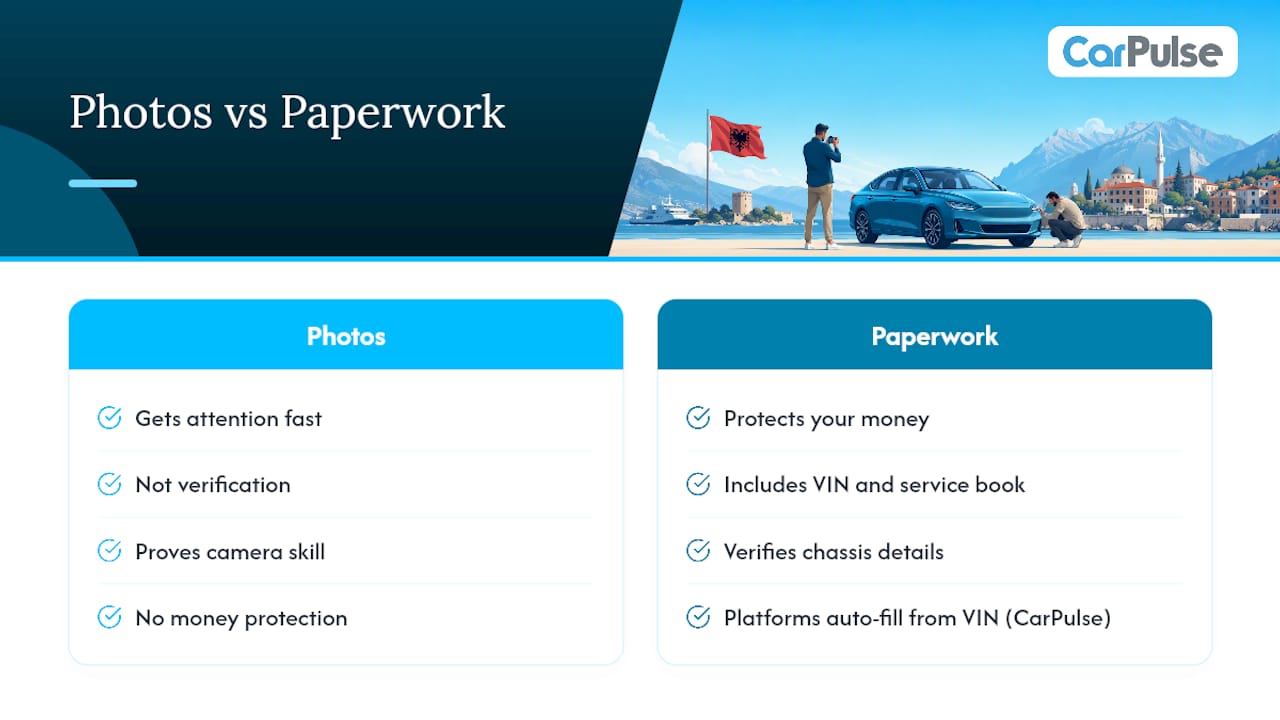
Good photos get my attention fast, I will admit that. But attention is not verification. A gallery only proves someone knows how to use a camera. The VIN, the service book, and a platform that auto-fills chassis details from the VIN itself, the way CarPulse does, are what actually protect your money.
Find Listings With Real VIN Data and Full Photo Galleries
Carpulse is built around one idea: a listing should tell you the truth before you ever call the seller. Every vehicle listed through VIN-based entry auto-populates make, model, year, and mileage straight from the chassis number, so the details in the gallery match the paperwork instead of relying on a seller’s memory. Verified dealer listings sit alongside private ones, and you can filter by make, model, year, mileage, price, and fuel type to narrow down exactly what you are comparing.
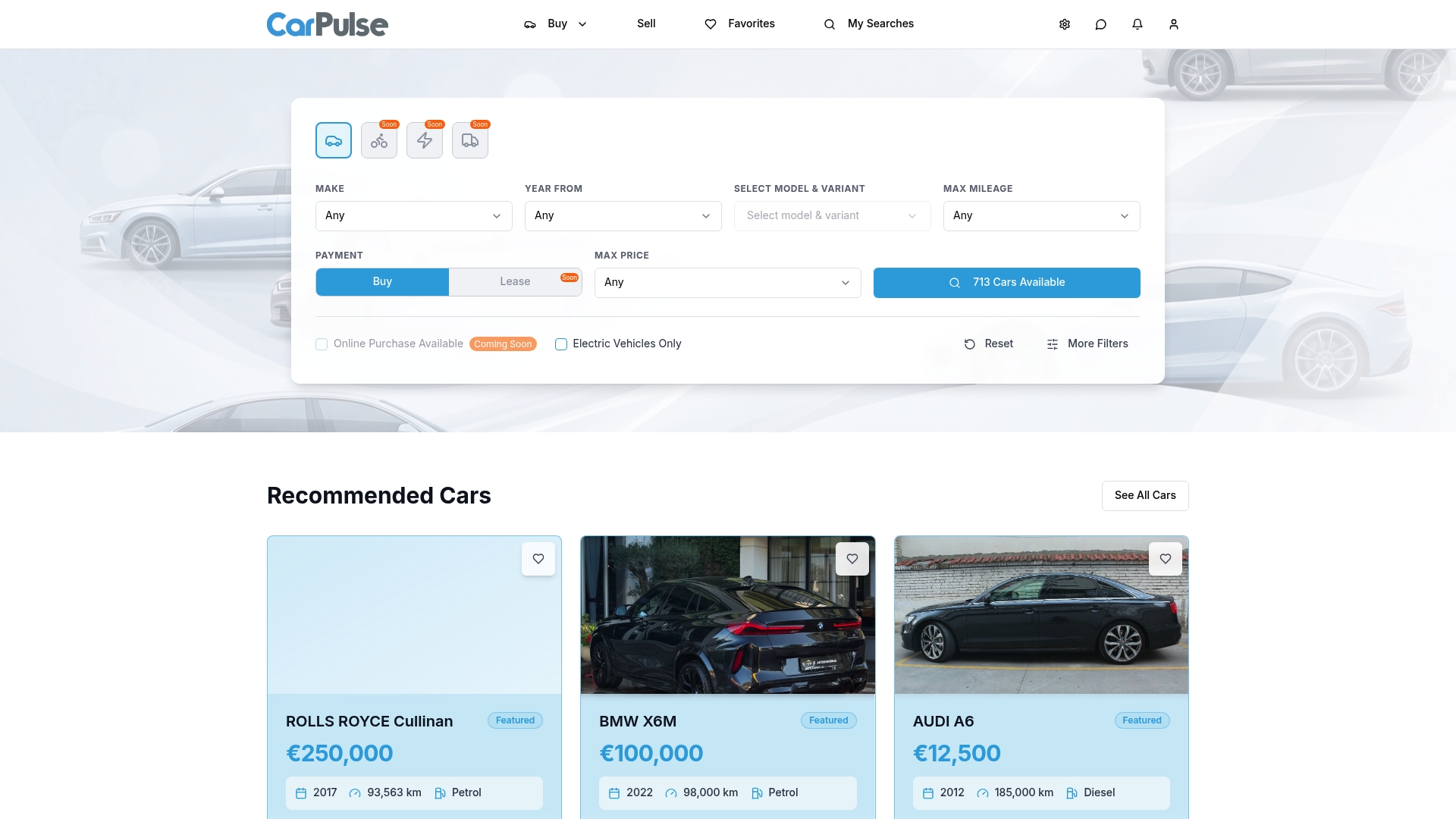
That means fewer listings with a missing VIN photo, fewer mismatched odometer numbers, and less back-and-forth chasing service records that should have been there from the start. Save your searches, bookmark the listings worth a second look, and pick up where you left off from the CarPulse mobile app on iOS or Android. If you are ready to compare real listings with verified data behind the photos, start browsing on CarPulse today.
Sources
- Invest in Albania — how to check a used car’s history
Recommended
- Udhëzues: Blerja e sigurt e një makine të përdorur në… | CarPulse Albania
- Makina ne Shitje Shqipëri - Udhëzuesi i Plotë për Blerje | CarPulse Albania
- Fiat në Shitje Shqipëri: Modele, Çmime, Këshilla Blerjeje | CarPulse Albania
- Blej Makina në Shqipëri: Udhëzuesi i Plotë | CarPulse.al | CarPulse Albania