Guides
Electric Vehicles Explained: A Complete Guide for 2026
Electric Vehicles Explained: A Complete Guide for 2026
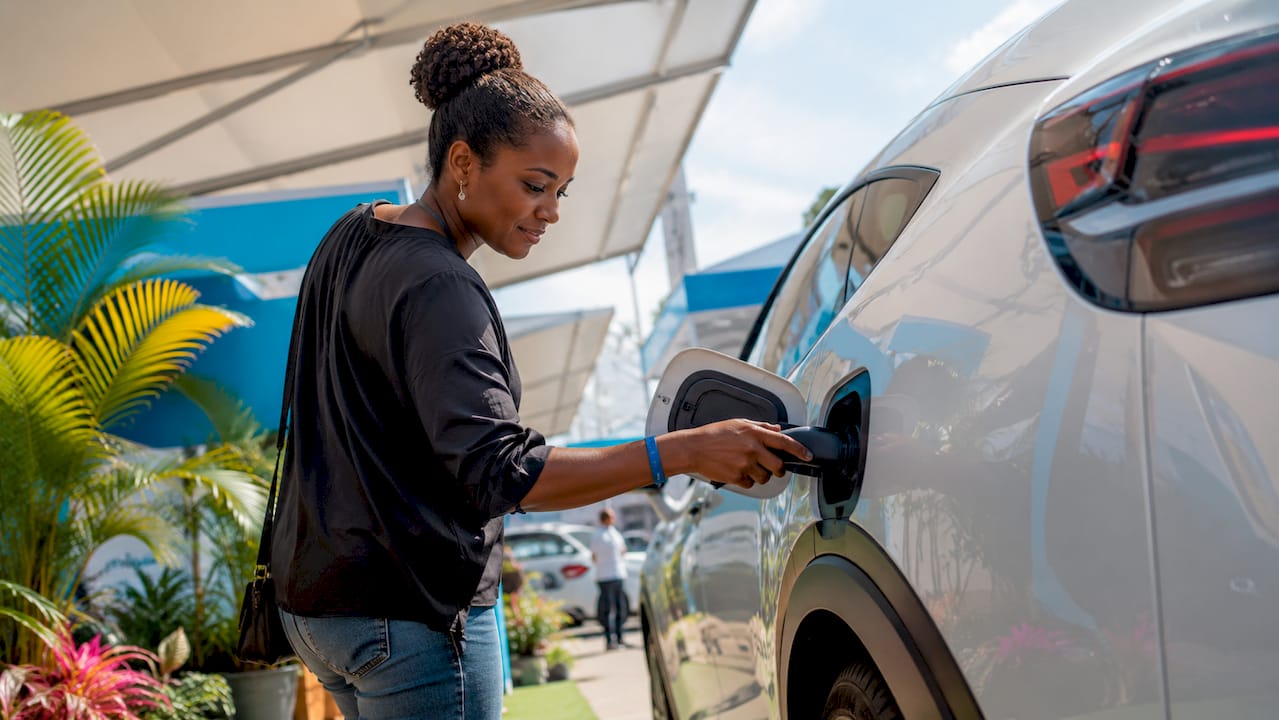
Electric vehicles run on electricity stored in onboard rechargeable batteries and use electric motors for propulsion instead of internal combustion engines. They produce zero tailpipe emissions because they never burn fuel inside the vehicle. No exhaust pipe, no oil changes, no trips to the gas pump. Here is what you need to know at a glance:
- Propulsion: Electric motors powered by a traction battery pack
- Fuel: Electricity, stored in lithium-ion battery cells
- Emissions: Zero tailpipe emissions during operation
- Types: BEV, PHEV, HEV, and FCEV (detailed below)
- Range: Most current models cover 150–400 miles on a full charge
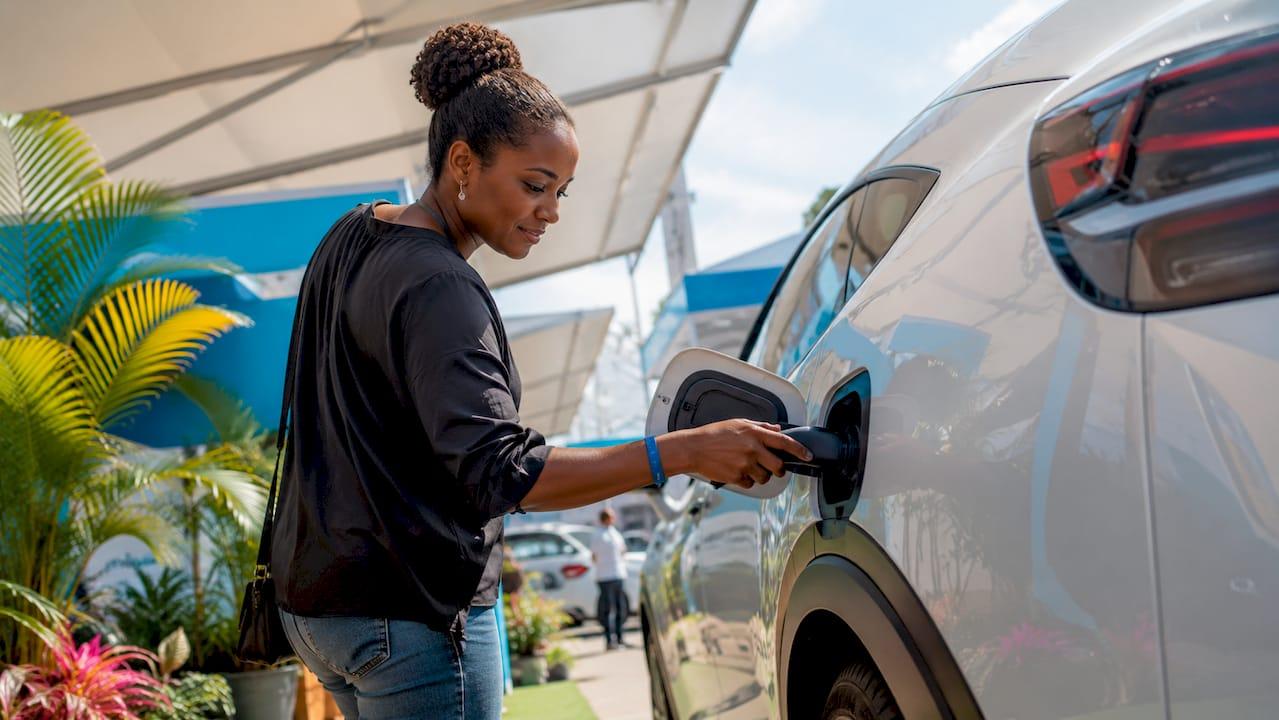
- Charging: Standard home outlets, dedicated Level 2 chargers, or DC fast chargers
The term “electric vehicle” covers a wider family than most people realize. Some models run entirely on battery power; others pair a battery with a gasoline engine. Understanding those differences is where a clear picture of EV technology starts.
What are the main types of electric vehicles?
The four categories of EVs differ in how they store energy, how they recharge, and how far they can travel on electricity alone. BEVs and PHEVs represent the two primary plug-in types, while HEVs and FCEVs round out the full picture.
- Battery Electric Vehicles (BEVs): Fully electric, no combustion engine at all. The entire drivetrain runs on a large traction battery pack that you recharge by plugging in. BEVs produce zero tailpipe emissions and offer the highest fuel economy ratings, up to 136 MPGe. New BEV models typically deliver a substantial range per charge, depending on the model and conditions
- Plug-In Hybrid Electric Vehicles (PHEVs): Combine a battery-powered electric motor with a gasoline engine. You can plug in to charge the battery for a shorter electric-only range, typically 15–60 miles, then the gasoline engine takes over. PHEVs produce no tailpipe emissions in electric-only mode and can achieve high fuel economy ratings.
- Hybrid Electric Vehicles (HEVs): Primarily gasoline-powered, with an electric motor that assists the engine and recovers energy through regenerative braking. The battery charges itself from the engine and braking; you never plug it in. HEVs cannot run on electricity alone for any meaningful distance, but they are more fuel-efficient than conventional vehicles, reaching up to 58 mpg.
- Fuel Cell Electric Vehicles (FCEVs): Powered by hydrogen. A fuel cell converts hydrogen gas into electricity on board, which then drives an electric motor. FCEVs emit only water vapor from the tailpipe and refuel at hydrogen stations rather than charging points.
For a deeper comparison of BEVs and hybrids in the context of car buying, Carpulse’s electric vs. hybrid guide walks through the practical trade-offs.
How electric vehicles work: key components and energy flow
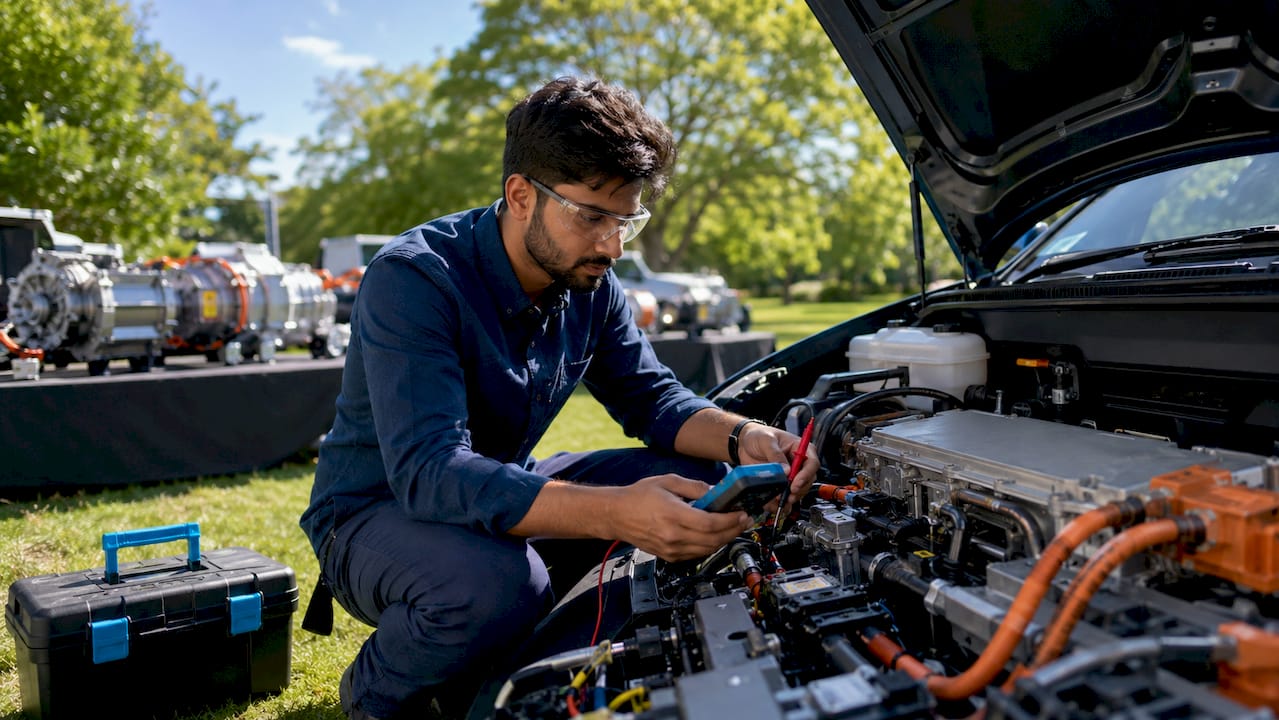
An EV’s powertrain replaces the engine, transmission, and fuel system with a set of electrical components that store, convert, and deliver energy. The Alternative Fuels Data Center identifies the core parts as follows:
| Component | Function |
|---|---|
| Traction battery pack | Stores electricity for the electric motor |
| Charge port | Connects the vehicle to an external power source |
| Onboard charger | Converts incoming AC electricity to DC for the battery |
| Power electronics controller | Manages energy flow; controls motor speed and torque |
| Electric traction motor | Drives the wheels using power from the battery |
| DC/DC converter | Steps high-voltage battery power down for accessories |
| Auxiliary battery | Powers low-voltage systems independently of the main pack |
| Thermal management system | Keeps battery and motor within safe operating temperatures |
The energy flow works like this: the traction battery stores direct current (DC). When you drive, the power inverter converts DC to AC so the motor can use it. When you brake, that process reverses. The motor acts as a generator, converting kinetic energy back into DC electricity and sending it to the battery. That is regenerative braking, and it is one reason EVs often get better range in city driving than on the highway.
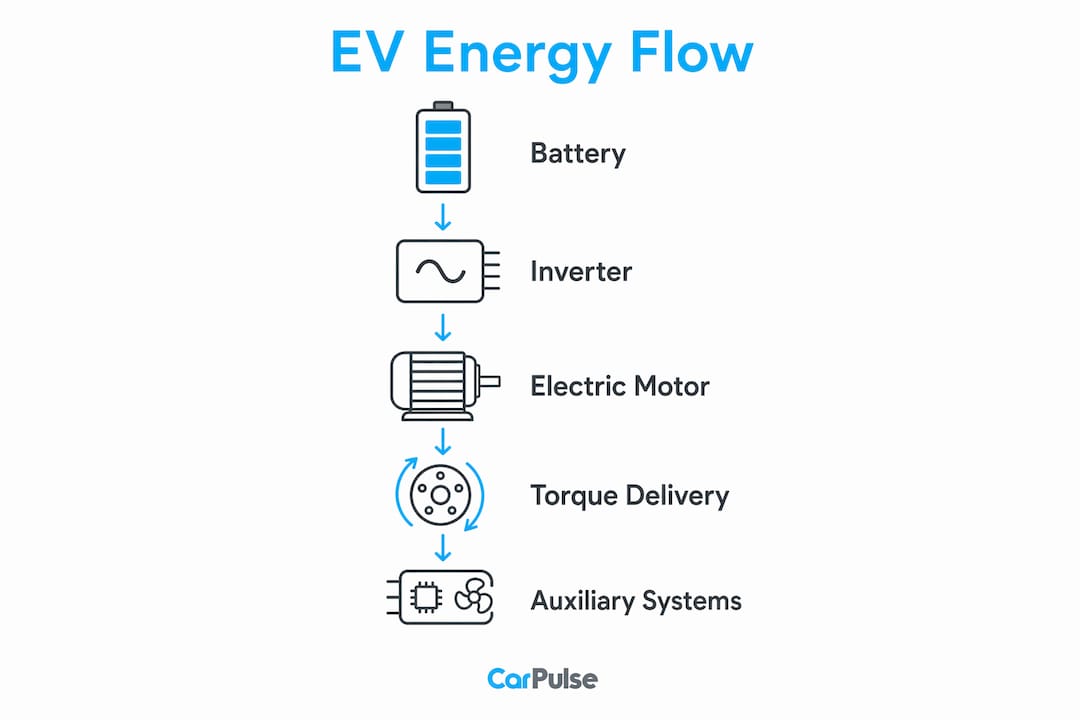
Electric motors deliver instant torque, which is why EVs accelerate faster than most gas cars without needing a multi-gear transmission. The power electronics controller handles everything the transmission would normally do, adjusting motor speed and output electronically.
The auxiliary battery and DC/DC converter are easy to overlook, but they keep your lights, infotainment, and climate controls running without drawing from the high-voltage traction pack. The onboard charger does more than just convert AC to DC; it also monitors voltage, current, temperature, and state of charge throughout every charging session.
Pro Tip: Thermal management directly affects how far you can drive. In extreme cold, the battery uses some of its stored energy just to stay warm, which can reduce range noticeably.
How does EV charging work, and what are your options?
Charging an EV comes down to three levels, each defined by voltage and speed. Charging time depends on battery depletion, battery capacity, charger type, and temperature.
- Level 1 (120V): Uses a standard household outlet. Adds roughly 2–5 miles of range per hour of charging. Slow, but enough for drivers with short daily commutes who can charge overnight.
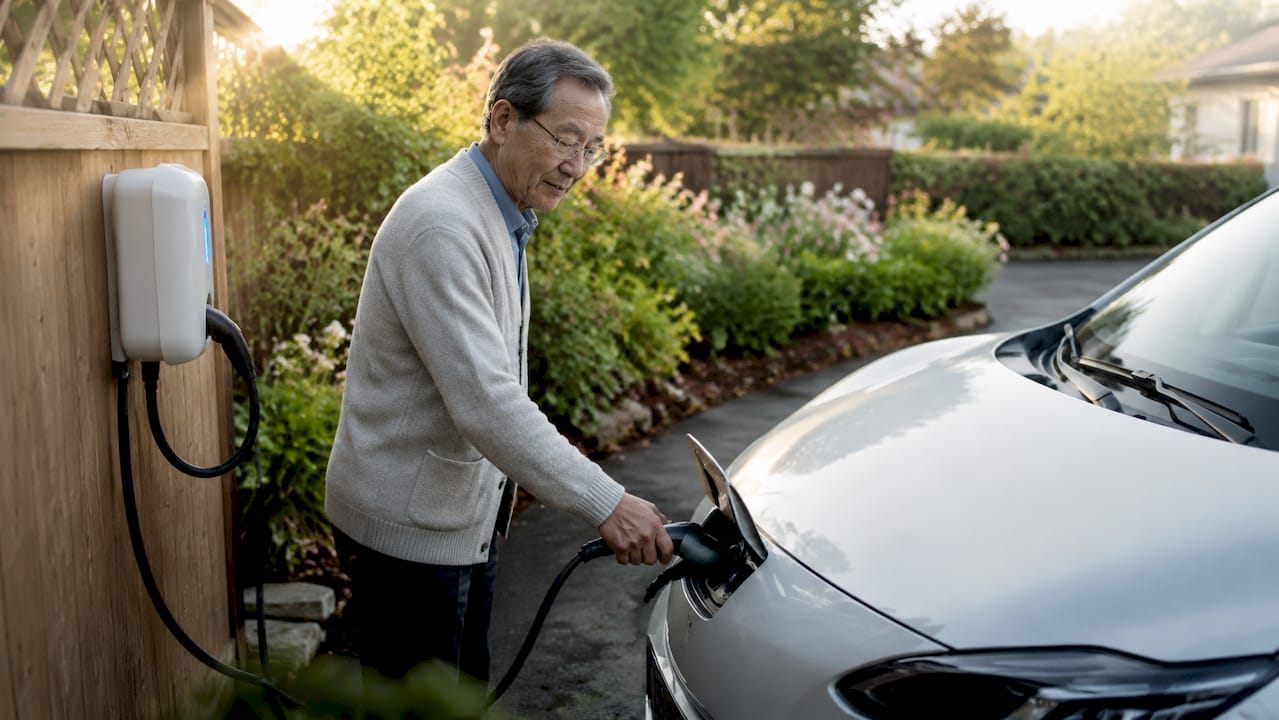
- Level 2 (240V): The same voltage as a home electric dryer. Adds about 10–20 miles of range per hour and can replenish hundreds of miles overnight. Most EV owners install a dedicated Level 2 charger at home.
- DC Fast Charging: Bypasses the onboard charger and delivers high-voltage DC directly to the battery. Many EVs can recover a significant amount of range in about 20–30 minutes using DC fast chargers. These chargers are found primarily along highways and in urban centers.
One detail that catches people off guard: DC fast charging slows above 80% battery capacity. The charging rate tapers for chemical and thermal reasons, and going from 80% to 100% can sometimes double your total time at the charger. On a road trip, stopping at 80% and moving on is almost always faster than waiting for a full charge.
About 75% of EV owners charge at home, which means the public charging network matters most for longer trips. The EPA counts over 77,000 public charging stations and 219,000 charging ports across the United States.
What are the environmental benefits of driving an EV?
EVs produce zero tailpipe emissions because they carry no combustion engine and burn no fuel. That is the straightforward part. The fuller picture involves the electricity source used for charging.
Even accounting for power plant emissions, research shows that an EV is typically responsible for lower greenhouse gas levels than an average new gasoline car. The EPA confirms that EVs use approximately 87%–91% of battery energy to propel the vehicle, while gasoline engines convert only about 16%–25% of fuel energy into movement. That efficiency gap is large enough that EVs come out ahead on emissions in nearly every U.S. electricity grid region.
The EPA adjusts its range estimates using a 0.7 factor to account for real-world conditions like air conditioning, cold temperatures, and aggressive driving. A vehicle that achieves 200 miles on a lab highway test gets an adjusted label of 140 miles. That adjustment is why EPA-rated range and real-world range sometimes differ, and it is the root cause of much of the range anxiety drivers report.
Regenerative braking also contributes to efficiency. Rather than wasting kinetic energy as heat the way conventional brakes do, the system captures it and returns it to the battery. In stop-and-go city traffic, that recovery adds up.
How did electric vehicles develop over time?
EVs are not a recent invention. The U.S. Energy Information Administration notes that electric vehicles were among the first automobiles ever produced and sold in the United States. Early models appeared in the late 19th century, but limited range and the rise of cheap gasoline pushed them out of the mainstream for most of the 20th century.
Modern EVs re-entered the market seriously around 2010, when lithium-ion battery technology made longer ranges commercially viable. In 2012, fewer than 100,000 EVs were registered in the United States. By 2022, that number exceeded 3 million, accounting for 7% of light-duty vehicle sales. BEVs overtook PHEVs as the dominant EV type in the U.S. by 2016 and have held that position since.
What battery technologies power today’s EVs?
Most current EVs use advanced lithium-ion chemistry. The three main types are lithium manganese cobalt oxide (NMC), lithium iron phosphate (LFP), and lithium nickel-cobalt-aluminum oxide (NCA). NMC and NCA batteries offer higher energy density and longer range but cost more to produce. LFP batteries are heavier and offer somewhat less range, but they tend to be more affordable and handle frequent fast charging better over time.
Battery management systems (BMS) sit at the center of every modern pack. The BMS monitors cell voltage, temperature, and state of charge continuously, balancing energy use across hundreds or thousands of individual cells. Thermal management works alongside the BMS, keeping the pack within its optimal temperature window. Both systems directly affect how long a battery lasts and how consistently it performs across seasons.
A recent study of about 15,000 vehicles showed that EV battery replacements due to failure have averaged just 2.5% across all model years, and since 2016, that rate has dropped below 0.5%.
Are electric cars worth it financially?
The upfront cost of an EV is typically higher than a comparable gasoline vehicle, but the gap narrows when you factor in operating costs. EVs require no oil changes, no fuel at the pump, and fewer brake replacements because regenerative braking reduces wear on the physical brake pads. The Congressional Research Service notes that EVs have fewer moving and wearing parts in the powertrain, which shifts maintenance demands away from traditional auto service.
Electricity costs less per mile than gasoline in most U.S. regions. Charging at home overnight on a Level 2 charger is generally cheaper than DC fast charging on the road. For buyers considering the full range of eco-friendly vehicle options, the total cost of ownership calculation often favors EVs over a five-year horizon.
What government incentives support EV adoption in the U.S.?
Federal tax credits have been the primary policy tool for EV adoption. The federal income tax credit offers up to $7,500 per vehicle for qualifying plug-in electric vehicles, including both PHEVs and BEVs. Eligibility depends on vehicle price, buyer income, and where the battery is manufactured. Many states layer additional rebates, reduced registration fees, or HOV lane access on top of the federal credit.
Charging infrastructure has also received federal investment, with the goal of expanding the public network beyond its current 77,000-plus stations. Utility companies in many states offer time-of-use rates that make overnight charging significantly cheaper, effectively functioning as an indirect subsidy for home charging.
How does EV maintenance compare to a gas car?
EVs need less routine maintenance than gasoline vehicles. No oil changes, no spark plugs, no timing belts, and no exhaust system to service. Brake jobs are less frequent because regenerative braking handles most of the deceleration. Tire rotation and cabin air filter replacements remain on the schedule, as does the occasional check of the thermal management system.
The traction battery is the component that draws the most questions. Battery packs are designed to last the lifetime of the vehicle, and failure rates are low as noted above. Manufacturers typically cover the battery under an 8-year or 100,000-mile warranty. The main thing that degrades a battery over time is repeated DC fast charging and exposure to extreme temperatures, both of which the thermal management system works to limit.
Key Takeaways
Electric vehicles offer zero tailpipe emissions, lower operating costs, and simpler maintenance than gasoline cars, with most new BEV models delivering 150–400 miles of range on a single charge.
| Point | Details |
|---|---|
| Zero tailpipe emissions | EVs burn no fuel, so they produce no exhaust during operation. |
| Four EV types | BEV, PHEV, HEV, and FCEV differ in how they store and use energy. |
| Charging levels | Level 1 adds 2–5 miles/hour; Level 2 adds 10–20 miles/hour; DC fast charging adds a significant amount of range in 20–30 minutes. |
| Energy efficiency | EVs convert 87%–91% of battery energy into movement; gasoline engines convert only 16%–25%. |
| Low maintenance | No oil changes, fewer brake jobs, and battery failure rates below 0.5% for post-2016 models. |
Ready to browse electric and hybrid vehicles available right now? Carpulse lists new and used EVs from verified dealers across Albania, with filters for fuel type, range, and price.
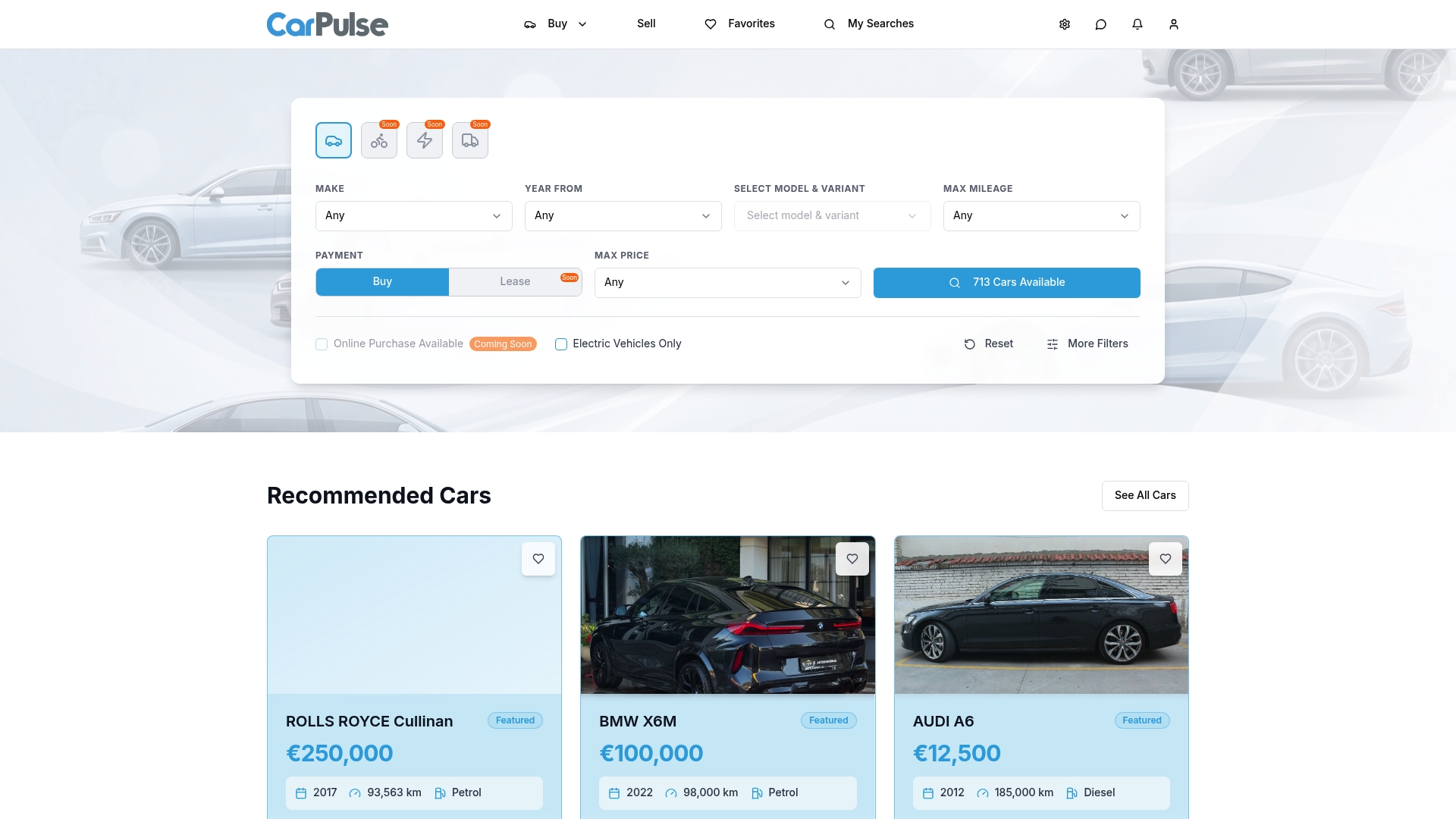
Explore EV listings on Carpulse and find the right electric vehicle for your needs today.
Recommended
- Fuoristrada në Shitje Shqipëri: Udhëzuesi dhe Këshilla 2024 | CarPulse Albania
- Blerja online e makinave në Shqipëri: 12% rritje e EV në… | CarPulse Albania
- Blerja e makinave online në Shqipëri: Rritje 12% e EV në… | CarPulse Albania
- Blerja Online e Makinave në Shqipëri: Rritje EV 12% në 2026 | CarPulse Albania