
Guides
Dealer Fees in Albania: Add 20% VAT Before Comparing Plans
Dealer Fees in Albania: Add 20% VAT Before Comparing Plans

Dealer listing fees are the payments dealers make to publish and promote vehicles on an online marketplace, and they vary by feature, from a flat per-listing charge to subscription tiers and paid promotion. In most markets a 20% VAT applies on top, so the number on the plan page is never the final number. The right choice balances fee cost against lead quality, and a platform like CarPulse gives dealers a concrete place to test that tradeoff.
TL;DR:
- Albanian dealers should add 20% VAT to listing and promotion charges, keep a proper VAT invoice, and record each payment for monthly filing.
- A €10 listing and €15 promotion total €30 after 20% VAT; calculate costs per sale separately using monthly fees and actual conversions.
- Dealers with steady monthly volume can seek discounted rates or enterprise bundles; smaller sellers should bring sales, time to sale, and conversion figures.
- Judge upgrades by impressions, contact rate, and sales conversion, since added visibility alone does not show whether a promotion earns its fee.
- Occasional sellers can use CarPulse Basic at €14.99 monthly, while higher turnover dealers may need Premium at €29.99 for promotion tools and priority placement.
Table of Contents
- 1. What makes up a typical marketplace fee
- 2. How VAT changes the real cost of a listing fee
- 3. Pricing models marketplaces use and how to negotiate them
- 4. Operational tactics that improve lead quality without raising spend
- 5. Worked examples: fee, VAT, and effective cost per vehicle
- 6. Dealer fees beyond the listing: documentation, prep, and destination charges
- 7. Why dealer fees exist and what they actually fund
- 8. Dealer fees versus private sale costs
- 9. How dealer fees add up in the final purchase price
- 10. What buyers should ask before accepting any dealer fee
- 11. Why dealer fee structures vary so widely
- CarPulse’s view on fees: pay for what moves the needle
- Getting started with a CarPulse plan
- FAQ
- Sources
1. What makes up a typical marketplace fee
Most marketplace invoices break down into four recognizable categories, and knowing which one you are paying for helps you judge whether the price is fair.
A per-listing fee covers the baseline cost of putting one vehicle online: a listing page, basic photo slots, and inclusion in standard search results. It is the simplest unit of cost and the easiest to compare across platforms.
Subscription or plan tiers bundle a set number of listings with extra tools. A Basic tier typically covers straightforward listing creation, while a Premium tier adds promotion slots, priority placement, or faster turnaround on edits. CarPulse structures its own seller plans this way, with Basic and Premium tiers available on its pricing page.
Promoted or featured listing fees buy visibility rather than existence: a spot near the top of search results, a badge, or inclusion in a curated homepage section. These fees are usually billed per listing or per campaign window rather than monthly.
Add-on services round out the invoice:
- VIN-based autofill that pulls specs automatically and speeds up listing creation.
- AI-assisted price evaluation that benchmarks a vehicle against similar inventory.
- Inspection or verification badges that signal a vehicle has passed a documented check.
- Extra photo slots or video embeds for higher-value inventory.
Some of these charges are one-off (a single promotion push), while others recur monthly as part of a plan. Reading the invoice line by line before renewal avoids paying twice for the same feature under two different names.
2. How VAT changes the real cost of a listing fee
The sticker price on a listing fee is rarely what leaves your account. Albania’s standard VAT rate is 20% on taxable services, and official guidance from the Albanian tax authority confirms that marketplace service fees fall within this taxable base. A few practical points follow from that:
- The taxable value includes the listing fee itself plus any related charges billed alongside it, such as promotion add-ons.
- VAT-registered dealers generally need a proper VAT invoice from the marketplace to support input VAT recovery.
- Declarations in Albania follow a monthly filing cycle, so fees paid mid-month still need to land in that period’s VAT return.
- Keeping a simple register of marketplace invoices, net amount, VAT amount, and gross paid makes reconciliation at filing time far faster.
Treating VAT as part of the cost comparison, not an afterthought, is what separates an accurate per-vehicle cost estimate from a rough guess.
3. Pricing models marketplaces use and how to negotiate them
Marketplaces generally monetize dealers through one of four models: pay-per-listing, flat subscription, performance-based pricing tied to leads or sales, or a hybrid that blends a base subscription with paid promotion on top. The global used-car platform market shows this mix is now standard across markets, with listing fees, subscriptions, and add-ons all coexisting on the same platforms.
Volume changes what is negotiable. Large dealer groups that move consistent monthly inventory often qualify for discounted rates or enterprise bundles that include analytics and priority placement, since the marketplace is trading a lower per-unit price for guaranteed volume and sometimes exclusivity. Smaller dealers have less leverage individually but can still ask.
Before approaching a marketplace for custom terms, prepare:
- Monthly sold units and average days-on-market for your current inventory.
- A rough conversion rate from listing views to serious inquiries.
- The specific features you actually use versus ones sitting unused in your current plan.
Pro Tip: Bring your own numbers to the conversation. A dealer who can state “40 units a month, 12-day average turn” gets a better offer than one who simply asks for a discount.
4. Operational tactics that improve lead quality without raising spend
Fee structure is only half the equation. The other half is whether your listings convert, and that depends more on execution than on which tier you pay for.
- Complete every VIN-based field rather than leaving specs blank; autofill tools pull accurate data straight from the VIN and buyers trust a fuller listing more than a sparse one.
- Match the listing format to the vehicle’s price point: higher-value inventory benefits from extra photos, verified badges, and a fuller description, while budget units need less.
- Refresh or re-promote listings on a predictable cadence rather than letting them sit static for weeks, since visibility decays over time in most search rankings.
- Write a clear title, honest condition notes, and a direct call to action so inquiries come from buyers who are actually ready, not browsers.
- Track three numbers consistently: impressions, contact rate, and lead-to-sale conversion. These three tell you whether a fee is earning its keep.
5. Worked examples: fee, VAT, and effective cost per vehicle
Say a single listing costs €10 and a featured promotion adds €15. The combined fee is €25, plus 20% VAT per the Albanian VAT guidance, for a total payable of €30.
Now say a dealer runs 50 listings a month under a subscription priced at €29.99, CarPulse’s Premium plan rate. Spread across 50 listings, that works out to about €0.72 per listing before any lead-quality adjustment.
- If one in 50 listings converts to a sale, the effective cost per sale is the full monthly fee, around €36.
- A dealer selling a €15,000 vehicle can treat that €36 as a negligible fraction of margin, even before counting faster turn time.
- Keeping a simple spreadsheet with fee, VAT, listings, and conversions lets you recompute this ratio every month as volume shifts.
6. Dealer fees beyond the listing: documentation, prep, and destination charges
Marketplace listing fees are only one category of dealer fee. Separately, many dealerships charge the buyer their own line items at the point of sale, and it helps to know these by name even though they are distinct from what you pay a marketplace to list a vehicle.
A documentation fee (sometimes called a doc fee) covers the paperwork a dealership handles on a sale: title transfer, registration filing, and contract preparation. A dealer preparation fee covers the physical work of getting a vehicle sale-ready, cleaning, inspection, and minor touch-ups before handover. A destination charge reflects the cost of transporting a new vehicle from the factory or distribution point to the dealership lot, and is typically set by the manufacturer rather than the individual dealer.
These are separate from any marketplace cost structure. A dealer’s own documentation or preparation fee has nothing to do with what that same dealer pays to list the vehicle online, and the two should never be confused when a buyer asks “why does this car cost more than the sticker price.” Understanding the distinction also helps a dealer explain pricing clearly to a buyer who sees a listing price and then a final invoice that differs from it.

7. Why dealer fees exist and what they actually fund
Fees exist because listing a vehicle is not free to produce on the marketplace side. Hosting, search infrastructure, fraud checks, dealer verification, and the tools that let a seller pull accurate specs from a VIN number all cost money to build and maintain.
A per-listing fee funds the baseline infrastructure: the page itself, standard search placement, and basic support. A promotion fee funds the extra visibility, placement higher in results or in a featured section that a plain listing would not reach on its own. Add-on fees such as AI price evaluation or verification badges fund specific tools that took engineering work to build and that directly raise buyer trust.
Separately, a dealership’s own documentation or preparation fee funds actual labor: paperwork processing, title work, and getting a car ready to hand over. None of these are arbitrary markups when they are itemized clearly. The test for a fair fee is simple: can the seller or buyer point to a specific service the charge paid for? When they can, the fee is doing its job.
8. Dealer fees versus private sale costs
A private seller posting a single car for sale typically pays little or nothing beyond a basic listing fee, and has no documentation team, no prep crew, and no dealership overhead to cover. That is the main reason private-party prices often run lower than dealership prices for a comparable vehicle.
A dealership’s fees, documentation, preparation, and sometimes a destination charge on new inventory, pay for services a private seller simply does not provide: a vehicle history check, a basic safety inspection, warranty paperwork, and someone to answer questions after the sale rather than disappearing once the money changes hands. Buyers comparing a private listing to a dealership listing are not comparing the same product; they are comparing a bare transaction to one with services wrapped around it.
For sellers, this comparison also explains why a private individual using a marketplace like CarPulse pays a far simpler fee structure than a dealership does. A private seller usually just needs a single listing fee to get a car in front of buyers, while a dealership’s marketplace spend sits on top of its own internal cost structure for documentation and prep work it performs separately. Knowing this difference helps a seller of either type price realistically and explain the gap to a buyer who is comparing options.

9. How dealer fees add up in the final purchase price
Every fee a dealership charges, whether it is a documentation fee, a preparation fee, or a destination charge, adds to the number a buyer ultimately pays beyond the advertised vehicle price. None of these show up in the headline listing price, which is why a buyer who only compares sticker numbers across listings can end up surprised at the final invoice.
The practical impact is that two vehicles listed at the same price are not necessarily the same deal. A car with a lower documentation fee or no destination charge built in can cost less out the door than one with a higher sticker price but minimal add-on fees. For sellers, this means transparency about what the listing price includes is a trust signal in itself, a clearly itemized listing tends to generate fewer disputed negotiations later than one that leaves the buyer to discover fees at signing.
For dealers managing listings, the lesson is to make sure the marketplace description reflects what is and is not included in the quoted price, so the buyer’s expectation matches the final invoice before they ever walk in. A detailed, VIN-populated listing with accurate specs reduces the chance a buyer feels misled once prep or documentation charges are added at the point of sale.
10. What buyers should ask before accepting any dealer fee
A buyer who wants to avoid overpaying should ask for an itemized breakdown before signing anything, not after. Specifically useful questions include whether a documentation fee is fixed or negotiable, what exactly a preparation fee covered on this particular vehicle, and whether a destination charge is manufacturer-set or dealer-added.
- Ask to see the fee itemized separately from the vehicle price, not bundled into one total.
- Compare the same fee across two or three listings for similar vehicles to spot one that is unusually high.
- Ask what specific work a preparation fee covered rather than accepting it as a standard line item.
- Confirm whether any fee is negotiable before the final paperwork stage, since some are and some are fixed by policy.
None of this requires confrontation. A dealer who lists fees clearly on the vehicle page, rather than leaving the buyer to ask, generally faces fewer of these questions at the point of sale and builds trust earlier in the process.
11. Why dealer fee structures vary so widely
Fee structures differ from one dealership to another because each one sets its own documentation and preparation charges independently, and destination charges depend on the manufacturer and the vehicle’s origin point. A dealership selling mostly new inventory from a single brand will have a more predictable destination charge pattern than one selling a mixed used-vehicle lot, where preparation work varies case by case.
This variability is exactly why itemized listings matter more than headline price alone. Two dealerships advertising the same model at the same price can differ meaningfully in what the buyer pays once documentation and preparation fees are added, and a buyer has no way to know that without asking or seeing it listed. For dealers, publishing a clear, itemized vehicle listing rather than a single bottom-line number is one of the simplest ways to stand out as straightforward in a market where fee variability is the norm rather than the exception.
CarPulse’s view on fees: pay for what moves the needle
We think a fee only earns its place when it maps to something measurable: more qualified contacts, a faster sale, or a buyer who trusts the listing enough to act on it. VIN-based autofill, verified dealer support, and AI price evaluation exist to serve that goal rather than to pad an invoice. The right question to ask any marketplace is simple: what did this fee change in impressions, contact rate, or days to sale?
— Henri
Getting started with a CarPulse plan
If you list occasional single vehicles, our Basic plan at 14.99 € per month covers straightforward listing creation with VIN autofill built in. If you want promotion tools and priority placement for higher-turnover inventory, our Premium plan at 29.99 € per month adds that layer.
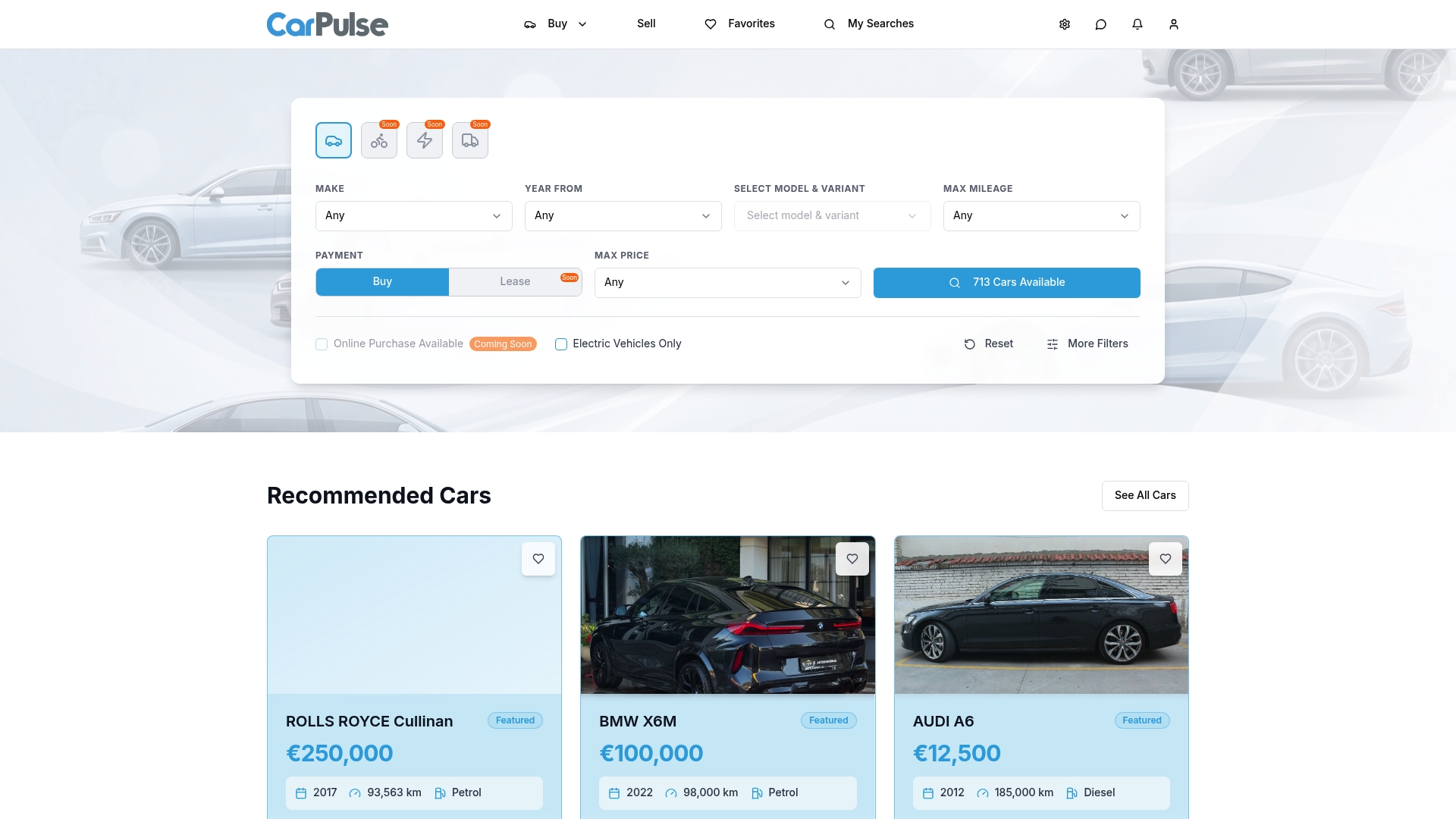
Dealers managing larger volume can reach out through our platform page to discuss pricing suited to consistent monthly listing counts.
FAQ
What are dealer fees on a car marketplace?
Dealer listing fees are what dealers pay a marketplace to publish, promote, or add features to a vehicle listing, separate from any documentation or preparation fee a dealership charges a buyer directly. They typically fall into per-listing charges, subscription tiers, promoted placement, and add-on services.
Are dealer fees negotiable?
Listing fees and add-ons are often negotiable for dealers with consistent monthly volume, since marketplaces frequently offer enterprise bundles or discounted rates in exchange for guaranteed inventory. Smaller sellers have less leverage but can still ask about available plan tiers, such as Basic and Premium.
Does VAT apply to marketplace listing fees?
Yes, in Albania the standard VAT rate is 20% and it applies to taxable services, which includes marketplace listing fees according to official tax guidance. Dealers should request a proper VAT invoice to support their own filing and recovery.
How do I know if a listing fee is worth paying?
A fee is worth paying when it improves measurable outcomes like contact rate or lead-to-sale conversion rather than just visibility for its own sake. Tracking impressions, contact rate, and conversion over a few weeks shows whether a paid promotion or plan upgrade is actually earning its cost.
What is the difference between a listing fee and a documentation fee?
A listing fee is what a dealer pays a marketplace to publish a vehicle online, while a documentation fee is what a dealership charges a buyer at the point of sale to cover paperwork like title transfer and registration. The two are unrelated costs that sit on different sides of the transaction.