
Guides
Certified Pre-Owned or Used? Use This Buyer Checklist and VI
Certified Pre-Owned or Used? Use This Buyer Checklist and VIN Workflow

Certified pre-owned vehicles suit buyers who want warranty coverage and lower near-term repair risk, even at a higher purchase price. Non-certified used cars suit budget-first buyers willing to accept more uncertainty in exchange for a lower sticker price. Either way, your first move is the same: check the warranty terms and pull a vehicle history report before you negotiate anything else. The rest of this guide walks through the trade-offs, the inspection steps, and a checklist you can apply to any listing.
TL;DR:
- Before paying a CPO premium, confirm the automaker backs the certification and calculate remaining coverage from the original in service date.
- For a noncertified car, get a history report and independent inspection; reports can miss unreported damage, and inspections typically cost $100 to $150.
- Use inspection findings to request repairs, a lower price, or walk away, and obtain both reports before negotiating when repair estimates exceed your preset limit.
- If you plan to resell within two years, the CPO premium is harder to recover because certification usually does not transfer to the next buyer.
Table of Contents
- Certified Pre-Owned vs Used: A Side-by-Side Comparison
- The Real Advantages and Limits of CPO Programs
- Why Buyers Choose Non-Certified Used Cars Anyway
- What the CPO Premium Actually Buys You Over Time
- A Step-by-Step Checklist Before You Buy
- What History Reports and Inspections Catch, and What They Miss
- How CarPulse’s Marketplace Tools Support Your Research
- My Honest Take on the CPO Premium
- Start Comparing Listings on Your Own Terms
- FAQ
- Sources
Certified Pre-Owned vs Used: A Side-by-Side Comparison
The core difference between certified pre-owned (CPO) and standard used cars comes down to five things: price, warranty, eligibility rules, inspection depth, and where you actually find the car. Once you see these side by side, the decision gets much simpler.
CPO vehicles must typically meet age and mileage limits set by the manufacturer, often under a certain number of years old and under a mileage cap, though exact thresholds differ by brand. A car that falls outside those limits cannot be certified through the automaker’s own program, no matter how clean its history looks. Standard used cars carry no such restriction: you’ll find everything from a one-year-old lease return to a fifteen-year-old commuter car with high mileage, which gives you a far wider selection to shop from.
Price works in the opposite direction. CPO vehicles typically carry a price premium over comparable non-certified used cars, and that premium varies by make and model, as shown here. What you get for that premium is a manufacturer-backed warranty, a multipoint inspection, and in many cases added perks like roadside assistance. A standard used car skips all of that unless the seller or a third party adds a service contract separately.
Where you shop also differs. CPO cars are sold almost exclusively through franchised dealers authorized by the manufacturer to certify vehicles for that brand. Used cars show up everywhere: private sellers, independent used car lots, and online marketplaces where both individuals and dealerships list inventory side by side.
A few practical notes worth keeping in mind as you compare listings:
- CPO pricing is often less negotiable because the certification and warranty are baked into the sticker price.
- Used car pricing from private sellers tends to have more room for negotiation, especially when a pre-purchase inspection turns up issues.
- Mileage and age caps for CPO eligibility mean an otherwise great car can simply be ineligible for certification.
- Marketplace filters for year, mileage, and price let you narrow either category quickly instead of scrolling through irrelevant listings.
The practical takeaway: if you’re cross-shopping the same model, run the math on what the CPO premium buys you in warranty coverage versus what you’d pay out of pocket for a comparable service contract on a used car. Sometimes the premium pays for itself. Sometimes it doesn’t.
The Real Advantages and Limits of CPO Programs
Certified pre-owned programs exist because manufacturers want to sell confidence, not just a car. The core perks are consistent across most automaker programs:
- A manufacturer-backed warranty that extends coverage beyond what the original new-car warranty provided.
- A multipoint inspection performed by factory-trained technicians before the car is certified.
- Roadside assistance included for the duration of the certified warranty in many programs.
- Occasionally, low-rate financing offers exclusive to certified vehicles.
Certified pre-owned vehicles experience fewer problems than standard used cars, which is the main reason the premium often makes sense for buyers who prioritize reliability over the lowest possible price. That data point is worth sitting with: it isn’t just marketing language from a dealer, it reflects an actual gap in reported problems between the two categories.
But the warranty fine print deserves more attention than most buyers give it. CPO warranty terms often count time from the vehicle’s original in-service date rather than the date you buy it, which means a car that’s been on the road for two years before certification might only have a fraction of the stated warranty term left by the time it reaches you. Always ask for the original in-service date and do the math yourself rather than assuming the full term applies from your purchase date.
There’s also a labeling problem. Only franchised dealers authorized by the automaker can sell a true manufacturer-backed CPO vehicle for that brand. Some independent lots advertise their own “certified” stickers that amount to a dealer guarantee or a third-party service contract, not an automaker program. These can still be reasonable purchases, but they don’t carry the same nationwide warranty support or standardized inspection protocol that genuine automaker CPO programs provide.
Pro Tip: Ask the dealer directly whether the certification is backed by the automaker or by the dealership itself, and get the warranty provider’s name in writing before you sign anything.
Why Buyers Choose Non-Certified Used Cars Anyway
Plenty of buyers skip CPO entirely, and not because they haven’t heard of it. The math and the selection often favor a standard used car, especially for anyone comfortable managing some uncertainty.
- Lower purchase price is the obvious draw. Without a certification premium baked in, the same model year and mileage often costs noticeably less.
- Wider selection comes from the lack of age and mileage restrictions. You can shop older vehicles, higher-mileage vehicles, or less common trims that would never qualify for a CPO program.
- More negotiating room exists with private sellers and independent lots, particularly once a pre-purchase inspection (PPI) surfaces anything that needs repair.
- No forced warranty cost means you’re not paying for coverage you might not need, especially if you’re mechanically confident or already have a trusted repair shop.
The tradeoff is variability. Condition on used cars ranges enormously, from a well-maintained single-owner vehicle to one that’s been through multiple owners with inconsistent maintenance records. That variability is exactly why a vehicle history report and an independent PPI matter more here than they do with a CPO purchase, where the manufacturer’s inspection has already done some of that work.
A few safeguards make a real difference when buying used:
- Buy from a seller with a verifiable track record, whether that’s a reputable independent dealer or a private seller with documented maintenance history.
- Insist on a pre-purchase inspection before you commit to anything, even if the seller says the car is “mechanic-checked.”
- Use secure payment methods and get all paperwork, including the title transfer and bill of sale, documented properly before money changes hands.
None of this eliminates risk entirely, but it narrows the gap between what you’re told about a used car and what’s actually true about it.
What the CPO Premium Actually Buys You Over Time
The sticker price difference between CPO and used only tells part of the story. What matters more is what that premium buys in warranty coverage and how depreciation plays out over your expected ownership period.
CPO vehicles typically command a price premium over comparable non-certified used cars, and the size of that premium varies by make and model, according to Kelley Blue Book. That premium is paying for the inspection, the warranty, and often the perks bundled into the program. Whether it’s worth it depends heavily on how long you plan to keep the car and how much you value predictable repair costs over that period.
Here’s where the math gets tricky: warranty length on paper doesn’t always match warranty length in practice. As mentioned earlier, some CPO warranties run from the original in-service date rather than your purchase date, so a car certified two years into its life might only carry a year or two of effective coverage left, even if the brochure lists a longer term.
A few other cost factors worth weighing:
- Depreciation curves are similar for CPO and used versions of the same model, since certification doesn’t change how the car ages, just how it’s backed.
- Resale value differences between CPO and used are usually small once you’re the one reselling, because the original certification doesn’t transfer forward to the next buyer.
- Financing terms sometimes favor CPO purchases through manufacturer-sponsored low-rate offers, which can offset part of the premium if you qualify.
- Insurance costs are generally tied to the car itself, not its certification status, so expect similar premiums either way.
Owners of certified pre-owned vehicles report higher satisfaction levels than owners of non-certified used cars, per Consumer Reports, which lines up with the lower reported problem rates for CPO vehicles overall. For a buyer planning to keep a car for several years, that satisfaction gap can matter more than the upfront premium.
If you’re only keeping the car for a short stretch before reselling or trading in, the CPO premium is harder to justify since you won’t be around long enough to benefit from the extended warranty coverage.
A Step-by-Step Checklist Before You Buy
Once you’ve narrowed your choice between a specific CPO listing and a specific used listing, run through this checklist before you make an offer.
- Decide your ownership horizon. If you plan to keep the car five or more years, warranty coverage matters more. If you’re turning it over in two years, the premium matters less.
- Set your repair budget tolerance. If an unexpected $1,500 repair bill would strain your finances, lean toward CPO or budget separately for a used car’s higher risk.
- Confirm who backs the certification. Ask whether the CPO label is manufacturer-backed or dealer-specific, and get it in writing.
- Pull the vehicle history report. Look for title issues, reported accidents, and odometer discrepancies before you go further.
- Schedule an independent PPI. Do this even on a CPO vehicle if you want a second opinion beyond the dealer’s own inspection.
- Read the warranty fine print. Check whether coverage counts from the in-service date or your purchase date, and note what’s excluded.
- Decide your walk-away point. Set a repair-cost threshold from the PPI report that would make you back out of the deal entirely.
Pro Tip: Request the PPI report and the vehicle history report in writing before you finalize price negotiations. A clean PPI gives you leverage to ask for a lower price; a flagged issue gives you a reason to request repairs or walk away.
The price premium for CPO tends to be reasonable when you’re keeping the car long-term, value predictable repair costs, and are buying through a dealer you trust. A used car tends to be the smarter buy when you’re budget-constrained, comfortable handling some repair risk, and willing to put in the extra legwork on inspections.
What History Reports and Inspections Catch, and What They Miss
Vehicle history reports and pre-purchase inspections serve different purposes, and neither one alone tells you everything.
A typical history report includes title records, reported accidents, odometer readings over time, and past ownership changes. What it often misses matters just as much: history reports can miss accidents, flood damage, and other events that were never reported to the services that compile them. That’s why a clean report is a starting point, not a guarantee.
A proper PPI, performed by an independent mechanic, should cover:
- Engine performance and signs of leaks or unusual wear.
- Transmission function under normal driving conditions.
- Body and frame integrity, checking for prior collision repair.
- Rust, particularly in areas prone to road salt exposure.
- Flood damage indicators like musty odors, water lines, or corroded electronics.
- Electronic systems, including sensors and infotainment functions.
- Tire wear patterns and remaining tread depth.
- Brake condition and responsiveness.
A pre-purchase inspection typically costs around $100 to $150 in many markets, though prices vary, and that small cost upfront can save you from a far larger repair bill down the road. Once you have the PPI report in hand, use it directly in negotiations: a flagged issue becomes either a repair request, a price reduction, or a legitimate reason to walk away if the estimated cost is too high. If you’re prepping a car for sale or for its own inspection, giving the exterior a proper clean beforehand, using products like those from Diamondbrite, can also help a mechanic and a buyer get a clearer first look at the vehicle’s actual condition.
How CarPulse’s Marketplace Tools Support Your Research
Researching CPO and used listings side by side gets easier with the right filters and verification tools. Our VIN-based listing autofill pulls accurate vehicle details directly from the VIN, which reduces the guesswork of comparing specs across listings. Dealer badges help you spot sellers that have gone through a verification process, while filters for year, mileage, and price let you narrow results to exactly what fits your budget and ownership plans.
A practical workflow: search by make and model, filter for your target age and mileage range, bookmark the listings worth a closer look, then request a vehicle history report and schedule a PPI before you contact the seller to negotiate. A mobile app lets you do all of this from wherever you’re standing, including at the dealer lot itself.

My Honest Take on the CPO Premium
I treat the CPO premium as worth paying when I plan to keep a car for at least three to four years and when the warranty genuinely starts from my purchase date, not some earlier in-service date buried in the paperwork. The detail most buyers skip is checking that date, and it’s often the single factor that determines whether the premium pays for itself. My practical rule: always get the PPI report before negotiating, whether the car is certified or not. A warranty covers mechanical failure. It doesn’t cover buyer’s remorse over a car you never properly inspected.
— Henri
Start Comparing Listings on Your Own Terms
Whether you land on certified pre-owned or a standard used car, the research process matters more than the label on the listing. Our marketplace brings VIN-based autofill, a verified dealer network, and detailed filters for year, mileage, and price into one place, so you can compare real listings instead of guessing from vague descriptions.
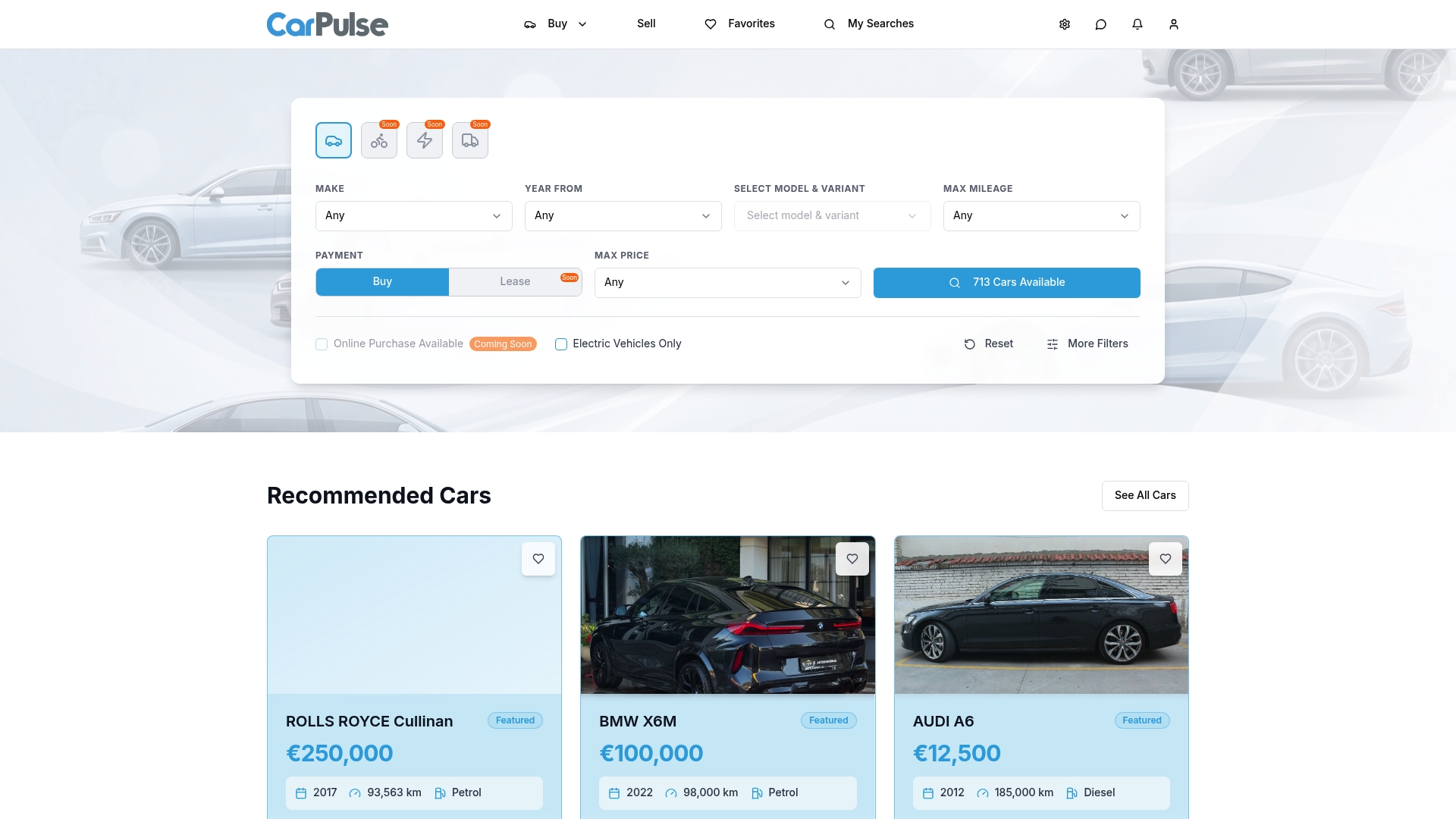
- Search and filter listings by make, model, year, mileage, and price.
- Check whether a dealer carries our verified badge before you reach out.
- Bookmark favorites and track them through our mobile app on iOS or Android.
Start browsing current listings on CarPulse and narrow down your next car with the filters that matter to you.
FAQ
Is certified pre-owned better than used?
Neither option is universally better. CPO tends to suit buyers who want warranty coverage and lower repair risk, since certified pre-owned vehicles report fewer problems than standard used cars, while a standard used car tends to suit buyers prioritizing a lower purchase price.
Is it better to buy certified pre-owned?
It depends on your ownership horizon and budget for unexpected repairs. If you plan to keep the car for several years and value predictable costs, the CPO premium often pays for itself through warranty coverage and a documented inspection process.
What’s the difference between used and pre-owned?
“Used” and “pre-owned” generally describe the same thing: a vehicle that’s had at least one previous owner. “Certified pre-owned” is the distinct category, referring specifically to a vehicle that has passed a manufacturer’s or dealer’s certification inspection and comes with added warranty backing.
Should I only buy certified pre-owned?
No single approach fits every buyer. A used car paired with a thorough vehicle history report and an independent pre-purchase inspection can be just as sound a purchase, particularly for buyers comfortable handling some repair risk in exchange for a lower price.