
Guides
1 MPG Penalty: When AWD vs FWD Is Worth It for Albanian Buye
1 MPG Penalty: When AWD vs FWD Is Worth It for Albanian Buyers

If you deal with wet, snowy, or hilly roads on a regular basis, all-wheel drive gives you an edge in traction. If you mostly drive in mild weather and want lower upfront cost and better fuel economy, front-wheel drive usually covers everything you need. AWD adds grip when accelerating on loose surfaces, but that grip comes with a higher price tag and a fuel penalty you pay every time you fill the tank.
TL;DR:
- AWD increases traction on slippery surfaces but adds significant cost, weight, and fuel consumption compared to FWD, which is more economical and easier to maintain.
- FWD is typically sufficient for mild climates and daily commuting, with better fuel economy and more interior space, but it underperforms in challenging weather conditions.
- Not all AWD systems are the same; full-time systems offer continuous power to all wheels, while on-demand systems activate only when slip is detected, affecting performance and maintenance needs.
- Proper tire selection and maintenance, especially matching tread and replacing tires after six years, are more critical for safety and traction than solely relying on AWD.
- The decision should be based on local weather, road conditions, and budget, as AWD does not improve braking performance, and in many cases, winter tires on FWD vehicles can provide comparable or better safety.
Table of Contents
- Quick comparison: core differences at a glance
- Pros and cons of front-wheel drive (FWD)
- Pros and cons of all-wheel drive (AWD)
- How to decide: practical criteria, checklist, and questions to ask when buying
- Tires, braking, and where AWD helps (and doesn’t)
- Ownership costs: fuel, maintenance, and resale considerations
- AWD versus 4WD: a short primer and when you need 4WD instead
- Perspective: what actually decides this for most buyers
- How to find FWD or AWD cars: use the marketplace
- Sources
- FAQ
Quick comparison: core differences at a glance
Before you dig into the details, here’s how the two systems stack up on the things that matter most when you’re shopping.
- Traction: AWD sends power to all four wheels, which helps with acceleration in rain, snow, or gravel; FWD sends power to the front two, which is fine on dry or lightly wet pavement.
- Fuel economy: FWD is lighter and has fewer drivetrain parts, so it typically gets better mileage than an AWD version of the same car.
- Purchase and maintenance cost: AWD systems cost more to buy and more to service because of the extra hardware.
- Complexity: FWD is mechanically simpler; AWD includes a transfer case, extra differentials, or electric motors depending on the system.
- Best use case: FWD suits daily commuting and highway driving; AWD suits drivers who face slippery roads or moderate hills often.
One thing that trips up a lot of buyers: AWD helps you get moving on a slick surface, but it does nothing for stopping. Braking distance depends on your tires and brakes, not which wheels get power, according to Consumer Reports.
It’s also worth knowing that not all AWD is the same. Some systems run full-time, splitting power to all four wheels continuously. Others are part-time or “on-demand,” operating as FWD until a sensor detects slip and shifts power rearward. Hybrid and electric vehicles often use a separate electric motor on the rear axle instead of a mechanical connection, which changes how the system behaves in practice.
Pros and cons of front-wheel drive (FWD)
FWD is the default layout on most passenger cars for a reason. Putting the engine, transmission, and drive wheels all at the front lets automakers build a lighter, more compact vehicle with fewer parts to package and maintain.
That simplicity translates directly into savings. AutoZone notes that FWD is the most common drivetrain for passenger vehicles precisely because it’s cheaper to design, build, and own, and it’s more space-efficient than AWD while often delivering better fuel economy.
- Lower purchase price: fewer components mean a lower sticker price compared to an AWD version of the same model.
- Better fuel economy: less weight and fewer driveline losses mean more miles per gallon.
- Simpler maintenance: no transfer case, rear differential, or extra driveshafts to service.
- More interior space: the compact front-drive layout frees up cabin and cargo room.
The tradeoff shows up in how the car drives. FWD vehicles tend to understeer at the limit, meaning the front tires push wide in hard cornering rather than the rear stepping out. High-power FWD cars can also suffer from torque steer, a slight tugging at the steering wheel under hard acceleration as the front wheels fight to put power down.
AWD systems typically cost about 1 mpg in fuel economy compared to an equivalent FWD model, according to CarBuzz, largely due to the added weight and mechanical drag of the extra hardware. For city and highway driving in a mild climate, FWD gives you nearly everything AWD offers on pavement, minus the cost and the fuel penalty.
Pros and cons of all-wheel drive (AWD)
AWD exists to solve one problem: getting power to the ground when one or more wheels lose grip. How it does that varies by manufacturer. Full-time systems split torque continuously between front and rear axles. Part-time systems default to FWD and only engage the rear wheels when sensors detect slip. Hybrid and electric vehicles frequently skip the mechanical link altogether, using a second electric motor to drive the rear wheels independently.
The benefit is real, particularly when the road surface isn’t cooperating.
- Improved acceleration traction: power to all four wheels helps you get moving on rain-slicked or snow-covered roads.
- Better hill performance: AWD can maintain grip on inclines where a FWD car might struggle to find purchase.
- Fewer surprises in mixed weather: drivers who see rain, snow, and dry pavement all in the same week benefit from not having to think about it.
Those benefits come at a cost. AWD systems add weight, mechanical complexity, and price. CarBuzz points out that AWD provides its traction advantage by distributing power to all four wheels automatically when slippage is detected, but the added hardware also increases weight and reduces fuel economy compared to FWD.
- Higher purchase price: expect a premium over the FWD version of the same model.
- Higher maintenance costs: more parts (transfer case, rear differential, extra driveshafts) mean more that can eventually need service.
- Fuel economy penalty: the extra weight and driveline friction cost you at the pump.
The point that catches most new AWD owners off guard: none of this improves braking. AWD helps you accelerate on a slippery surface, but stopping distance is governed entirely by your tires and brakes, not by how many wheels are driven.
How to decide: practical criteria, checklist, and questions to ask when buying
The right drivetrain depends less on brand preference and more on where and how you actually drive. Work through these questions before you commit.
- How often do you deal with snow, ice, or heavy rain? If it’s a regular part of your commute, AWD earns its keep. If it’s a few days a year, winter tires on a FWD car often do the job just as well.
- What’s your local road quality like? Frequent hills, gravel, or poorly maintained roads favor AWD’s extra grip.
- Do you tow or carry heavy loads regularly? If so, look beyond AWD entirely and consider whether you need 4WD.
- What’s your budget, both upfront and long-term? Factor in the higher purchase price, the fuel penalty, and the added maintenance cost of AWD, not just the sticker.
- Where do you park? A tight urban garage might favor the more compact packaging FWD allows.
Once you’ve narrowed down a drivetrain, use this checklist when you’re evaluating a specific listing or standing in front of a car at a dealership:
- Confirm the actual drivetrain through the VIN rather than trusting the listing title alone.
- Check whether the tires match front to rear and inspect their tread depth and age.
- Ask for service records, specifically for AWD-specific components like the rear differential or drive axles.
- Ask the seller how the car was used previously: regular snow or off-road driving puts more wear on an AWD system.
- Take the car for a real test drive in whatever conditions are available, not just a quick loop around dry pavement.
AutoZone recommends decoding the VIN and checking for AWD-specific service items during any used-car inspection, since mismatched or aging tires are a red flag regardless of which drivetrain the car has.
Pro Tip: A car with a mismatched tire set, especially on an AWD model, can signal deferred maintenance that costs more to fix than the price difference between AWD and FWD ever saved you.
Tires, braking, and where AWD helps (and doesn’t)
Nothing about AWD changes how well your car stops or turns. That’s a tire and brake job, full stop. Consumer Reports is direct about this: AWD increases straight-line traction for acceleration in slippery conditions but does not improve braking or cornering.
That distinction matters more than most buyers realize. A FWD car fitted with dedicated winter tires is frequently safer and more controllable in snow than an AWD car running all-season tires, according to Michelin. AWD is not a substitute for proper seasonal tires, and Michelin’s guidance recommends prioritizing winter tires over drivetrain upgrades since winter tires improve braking and cornering far more than AWD alone.

Adding AWD hardware also increases vehicle mass, which can slightly increase stopping distances compared to an identical FWD model, per engineering analysis from TorqueNews.
A few practical tire habits matter more than your drivetrain choice:
- Match tread type and wear across all four tires, since mismatched tires can confuse traction and stability systems.
- Swap to dedicated winter tires if you regularly see snow or sustained temperatures near freezing, rather than relying on all-season tires year-round.
- Check tire age, not just tread depth: rubber hardens over time and loses grip even if the tread looks fine, generally after six years regardless of mileage.
Ownership costs: fuel, maintenance, and resale considerations
The sticker price is just the starting point. Over years of ownership, fuel and maintenance differences add up in ways that can outweigh what you saved (or spent) at purchase.
AWD systems typically cost about 1 mpg in fuel economy compared to an equivalent FWD model, according to CarBuzz, a gap driven by the added weight and driveline losses of the extra hardware. Over tens of thousands of miles, that penalty adds up at the pump.
- Maintenance complexity: AWD systems have more parts, including a transfer case, extra differentials, and additional driveshafts, each a potential future repair.
- Parts to watch: rear differential fluid, transfer case service, and driveshaft joints are AWD-specific items a FWD owner never has to think about.
- Resale nuance: AWD can boost resale value for buyers shopping in regions with real winters, but in milder climates the effect is limited and may not offset the higher purchase price.
Automakers commonly offer AWD as an optional upgrade on FWD-based crossovers, and that upcharge, along with the ongoing fuel and maintenance costs, is worth weighing against how often you’ll actually need the extra traction.
AWD versus 4WD: a short primer and when you need 4WD instead
AWD and 4WD solve different problems, and confusing them leads to buying the wrong vehicle. AWD is built for on-road, all-weather traction: rain, light snow, occasional gravel. 4WD, by contrast, typically includes a transfer case with a low-range gear set designed for serious off-road terrain and heavy towing, according to Motor1.
- AWD: best for daily driving in mixed weather, on paved or lightly unpaved roads.
- 4WD: best for off-road trails, deep mud or snow, and heavy-duty towing where low-range gearing provides extra mechanical leverage.
- Rule of thumb: if your toughest terrain is a wet highway on-ramp or a gravel driveway, AWD covers it; if you’re hauling a trailer up a mountain trail, look at 4WD instead.
If off-road capability is genuinely part of your plan, it’s worth reading more on what separates a true off-road vehicle from an AWD crossover before you shop.
Perspective: what actually decides this for most buyers
Most people overthink the AWD versus FWD decision and underthink their tires. A commuter in a mild climate rarely needs AWD, and a driver who faces real winters but skips winter tires is leaving most of the safety benefit on the table regardless of drivetrain. Match the car to your actual roads, not your worst hypothetical day, and inspect the tires and service history before you even ask about the drivetrain.
— Henri
How to find FWD or AWD cars: use the marketplace
Once you know which drivetrain fits your driving, the next step is finding a listing that actually matches, and that’s where filtering saves you time. CarPulse lets you search new and used listings by make, model, year, mileage, price, and fuel type, and every listing built through VIN autofill pulls verified vehicle details directly from the VIN, so you’re not relying on a seller’s memory of whether a trim came in AWD or FWD.
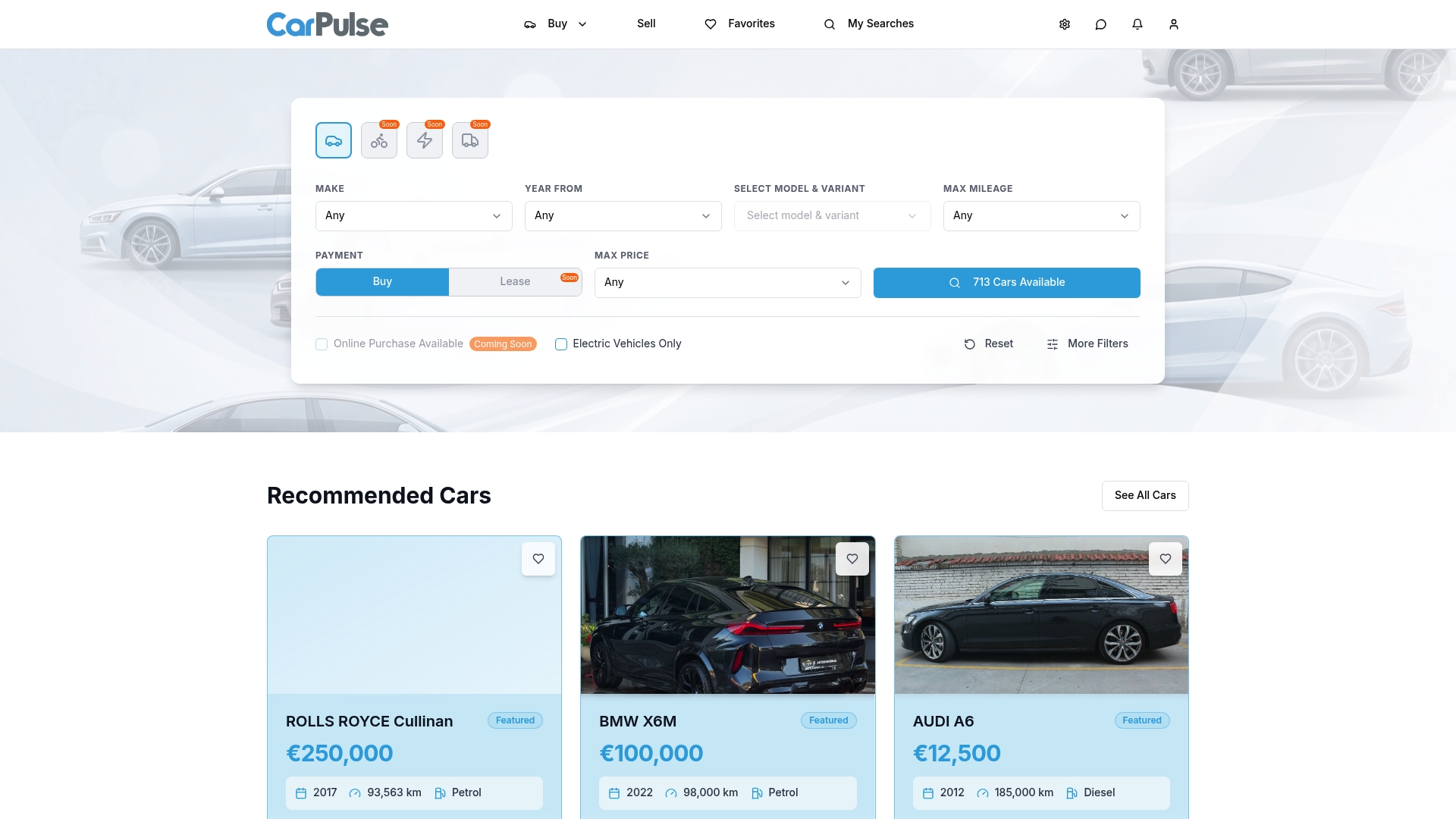
- Combine filters: search by make and model, then cross-check the specific trim against known AWD or FWD availability before contacting a seller.
- Check for fuel-efficient trims: if fuel economy is your priority, browse listings like our fuel-efficient picks to see which FWD models tend to lead on mileage.
- Compare trims side by side: a model like the Toyota RAV4 versus VW Tiguan often comes in both FWD and AWD trims, so checking the comparison first narrows your search.
- Save your search and follow up directly: bookmark listings that match your criteria and message verified dealers or private sellers straight through the platform.
Browse current listings on CarPulse to start comparing FWD and AWD options side by side, or check the pricing page if you’re a seller looking to list your own vehicle.
Sources
Claims above draw on Consumer Reports for drivetrain mechanics, AutoZone for buying checks, CarBuzz for cost and mpg comparisons, Michelin for tire safety, and Motor1 for AWD versus 4WD distinctions. For brake-specific mechanics, see this AWD brake system explainer.
- All Wheel Drive vs Front Wheel Drive: Which is Best? - AutoZone
- AWD Vs. FWD: The Pros And Cons Of Each - CarBuzz
- AWD and winter tire safety - Michelin
- How It Works: FWD vs. RWD vs. AWD vs. 4WD - Consumer Reports
- AWD Vs 4WD Explained - Motor1
FAQ
What is better, AWD or FWD?
Neither is universally better: AWD suits drivers who regularly face rain, snow, or hills, while FWD suits mild-climate commuters who want lower cost and better fuel economy. CarBuzz frames the choice around driving environment rather than one system beating the other outright.
What are the disadvantages of AWD?
AWD costs more to buy, weighs more, and typically costs about 1 mpg in fuel economy compared to an equivalent FWD model, according to CarBuzz. It also adds maintenance complexity through extra components like a transfer case or rear differential, and it does not improve braking distance.
Which is better, FWD or RWD or AWD?
Each layout suits a different priority: FWD favors cost and fuel economy, RWD favors balanced handling and is common in performance cars, and AWD favors all-weather traction at a higher price. The right choice depends on your climate, budget, and whether you value efficiency or grip more.
Is AWD or FWD better in rain?
AWD generally provides more confident acceleration traction in heavy rain since power reaches all four wheels. That said, braking and cornering in wet conditions depend on tire grip rather than drivetrain, so a FWD car with good tires can still stop and turn as well as an AWD car on worn ones, per Consumer Reports.