Guides
Why Compare Vehicle Features Before Buying a Car

Why Compare Vehicle Features Before Buying a Car

TL;DR:
- Comparing vehicle features helps Albanian buyers select cars suited to diverse road conditions, safety, and budget needs. Structured evaluation with standardized data guides informed decisions and reduces costly mistakes in ownership costs and reliability. Building a clear feature checklist before visiting dealerships ensures a tailored, confident purchase aligned with real driving requirements.
Comparing vehicle features means systematically evaluating car attributes like performance, safety, fuel efficiency, and comfort to identify the best fit for your specific needs and budget. For car buyers in Albania, where road conditions range from smooth urban streets in Tirana to rough mountain passes in the north, this kind of structured evaluation is not optional. It is the difference between a purchase you regret in six months and one that serves you for a decade. Sources like Car and Driver, Consumer Reports, and CarPulse give buyers the data to make that call with confidence.
Why compare vehicle features before making a purchase decision
Vehicle feature comparison is the practice of placing two or more cars side by side across objective, measurable categories to determine which model best matches your priorities. The categories that matter most are performance, fuel efficiency, interior space, vehicle size, safety features, transmission type, and drivetrain configuration. Each of those categories directly affects how the car behaves in your daily life, not just on a test track.
The core insight is this: most buyers who skip structured comparison end up optimizing for price or brand name alone. That approach ignores the fact that two cars priced identically can differ by 30% in fuel costs over five years, carry completely different safety ratings, and offer dramatically different ground clearance for Albania’s mixed road network. Feature comparison forces you to confront those differences before you sign anything.
Consumer Reports confirms that feature comparison forces buyers to define specific priorities, which leads to concrete purchasing decisions rather than chasing vague “best car” recommendations. That shift from vague to specific is where buyers gain real control over the outcome.
What key vehicle features should Albanian buyers compare
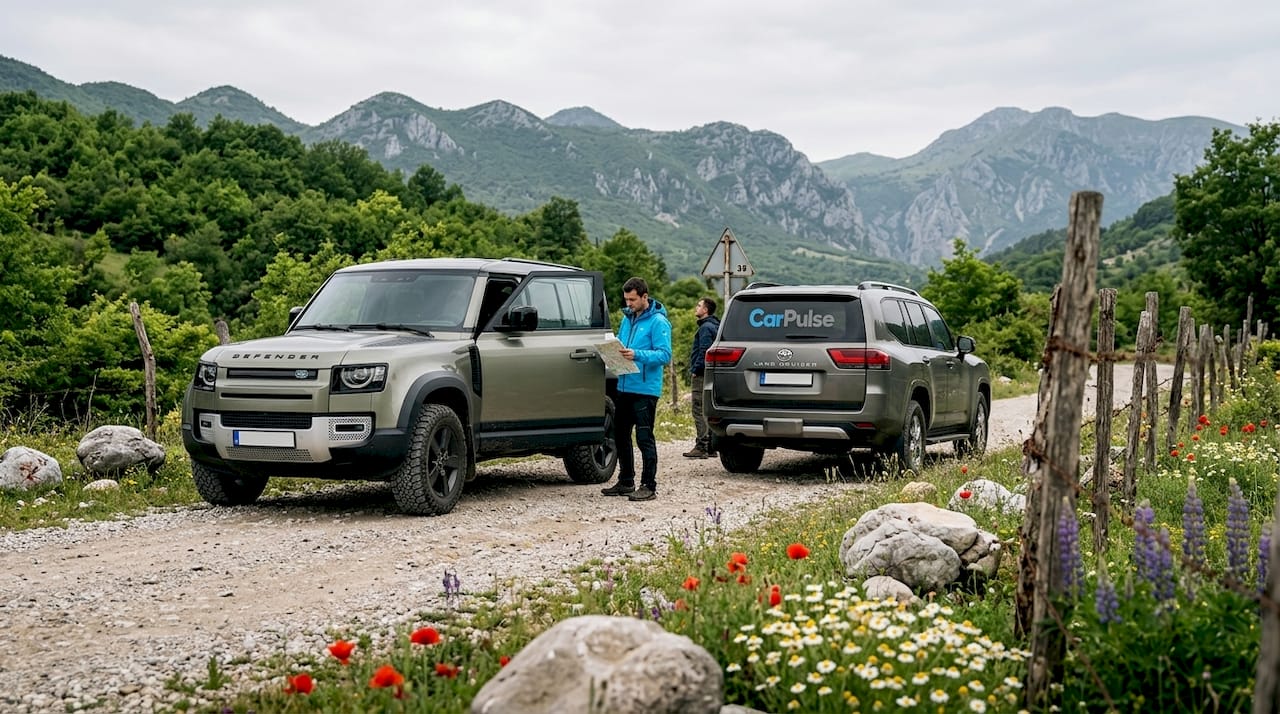
Albanian roads demand a broader feature checklist than buyers in, say, Germany or the Netherlands typically need. The following categories deserve close attention before any purchase.
Performance metrics cover horsepower, torque, and acceleration. For city driving in Tirana, a 1.5-liter turbocharged engine with strong low-end torque handles stop-and-go traffic better than a high-revving naturally aspirated engine tuned for highway speeds. For mountain routes near Shkodër or Gjirokastër, torque output at low RPM is what keeps you safe on steep inclines.
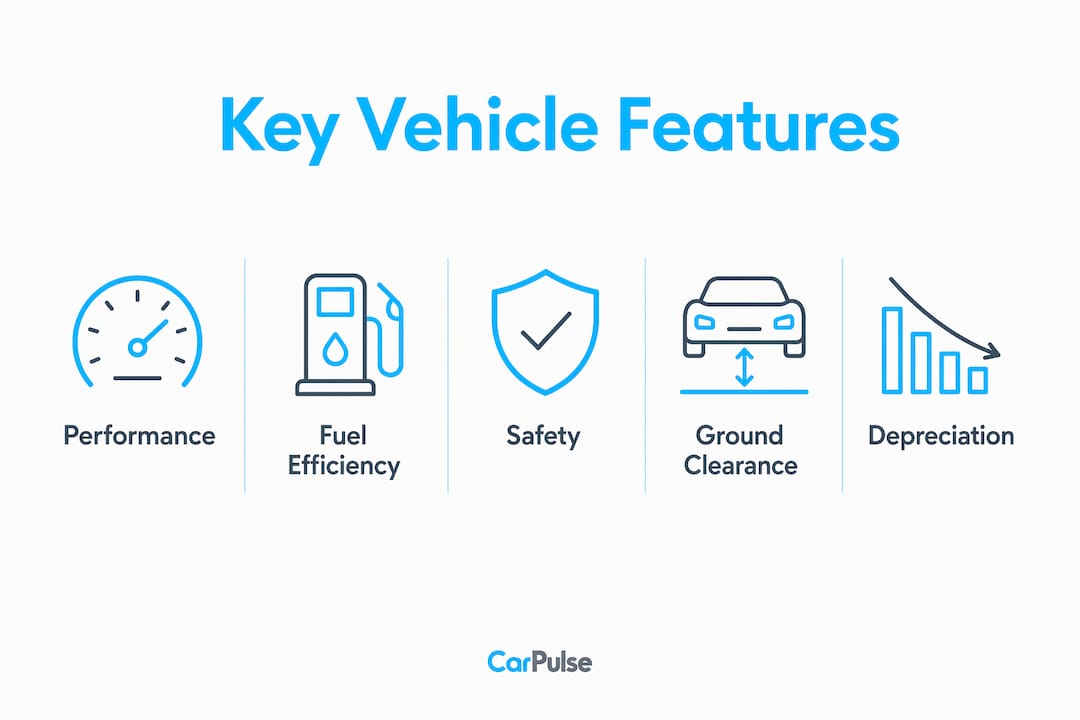
Fuel efficiency and energy specs directly affect your monthly budget. Higher MPG or electric range lowers operational costs and supports sustainability goals. Albania’s fuel prices fluctuate with European market trends, so a car delivering 40 MPG versus 28 MPG on the same commute translates to hundreds of dollars saved annually.
Safety features now include Advanced Driver Assistance Systems (ADAS) technologies such as automatic emergency braking, lane-keeping assist, and blind-spot monitoring. Safety ratings from authoritative organizations like Euro NCAP provide objective measures that no salesperson’s pitch can replace.
Here are the core feature categories to include on your vehicle features checklist:
- Ground clearance (critical for unpaved roads outside major Albanian cities)
- Drivetrain configuration: front-wheel drive, all-wheel drive, or four-wheel drive
- Transmission type: manual, automatic, or CVT
- Interior cargo volume and rear passenger space
- Infotainment system responsiveness and connectivity options
- Warranty terms and local service network availability
Pro Tip: When comparing SUVs for Albanian roads, prioritize ground clearance above 200mm. Models like the Toyota RAV4 and Volkswagen Tiguan both clear that threshold, but their approach angles and suspension tuning differ significantly on unpaved surfaces. Check a detailed SUV comparison before deciding.
How does standardized testing make comparisons reliable?
Not all comparison data is created equal. The reliability of any feature comparison depends entirely on whether the underlying data was collected under consistent, repeatable conditions.
Car and Driver uses standardized test procedures collecting 200+ data points per vehicle, including acceleration, fuel economy, visibility, and infotainment responsiveness, all measured under uniform conditions. This matters because a 0-60 mph time tested on a cold morning in Michigan and one tested on a warm afternoon in Arizona are not the same number. Controlled methodology eliminates that noise.
“Car and Driver’s consistent, comparative testing methodology ensures that vehicle specs and performance figures are directly comparable across models.” — Car and Driver Testing Overview
The EPA fuel economy rating system applies a similar logic. EPA figures are measured on a standardized drive cycle, which means you can compare a Toyota Corolla’s 32 MPG city rating directly against a Honda Civic’s 31 MPG city rating without worrying about testing inconsistencies. The limitation is that real-world driving rarely mirrors EPA conditions, so treat those numbers as a relative benchmark rather than an absolute promise.
Here is how key testing frameworks compare:
| Testing Framework | What It Measures | Limitation |
|---|---|---|
| Car and Driver 200+ point test | Acceleration, handling, infotainment, visibility | U.S.-focused conditions |
| EPA fuel economy rating | City, highway, and combined MPG | Idealized drive cycle, not real-world |
| Euro NCAP crash rating | Occupant protection, ADAS performance | Tested on specific trim levels only |
| Manufacturer specs sheet | Power output, dimensions, weight | No independent verification |
The takeaway is clear: repeatable test procedures prevent guesswork and produce objective data you can trust when placing two vehicles side by side.
Financial implications revealed by comparing features and specs
Feature choices are financial choices. A buyer who skips the comparison step often discovers this truth only after the purchase, when fuel bills, maintenance costs, and resale values start diverging from expectations.
Fuel efficiency is the most immediate cost driver. A vehicle with a diesel engine rated at 45 MPG highway versus a gasoline model at 30 MPG will save a high-mileage Albanian driver a meaningful sum each year. Over five years, that gap compounds into a figure that often exceeds the price difference between trim levels.
The buying versus leasing decision also hinges on feature evaluation. Buying is better long-term if you plan to keep the car more than six years, because you build equity and eliminate monthly payments after the loan is paid off. Leasing offers lower monthly payments but creates continuous costs with no ownership stake. The feature set of the car you choose affects which path makes more financial sense. A vehicle with strong reliability scores and low depreciation rewards buyers who hold it long-term.
Depreciation rates are influenced by features and trim levels, which directly affects resale value and total cost of ownership. Popular safety packages, modern infotainment systems, and proven drivetrains hold value better than stripped-down trims or niche configurations with limited buyer demand in the Albanian market.
Pro Tip: Before finalizing any purchase, calculate the five-year total cost of ownership by adding purchase price, estimated fuel costs, insurance, maintenance, and projected resale value. A car that costs 2,000 euros less upfront but depreciates 40% faster is not the better deal.
Practical methods for comparing car features efficiently
Knowing what to compare is only half the work. The other half is knowing how to run the comparison without getting lost in conflicting data or misleading tools.
Follow this structured process to compare vehicles with confidence:
-
Define your top five priorities. Write them down before opening any comparison tool. Common priorities for Albanian buyers include ground clearance, fuel economy, cargo space, safety rating, and total purchase cost. Without a written list, you will drift toward whatever feature a salesperson emphasizes.
-
Use structured comparison platforms. Tools that display specs side by side, such as manufacturer configurators or automotive marketplace filters on CarPulse, consolidate data in one view. Specific, structured requests to comparison platforms yield more useful, transparent results than open-ended searches.
-
Treat AI-generated comparisons as a starting point, not a conclusion. Consumer Reports found that AI tools sometimes produce inaccurate vehicle details, including fictitious model details and outdated trim information, which causes real buyer confusion. Always validate AI output against official manufacturer spec sheets.
-
Cross-reference with independent test data. Car and Driver, Consumer Reports, and Euro NCAP each test vehicles under controlled conditions. If a car scores well across all three sources, that convergence is meaningful. If scores diverge, investigate why before deciding.
-
Validate with a test drive. Numbers tell you what a car can do. A test drive tells you how it feels doing it. Use the comparison data to narrow your shortlist to two or three models, then test drive each one on a road type representative of your actual commute.
Pro Tip: When using online comparison charts, always verify that you are comparing the same model year and trim level. Mixing model years or trims in a comparison chart is one of the most common errors buyers make, and it produces conclusions that do not reflect the car you will actually buy. Check the CarPulse buying guide for Albania-specific guidance on trim levels available locally.
Key takeaways
Comparing vehicle features before purchase is the single most effective way to align your budget, driving needs, and long-term ownership costs with the right car.
| Point | Details |
|---|---|
| Start with a written priority list | Define your top five needs before opening any comparison tool to avoid being swayed by irrelevant features. |
| Trust standardized test data | Car and Driver’s 200+ point methodology and Euro NCAP ratings provide objective benchmarks no sales pitch can match. |
| Factor in five-year ownership costs | Fuel efficiency, depreciation, and warranty terms affect total cost far more than the sticker price alone. |
| Validate AI comparisons with official sources | AI tools can generate inaccurate trim details; always cross-check with manufacturer spec sheets and trusted reviews. |
| Match features to Albanian road conditions | Ground clearance, drivetrain type, and suspension tuning matter more in Albania’s mixed road environment than in Western European markets. |
Why I think most Albanian buyers compare cars the wrong way
Most buyers I talk to in the Albanian market approach car shopping by asking “which car is the best?” That question has no useful answer. The right question is “which car is best for my specific roads, budget, and weekly driving pattern?” Those are completely different questions, and only the second one leads to a good decision.
The mistake I see repeatedly is buyers comparing cars based on brand prestige or a single headline spec, usually horsepower or price, while ignoring the features that actually affect daily life. A 200-horsepower engine means very little if the suspension is too stiff for the road between Elbasan and Librazhd, or if the fuel economy makes the car unaffordable to run on a typical Albanian salary.
The data-driven approach I recommend is not complicated. It requires about two hours of structured research using sources like Car and Driver, Euro NCAP, and CarPulse’s own listing filters. That investment pays back every single day you drive the car. The buyers who skip it are the ones trading in their vehicles after two years because the car “just wasn’t right.” It was never right because they never defined what right meant before buying.
My honest advice: build your vehicle features checklist before you visit a single dealership. Walk in knowing your ground clearance minimum, your fuel economy target, and your safety rating floor. Salespeople respect buyers who know their numbers, and you will negotiate from a position of knowledge rather than emotion.
— Henri
Find your next car on CarPulse
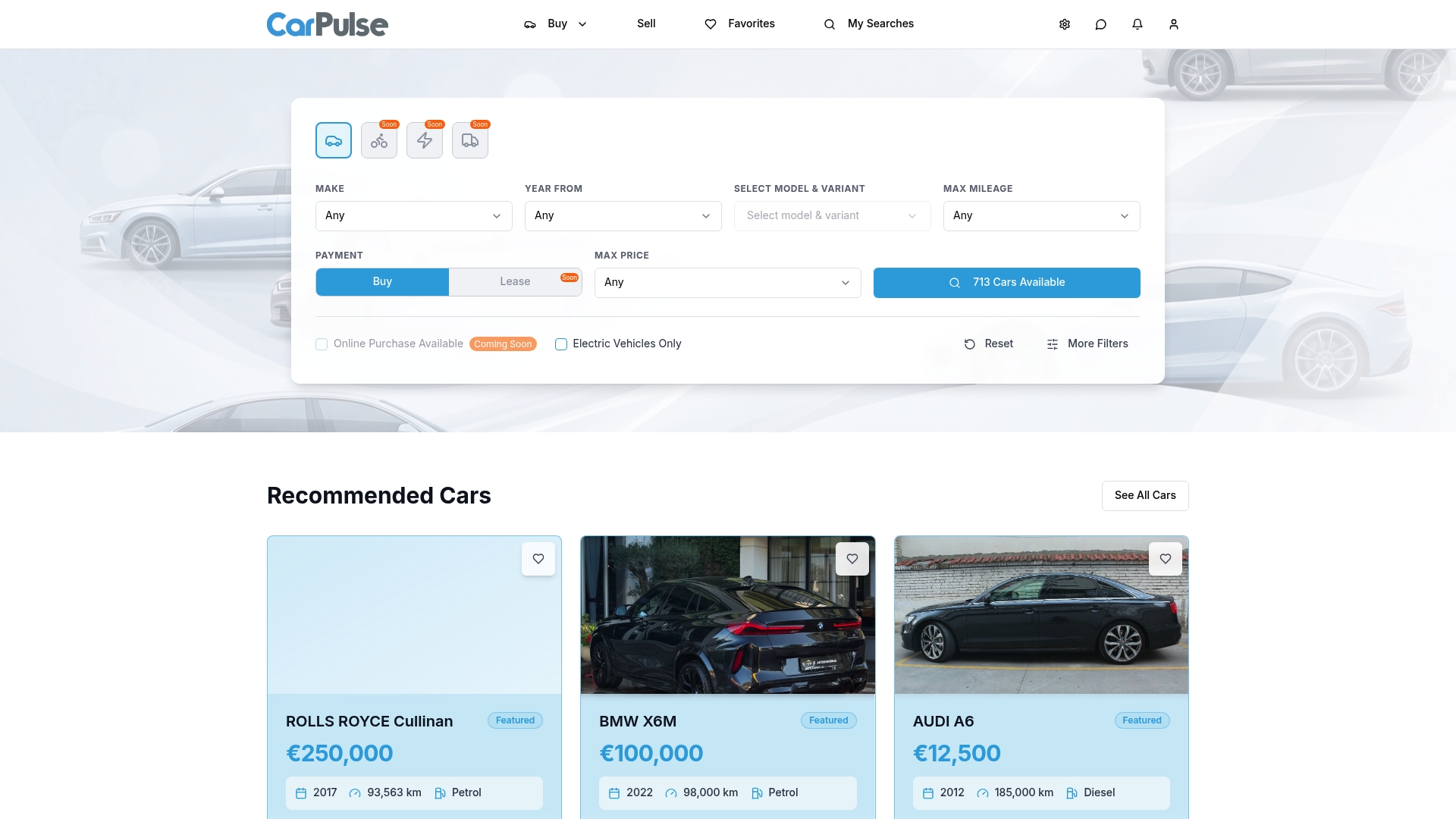
CarPulse is Albania’s largest online car marketplace, built specifically for buyers who want to compare vehicles with real data rather than guesswork. The platform lets you filter listings by make, model, year, mileage, price, and fuel type, so you can apply your vehicle features checklist directly to the available inventory. Verified dealership listings and VIN-based specs mean the data you see reflects the actual car, not a generic trim description. Browse thousands of new and used listings on CarPulse today, or download the iOS and Android app to compare vehicles on the go. If you already own a car and are ready to upgrade, you can also list your vehicle directly through the platform in minutes.
FAQ
Why is comparing vehicle features important before buying?
Comparing vehicle features reveals how different specs affect real-world driving, ownership costs, and personal fit before you commit to a purchase. Buyers who skip this step frequently discover mismatches in fuel costs, safety performance, or practicality only after the sale.
What features should I prioritize when comparing cars in Albania?
Ground clearance, fuel efficiency, drivetrain type, and safety ratings are the most critical features for Albanian buyers given the country’s mixed road conditions. Interior space and local warranty coverage are close secondary priorities.
How do I know if a vehicle comparison tool is reliable?
Reliable comparison tools draw from standardized test data, such as Car and Driver’s 200+ point methodology or Euro NCAP crash ratings, and display specs for matching model years and trim levels. Avoid tools that mix trims or rely solely on AI-generated summaries without citing official sources.
Is buying or leasing a better choice for Albanian car buyers?
Buying is the stronger long-term option if you plan to keep the vehicle for more than six years, because it builds equity and eliminates payments after the loan closes. Leasing suits buyers who want lower monthly costs and plan to switch vehicles every two to three years.
Can I use AI tools to compare car features?
AI tools can provide a useful starting framework, but Consumer Reports found they sometimes generate inaccurate or outdated vehicle details. Always validate any AI-generated comparison against official manufacturer spec sheets and independent test sources like Car and Driver or Euro NCAP.