Guides
Why Choose Electric Vehicles: Environmental and Economic Ben
Why Choose Electric Vehicles: Environmental and Economic Benefits
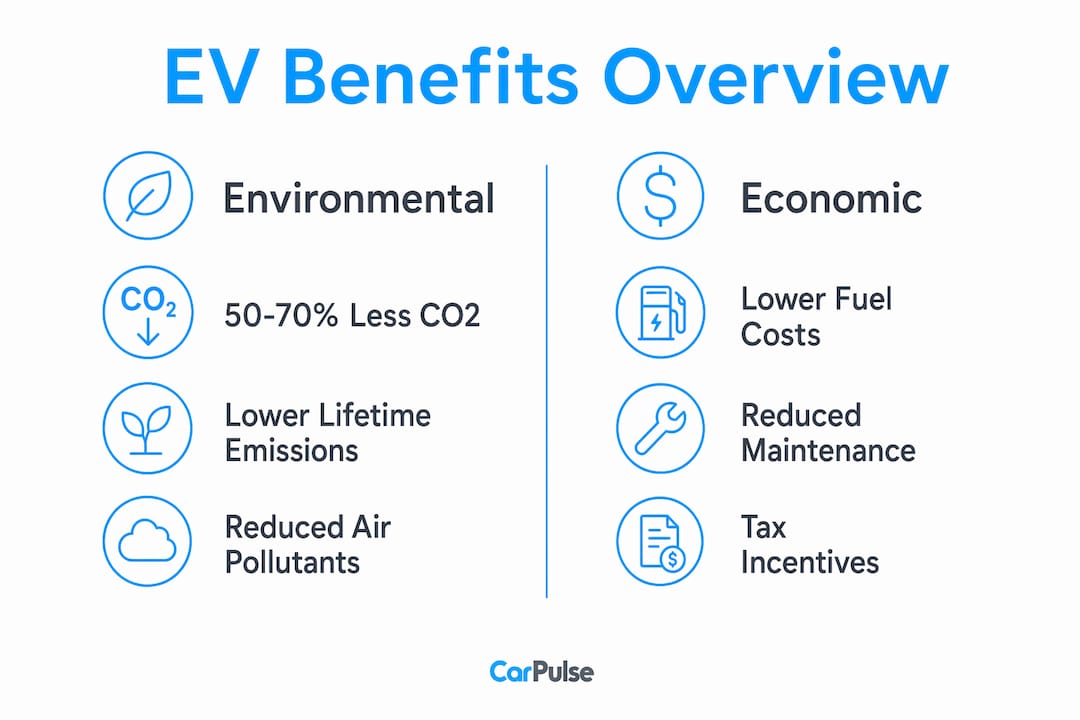
Choosing an electric vehicle typically cuts your lifetime greenhouse-gas emissions by 50–70% compared to a comparable gas-powered car, while lowering your total cost of ownership through cheaper fuel and simpler maintenance. Those two facts alone answer the core question. The rest is detail that helps you decide whether the math works for your specific situation.
Three reasons stand out immediately:
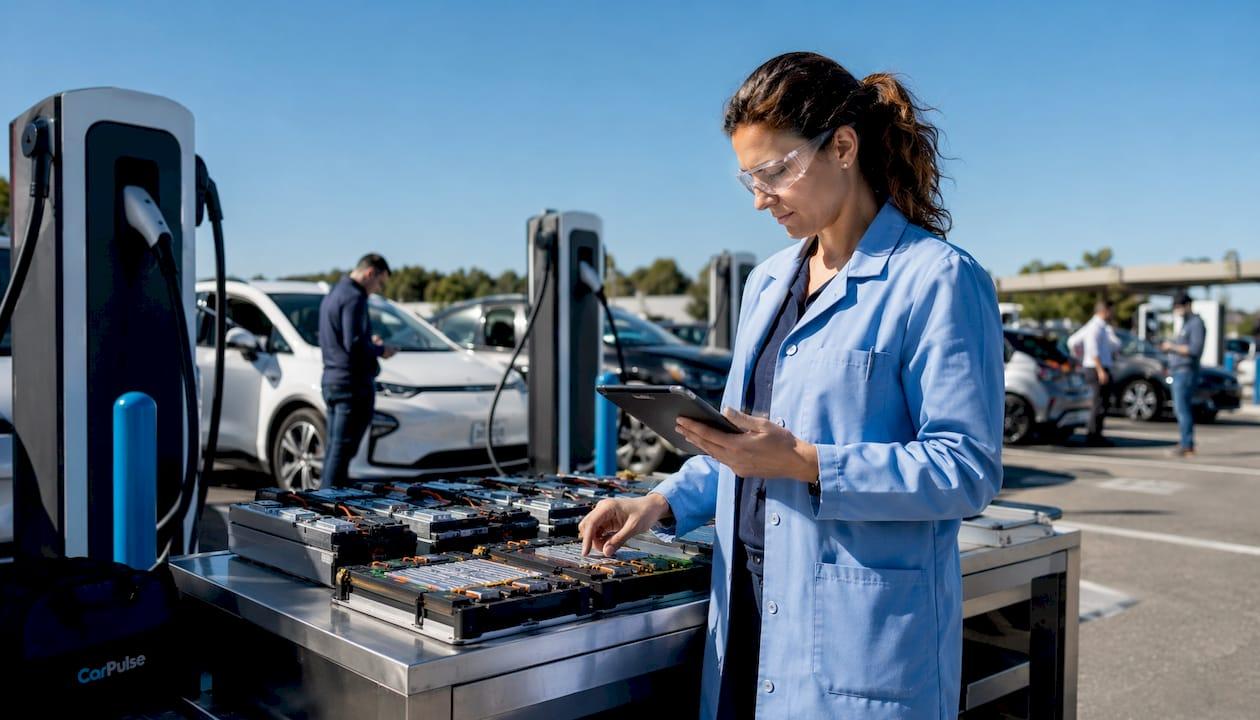
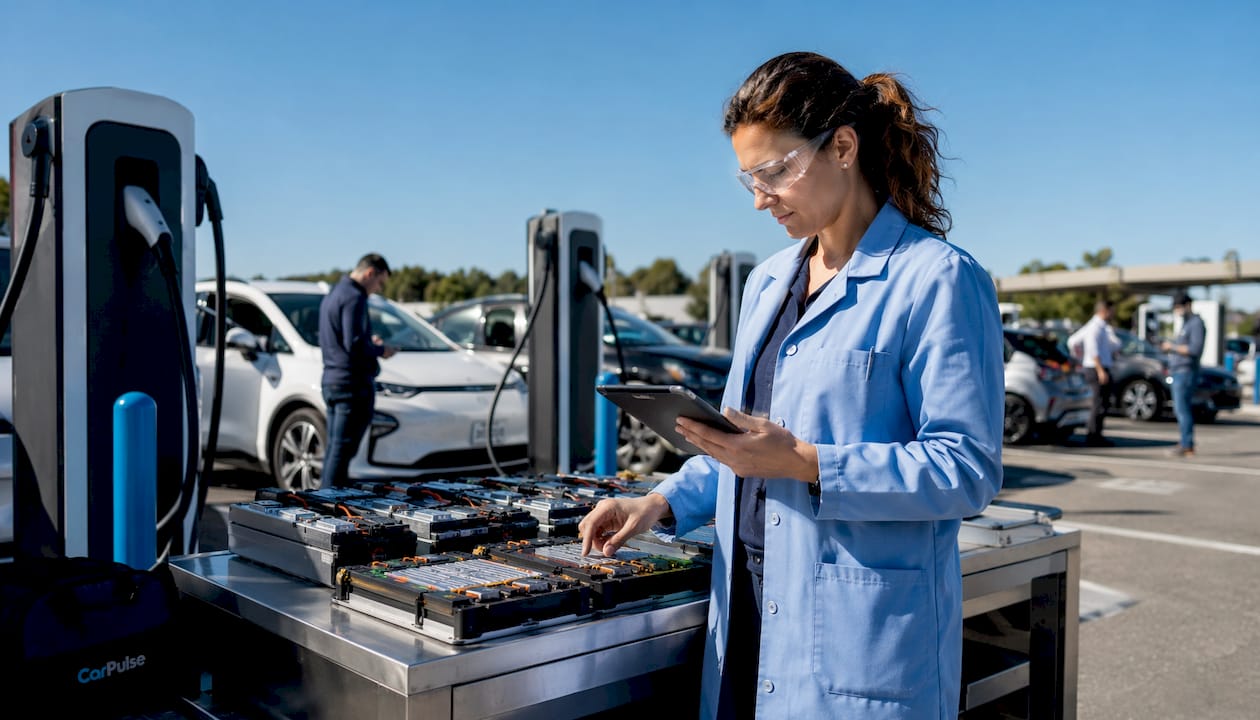
- Emissions: EVs produce far less carbon over their full lifecycle, even when charged from a power grid with mixed energy sources.
- Operating costs: Electricity costs less per mile than gasoline in most U.S. cities, and EVs have fewer moving parts to repair.
- Driving experience: Instant torque, near-silent operation, and a lower center of gravity make everyday driving noticeably different.
Stat: Per-mile electricity costs are often equivalent to paying roughly $1–$2 less per gallon than gasoline, depending on your local rates and time-of-use plan.
Table of Contents
- How do EVs actually reduce greenhouse gases over a full lifetime?
- What does an EV actually cost over five years?
- What should you know about EV batteries before buying?
- How does EV charging actually work day to day?
- What is it like to drive an EV every day?
- What are the real drawbacks of owning an EV?
- How do you decide if an EV is right for you?
- BEV, PHEV, or FCEV: which type fits your situation?
- What’s coming next in EV technology?
- What government policies are pushing EV adoption beyond tax credits?
- Key Takeaways
- The case for EVs is stronger than the sticker price suggests
- Carpulse makes it easy to find your next EV
- Useful sources and further reading
How do EVs actually reduce greenhouse gases over a full lifetime?
The lifecycle question trips up a lot of people. Manufacturing an EV battery does produce more carbon upfront than building a conventional engine. That is simply true. But Argonne National Laboratory lifecycle modeling shows that use-phase savings dominate over the vehicle’s lifetime, so total emissions end up lower for EVs in nearly every scenario.
How much lower depends on your regional grid. A driver in the Pacific Northwest, where hydropower dominates, sees much larger gains than someone in a coal-heavy region. Even so, RMI research confirms that EVs maintain a lifetime emissions advantage across most U.S. grids, and that advantage grows as utilities add more renewables. Pairing your EV with rooftop solar or enrolling in a green-power program from your utility accelerates the benefit further.
| Grid scenario | Estimated lifetime CO₂ vs. comparable ICE vehicle |
|---|---|
| Clean grid (hydro/wind/solar heavy) | significantly lower |
| Average U.S. grid mix | substantially lower |
| Coal-heavy regional grid | lower |
Exact figures vary by vehicle class and annual mileage.
The manufacturing carbon “debt” from battery production is typically repaid within two to three years of average driving. After that, every mile is a net win for emissions.
What does an EV actually cost over five years?
Upfront sticker prices for EVs still run higher than comparable gas cars for many models, but that gap has been narrowing fast. Battery pack prices have fallen roughly 90% since 2010, and that structural shift is what’s making EVs cost-competitive on a lifetime basis, not just in marketing copy.

The federal tax credit under the Inflation Reduction Act offers up to $7,500 for qualifying new EVs and up to $4,000 for used ones, subject to income and vehicle price caps. State rebates, utility incentives, and HOV lane access add further value that varies by location.
Where to check for local incentives and TOU rates:
- Alternative Fuels Data Center Laws & Incentives database
- Your state’s energy office or clean-vehicle program
- Your utility’s website for time-of-use rate schedules
- DriveClean (California) or equivalent state portals
Illustrative 5-year TCO example (mid-size sedan, 12,000 miles/year):
| Cost category | Gas vehicle | Electric vehicle |
|---|---|---|
| Purchase price (after incentives) | — | — $32,000 |
Illustrative only; actual figures depend on local electricity rates, gas prices, driving habits, and available incentives.
Electric vehicles typically cost less to fuel and maintain, with potential lifetime maintenance savings in the thousands. High-mileage drivers recover the upfront premium fastest.
Pro Tip: Sign up for your utility’s time-of-use plan and charge overnight (typically 11 PM–7 AM). In many markets, off-peak rates drop charging costs by 30–50% compared to peak-hour electricity. Combine that with home solar and the per-mile cost can fall below $0.02 in favorable states.
What should you know about EV batteries before buying?
Range figures on the window sticker are EPA estimates under controlled conditions. Real-world range typically runs 10–20% lower in cold weather, at highway speeds, or with a full passenger load. That is not a flaw unique to EVs; it is just physics, and worth factoring into your daily-use math.
Most manufacturers back their battery packs with an 8-year/100,000-mile warranty covering capacity retention, typically guaranteeing the battery will not fall below 70% of its original capacity during that period. That warranty norm gives buyers a meaningful floor of protection.
Battery degradation in practice is gradual. Most packs retain 80–90% capacity after eight years of typical use, and real-world data from high-mileage fleets suggests longevity well beyond the warranty period for drivers who avoid frequent DC fast charging as their sole charging method.
Buyer checklist for battery health:
- Confirm the warranty covers capacity retention, not just defects.
- For used EVs, request a battery health report or use a diagnostic tool (many dealers provide this).
- Ask whether the manufacturer has a certified battery remanufacturing or recycling program.
- Check whether the vehicle supports over-the-air software updates that can optimize battery management.
For a deeper look at how different EV types handle range and battery design, Carpulse’s EV guide covers the key differences in plain language.
How does EV charging actually work day to day?
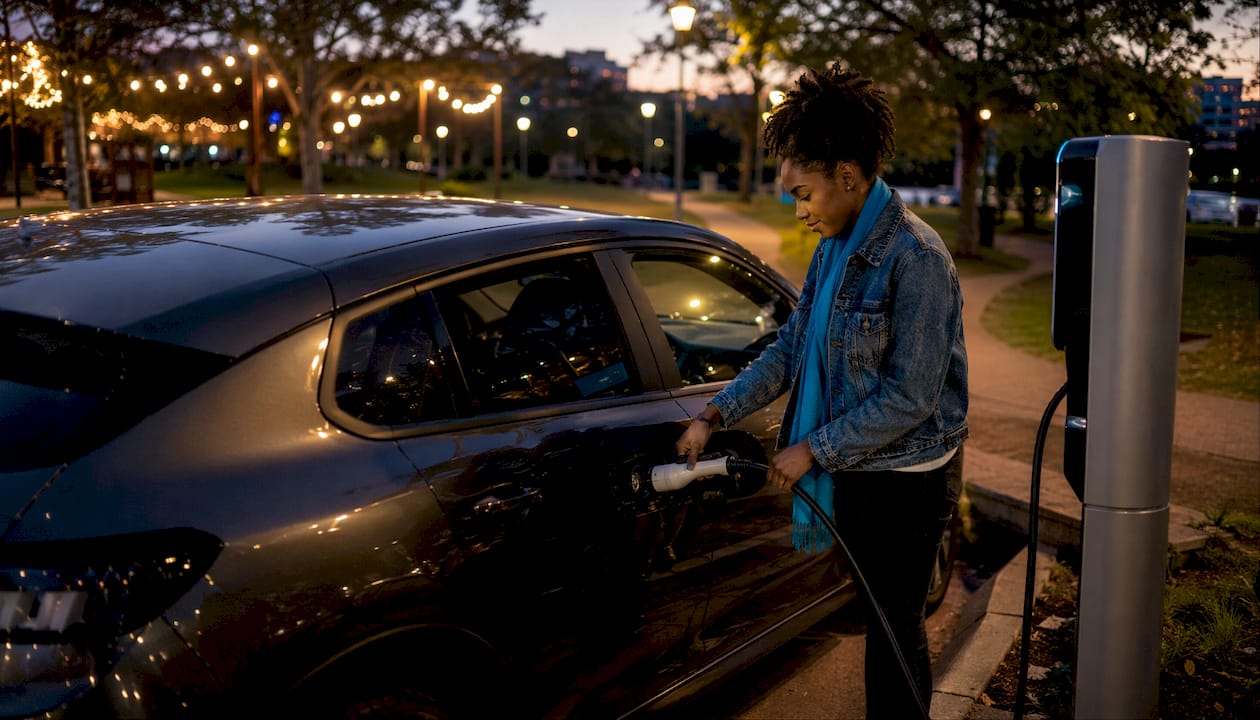
About 80% of EV charging in the U.S. happens at home, and that single fact shapes the ownership experience more than almost anything else. If you have a garage or dedicated parking spot, home charging is straightforward and cheap. If you rent or park on the street, the calculus changes.
The three charging levels:
- Level 1 (standard 120V outlet): Adds roughly 3–5 miles of range per hour. Fine for low-mileage drivers or as a backup.
- Level 2 (240V, like a dryer outlet): Adds 15–30 miles per hour. The standard home setup; a licensed electrician installs a dedicated circuit for around $500–$1,500 depending on your panel.
- DC fast charging (public stations): Adds 100–200+ miles in 20–45 minutes. Best for road trips, not daily use.
| Charging type | Speed | Typical cost per mile | Best use |
|---|---|---|---|
| Level 1 (120V) | 3–5 mph added | Lowest (off-peak home rate) | Overnight, low-mileage drivers |
| Level 2 (240V) | 15–30 mph added | Low (off-peak home rate) | Daily home charging |
| DC fast charging | 100–200+ mph added | Higher (public station fees) | Road trips, urgent top-ups |
The U.S. had over 32,000 DC fast chargers as of 2024, but coverage is uneven. Urban corridors are well-served; rural areas and the interior West have gaps that matter for long-distance drivers.
For renters and apartment dwellers:
- Ask your landlord about Level 2 installation; some states require landlords to permit it.
- Check whether your building participates in a shared charging program.
- Look for workplace charging as a primary option.
Pro Tip: Most EVs let you schedule charging to start at a specific time. Set it to begin at your utility’s off-peak window and you capture the cheapest electricity automatically, every night, without thinking about it.
What is it like to drive an EV every day?
The performance difference is immediate and hard to un-experience. Electric motors deliver full torque from a standstill, so acceleration from a stoplight or merging onto a highway feels effortless compared to a gas engine that needs to build revs. That is not marketing; it is how electric motors work.
Daily driving advantages:
- Instant torque from 0 mph, with no gear shifts interrupting acceleration.
- Regenerative braking that slows the car when you lift off the throttle, extending brake-pad life significantly.
- Lower center of gravity (battery pack sits in the floor), which improves cornering stability and reduces rollover risk.
- Near-silent cabin at city speeds, which reduces driver fatigue on long urban commutes.
Safety benefits follow from the same physics. The low center of gravity that improves handling also lowers rollover risk, a leading cause of fatal crashes. The battery pack’s structural role in the floor also creates a rigid crumple zone that engineers can design around, rather than working around an engine block.
What are the real drawbacks of owning an EV?
A balanced answer to why buy electric vehicles has to include the honest trade-offs. Here are the ones that actually affect ownership decisions:
- Range anxiety: Less of an issue for daily commuters (most EVs offer 200–300+ miles), but real for long-distance rural drivers without fast-charger access along their route.
- Upfront cost: Even after incentives, some EV models cost more than comparable gas cars. The TCO math favors EVs over time, but the check you write on day one is larger.
- Charging access for renters: Without home charging, you depend on public infrastructure, which adds cost and inconvenience.
- Battery production concerns: Mining lithium, cobalt, and nickel has environmental and human-rights implications. Buying a used EV or choosing a manufacturer with a certified recycling program mitigates some of this.
- Public charger reliability: Kelley Blue Book and other consumer guides note that public charger uptime is inconsistent; some stations are out of service more often than drivers expect.
Pro Tip: Before buying, drive your typical weekly route and map every public fast charger along it using PlugShare or the AFDC station locator. If you find fewer than two reliable options within your range buffer, factor that into your decision.
DOE guidance also flags that EVs are not zero-maintenance. Tire wear runs faster due to vehicle weight and instant torque. Cabin air filters need periodic replacement. Software updates are part of ownership. Regenerative braking does extend brake life, but the rest of the vehicle still needs attention.
How do you decide if an EV is right for you?
Run through this checklist before you commit:
- Home charging access: Do you have a garage or dedicated parking where you can install a Level 2 charger?
- Daily mileage: Is your typical round trip under 150 miles? Most EVs handle this with range to spare.
- Workplace charging: Does your employer offer charging, or is there a public charger near your office?
- Local TOU rates: Does your utility offer off-peak rates below $0.10/kWh? That’s where the fuel savings really stack up.
- Local incentives: Have you checked the AFDC database and your state’s clean-vehicle program for rebates?
- Resale market: Are EVs selling well in your area? Strong local resale supports your long-term value.
5-year TCO calculation steps:
| Step | What to gather |
|---|---|
| Annual miles | Your odometer reading over the past 12 months |
| Current fuel cost | Average MPG × local gas price × annual miles |
| EV charging cost | (Annual miles ÷ EV efficiency in miles/kWh) × off-peak rate |
| Maintenance delta | Estimate $1,500–$2,500 less per year for EVs vs. ICE |
| Incentives | Federal credit + state rebate + utility rebate |
Subtract EV total from gas-vehicle total over five years. High-mileage drivers (15,000+ miles/year) typically see the clearest savings. Low-mileage drivers (under 8,000 miles/year) may need a longer payback window.
Pro Tip: Run the calculation twice: once with your current electricity rate and once with your utility’s off-peak TOU rate. The difference often shifts the 5-year outcome by $1,500–$2,500 in the EV’s favor.
BEV, PHEV, or FCEV: which type fits your situation?
Not all electric vehicles work the same way, and the differences between BEV, PHEV, and hybrid types matter for real-world ownership.
Battery Electric Vehicle (BEV): Runs entirely on electricity. No tailpipe emissions, lowest per-mile fuel cost, simplest drivetrain. Requires reliable charging access. Best for drivers with home charging and predictable daily routes.
Plug-in Hybrid Electric Vehicle (PHEV): Combines a battery (typically 20–50 miles of electric range) with a gasoline engine. You drive on electricity for short trips and switch to gas for longer ones. A pragmatic bridge for drivers without consistent charging access or who regularly drive long distances without fast-charger coverage.
Fuel Cell Electric Vehicle (FCEV): Runs on hydrogen, emitting only water vapor. Refueling is fast (similar to gas), but hydrogen stations are concentrated in California and a handful of other states. Currently a niche option outside those markets.
For most U.S. drivers deciding how to choose electric vehicles for daily use, the BEV vs. PHEV choice comes down to one question: do you have reliable home charging? If yes, a BEV almost always delivers better economics. If no, a PHEV reduces the risk while still cutting fuel costs and emissions on shorter trips.
What’s coming next in EV technology?
The two developments most likely to change the EV calculus in the next five years are solid-state batteries and faster charging standards.
Solid-state batteries replace the liquid electrolyte in current lithium-ion packs with a solid material. The theoretical benefits are significant: higher energy density (more range per pound), faster charging, longer cycle life, and reduced fire risk. Several manufacturers have announced production timelines in the 2027–2030 range, though mass-market availability at competitive prices remains uncertain.
Ultra-fast charging is already improving. The latest 800-volt architectures in some current vehicles can add 150–200 miles of range in under 20 minutes. As charging networks upgrade their hardware to match, the road-trip calculus for EVs shifts meaningfully.
Grid integration is the less-discussed trend worth watching. Vehicle-to-grid (V2G) technology lets your EV battery discharge back to the home or grid during peak demand, potentially earning credits from your utility. A handful of utilities are already piloting this in the U.S., and it could turn your car into a household energy asset.
What government policies are pushing EV adoption beyond tax credits?
Incentives get most of the attention, but regulatory pressure is the structural force reshaping the market.
The EPA’s updated vehicle emissions standards, finalized in 2024, set progressively tighter limits on fleet-average CO₂ through 2032. Automakers must either sell more zero-emission vehicles or pay penalties, which means EV availability and competitive pricing are not optional for major manufacturers.
Zero-Emission Vehicle (ZEV) mandates, adopted by California and more than a dozen other states, require that a growing percentage of new vehicle sales be zero-emission by specific years. California’s Advanced Clean Cars II rule targets 100% ZEV sales by 2035. States that have adopted California’s standards represent a large share of the U.S. new-car market, so these mandates effectively shape national production decisions.
The Alternative Fuels Data Center tracks both federal and state-level policies, including fleet requirements, building codes that mandate EV-ready parking in new construction, and utility interconnection rules that affect home charger installation. These structural policies create a long-term tailwind for EV adoption that exists independently of any single incentive program.
Key Takeaways
EVs reduce lifetime greenhouse-gas emissions by 50–70% compared to comparable gas vehicles, cost less to fuel and maintain over five years, and the decision hinges primarily on home charging access and local electricity rates.
| Point | Details |
|---|---|
| Lifecycle emissions advantage | EVs produce 50–70% less lifetime CO₂ than comparable gas vehicles, even accounting for battery manufacturing. |
| TCO favors high-mileage drivers | Fuel and maintenance savings over five years often offset the higher upfront cost, especially above 12,000 miles/year. |
| Home charging is the key variable | About 80% of U.S. EV charging happens at home; without it, ownership costs and convenience trade-offs increase. |
| Battery warranties offer real protection | Most manufacturers cover battery capacity for 8 years/100,000 miles, typically guaranteeing no more than 30% degradation. |
| Carpulse for EV browsing | Carpulse lets you filter listings by fuel type to compare available EVs and PHEVs in your market. |
The case for EVs is stronger than the sticker price suggests
The most common mistake people make when evaluating an EV is stopping at the MSRP comparison. They see a $5,000–$10,000 premium over a comparable gas car and walk away. But that framing ignores the fuel and maintenance savings that accumulate every month, the federal and state incentives that can close most of the gap at purchase, and the fact that battery costs have dropped roughly 90% since 2010 with no sign of reversing.
What I find more interesting is the charging-access question, because it is the variable that most determines whether someone becomes a satisfied EV owner or a frustrated one. The drivers who struggle are almost always those who bought without a clear home-charging plan. The ones who thrive set up a Level 2 charger before delivery day, enrolled in their utility’s off-peak rate, and never think about “fueling” again. That gap in experience is not about the technology. It is about preparation.
The regulatory picture reinforces the long-term direction. EPA emissions standards, ZEV mandates in 17+ states, and EV-ready building codes are not temporary programs. They are structural changes that will keep pushing automakers toward electrification regardless of which incentives survive any given budget cycle. Buying an EV now means buying into a technology that the entire supply chain is being reorganized around.
Carpulse makes it easy to find your next EV
Switching to an electric vehicle starts with finding the right one for your budget, driving habits, and charging setup. Carpulse is Albania’s online car marketplace, and it gives you a direct path to that search: filter listings by fuel type to surface EVs and PHEVs specifically, compare specs side by side, and contact verified sellers or dealerships without the runaround.
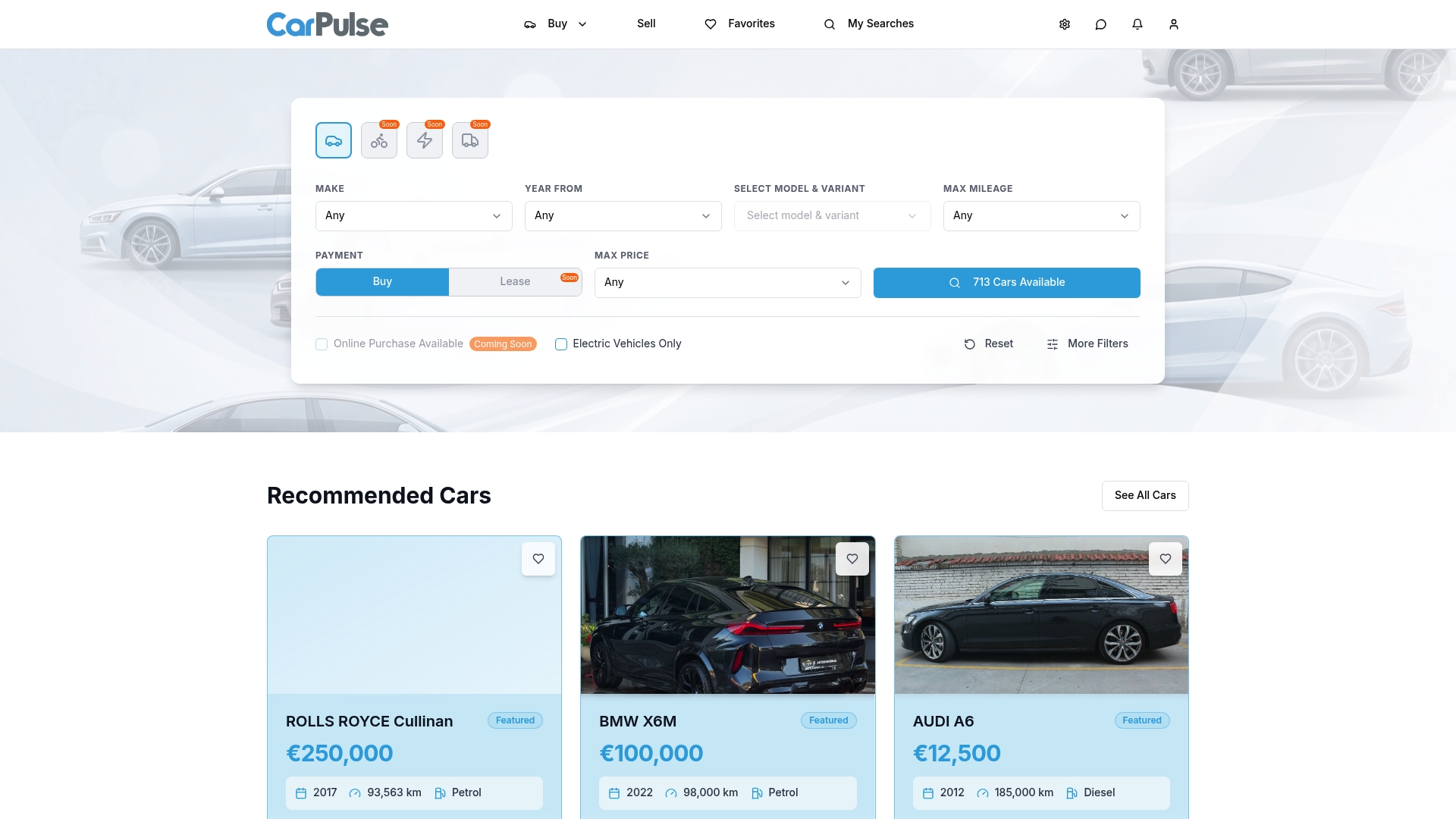
The platform’s VIN-based listings auto-populate vehicle details, so you see accurate specs rather than seller-written descriptions. Save your search, bookmark the models that fit your checklist, and use the mobile app to check new listings the moment they go live. Whether you are ready to buy today or still running your 5-year TCO calculation, browse EV listings on Carpulse and see what is available in your market right now.
Useful sources and further reading
- Alternative Fuels Data Center (AFDC): DOE-maintained database of EV benefits, charging infrastructure, and the Laws & Incentives tool for state and utility programs.
- Argonne National Laboratory (ANL): Lifecycle emissions modeling and charging-behavior data, including the 80% home-charging statistic.
- International Energy Agency (IEA): Global and U.S.-specific lifecycle carbon-reduction analysis for EVs versus ICE vehicles.
- Union of Concerned Scientists (UCS): Consumer-facing summary of EV fuel and maintenance cost advantages.
- BloombergNEF (BNEF): Battery price trend data, including the ~90% cost decline since 2010.
- RMI (Rocky Mountain Institute): Analysis of EV emissions advantages across different grid mixes.
- Kelley Blue Book: Consumer-oriented EV buying guide covering pros, cons, and used-EV considerations.
- NYSERDA: New York State energy authority data on per-mile fuel cost comparisons between EVs and gas vehicles.
- U.S. Department of Energy (DOE): Maintenance guidance, charging standards, and energy-security context for EV adoption.