
Guides
What Is a Hybrid Car? Benefits, Types, and How They Work
What Is a Hybrid Car? Benefits, Types, and How They Work

TL;DR:
- Hybrid cars use both a gasoline engine and an electric motor to improve fuel efficiency and lower emissions. They are more reliable and cost less to maintain over time compared to gas-only vehicles. The main types include traditional hybrids, plug-in hybrids, and mild hybrids, each suited for different driving needs and charging capabilities.
A hybrid car is defined as a vehicle that uses both a gasoline engine and an electric motor to power the drivetrain, improving fuel efficiency and cutting emissions compared to gas-only models. The industry term is “hybrid electric vehicle,” or HEV, and understanding the distinction between HEV types matters before you buy. Hybrid vehicles produce up to 33% lower tailpipe emissions than comparable gas-only cars. That figure alone makes them worth serious consideration for any buyer focused on running costs or environmental impact. Technologies like regenerative braking and EPA fuel economy standards have shaped how these vehicles perform in the real world, and the results are measurable.
What is a hybrid car and how does it combine gas and electric power?
A hybrid car works by pairing an internal combustion engine with one or more electric motors, using a control system to decide which power source runs at any given moment. At low speeds or during light acceleration, the electric motor handles most of the work. At highway speeds or under heavy load, the gasoline engine takes over or assists. The two systems work together automatically, with no input required from the driver.
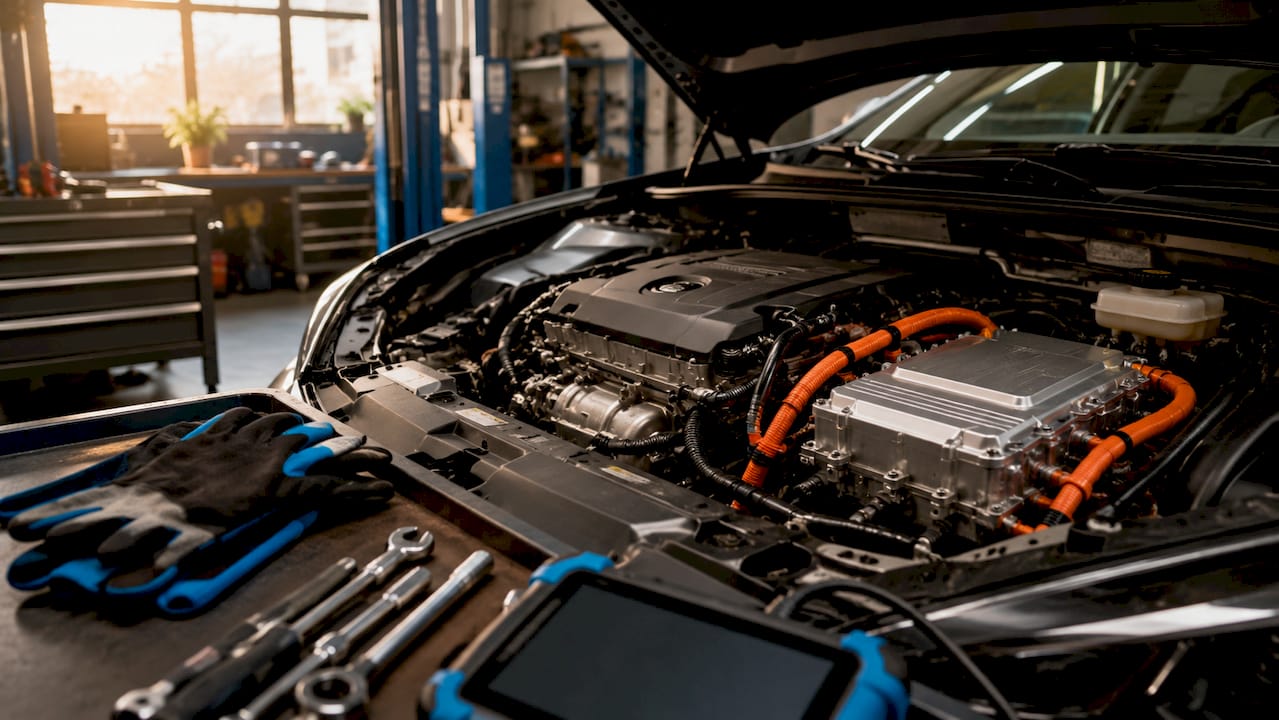
Regenerative braking is the technology that makes self-charging hybrids possible. When you press the brake pedal, the electric motor runs in reverse, acting as a generator that converts kinetic energy into electricity. That electricity flows back into the battery pack. Hybrids recharge their batteries through this process and through the gas engine, so most models never need to be plugged in.
The control system is the brain of the operation. It monitors speed, throttle input, battery charge level, and driving conditions to determine the most efficient power mix at every second. Full hybrids can run on electric power alone for short distances at low speeds. Mild hybrids, by contrast, use the electric motor only to assist the engine and cannot propel the car on electricity alone.
Key components in any hybrid system include:
- High-voltage battery pack: Stores electricity generated by regenerative braking and the engine
- Electric motor/generator: Drives the wheels and recharges the battery
- Internal combustion engine: Provides power at higher speeds and charges the battery when needed
- Power control unit: Manages energy flow between all components in real time
Pro Tip: If you do a lot of city driving with frequent stops, the regenerative braking system works harder and recharges the battery more often, which is exactly when hybrid efficiency peaks.
What are the main types of hybrid vehicles available today?
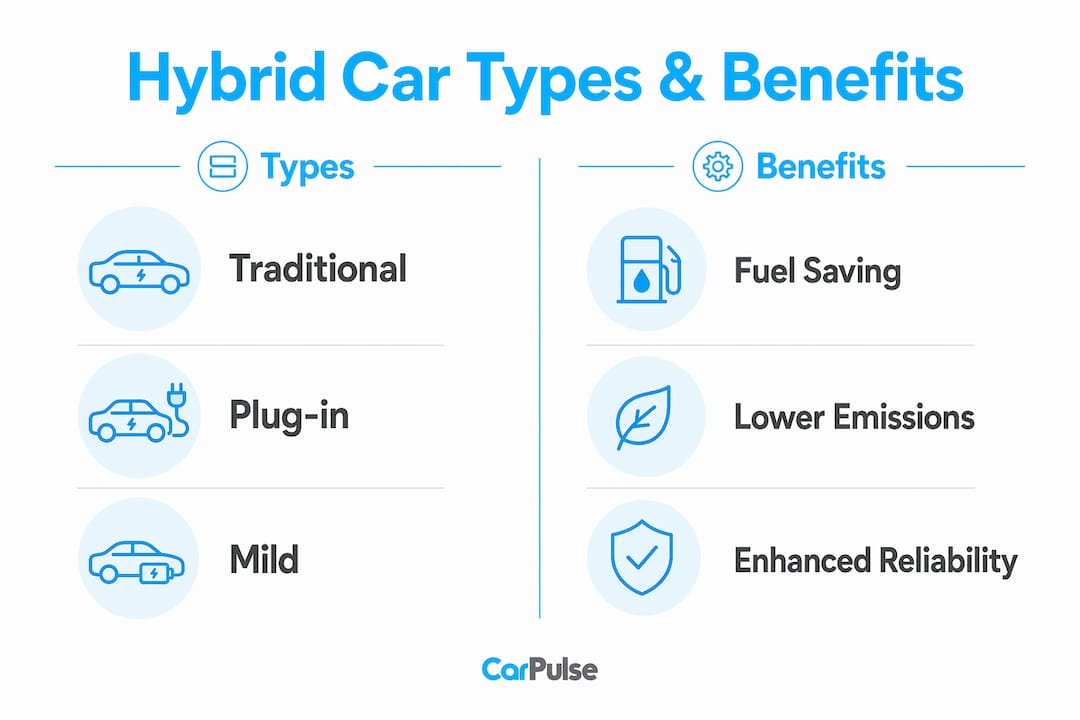
Three distinct categories of hybrid vehicles exist, and each suits a different type of driver. Knowing the difference prevents a costly mismatch between the car you buy and the way you actually drive.
Traditional (self-charging) hybrids
Traditional hybrids, also called full hybrids or HEVs, charge their batteries entirely through regenerative braking and the onboard engine. No plug is required. The Toyota Camry Hybrid and Honda Civic Hybrid are well-known examples. These vehicles suit drivers who want better fuel economy without changing any habits around charging or refueling.
Plug-in hybrid electric vehicles (PHEVs)
Plug-in hybrids carry a larger battery that you charge from an external power source, like a home outlet or public charging station. EPA range estimates for 2024 model year PHEVs span from 7 to 51 miles of electric-only driving before the gasoline engine activates. That range covers most daily commutes on electricity alone. PHEVs make the most sense if you have reliable home charging access and drive mostly short distances.
Mild hybrids (MHEVs)
Mild hybrids use a small electric motor to assist the gasoline engine during acceleration and to recover some braking energy. They cannot drive on electricity alone. Mild hybrids improve fuel consumption by up to 15% in urban driving compared to non-hybrid gas vehicles. The efficiency gains are real but more modest than full hybrids or PHEVs.
| Type | Electric-only range | Charging required | Fuel economy gain |
|---|---|---|---|
| Traditional hybrid (HEV) | Very short, low-speed only | No | Moderate to high |
| Plug-in hybrid (PHEV) | 7–51 miles | Yes (external plug) | High for short trips |
| Mild hybrid (MHEV) | None | No | Up to 15% |
Pro Tip: If you cannot charge at home or at work, a traditional self-charging hybrid gives you most of the fuel savings without any infrastructure dependency.
How do hybrid cars compare to gas-only vehicles?
Hybrid vehicles are 15% more reliable on average than traditional gas-only vehicles. That reliability edge comes partly from the electric motor handling low-speed work that would otherwise wear out the engine faster. Models like the Toyota Camry Hybrid and Honda Civic Hybrid consistently rank among the most dependable vehicles in their segments.
Maintenance costs also favor hybrids over time. Regenerative braking reduces wear on brake pads and rotors, which are among the most common and expensive routine repairs on gas-only cars. High-voltage battery failures are rare in practice. The combination of fewer brake jobs and a more durable engine translates to lower lifetime ownership costs for many buyers.
The upfront price of a hybrid is higher than its gas-only equivalent. Urban drivers recoup that premium faster because stop-and-go traffic maximizes electric motor use and minimizes fuel consumption. Highway-heavy drivers see smaller savings and a longer break-even timeline.
| Metric | Hybrid vehicle | Gas-only vehicle |
|---|---|---|
| Average reliability | 15% fewer problems | Baseline |
| Tailpipe emissions | Up to 33% lower | Baseline |
| Brake maintenance | Reduced (regenerative braking) | Standard wear |
| Upfront cost | Higher premium | Lower |
| Best for | City and mixed driving | Highway-heavy driving |
Hybrids also hold an advantage over fully electric vehicles for buyers who are not ready to commit to charging infrastructure. Hybrids use gas tanks for fast refueling and eliminate the range anxiety that comes with pure EVs. For buyers in markets where public charging is still developing, that practical advantage is significant.
Why consider a hybrid car? Practical factors for buyers
The benefits of hybrid cars are most pronounced for specific driving patterns. City commuters who spend time in stop-and-go traffic get the most from the electric motor and regenerative braking system. Drivers with short daily trips under 30 miles are ideal candidates, especially for PHEVs that can cover those trips entirely on electricity.
Choosing between plug-in and self-charging hybrids depends mostly on access to charging infrastructure and daily driving distance. If you park in a garage or near an outlet overnight, a PHEV pays off quickly. If charging access is uncertain, a traditional hybrid removes that variable entirely.
Common concerns about hybrids often do not hold up under scrutiny:
- Battery replacement costs: High-voltage battery failures are rare, and most manufacturers offer long warranties on hybrid battery systems
- Performance: Hybrids often deliver stronger low-end acceleration than gas-only equivalents because electric motors produce full torque instantly
- Complexity: The control system manages everything automatically, so the driving experience feels identical to a conventional car
- Resale value: Consumer Reports experts recommend choosing the hybrid version over gas when both are available, which reflects strong resale demand
Pro Tip: Check the EPA fuel economy label on any hybrid you test drive. The city MPG figure is often higher than the highway figure, which is the opposite of gas-only cars. That tells you exactly how much you will save on your specific commute.
For buyers in Albania, checking a fuel-efficient cars list helps narrow down which hybrid models are available locally and which deliver the best real-world returns for Albanian driving conditions.
Key Takeaways
Hybrid cars deliver measurable advantages in reliability, emissions, and running costs, but the right type depends entirely on your driving habits and charging access.
| Point | Details |
|---|---|
| Hybrid car definition | A hybrid combines a gasoline engine and electric motor to cut fuel use and emissions. |
| Reliability advantage | Hybrids average 15% fewer problems than gas-only vehicles, per Consumer Reports data. |
| Three distinct types | HEVs, PHEVs, and MHEVs each suit different driving patterns and charging situations. |
| Best for city driving | Stop-and-go traffic maximizes electric motor use and speeds up the cost break-even point. |
| Lower maintenance costs | Regenerative braking reduces brake wear, cutting one of the most common repair expenses. |
The case for hybrids is stronger than most buyers realize
Most car buyers I talk to still think of hybrids as a compromise. They picture a sluggish, underpowered car that costs more and requires a degree in engineering to maintain. That picture is about 15 years out of date.
The reliability data from Consumer Reports is the part that surprises people most. Fifteen percent fewer problems on average is not a marginal difference. That is the kind of gap that shows up in your wallet over a five-year ownership period. Combine that with reduced brake wear and you have a vehicle that genuinely costs less to keep on the road, not just less to fuel.
The one area where I think buyers still need to be careful is the PHEV decision. A plug-in hybrid only delivers its full promise if you actually charge it regularly. If you buy a PHEV and never plug it in, you are driving a heavier-than-normal gas car with a battery you are not using. The urban driving advantage is real, but only if your habits match the technology.
My honest recommendation: if a hybrid version of the car you want exists, buy it. The fuel savings, the quieter ride, the stronger low-end pull, and the lower maintenance bills all add up. The upfront premium is real, but for most drivers it pays back within a few years. The myth that hybrids are for a niche audience of eco-conscious buyers is simply wrong. They are the better car in most categories, for most drivers.
— Henri
Hybrid car listings on Carpulse
Carpulse is Albania’s largest car marketplace, and hybrid vehicles are listed alongside every other fuel type on the platform. You can filter by fuel type to see only hybrid and plug-in hybrid options, compare prices across private sellers and verified dealerships, and save your search for new listings.
Whether you are looking for a self-charging city car or a PHEV for mixed driving, Carpulse gives you the full picture in one place. The 2026 buying guide covers hybrid-specific considerations for the Albanian market, including what to check on a used hybrid before you buy. Start your search at Carpulse and filter by hybrid to see what is available right now.
FAQ
What is a hybrid car in simple terms?
A hybrid car uses both a gasoline engine and an electric motor to power the vehicle. The two systems work together automatically to improve fuel efficiency and reduce emissions.
Do hybrid cars need to be plugged in?
Traditional hybrids and mild hybrids charge themselves through regenerative braking and the onboard engine, so no plug is required. Plug-in hybrids (PHEVs) do require external charging to access their full electric range.
Are hybrid cars more reliable than gas cars?
Hybrid vehicles average 15% fewer problems than gas-only vehicles, according to Consumer Reports reliability surveys. Models like the Toyota Camry Hybrid and Honda Civic Hybrid consistently rank among the most dependable in their class.
How much can a hybrid car save on fuel?
Savings depend on driving habits. Urban drivers with frequent stops benefit most because the electric motor handles more of the work. Highway-heavy drivers see smaller gains since the gasoline engine dominates at higher speeds.
What is the difference between a hybrid and an electric car?
A hybrid car carries a gasoline engine alongside its electric motor and never runs out of range. A fully electric vehicle runs on battery power only and requires charging infrastructure for every trip.