Guides
What Is a Car Warranty? Your Buyer's Guide

What Is a Car Warranty? Your Buyer’s Guide

TL;DR:
- Car warranties guarantee repairs for specific vehicle components within a set time or mileage, varying from factory to extended coverage.
- Understanding the differences, exclusions, and transfer rules is essential to choosing the right protection and avoiding costly misunderstandings.
A car warranty is a contract that guarantees repair or replacement of specific mechanical or electrical components in your vehicle within a defined time period or mileage limit. Manufacturers offer factory warranties with every new car purchase, while third parties sell extended coverage for older or higher-mileage vehicles. Typical factory warranties include bumper-to-bumper, powertrain, emissions, and sometimes corrosion or roadside assistance coverage. Understanding how car warranties work before you sign anything is the difference between a purchase that protects you and one that leaves you exposed.
What are the main types of car warranties?
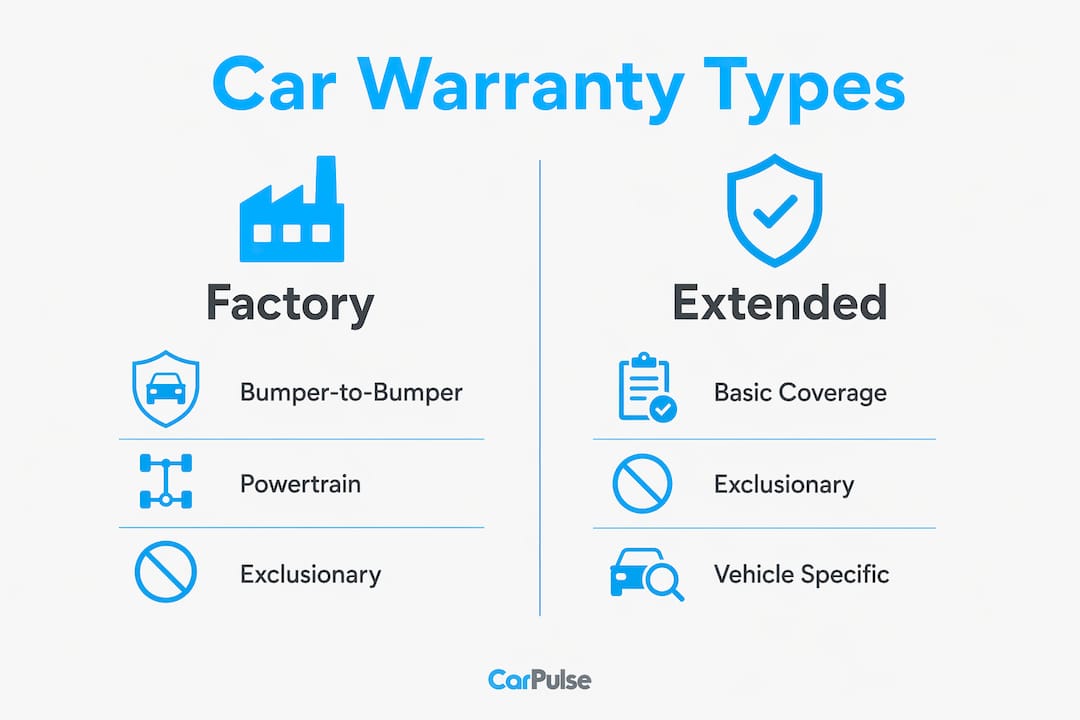
Car warranties fall into two broad categories: factory warranties and extended warranties. Each category contains several tiers, and knowing the difference helps you compare vehicles and negotiate with confidence.
| Warranty Type | What It Covers | Typical Duration |
|---|---|---|
| Bumper-to-bumper | Nearly all components except wear items | 3 years / 36,000 miles |
| Powertrain | Engine, transmission, drivetrain | 5 years / 60,000 miles |
| Extended (service contract) | Varies by tier: powertrain to exclusionary | 1 to 7 years beyond factory |
| Certified Pre-Owned (CPO) | Manufacturer-inspected used vehicles | Varies by brand |
Bumper-to-bumper warranties are the most inclusive factory coverage. The most comprehensive warranties cover nearly everything except wear items such as brake pads, tires, and windshield wipers. This means that if your air conditioning compressor fails or your power window motor stops working, the manufacturer pays for the repair.
Powertrain warranties focus on the components that make the car move: the engine, transmission, and drivetrain. A standard bumper-to-bumper warranty typically lasts 3 years or 36,000 miles, while powertrain warranties extend to 5 years or 60,000 miles and sometimes longer. Hyundai and Kia, for example, offer powertrain coverage up to 10 years or 100,000 miles, which is a significant competitive advantage.
Extended warranties, technically called vehicle service contracts, are sold separately and activate after the factory warranty expires. Extended warranties are not legally warranties under federal law. They are service contracts, and that distinction matters because the consumer protections that apply to warranties do not always apply to service contracts.
Coverage tiers within extended warranties follow a clear structure:
- Powertrain only: The most affordable tier, covering engine, transmission, and drivetrain
- Mid-level / named component: Adds electrical systems, air conditioning, and steering
- Exclusionary / bumper-to-bumper: Covers everything except a specific list of excluded parts
Exclusionary warranties are favored by experts because they specify what is NOT covered, which reduces disputes over coverage of small parts. This approach is cleaner and more buyer-friendly than a named-component plan, where unlisted parts fall into a gray area.
Pro Tip: When comparing extended warranty tiers, ask the provider for the exclusion list in writing. A short exclusion list on an exclusionary plan is a strong signal of genuine coverage.
What does a car warranty typically cover and exclude?
Car warranty coverage focuses on defects in materials and workmanship that arise from normal vehicle use. If a component fails because it was poorly manufactured or assembled, the warranty pays for the fix. If it fails because you skipped oil changes for three years, it does not.

Common covered repairs include engine failures, transmission malfunctions, electrical system faults, and fuel system defects. Warranty coverage often excludes infotainment and certain sensor repairs unless higher-tier plans are purchased. This catches many buyers off guard, particularly on modern vehicles loaded with driver-assistance technology.
Warranties exclude routine maintenance such as oil changes, tire rotations, and wiper blade replacements, as well as damage from accidents or misuse. Environmental damage, including flood, hail, and UV degradation, falls outside warranty coverage as well. Accident damage is the territory of your auto insurance policy, not your warranty.
Here is a clear breakdown of what falls inside and outside standard coverage:
Typically covered:
- Engine and transmission defects
- Electrical system failures
- Fuel system components
- Heating and cooling system defects (mid-level and above)
- Factory-installed audio and navigation (bumper-to-bumper only)
Typically excluded:
- Oil changes, filters, and fluid top-offs
- Brake pads, rotors, and tires
- Clutch wear on manual transmissions
- Damage from accidents, floods, or improper modifications
- Cosmetic issues such as paint fading or interior wear
Maintaining your vehicle according to the manufacturer’s schedule is not optional if you want your warranty to hold. Aftermarket service contracts in particular can include “gotcha” clauses requiring precise maintenance documentation, voiding coverage if conditions are not met. Keep every service receipt from day one.
Pro Tip: Store your maintenance records digitally using an app like Drivvo or a simple cloud folder. If a warranty claim is ever disputed, timestamped records are your strongest defense.
How do car warranties work for new cars versus used cars?
The warranty experience differs significantly depending on whether you buy new or used. New car buyers receive factory coverage automatically. Used car buyers must investigate what remains, what transfers, and whether additional coverage makes sense.
For new vehicles, the process is straightforward:
- Factory warranty activates at purchase. Coverage begins on the sale date and runs for the stated period or mileage, whichever comes first.
- Multiple warranty types apply simultaneously. Your new car likely carries a bumper-to-bumper warranty, a longer powertrain warranty, and a separate emissions warranty required by federal law.
- Authorized dealers handle all warranty repairs. You bring the car to a franchised dealership, they diagnose the issue, and the manufacturer reimburses them directly. You pay nothing for covered repairs.
- Warranty transfers to subsequent owners. Warranties generally transfer to new owners but may require fees or administrative steps, and terms can sometimes change upon transfer. Some manufacturers impose administrative fees for this process, so verify the policy before buying a used car from a private seller.
- Certified Pre-Owned (CPO) programs bridge the gap. Brands like Toyota, BMW, and Mercedes-Benz offer CPO programs that include manufacturer-backed warranties on inspected used vehicles, often extending coverage by two or more years beyond the original factory terms.
For used vehicles outside CPO programs, your options narrow. The original factory warranty may still have time or mileage remaining, which is worth verifying through the VIN. If the factory coverage has expired, you are looking at aftermarket extended warranty options. These vary widely in quality, and the safe used car buying process should always include a warranty status check before you commit.
A vehicle with transferable factory warranty remaining commands higher resale value and greater buyer confidence. When you list or purchase through a platform like Carpulse, verified warranty status is part of the vehicle information that helps buyers make faster, more confident decisions.
What are the benefits and drawbacks of an extended car warranty?
Extended warranties generate strong opinions, and both sides have merit. The right answer depends on your vehicle, your financial situation, and your tolerance for repair risk.
Benefits worth considering:
- Protection against expensive, unpredictable repairs after the factory warranty expires
- Fixed monthly costs that make budgeting easier than absorbing a sudden $3,000 transmission repair
- Peace of mind, particularly for buyers of high-mileage or luxury vehicles where repair costs are steep
- Extended warranties range from $40 per month for basic powertrain coverage to $180 per month for comprehensive exclusionary plans, giving buyers flexibility
Drawbacks to weigh carefully:
- Total cost over a multi-year contract can exceed the value of repairs you actually need
- Aftermarket warranty providers vary dramatically in reliability, and some operate with restrictive claim processes designed to minimize payouts
- Coverage gaps and exclusions often surprise buyers who assumed they had full protection
- Dealers often push extended warranties late in the buying process, which leads to rushed decisions and overpriced plans
“Many owners find that saving a dedicated repair fund may be more cost-effective than buying expensive extended warranties.” This perspective from Kelley Blue Book reflects a real alternative worth calculating. If your vehicle is reliable and your factory warranty is still active, a self-funded repair reserve of $100 to $150 per month may outperform a third-party contract over five years.
The calculus shifts for luxury vehicles, electric vehicles with expensive battery systems, or used cars with unknown service histories. In those cases, a well-structured extended warranty from a reputable provider offers genuine financial protection.
How to evaluate and choose the right car warranty
Choosing a warranty is not about buying the most coverage. It is about matching coverage to your actual risk profile.
- Assess your vehicle’s reliability track record. A Toyota Camry with 40,000 miles carries different risk than a used Range Rover at the same mileage. Research owner forums and reliability ratings before deciding on coverage level.
- Compare coverage models, not just prices. An exclusionary plan at $150 per month may offer more real protection than a named-component plan at $90 per month if the exclusion list is short.
- Check transfer terms before you buy. If you plan to sell the vehicle within the warranty period, a transferable warranty adds resale value. Verify whether your manufacturer or provider allows transfer and at what cost.
- Investigate the provider’s claim process. Read third-party reviews on platforms like the Better Business Bureau or Trustpilot. Look specifically for complaints about denied claims or slow reimbursements.
- Understand your repair network. Some extended warranties restrict repairs to specific shops, which limits your flexibility. Factory warranties use authorized dealerships, which is more predictable.
- Review deductibles and pricing structures. A $0 deductible plan sounds attractive but typically costs more per month. A $100 or $200 deductible plan lowers your monthly cost and still protects you from major repairs.
- Request the full written contract before signing. Never accept a summary sheet as your agreement. The full contract contains the exclusions, claim procedures, and cancellation terms that determine whether the warranty actually works for you.
Pro Tip: If a dealer presents an extended warranty at the end of a long buying session, ask to take the contract home overnight. Any provider unwilling to give you 24 hours to review a multi-year contract is a red flag.
For verified car listings that include warranty status and vehicle history, Carpulse makes it easier to start this evaluation process before you ever walk into a dealership.
Key takeaways
A car warranty is a repair contract that protects you from manufacturing defects, and understanding its types, exclusions, and transfer rules determines whether it delivers real value or false security.
| Point | Details |
|---|---|
| Factory warranty basics | New cars include bumper-to-bumper and powertrain coverage; durations vary by manufacturer. |
| Exclusions are universal | Wear items, maintenance, and accident damage are excluded from every warranty type. |
| Extended warranties are service contracts | Legally distinct from warranties; review exclusion lists and claim processes before buying. |
| Used car warranty status matters | Verify remaining factory coverage via VIN and check transfer terms before purchasing. |
| Self-funding is a valid alternative | A dedicated repair savings fund can outperform an extended warranty for reliable vehicles. |
The warranty clause nobody reads until it’s too late
I have reviewed enough car purchase agreements to know that warranty misunderstandings are not rare. They are the norm. Most buyers skim the warranty summary sheet and assume they understand what they bought. They do not find out otherwise until a claim is denied.
The single most common mistake I see is confusing a car warranty with car insurance. Many car buyers misunderstand this distinction, expecting warranties to cover items better handled by insurance. A warranty covers manufacturing defects. Insurance covers accidents, theft, and liability. They are completely separate products, and conflating them leads to expensive surprises.
The second mistake is buying an extended warranty from a provider you have not researched. The extended warranty market includes legitimate, well-capitalized companies and outright scams. The difference is not always obvious at the dealership. I recommend spending 30 minutes reading reviews and checking complaint histories before committing to any third-party contract.
My honest recommendation: if you are buying a new car from a reputable manufacturer, the factory warranty is sufficient for the first several years. Focus your energy on understanding its exclusions rather than layering additional coverage on top. If you are buying used, verify the remaining factory coverage first, then evaluate whether the vehicle’s reliability profile justifies an extended plan. The car maintenance plan you follow will do more to protect your investment than any warranty contract you sign.
— Henri
Find cars with clear warranty information on Carpulse
Knowing what a car warranty covers is only half the equation. The other half is finding a vehicle where the warranty status is transparent from the start.
Carpulse is Albania’s largest car marketplace, where every listing includes verified vehicle details populated directly from the VIN. That means you can see warranty status, service history indicators, and full vehicle specs before you contact a seller. Whether you are searching for a new car with full factory coverage or a used vehicle with remaining powertrain protection, browse verified listings on Carpulse to compare your options with confidence. Buying a car is a major financial decision. Start with a platform that gives you the information you need to make it a good one.
FAQ
What is a car warranty in simple terms?
A car warranty is a promise from the manufacturer or a third party to pay for specific repairs if covered components fail within a set time or mileage limit. It protects you from defects in materials or workmanship, not from accidents or normal wear.
What does a standard car warranty not cover?
Standard warranties exclude routine maintenance items like oil changes and brake pads, damage from accidents or misuse, environmental damage, and normal wear and tear on components like tires and clutches.
Is a car warranty the same as car insurance?
No. A car warranty covers mechanical and electrical defects from manufacturing faults. Car insurance covers accidents, theft, and liability. They serve different purposes and are purchased separately.
Can a used car still have a factory warranty?
Yes. If the original factory warranty has not expired by time or mileage, it typically transfers to the new owner. Warranty transfer may require fees and administrative steps, so verify the terms before completing a used car purchase.
Are extended car warranties worth buying?
Extended warranties offer genuine value for high-mileage vehicles, luxury cars, or electric vehicles with expensive components. For reliable vehicles with strong factory coverage still active, a self-funded repair reserve is often more cost-effective.