Guides
What Is a Car Variant? Your Buying Guide for 2026

What Is a Car Variant? Your Buying Guide for 2026

TL;DR:
- Understanding car variants is crucial because they significantly influence purchase price, ownership costs, and resale value. Variants are specific versions within a model lineup that differ in features, equipment, and sometimes engines, typically organized into base, mid, and top tiers. Selecting the appropriate variant based on your needs and budget ensures better value, driving experience, and long-term satisfaction.
Most car buyers know the brand they want and even the model. But when the salesperson starts talking about the LX versus the EX, or the base versus the Limited, many buyers go quiet. Understanding what is a car variant is not just trivia. It directly affects what you pay, what you drive, and what you get when you eventually sell. This guide breaks down car variant vs model distinctions in plain language, walks through real examples of car variants, and gives you the tools to make a smarter purchase.
Table of Contents
- Key Takeaways
- Car make, model, and variant explained
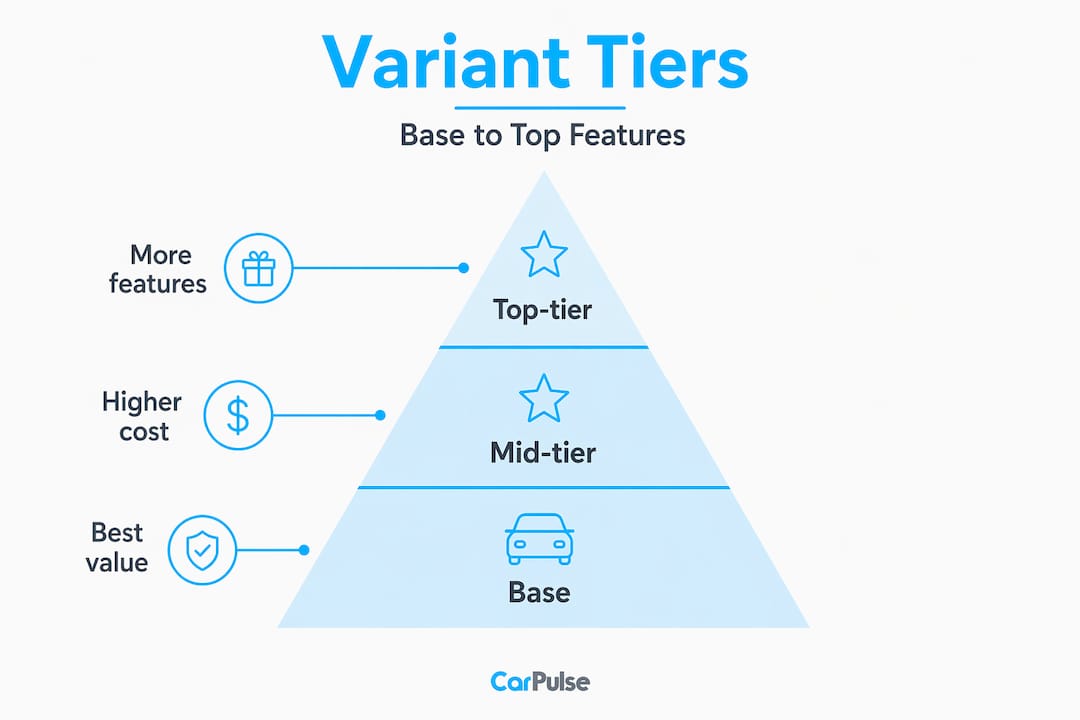
- How variant tiers work: base, mid, and top
- How your variant choice affects ownership costs
- How to identify a car’s variant before you buy
- Choosing the right variant for your situation
- My honest take on variant choices
- Find your next car on Carpulse
- FAQ
Key Takeaways
| Point | Details |
|---|---|
| Variant vs. model | A model is the product line (e.g., Honda Civic); a variant is a specific version within that line. |
| Three core tiers | Most variants fall into base, mid, or top trim categories, each with distinct features and pricing. |
| Ownership costs differ | Variant choice affects insurance premiums, resale value, and long-term satisfaction, not just sticker price. |
| VIN decodes your variant | Your vehicle identification number and registration documents reliably identify which variant you own or are buying. |
| Mid-tier often wins | Mid-spec variants tend to hold resale value better than top trims, which depreciate faster. |
Car make, model, and variant explained
Before you can understand variants, you need three terms sorted out clearly. They are not interchangeable, even though people treat them that way constantly.
Make is the manufacturer. Ford, Toyota, Honda, Volkswagen. That is it.
Model is the specific product line within that brand. Think Ford F-150, Toyota Camry, Honda Civic. The model has a name and represents a vehicle family, sold across multiple years with consistent design language and general positioning.
Variant (also called a trim level or trim) is where things get specific. A car variant refers to a specific version of a vehicle model that differs in features, equipment, and sometimes powertrain. Two cars can both be 2026 Honda Civics and still be very different vehicles depending on which variant you are looking at.
Manufacturers designate variants using alphanumeric codes or descriptive names. Some of the most common examples of car variants include:
- Alphanumeric codes: Honda uses LX, EX, EX-L, Sport, Touring. Toyota uses LE, XLE, XSE, Limited. Hyundai uses trims like E, S, SX, and Maruti uses LXi and VXi designations.
- Descriptive tier names: Base, Active, Premium, Executive, Sport, Limited, Platinum.
The car model differences between an LX and a Touring version of the same Civic are enormous. We are talking about thousands of dollars in price, different safety packages, different interior materials, and sometimes different engine options entirely.
| Term | What it means | Example |
|---|---|---|
| Make | Manufacturer brand | Honda |
| Model | Vehicle product line | Honda Civic |
| Variant / Trim | Version within the model | Honda Civic EX |
Understanding this structure answers the car variant vs model question directly. The model is the family name; the variant is the individual within that family.
How variant tiers work: base, mid, and top
Most manufacturers organize their variants into three broad tiers. Knowing what each tier typically includes helps you evaluate any car, regardless of brand.

Base variants
Base models focus on mechanical essentials and keep pricing as low as possible. You get the safety requirements, the powertrain, and the basics. Think a Ford F-150 XL or a Chevrolet Malibu LS. These trims are built for buyers who want reliable transportation without spending on comfort technology they may not use.
What base trims typically omit: touchscreen infotainment, rear cameras (unless legally required), heated seats, premium audio, automatic climate control, and advanced driver-assist systems.
Mid-tier variants
This is where most buyers land, and for good reason. Mid trims add the features that make daily driving noticeably more comfortable without crossing into luxury territory. Mid-spec variants combine popular extras like touchscreen infotainment and reverse cameras without the full luxury premium. You get more tech, better interior materials, and usually a slightly upgraded safety package.
Top-tier variants
Fully loaded trims bundle leather seats, panoramic sunroofs, premium audio systems, and the full suite of driver-assist technology. The experience feels genuinely different from a base model of the same car. The tradeoff is cost, not just at purchase but across the ownership period.
High-performance engines or advanced transmissions are often restricted to specific top-tier variants. You cannot mix and match those features into a lower trim at the factory. That means if you want the turbocharged engine, you are buying the full package.
Pro Tip: When you see a car advertised at an attractive base price in a commercial, that price almost always reflects the entry-level variant. The version you actually test drive at the dealership is typically a mid or top trim. Always ask which variant is on the lot.
Manufacturers also revise variant lineups over time. The 2026 Hyundai Creta updated its lineup to seven trims, with certain trims discontinued. This is worth knowing because the variant you researched six months ago may not exist in the same form today.
How your variant choice affects ownership costs
Choosing a variant is not a one-time decision. It ripples through your entire ownership experience in ways that most buyers do not fully think through before signing.
Upfront price. The price gap between a base and a top trim of the same model can easily reach $8,000 to $15,000 or more. Understanding this range from the start keeps your budget realistic.
Insurance premiums. This is the one that surprises people most. Insurance premiums often vary between variants of the same model because of feature differences and engine options. A high-performance or luxury trim carries higher insurance costs. If you are comparing total monthly cost of ownership, the premium trim can cost significantly more than its sticker price suggests when insurance is factored in.
Resale value. Here is a counter-intuitive finding: mid trims typically provide the best resale value because top trims depreciate faster. Luxury features that cost $10,000 new may only add $3,000 to a three-year-old car’s resale price. Mid-tier buyers get those popular features without absorbing the depreciation hit.
Driving experience. This one gets overlooked. Test driving different trim levels of the same model can reveal important differences in driving feel through features like suspension tuning, wheel size, and interior materials. Even with identical engines, the base and fully loaded variants of the same car can feel meaningfully different behind the wheel.
Pro Tip: Calculate your variant’s total cost of ownership over three to five years. Add insurance estimates, expected depreciation, and any tech subscription fees that top trims sometimes require. The full picture changes which variant makes financial sense.
Before finalizing any purchase, reading through how used car prices in Albania are determined will sharpen your understanding of how variant and feature levels shape market value.
How to identify a car’s variant before you buy
When you are looking at a used car or trying to confirm what you own, variant identification is a practical skill with real financial consequences. A seller who misrepresents a lower trim as a higher one is not uncommon.
Here is a reliable process:
- Check the vehicle registration documents. Registration and official papers typically list or allow retrieval of trim and variant details. This is your first stop.
- Decode the VIN. The Vehicle Identification Number contains characters that correspond to specific build configurations, including trim level. Use the manufacturer’s own website or a reputable VIN decoder to pull the exact variant.
- Look for trim badges. Most manufacturers place the variant designation as a badge on the trunk lid or rear panel. Check both sides of the car.
- Cross-reference the features. Pull the official spec sheet for that model year and compare what the car actually has (leather vs. cloth, sunroof yes or no, infotainment screen size) against what each trim should include.
- Ask for the window sticker or Monroney label on new cars. This document lists the exact trim, installed packages, and MSRP. On used cars, dealerships sometimes retain a copy.
Pro Tip: If a used car listing claims a premium variant but the photos show cloth seats and a small infotainment screen, trust the photos. Cross-check with the VIN before you drive to see it.
For a structured walkthrough of what to inspect during an actual test drive of a used car, CarPulse has a detailed guide covering every step from exterior checks to variant verification.
Choosing the right variant for your situation
Now that you understand what differentiates variants, the final step is applying that knowledge to your actual life. The right variant is not the most expensive one you can afford. It is the one that matches how you actually use a vehicle.
- City commuting. If most of your driving is stop-and-go urban traffic, you rarely use highway cruise control, sport suspensions, or rear entertainment systems. A mid-tier variant with good visibility, a decent infotainment screen, and parking sensors covers 90% of what you need.
- Family use. A growing family benefits from rear-seat climate controls, third-row access if available, higher safety ratings, and rear cameras. These features often appear at mid or top trims. Evaluate which safety tech is standard versus optional.
- Long-distance driving. Highway drivers genuinely benefit from adaptive cruise control, lane-keeping assist, and premium seats. These features reduce fatigue on long trips and are typically locked to higher trims.
- Short ownership horizon. If you plan to sell or trade in within three years, mid-tier variants almost always give you the best financial outcome. You pay less upfront and depreciate less per dollar spent.
- Long-term ownership. If you are keeping the car for ten years, spending more on a higher variant upfront can make sense since you spread that cost over more time and personal use.
Pro Tip: Make a short list of three features you genuinely cannot live without and three you would be fine skipping. Find the lowest trim that includes your “cannot live without” list. That is your starting point for negotiation.
A direct comparison of how feature sets play out across trims in practice, like the RAV4 vs. Tiguan trim analysis on CarPulse, shows exactly how these decisions affect real-world value.
My honest take on variant choices
I have watched a lot of buyers spend weeks agonizing over make and model and then pick a variant in five minutes at the dealership. That backward approach has cost people real money.
The moment I started test-driving multiple trims of the same car, my perspective shifted entirely. I once sat in the base and top versions of the same midsize sedan back to back. The base had firmer, noisier ride quality, harder plastics at every touchpoint, and a smaller screen with an interface that felt five years old. The top trim felt like a different vehicle. Same model, radically different daily experience.
My contrarian view: the fully loaded trim is frequently a bad financial decision for the average buyer. You are paying $12,000 to $18,000 more for features you will use occasionally, accepting faster depreciation, and locking yourself into higher insurance costs for the entire ownership period. The mid-tier trim is where the manufacturers quietly put their best value. It gets the safety and comfort upgrades that matter, skips the luxury flourishes that depreciate fastest, and holds value better when you sell.
What I tell anyone who asks: buy the trim level that you would still feel good about after three years of living with it. Not the one that impresses you in the showroom for twenty minutes.
— Henri
Find your next car on Carpulse
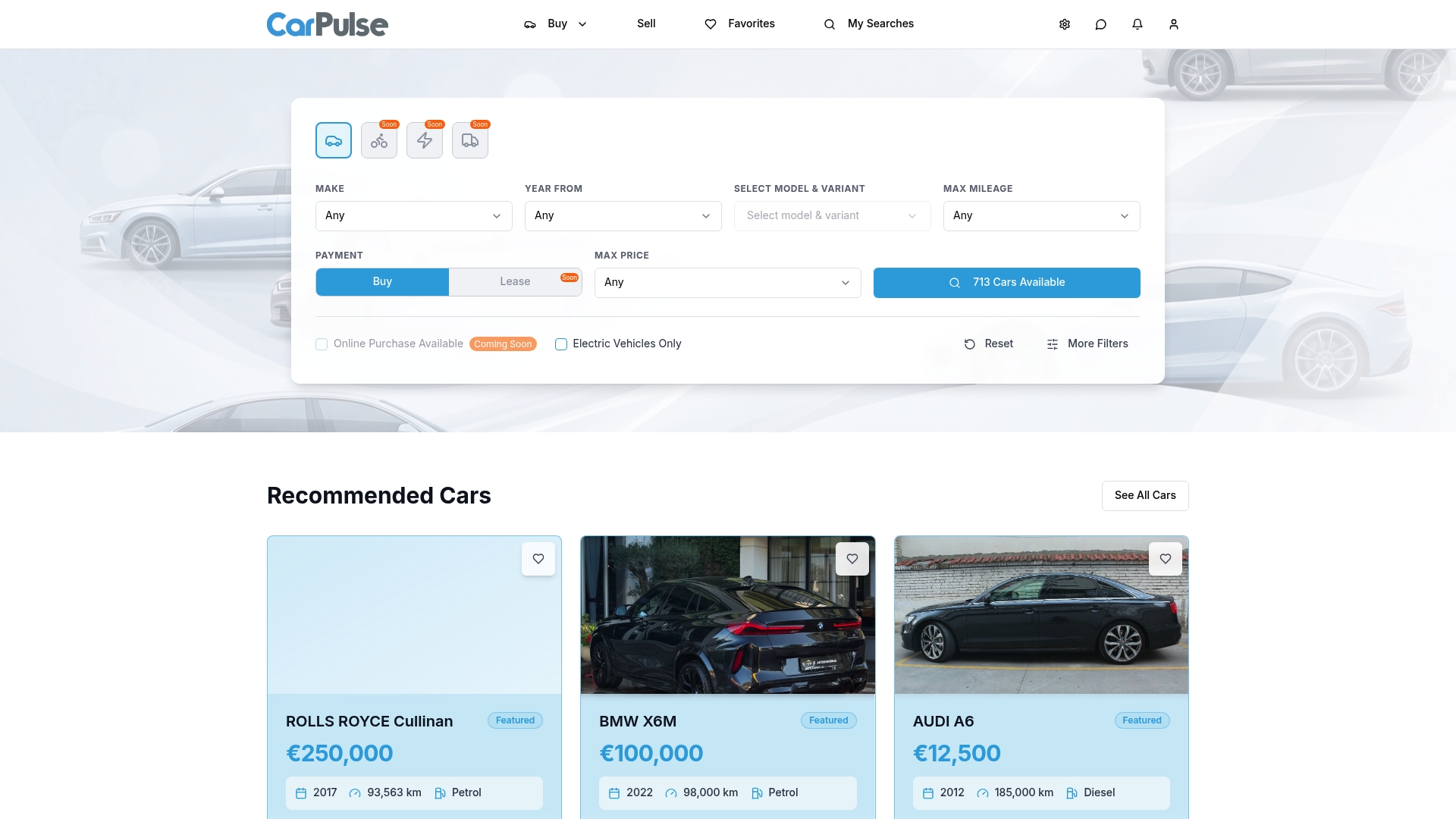
Knowing what is a car variant gives you a real advantage when shopping. Carpulse puts that advantage to work. As Albania’s largest car marketplace, Carpulse lets you filter listings by make, model, year, mileage, price, and fuel type so you can compare variants side by side without calling ten dealerships. Whether you are buying a base-trim daily driver or a fully loaded family SUV, you find exactly what each listing includes before you ever contact a seller. If you are selling, Carpulse’s VIN-based listing tool automatically populates your car’s variant details, so buyers see accurate specs from the start. List your car today and reach buyers who already know what they want.
FAQ
What is a car variant vs a model?
A car model is the product line, like a Toyota Camry or Ford F-150. A variant (or trim) is a specific version within that model that differs in features, equipment, and sometimes engine options.
What are common examples of car variants?
Common examples include Honda’s LX, EX, and Touring trims, Toyota’s LE and XLE levels, and Ford’s XL and Platinum trims on the F-150. Each represents the same model with a different feature set and price point.
Does the variant affect car insurance costs?
Yes. Higher-performance or luxury trims typically carry higher insurance premiums because of their increased repair costs and value, making variant selection a factor in total ownership cost.
Which variant holds its resale value best?
Mid-spec variants typically hold resale value better than top trims because luxury features depreciate faster. A mid-tier car offers popular equipment without absorbing the full premium depreciation.
How do I find out which variant a used car is?
Check the vehicle registration documents, decode the VIN through the manufacturer’s website, look for trim badges on the car’s exterior, and cross-reference the features against the official spec sheet for that model year.