
Guides
Vehicle Inspection Checklist Albania: 2026 Guide
Vehicle Inspection Checklist Albania: 2026 Guide
TL;DR:
- Vehicle inspections in Albania require valid documents, safety equipment, and passing tests on seven core mechanical systems. Buyers should verify the vehicle’s condition through independent checks and avoid relying solely on certification, as certificates can be outdated or misleading. Proper preparation, including self-checks and documentation, helps ensure a smooth inspection and protects against costly re-inspections or fraudulent purchases.
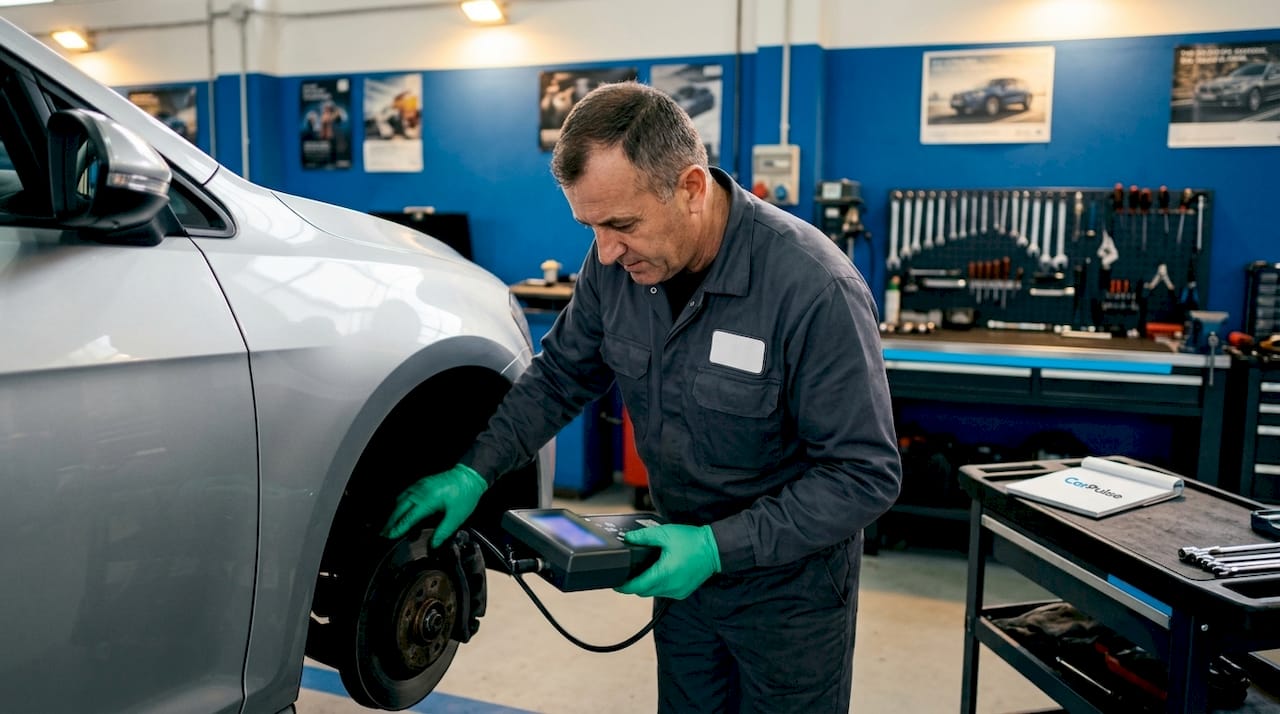
A vehicle inspection checklist in Albania outlines the mandatory safety components, legal documents, and mechanical conditions you must verify to stay compliant and road legal. The official periodic technical inspection, known as the Kolaudimi, is the legal standard every car owner must meet. Personal vehicles require a valid Kolaudimi every 2 years, while commercial vehicles and taxis must pass annually. Whether you are buying a used car or preparing your current vehicle for renewal, this guide covers every item on the Albania car inspection guide from documents to mechanical components to common traps.
What documents does Albania require for vehicle inspection compliance?
The right paperwork is the first thing inspectors check. Missing or invalid documents will stop the process before a single mechanical test begins.
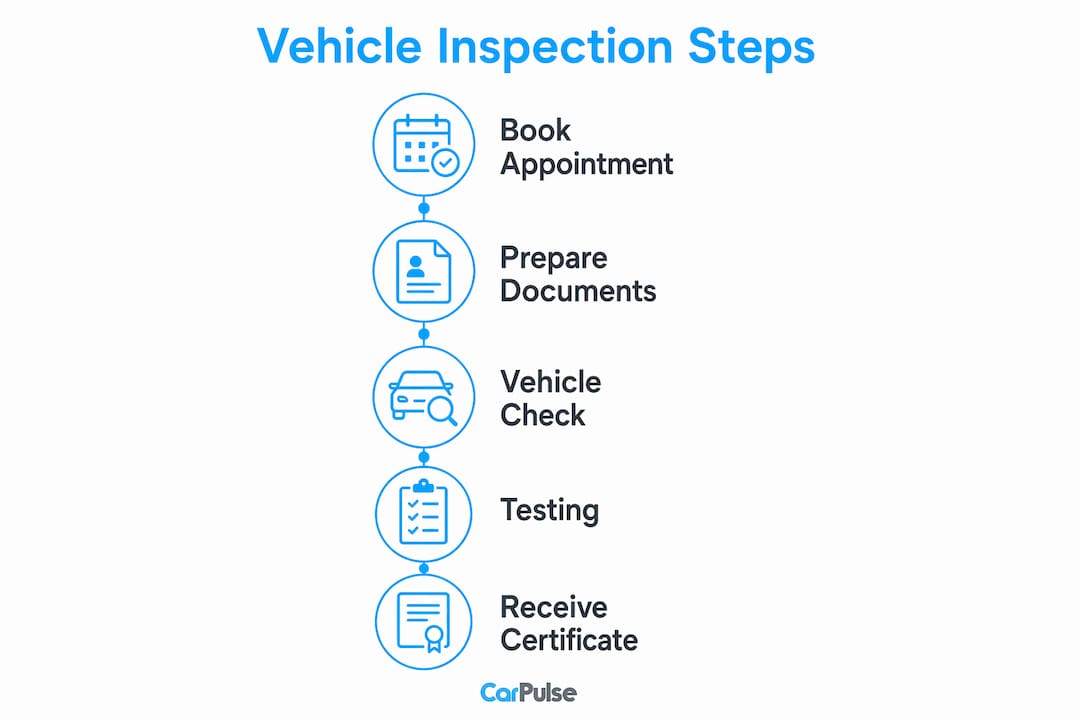
Albania requires the following documents for a vehicle to pass inspection or transfer ownership legally:
- Kolaudimi certificate: Valid for 2 years for personal vehicles and 1 year for commercial vehicles. Expired certificates result in fines and the vehicle cannot legally operate on public roads.
- Vehicle registration card (Leje qarkullimi): Issued by the General Directorate of Road Transport Services (DPSHTRR) and must match the vehicle’s current owner details.
- Compulsory third-party liability insurance (TPL): Active coverage is mandatory at all times. Inspectors verify the policy is current.
- Customs clearance certificate: Required for any vehicle imported from outside Albania. Without it, registration and inspection cannot proceed.
- Certificate of origin or title: Proves legal ownership and vehicle provenance.
Foreign documents require special handling. Translated and notarized foreign documents are mandatory for any paperwork originally issued in another language. A certified Albanian translator must handle the translation, and a notary must authenticate it before submission.
Inspection appointments are not walk-in. Booking via e-Albania is mandatory for all standard inspections. The same account that made the booking must handle any cancellation. The only exception is a re-inspection within 30 days of a failed test, which follows a separate process. Book early, because appointment slots at major centers fill up weeks in advance.
Pro Tip: Create your e-Albania account well before your inspection date. Account verification can take several days, and a last-minute registration will cost you your preferred slot.
Which vehicle components are checked during inspection?
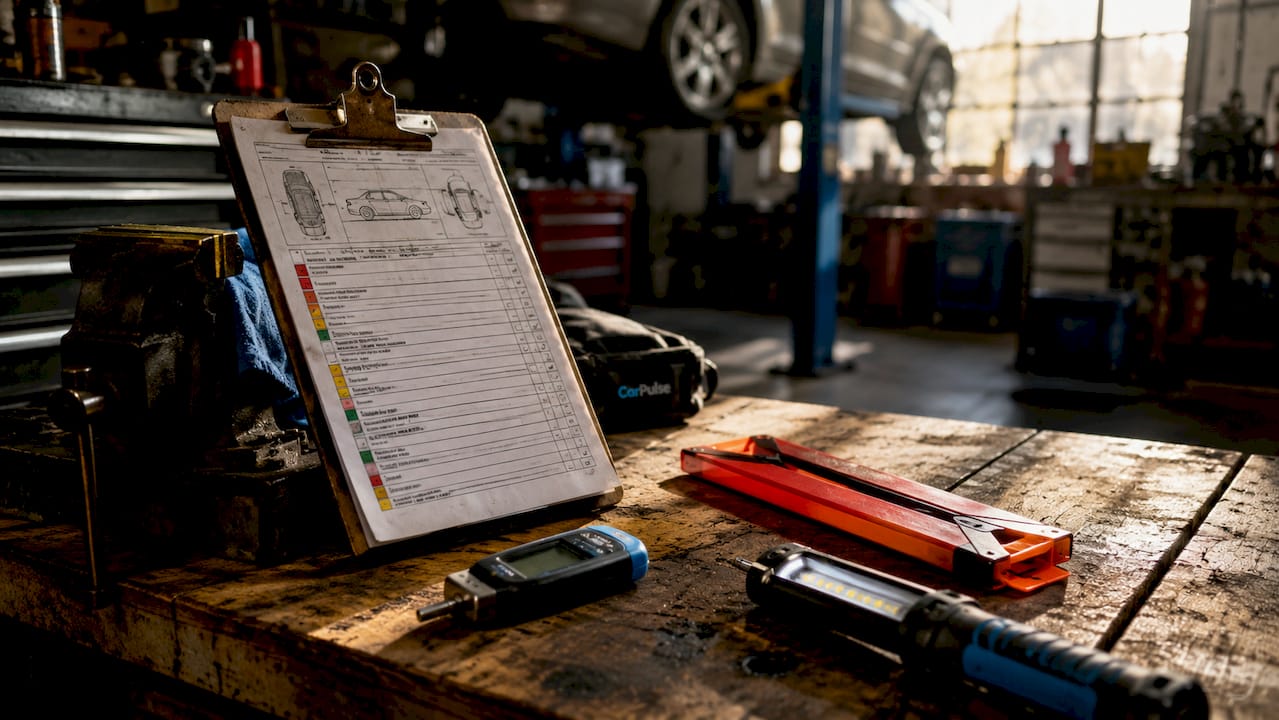
Albania’s technical inspection covers seven core systems. Knowing exactly what inspectors test lets you fix problems before they become failures.
Brakes
Brake efficiency is the most critical safety test. Inspectors measure stopping force on each wheel using a brake dynamometer. Uneven braking, worn pads, or a soft pedal will cause an immediate failure. Check your brake fluid level, listen for grinding sounds, and press the pedal firmly before your appointment. If the pedal sinks slowly, your master cylinder or brake lines need attention.
Lighting system
Burnt-out lamps and misaligned headlights are among the most common reasons cars fail inspection in Albania. Inspectors check headlights, brake lights, reverse lights, turn signals, hazard lights, and license plate lights. Headlight beam alignment is tested with a dedicated machine. Walk around your car at night and confirm every light works. Misaligned headlights blind oncoming drivers and fail the test even if the bulb is functional.
Tires
The minimum legal tire tread depth is 1.6mm across the central three-quarters of the tire width. Inspectors also check for sidewall damage, uneven wear, and correct pressure. A coin test works for a rough check: insert a 1 Lek coin into the tread groove. If you can see the full coin edge, the tread is too shallow. Replace tires before inspection, not after a failure.
Emissions
Petrol and diesel engines face different emission limits. Petrol engines are tested for CO (carbon monoxide) output at idle. Diesel engines are tested for smoke opacity under acceleration. A clogged air filter, failing oxygen sensor, or worn injectors can push emissions above the legal threshold. Replacing the air filter and checking for engine warning lights before your appointment costs little and prevents failure.
Steering, suspension, and undercarriage
Inspectors place the vehicle on a shaker plate to detect loose joints, worn bushings, and damaged shock absorbers. They also inspect the undercarriage visually for rust, leaks, and structural damage. Common electronic part failures, including faulty ABS sensors, can trigger warning lights that cause automatic failures. Address any dashboard warning lights before the inspection date.
Pro Tip: Drive your car over a speed bump slowly before your appointment. Clunking sounds from the front or rear indicate worn suspension components that will fail the shaker plate test.
How to prepare your vehicle before the official inspection
Preparation separates a first-pass result from a costly re-inspection. Follow these steps in order.
- Check all fluid levels. Engine oil, brake fluid, coolant, power steering fluid, and windshield washer fluid must all be at correct levels. Low brake fluid often signals worn pads.
- Test every light. Use a helper or reflective surface to confirm brake lights and reverse lights work. Replace any burnt bulb immediately.
- Inspect tires. Check tread depth, pressure, and sidewall condition on all four tires, including the spare if required.
- Scan for fault codes. Use an OBD-II reader to check for active error codes. Clear codes only after fixing the underlying problem, not before.
- Verify safety equipment. Albanian law requires four specific items in the vehicle at all times.
- Book your appointment. Confirm your e-Albania slot and gather all documents at least 48 hours before the appointment.
- Bring a mechanic. A trusted mechanic can spot issues you might miss and advise on the spot.
The legal safety equipment requirement is non-negotiable. Albanian law mandates that every vehicle carry a warning triangle, a reflective vest, a first aid kit, and a fire extinguisher. Fines for missing items range from 3,000 to 5,000 Lek (€25–€50) per missing item. Inspectors check for these items during the technical inspection.
| Safety item | Requirement |
|---|---|
| Warning triangle | One per vehicle, reflective and undamaged |
| Reflective vest | At least one, accessible from inside the car |
| First aid kit | Sealed and within expiry date |
| Fire extinguisher | Charged and within service date |
Re-inspection fees apply if your vehicle fails on specific points. Retesting on the same failed items typically costs half the original inspection fee. Fixing the problem correctly the first time saves both money and time.
Pro Tip: Check your car maintenance schedule at least one month before your Kolaudimi renewal date. Albanian roads are hard on suspension and tires, so wear happens faster than the manufacturer’s standard intervals suggest.
What are the most common pitfalls when buying a used car in Albania?
The Albanian used car market carries specific risks that a standard inspection certificate does not protect you from. Knowing these pitfalls before you buy saves you from expensive mistakes.
- Odometer rollback: Odometer readings cannot be trusted in the Albanian market. Sellers frequently roll back digital odometers to inflate perceived value. Check the engine, gearbox, and suspension condition instead. Worn pedal rubber, faded seat bolsters, and scuffed door handles tell the real story of a car’s age.
- Misleading inspection certificates: A valid Kolaudimi certificate does not mean the car is in good condition. Some sellers obtain certificates from lenient inspection centers or present outdated certificates as current. Always verify the certificate date and the issuing center.
- Undisclosed accident history: Albania has no centralized accident history database equivalent to services available in Western Europe. Physical inspection is your only protection. Look for mismatched paint, uneven panel gaps, and overspray on rubber seals.
- Document transfer liability: Buying a vehicle with unresolved fines, unpaid taxes, or disputed ownership transfers those liabilities to you. Verify the vehicle’s legal status at DPSHTRR before signing anything.
- No pre-purchase inspection: Skipping an independent mechanic’s evaluation is the single most expensive mistake buyers make. Official certificates alone are insufficient. A trusted mechanic will assess the engine, electronics, and suspension in ways a standard inspection does not.
Record the vehicle’s condition before any transaction. Timestamped video documentation of the car’s exterior, interior, and engine bay protects you against false damage claims after the sale. This practice is standard in professional vehicle transactions and takes less than five minutes. For a deeper look at how to assess a used car before committing, the used car buying guide from Carpulse covers the full process step by step.
Pro Tip: Ask the seller to drive the car cold, before it has been warmed up. Cold starts reveal oil leaks, rough idling, and smoke from the exhaust that disappear once the engine reaches operating temperature.
Key Takeaways
A complete vehicle inspection checklist in Albania covers legal documents, mandatory safety equipment, and seven mechanical systems, all of which must pass before the Kolaudimi certificate is issued or renewed.
| Point | Details |
|---|---|
| Kolaudimi validity | Personal vehicles need renewal every 2 years; commercial vehicles annually. |
| Mandatory safety gear | Carry a triangle, vest, first aid kit, and extinguisher or face fines of 3,000–5,000 Lek per missing item. |
| Book via e-Albania | All standard inspection appointments require online booking through the e-Albania platform. |
| Pre-inspection self-checks | Test lights, brakes, tires, and fluids before your appointment to avoid costly re-inspection fees. |
| Independent mechanic check | Never rely on a seller’s certificate alone; hire a trusted mechanic before any used car purchase. |
What I’ve learned from watching Albanian car buyers get it wrong
Most buyers I’ve seen in the Albanian market treat the Kolaudimi certificate as a finish line. They get the stamp, hand over the money, and drive away. Then three months later they’re dealing with a transmission that was clearly failing before the sale.
The certificate tells you the car passed a standardized test on a specific day. It does not tell you the seller didn’t fix one problem the week before inspection and ignore five others. Albania’s inspection system is improving, but it was never designed to replace a proper pre-purchase evaluation.
The buyers who come out ahead are the ones who treat the official inspection as a minimum baseline, not a guarantee. They bring a mechanic they trust, not one the seller recommends. They check the test drive process carefully and pay attention to how the car behaves under real conditions. They document everything before money changes hands.
The checklist in this guide is not bureaucratic box-ticking. Every item on it exists because someone, somewhere, got burned by skipping it. Use the checklist every time, without shortcuts.
— Henri
Carpulse makes finding a verified vehicle in Albania easier
Albania’s car market moves fast, and verified listings are hard to find without the right platform.
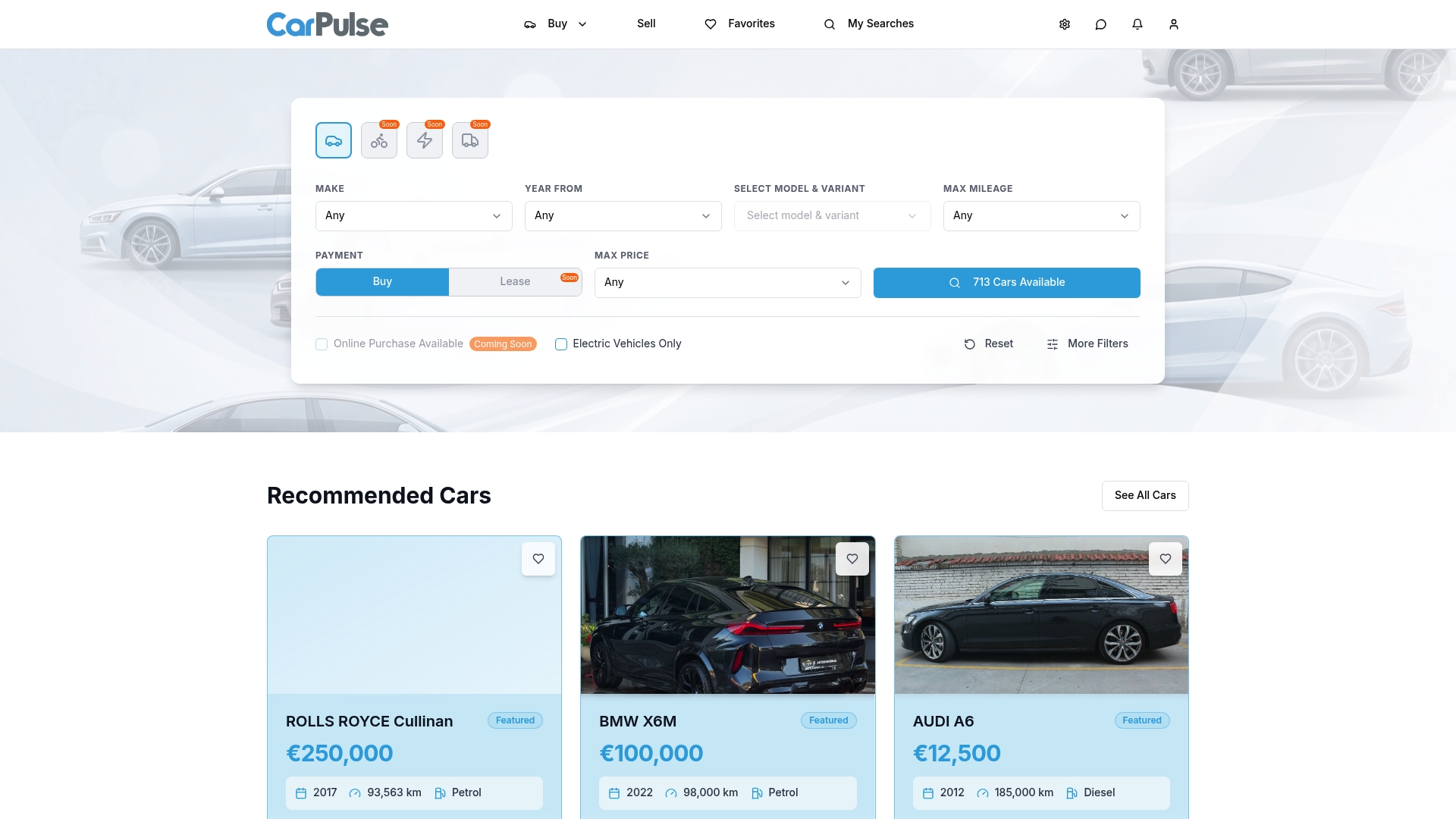
Carpulse is Albania’s largest online car marketplace, connecting buyers with private sellers and verified dealerships on a single platform. You can filter listings by make, model, year, mileage, price, and fuel type to find exactly what fits your needs. VIN-based listing means vehicle details are pulled directly from the vehicle identification number, so the information you see is accurate from the start. Browse trusted car listings on Carpulse and use the inspection checklist in this guide to evaluate every vehicle you consider. The Carpulse mobile app for iOS and Android keeps the full marketplace in your pocket wherever you search.
FAQ
What is the Kolaudimi and how often is it required?
The Kolaudimi is Albania’s mandatory periodic technical inspection for vehicles. Personal vehicles must pass every 2 years, while commercial vehicles and taxis require annual inspection.
What safety equipment must I carry in my car in Albania?
Albanian law requires a warning triangle, reflective vest, first aid kit, and fire extinguisher in every vehicle. Fines for missing items range from 3,000 to 5,000 Lek per item.
How do I book a vehicle inspection appointment in Albania?
All standard inspection appointments must be booked through the e-Albania platform. The same account used to book must handle any cancellation.
Can I trust a used car’s odometer reading in Albania?
Odometer readings are frequently manipulated in the Albanian market. Assess mechanical condition, maintenance history, and interior wear instead of relying on the displayed mileage.
Do foreign vehicle documents need to be translated for inspection in Albania?
Yes. Any document originally issued in a foreign language must be translated into Albanian by a certified translator and notarized before it is accepted for inspection or registration.
Recommended
- Provë me Makinë të Përdorur: Udhëzues i Plotë për Shqipërinë | CarPulse Albania
- Si të provoni një makinë të përdorur: udhëzues i plotë… | CarPulse Albania
- Udhëzues: Blerja e sigurt e një makine të përdorur në… | CarPulse Albania
- Makina ne Shitje Shqipëri - Udhëzuesi i Plotë për Blerje | CarPulse Albania