Guides
Vehicle History Explained: What Every Used Car Buyer Must Kn

Vehicle History Explained: What Every Used Car Buyer Must Know

TL;DR:
- A vehicle history report offers valuable insights but can be misleading if relied upon solely.
- Buyers should interpret report data carefully, combining it with inspections and honest seller conversations for confident buying decisions.
A clean vehicle history report is reassuring. It can also be misleading. Many buyers treat a spotless report as a green light, only to discover expensive mechanical problems a few months after purchase. Vehicle history explained correctly is not just about reading a document. It is about knowing what the data actually tells you, what it cannot tell you, and how to use it alongside other research to make a decision you will not regret. This guide walks you through every layer of understanding vehicle history reports so you buy with confidence, not wishful thinking.
Table of Contents
- Key takeaways
- Vehicle history explained: what the report actually contains
- How to read and interpret the key sections
- Free vs. paid vehicle history reports
- Using reports alongside inspections and seller conversations
- Common misconceptions buyers fall for
- My honest take on vehicle history reports
- How Carpulse helps you buy with confidence
- FAQ
Key takeaways
| Point | Details |
|---|---|
| Reports are starting points | A vehicle history report reveals documented events, not every issue a car may have. |
| Title brands carry serious risk | Salvage and washed titles signal major past damage even if the current title looks clean. |
| Free checks have real limits | Government tools cover recalls and theft, but paid reports add ownership and service detail. |
| Reports and inspections work together | Use the report to direct your mechanic’s focus during a physical inspection. |
| Ownership patterns matter most | Multiple owners in a short span is often a stronger warning sign than a single minor accident. |
Vehicle history explained: what the report actually contains
A vehicle history report is a compiled document that aggregates data from multiple official and private sources to build a picture of a car’s past. Think of it as a paper trail. Every time a car interacts with a government agency, an insurance company, or a repair facility, there is a chance that interaction gets recorded.
The core data points you will find in most reports include:
- Ownership history: How many people have owned the car, in which states, and for how long
- Accident and damage records: Reported collisions, airbag deployments, and insurance claims
- Title brands: Official status markers like clean, salvage, rebuilt, flood, or lemon law designations
- Odometer readings: Mileage snapshots at various points, which help detect rollback fraud
- Service and maintenance records: Oil changes, inspections, and repairs logged at participating shops
- Recall information: Open or completed manufacturer safety recalls
Data flows into these reports from police departments, state departments of motor vehicles, insurance companies, auto auctions, and repair facilities that participate in reporting networks. That last part matters: not every shop reports to every database. If a previous owner did all their repairs at an independent mechanic who did not report to any network, that maintenance history simply does not appear.
A newer development worth knowing about: license plate lookup tools now allow history checks without a VIN, pulling from over 600 million vehicle records by entering a plate number and state. This is particularly useful when you want a quick background check before you even know the car’s VIN.
| Data type | Common source | What it tells you |
|---|---|---|
| Accident records | Insurance companies, police | Collision severity, airbag status |
| Title brands | State DMV agencies | Salvage, flood, rebuilt designations |
| Odometer readings | State DMV, auction records | Mileage consistency over time |
| Service history | Participating repair shops | Maintenance patterns and gaps |
| Recall data | NHTSA | Open safety recalls needing repair |
How to read and interpret the key sections
Knowing what is in a report is step one. Knowing what it means is where most buyers fall short. Here is how to decode vehicle history at the section level.
Ownership history tells a story beyond a simple count. Two owners in ten years on a high-mileage commuter car is perfectly normal. Four owners in three years on a three-year-old vehicle is a red flag worth investigating. High-mileage cars can be reliable if maintenance is consistent; multiple owners in a short time often signal unresolved problems.

Accident records require you to look at severity, not just presence. A minor fender bender with a cosmetic repair is very different from a structural collision. Structural repairs cause 30 to 50% depreciation while moderate panel replacements typically drop value by 10 to 20%. Look for notes on which areas of the car were damaged and whether the repair was performed at a certified facility.
Title brands deserve special attention. A clean title means the car has never been declared a total loss by an insurer. A salvage title means it has. A rebuilt title means it was totaled but has since been repaired and reinspected. The one that catches buyers off guard is the washed title. Washed titles are previous total losses disguised by retitling the vehicle in a different state, allowing a salvage designation to disappear from the title. If a report shows a salvage or rebuilt history brand anywhere in its records, take that seriously even if today’s title reads clean.
Service records act as a reliability indicator. Regular oil changes, scheduled maintenance intervals, and documented repairs at reputable shops suggest an owner who cared for the car. Long gaps in service history, especially during high-use periods, are worth questioning.
Pro Tip: Always match the VIN on the report to the physical car before you go further. The VIN appears on the dashboard near the windshield, on the driver’s door jamb, and sometimes on the engine block. Differences in trim level, engine type, or color between the report and the actual car are major warning signs of VIN cloning or data errors.
Free vs. paid vehicle history reports
Not all vehicle history checks cost money, and knowing when to pay matters.
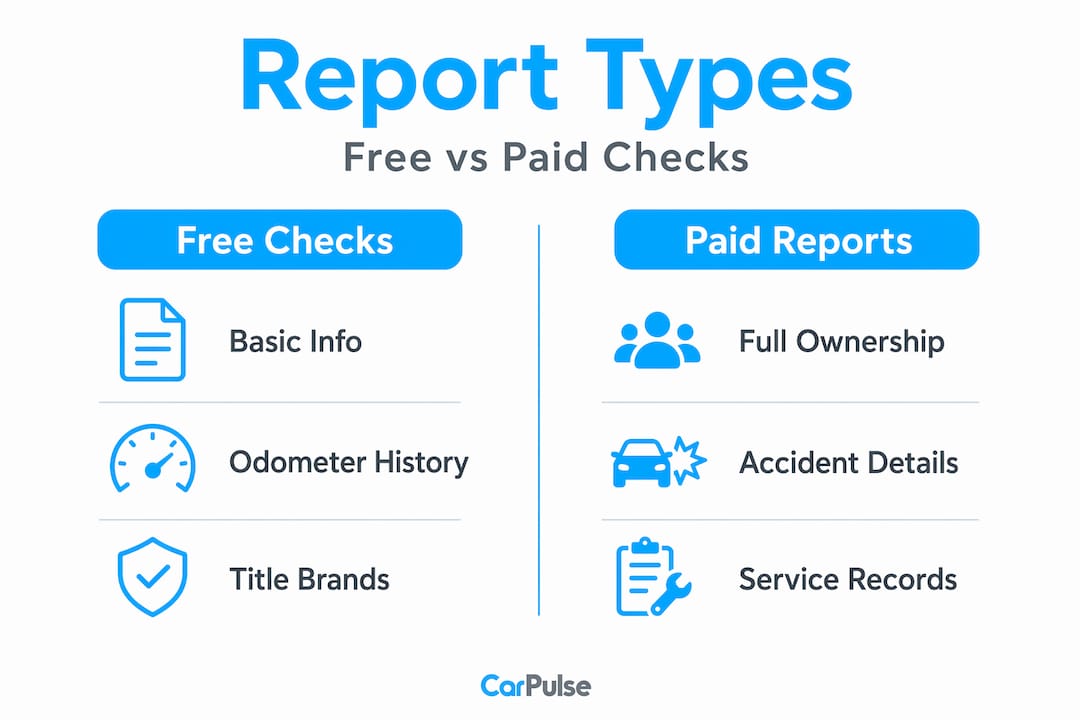
- NHTSA.gov lets you look up open safety recalls tied to any VIN at no cost. If there are unresolved recalls on a car you are considering, you want to know before anything else.
- NICB.org (National Insurance Crime Bureau) provides a free check to see if a vehicle has been reported stolen or totaled through a participating insurer.
- Vehiclehistory.gov connects to the NMVTIS database (National Motor Vehicle Title Information System) and provides title, brand, and junk or salvage records.
- Paid services like Carfax go significantly deeper. Carfax reports cost around $44.99 for a single report and add ownership timelines, detailed service records, accident descriptions, and odometer readings at multiple checkpoints.
- AutoCheck is a competing paid service often bundled with dealer listings and provides similar depth with a slightly different scoring model.
The practical rule: free checks are worth doing first, always. If the free checks raise any concern at all, a paid report is a reasonable investment on a vehicle worth thousands of dollars. Spending $45 to avoid buying a washed-title car is a straightforward calculation. On higher-value vehicles or cars with any question marks in their free check, the paid report is not optional. It is part of your buying decision process.
Using reports alongside inspections and seller conversations
Vehicle history reports cover documented history. They say nothing about what the car’s condition is right now. Condition reports complement history reports by physically assessing the current mechanical and cosmetic state, covering the exterior, interior, engine, suspension, and safety systems. One covers the past; the other covers the present. You need both.
Here is how to integrate them effectively:
- Direct your mechanic with the report. If the history shows a prior front-end collision, tell your mechanic before the inspection. They will look harder at the frame rails, radiator supports, and alignment specs.
- Cross-reference the report’s mileage with the odometer. If the car shows 90,000 miles but a service record from two years ago listed 88,000 miles, that is either very low use or a rollback attempt.
- Ask the seller direct questions about the report. How they respond tells you as much as the answer. A seller who gets defensive about a documented accident or cannot explain a gap in service history is a red flag on its own.
- Run a multi-point inspection at a trusted shop. This catches current wear issues that no history report will ever document.
Pro Tip: Contact the repair shops listed in the service records directly. Shops can often tell you not just what work was done, but what was recommended and declined. A car where the owner consistently skipped recommended repairs is a liability regardless of how clean the report looks.
Common misconceptions buyers fall for
The biggest mistake buyers make with vehicle history reports is treating them as a final verdict. They are not.
A clean report does not mean a car is mechanically sound. It means no reported events ended up in the database. Unreported accidents, cash-repair jobs, and private maintenance all stay invisible. Treat every report as a starting point for investigation, not a seal of approval.
Unreported accidents are more common than most buyers realize. A seller who pays out of pocket for repairs after a minor collision avoids an insurance claim and keeps the report clean. The car might have been repaired perfectly. Or it might have been repaired poorly with mismatched paint and non-OEM parts that will cause problems down the road. Poor-quality repairs degrade vehicle value even when the history report shows nothing. A physical inspection catches what the report misses.
Washed titles and title brand inconsistencies are another area where buyers get burned. Always check if a car has ever been titled in multiple states in a short period. That pattern is a common sign of title washing. And never assume a clean current title means a clean history.
My honest take on vehicle history reports
I have seen buyers wave a clean Carfax like it is a certificate of excellence and skip the physical inspection entirely. That is the wrong way to use this tool. In my experience, the most dangerous cars on the used market are the ones with spotless reports and neglected maintenance. The report shows nothing alarming because nothing was ever reported. The car is still falling apart.
What I have learned over years of watching used car transactions go wrong: ownership patterns and maintenance consistency are the two things worth obsessing over. A car with two prior accidents but regular dealer service and a single long-term owner is often a better buy than a car with a clean record and three owners in four years.
Reports are also genuinely useful for negotiating. If a car shows a documented moderate accident, you have documented grounds to push the price down. Accident damage causes an average resale value drop of 10 to 40% depending on severity. Use that number. My advice is to always combine the report with a professional inspection and a direct, honest conversation with the seller. The three together give you the full picture that none of them can provide alone.
— Henri
How Carpulse helps you buy with confidence
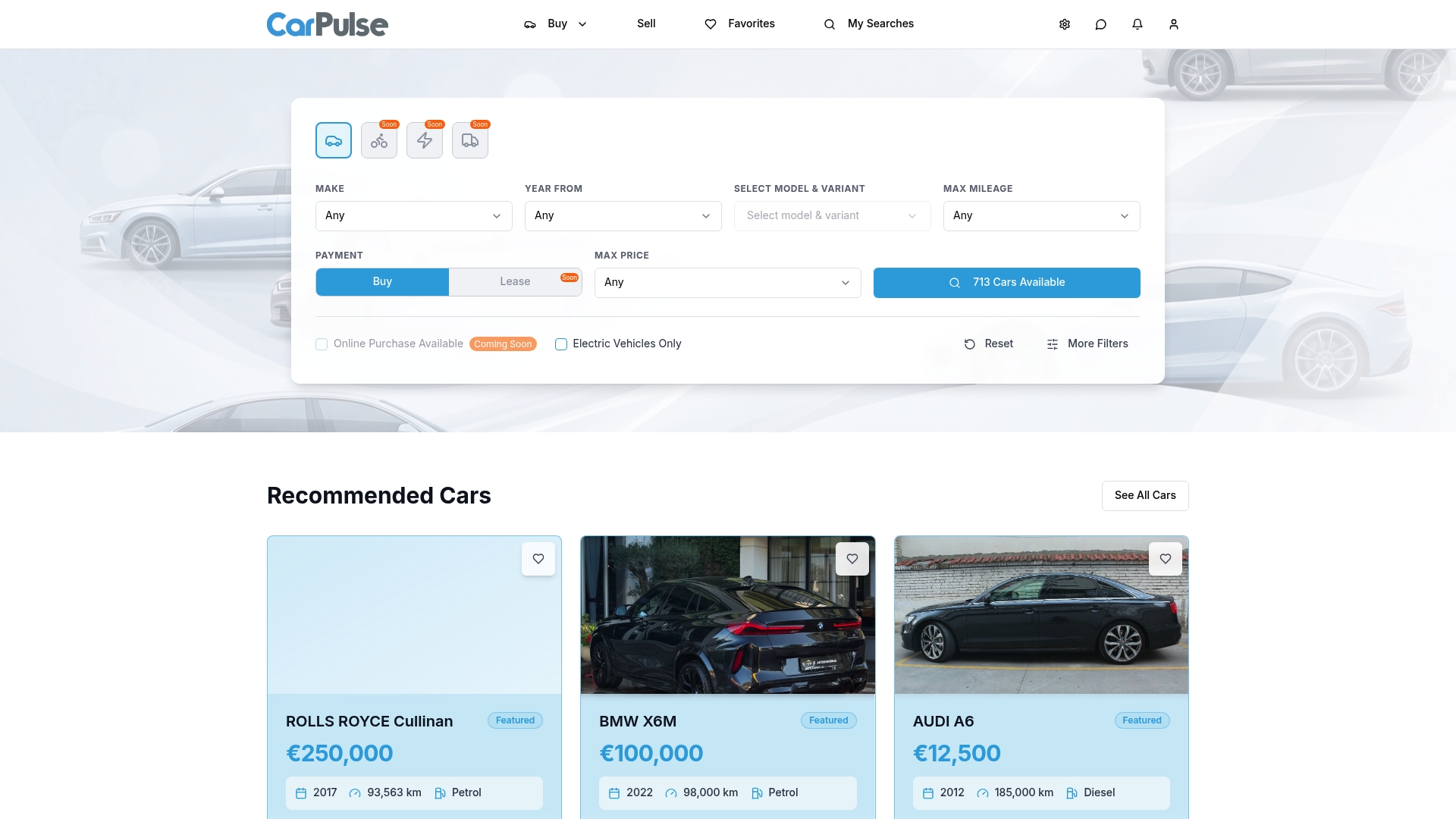
Understanding vehicle history is one piece of buying smart. Finding listings where that transparency already exists is another. Carpulse is Albania’s largest car marketplace, built around verified dealer listings and VIN-based vehicle data. Every listing uses the vehicle’s VIN to auto-populate accurate details, so what you see reflects what the car actually is. Buyers can browse verified used cars filtered by make, model, year, mileage, price, and fuel type, and contact sellers directly through the platform. If you want to apply everything in this guide to a real purchase, start with listings where the history conversation begins from a place of transparency. Explore verified car listings on Carpulse and take your next step with real information behind you.
FAQ
What does a vehicle history report include?
A vehicle history report includes ownership records, accident history, title brands, odometer readings, service records, and recall data, compiled from sources like insurance companies, state DMV agencies, and repair facilities.
Is a clean vehicle history report enough to buy a car?
No. A clean report does not guarantee a mechanically sound car. Unreported accidents and private repairs never appear in any database, so a physical inspection is always necessary alongside the report.
What is a washed title?
A washed title is a salvage or total-loss designation that disappears when a car is retitled in a different state. The current title may appear clean while the vehicle’s actual damage history is severe.
When should I pay for a vehicle history report?
Pay for a full report from a service like Carfax whenever the free government checks raise any concern, or when you are seriously considering a purchase. On a car worth several thousand dollars, a $44.99 report is a reasonable cost for the detail it provides.
How do I check a vehicle history report for free?
Use NHTSA.gov for recall data, NICB.org for theft and total-loss checks, and vehiclehistory.gov for title and brand records. These government tools cover the most critical red flags at no cost.
Recommended
- Golf në Shitje Shqipëri: Udhëzues Blerje, Modele & Çmime | CarPulse Albania
- Pse të Blini Makina të Verifikuara? Besueshmëri, Vlerë… | CarPulse Albania
- Makina në Shitje: Udhëzuesi i Plotë Blerje/Shitje në… | CarPulse Albania
- Provë me Makinë të Përdorur: Udhëzues i Plotë për Shqipërinë | CarPulse Albania