Guides
What is vehicle affordability: a guide for car buyers in Alb

What is vehicle affordability: a guide for car buyers in Albania

TL;DR:
- Most Albanian buyers focus on monthly payments, but true vehicle affordability depends on total ownership costs over time. The weeks-of-income metric provides a realistic measure by relating vehicle costs to actual earnings, especially important in Albania’s lower-wage economy. Considering depreciation, insurance, fuel, maintenance, and financing offers a comprehensive view for making smarter car buying decisions.
Most Albanian car buyers walk into a dealership thinking one thing: can I handle this monthly payment? That question feels logical, but it only tells a fraction of the story. Understanding what is vehicle affordability means looking beyond the loan installment and accounting for everything a vehicle actually costs you over time. This guide breaks down how affordability is properly measured, what total ownership costs look like, how financing shapes your real burden, and how to apply these principles when shopping for a new or used car in Albania today.
Table of Contents
- What is vehicle affordability and how is it measured?
- The total cost of owning a vehicle: beyond the purchase price
- How financing affects vehicle affordability
- Comparing affordability: new vs. used vehicles and different types
- Applying vehicle affordability concepts to your car buying decision in Albania
- Why focusing only on monthly payments can mislead your vehicle affordability assessment
- Find your affordable vehicle with CarPulse in Albania
- Frequently asked questions
Key Takeaways
| Point | Details |
|---|---|
| Affordability means weeks of income | Vehicle affordability measures how many weeks of an average earner’s income are needed to buy a median-priced car, not just monthly payments. |
| Total cost to own matters | Consider depreciation, insurance, fuel, maintenance, taxes, and financing to understand true vehicle affordability over 5 years. |
| Financing impacts overall cost | Interest rates, loan terms, and incentives combine to determine total financing cost and vehicle affordability. |
| Compare new and used models carefully | Depreciation and operating costs differ widely between vehicle types, affecting long-term affordability. |
| Plan and budget locally | Use local market data, realistic budgets, and trusted tools to evaluate vehicle affordability tailored to Albanian buyers. |
What is vehicle affordability and how is it measured?
Vehicle affordability is not what most people think it is. The sticker price misleads. The monthly payment misleads. Even a “good deal” can leave you financially stretched if you are not measuring affordability the right way.
The most meaningful way to measure affordability is the weeks-of-income metric. According to Cox Automotive, vehicle affordability measures how many weeks of income an average earner needs to purchase the median-priced financed vehicle. This frames affordability in terms of your actual earning power, not raw numbers that can be manipulated by extending loan terms or adjusting down payments.
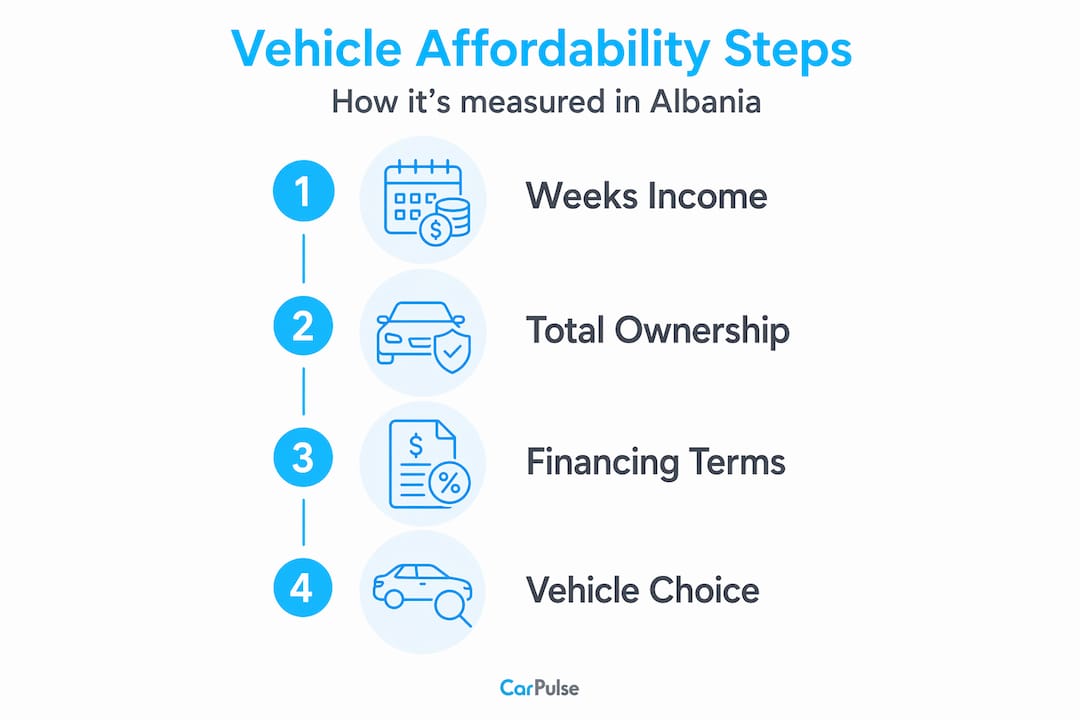
In early 2026 in the United States, buyers needed approximately 35 weeks of income to afford a median-priced new vehicle. That is a real benchmark. For Albanian buyers earning lower average wages, this number would be significantly higher for comparable vehicles, which means the weeks-of-income framework is even more critical to apply locally.
Why does this metric matter? Consider two scenarios:
- Buyer A earns 80,000 ALL per month and targets a used sedan priced at 800,000 ALL.
- Buyer B earns 50,000 ALL per month and targets the same car.
For Buyer A, that is 10 weeks of income. For Buyer B, it is 16 weeks. Same car, very different affordability picture. The sticker price told you nothing useful.
Key things the weeks-of-income metric clarifies:
- It accounts for your actual income, not just the advertised price.
- It removes the illusion created by stretched loan terms.
- It gives you a consistent way to compare affordable car options across different vehicle types and price ranges.
- It reflects how car affordability factors interact with your personal financial situation.
Now that we understand the core definition and measurement, let us explore what total ownership cost means beyond the initial purchase.
The total cost of owning a vehicle: beyond the purchase price
Here is what shocks most first-time buyers: the purchase price is often not the biggest cost of owning a car. Over five years, total vehicle costs include depreciation, fuel, insurance, financing, state fees, and maintenance combined into what Kelley Blue Book calls “Cost to Own.” Most buyers budget for the loan. They forget about everything else.

Depreciation alone accounts for roughly 55% of vehicle value lost over five years. That means a car purchased for 1,500,000 ALL today could be worth around 675,000 ALL in five years. You paid for that gap whether you noticed it or not.
The other costs stack up quickly:
- Insurance varies significantly by vehicle age, model, and coverage level.
- Fuel depends on engine size, fuel type, and how many kilometers you drive annually.
- Maintenance includes scheduled servicing, tires, and unexpected repairs. The cost to own framework reminds us that electronic repairs in modern vehicles can be surprisingly expensive.
- Registration and road taxes are recurring and often overlooked.
- Financing costs (interest paid over the loan term) can add 10% to 20% on top of the vehicle price.
Two vehicles with identical purchase prices can differ by thousands in total five-year cost. A compact sedan with lower fuel consumption and predictable maintenance will almost always cost less to own than a larger vehicle at the same sticker price. This is exactly what smart vehicle cost analysis looks like in practice.
Pro Tip: Before committing to any vehicle, estimate your five-year total cost, not just the monthly payment. A quick calculation of expected depreciation, insurance, fuel, and maintenance will reveal the true financial picture.
Understanding these multi-year costs clarifies why looking only at price or payment is misleading. Next, we examine how financing shapes affordability.
How financing affects vehicle affordability
Financing is where vehicle affordability can fall apart fast, or where a smart buyer can gain a real advantage. The loan terms you accept will affect your monthly budget, your total spending, and even your psychological relationship with the vehicle you drive.
Here is how the key financing variables interact:
- Interest rate. A lower rate means less total money paid over the loan’s life. Even a 2% difference on a 1,000,000 ALL loan over four years translates into a meaningful sum saved or lost.
- Loan term length. A 60-month loan versus a 36-month loan might lower your monthly payment, but you pay interest for two extra years. The vehicle also depreciates further before you fully own it.
- Down payment size. Larger down payments reduce the financed amount, cut interest charges, and build equity from day one.
- Dealer incentives. These can lower the effective cost of borrowing but often come bundled with conditions that are not always obvious.
- Your credit profile. Lenders in Albania, as elsewhere, assign interest rates based on perceived risk. A stronger credit history typically unlocks better vehicle financing options and lower rates.
Cox Automotive notes that affordability is a combined outcome of vehicle price, incentives, borrower income, and credit costs, not any single factor alone. This is critical. A low monthly payment that results from a long loan term does not make a vehicle more affordable. It makes it more expensive in total and harder to sell or trade without owing more than the car is worth.
Pro Tip: When comparing financing offers, always calculate the total amount repaid, not just the monthly figure. Multiply the monthly payment by the number of months, then add the down payment. That is what the vehicle actually costs you.
We now see how financing intricacies interact with total costs. Let us compare affordability over time and across vehicle types.
Comparing affordability: new vs. used vehicles and different types
Choosing between a new and a used vehicle is one of the most consequential affordability decisions an Albanian buyer can make. The answer is not always “used is cheaper.” It depends on vehicle type, fuel costs, expected reliability, and how long you plan to keep it.
| Vehicle type | Depreciation rate | Fuel cost (annual) | Maintenance cost | Best for |
|---|---|---|---|---|
| New small sedan | High (first 3 years) | Low to moderate | Low initially | Buyers wanting warranty coverage |
| Used small sedan | Absorbed by previous owner | Low to moderate | Moderate | Budget-focused buyers with mechanical knowledge |
| New pickup/SUV | High | High | Moderate | Buyers with specific hauling needs |
| Used pickup/SUV | Moderate after year 3 | High | High | Those who need capacity at lower entry cost |
| New electric vehicle | Moderate | Very low | Low | High-mileage drivers with charging access |
| Used electric vehicle | Significant early drop | Very low | Low to moderate | Tech-forward buyers in urban areas |
According to AAA, depreciation is the most significant ownership cost, and pickup trucks cost substantially more annually to own than small sedans due to higher fuel and maintenance expenses. That is a useful anchor for Albanian buyers weighing a rugged vehicle against a practical city car.
Some additional points worth knowing:
- Electric vehicles save on fuel and mechanical servicing (no oil changes, fewer brake replacements), but upfront prices remain higher in the Albanian market.
- Older used cars may appear affordable on the sticker but carry higher repair risks, especially without service history.
- Resale value differs sharply by model. A vehicle with strong local demand holds its value better, which directly improves total affordability.
- Understanding used car pricing factors in Albania helps you predict depreciation and buy vehicles with better resale trajectories.
The right vehicle for your budget is the one that minimizes total cost for your specific driving pattern, not the one with the lowest price tag on the listing. Explore proven vehicle repair cost strategies to further reduce long-term expenses after purchase.
Having compared affordability factors, we now turn to applying these insights practically for Albanian car buyers.
Applying vehicle affordability concepts to your car buying decision in Albania
Knowing the theory is useful. Applying it in the Albanian market is where it becomes valuable. Albania’s vehicle market has its own dynamics: a strong preference for European makes, a significant share of used imports, limited new car financing products compared to Western Europe, and income levels that make the weeks-of-income metric particularly important.
Here is a practical process for assessing what is affordable for you:
- Calculate your realistic budget. Use the weeks-of-income method. Determine how many weeks of your take-home pay the vehicle represents. Be honest about what you can absorb without stress.
- Estimate total ownership cost. Factor in insurance, fuel for your typical weekly mileage, servicing intervals, and any expected repairs based on the vehicle’s age and condition.
- Research local pricing and depreciation. Look at used car price trends in Albania to understand which models hold value and which drop quickly.
- Compare financing options carefully. Check offers from multiple lenders. Review the car financing options available in Albania, including bank loans, dealer financing, and leasing.
- Match the vehicle to your actual needs. A buyer commuting 20 km daily in Tirana needs a different vehicle than a buyer covering rural roads in the north. Needs determine true affordability.
- Negotiate price and financing separately. This keeps the transaction transparent and prevents the monthly payment from being used to mask an inflated purchase price.
Cox Automotive data confirms that income growth and incentives can offset rising prices, improving affordability even in challenging markets. This is encouraging for Albanian buyers: understanding these levers gives you real negotiating power.
Now that you know how to apply affordability principles, let us explore a perspective on the most common mistake buyers make.
Why focusing only on monthly payments can mislead your vehicle affordability assessment
Here is the uncomfortable truth that most dealership conversations are designed to avoid. The monthly payment is the single most manipulable number in any car deal. Stretch the loan to 72 months. Adjust the interest rate slightly. Include a trade-in at below-market value. Each of these moves can make a wildly unaffordable vehicle appear perfectly reasonable on paper.
Cox Automotive data makes this explicit: dealers can make deals feel affordable by adjusting monthly payments, but if prices rise or incentives shrink, true affordability worsens, often surprising buyers months later.
The buyers who get hurt are not naive. They are simply using the wrong measurement tool. Focusing on monthly payment is like judging a restaurant by how long the menu is. It tells you almost nothing about what you are actually getting.
What actually matters is the total money leaving your account over the ownership period. That number includes interest paid, depreciation absorbed, repairs absorbed, fuel consumed, and insurance paid. A buyer who understands used car price dynamics and factors in these real costs will almost always make a smarter decision than one who is fixated on keeping the monthly figure under a certain threshold.
The practical fix is simple. Before any negotiation, walk in knowing your maximum total vehicle budget across five years, not just your monthly ceiling. Then negotiate the vehicle price first, financing terms second, and trade-in value third. Keeping these three conversations separate prevents the dealer from balancing numbers across all three to create an illusion of affordability.
Find your affordable vehicle with CarPulse in Albania
If you are ready to put these affordability principles to work, CarPulse is built specifically for Albanian buyers who want transparency, range, and real pricing data in one place.
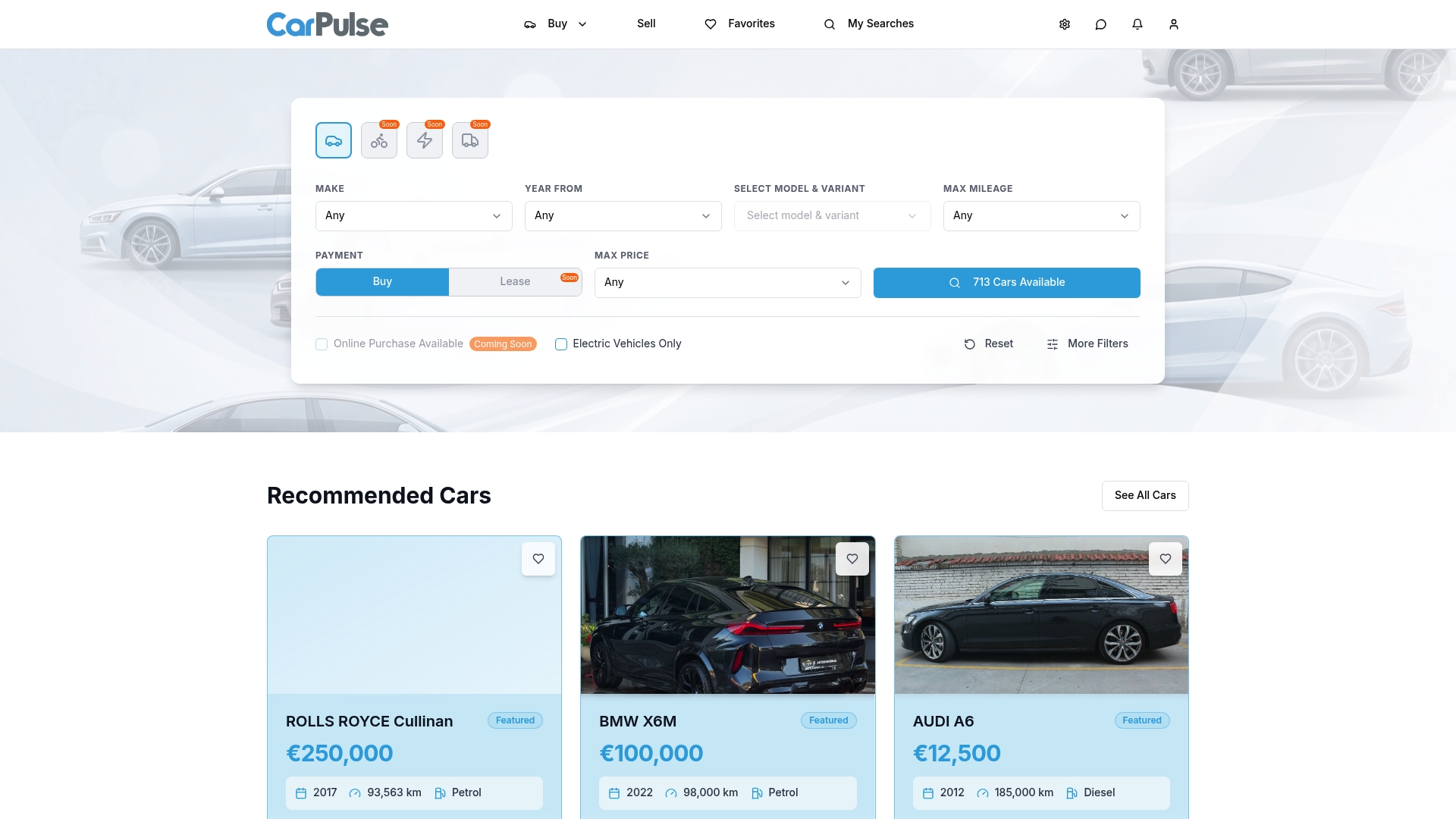
The CarPulse vehicle marketplace lets you browse new and used listings with filters by make, model, year, mileage, fuel type, and price, giving you immediate visibility into what budget-friendly vehicles exist at your target price point. Listings from verified dealerships include accurate vehicle details populated via VIN, so you can assess true condition before contacting a seller. Whether you are comparing a used sedan to an entry-level crossover, or evaluating financing terms across models, CarPulse gives you the information to make a clear-eyed affordability assessment. And if you are also selling, you can list your car on CarPulse quickly using the same VIN-based system that buyers trust.
Frequently asked questions
How is vehicle affordability measured?
Vehicle affordability is measured by how many weeks of an average earner’s income are needed to purchase the median-priced financed vehicle, making it a more accurate measure than sticker price or monthly payment alone.
What costs should I consider besides the car price when assessing affordability?
Beyond the purchase price, you should factor in depreciation, insurance, fuel, maintenance, and financing charges, which Kelley Blue Book includes in its five-year cost to own framework for a complete picture.
How do financing terms affect vehicle affordability?
Affordability is shaped by the combination of vehicle price, incentives, borrower income, and interest rates, so evaluating the total repayment amount rather than the monthly figure gives you a more accurate assessment.
Are electric vehicles more affordable to own than gasoline cars?
Electric vehicles typically offer lower fuel and maintenance costs, but annual ownership costs depend on your driving habits, local electricity prices, and how well the vehicle holds its resale value in the Albanian market.
How can I assess vehicle affordability in the Albanian market?
Start by calculating your weeks-of-income budget, then research local pricing, compare financing offers, and use tools like CarPulse to find listings with real data. As Cox Automotive notes, income growth and incentives can meaningfully improve your affordability position even when vehicle prices are rising.
Recommended
- Financimi i Automjeteve në Shqipëri: Kredi & Leasing |… | CarPulse Albania
- Financimi i automjeteve në Shqipëri: Kredi & Leasing |… | CarPulse Albania
- Blej Makina në Shqipëri: Udhëzuesi i Plotë | CarPulse.al | CarPulse Albania
- Makina ne Shitje Shqipëri - Udhëzuesi i Plotë për Blerje | CarPulse Albania