
Guides
Types of Electric Cars: A 2026 Buyer's Guide
Types of Electric Cars: A 2026 Buyer’s Guide
TL;DR:
- Electric car types vary from fully battery-powered to hydrogen fuel cell models, each with different driving ranges and infrastructure needs. The best choice depends on charging access and daily driving distance, with BEVs ideal for home chargers and PHEVs suitable for mixed distances. Matching your lifestyle to an EV’s strengths ensures convenience and cost savings over time.
Types of electric cars are defined by their powertrain and charging method, ranging from fully battery-powered vehicles to hydrogen fuel cell models. The five main electric vehicle categories are Battery Electric Vehicles (BEVs), Plug-in Hybrid Electric Vehicles (PHEVs), Hybrid Electric Vehicles (HEVs), Extended Range Electric Vehicles (eREVs), and Fuel Cell Electric Vehicles (FCEVs). Each type delivers a different driving experience, range capability, and infrastructure requirement. Understanding these differences is the single most important step before buying an EV, because the wrong choice for your lifestyle costs you money and convenience every day.
1. What are the types of electric cars?
The five types of EVs cover a wide spectrum of technology. At one end, BEVs run entirely on electricity with no combustion engine at all. At the other end, FCEVs generate electricity from hydrogen gas and emit only water vapor. Between those extremes sit HEVs, PHEVs, and eREVs, each blending electric and gasoline power in different proportions. EV acronyms group very different user experiences: silent full electric, hybrid-aided fuel efficiency, and transitional plug-in types that help drivers move gradually toward full electrification.

The right choice depends less on which type sounds most advanced and more on where you live, how far you drive daily, and whether you have access to a charger at home or work. Charging access, not specs, should guide your EV type decision. That single insight separates buyers who are happy with their EV from those who regret it within six months.
2. Battery Electric Vehicles (BEVs): fully electric, zero emissions
BEVs run exclusively on electric motors powered by large onboard battery packs. They produce zero tailpipe emissions and have no combustion engine whatsoever. BEVs range from 250 to 600 km on a single charge, depending on battery size and driving conditions. That range covers the daily needs of most drivers comfortably, since the average person drives well under 100 km per day.
Charging happens via AC home chargers or DC fast chargers at public stations. Home charging overnight is the most practical setup for daily use. Public DC fast chargers can replenish most BEV batteries to 80% in 20–45 minutes, making longer trips feasible where charging networks exist.
Key BEV features:
- Zero tailpipe emissions
- Quiet, instant torque from a standstill
- Lower fuel and maintenance costs than combustion vehicles
- Requires reliable home or workplace charging
- Higher upfront purchase price than comparable hybrids
Pro Tip: Install a Level 2 home charger (240V) before your BEV arrives. It charges roughly five times faster than a standard wall outlet and makes overnight top-ups effortless.
BEVs are the best choice for drivers who can charge at home or work every day and want to eliminate fuel costs entirely.
3. Plug-in Hybrid Electric Vehicles (PHEVs): flexible power for mixed driving
PHEVs combine an electric motor with a gasoline engine that acts as a backup power source. The electric motor handles most short daily trips, while the gasoline engine takes over for longer distances. PHEVs deliver 40–100 km of electric-only range before the combustion engine engages. For a driver commuting 50 km per day, that means running almost entirely on electricity while keeping the option to fill up at any gas station for a road trip.
PHEVs require external charging to use their electric range, but they never strand you if a charger is unavailable. That flexibility makes them the most practical entry point for drivers who are curious about electric driving but not yet ready to commit fully.
Key PHEV features:
- Electric-only driving for short daily trips
- Gasoline engine eliminates range anxiety entirely
- Requires external charging for maximum electric benefit
- More complex drivetrain than a pure BEV
- Lower electric range than a BEV or eREV
Pro Tip: Charge your PHEV every night and plan most trips within its electric range. Drivers who do this consistently report fuel savings of 60–70% compared to driving on gasoline alone.
PHEVs suit flexible commuters who need gas backup for longer trips but want electric efficiency for daily driving.
4. Hybrid Electric Vehicles (HEVs): fuel savings without a plug
HEVs pair a gasoline engine with a smaller battery and electric motor that assists during acceleration and low-speed driving. The battery charges itself through regenerative braking and the engine. No external plug is needed, ever. HEVs provide only 2–5 km of electric-assisted range, which means they cannot drive on electricity alone for any meaningful distance. The electric system exists purely to reduce fuel consumption.
One common misconception worth addressing: Mild Hybrids (MHEVs) are often marketed alongside full hybrids, but they are a different technology. MHEVs only assist the engine and cannot drive on electric power at all. A full HEV can briefly run on electricity at low speeds; an MHEV cannot. Buyers should confirm which system a vehicle uses before purchasing.
Key HEV features:
- No external charging required
- Improved fuel economy, especially in city stop-and-go traffic
- Familiar refueling at any gas station
- No meaningful all-electric driving mode
- Lower upfront cost than PHEVs or BEVs
Pro Tip: HEVs deliver their biggest fuel savings in city driving, where regenerative braking captures the most energy. Highway driving at constant speed reduces the efficiency advantage significantly.
HEVs are the right choice for drivers in areas with limited charging infrastructure who still want better fuel economy than a standard combustion vehicle.
5. Extended Range Electric Vehicles (eREVs): electric driving with a safety net
eREVs drive exclusively on electric motors, just like BEVs, but carry a small gasoline generator onboard. That generator never drives the wheels directly. Its only job is to produce electricity when the battery runs low. eREVs offer 150–300 km of electric-only range before the generator activates, which is significantly more than a PHEV’s electric range.
The key distinction from PHEVs is propulsion. In an eREV, the combustion engine generates electricity only and never connects mechanically to the wheels. In a PHEV, the gasoline engine can drive the wheels directly at higher speeds. That difference gives eREV drivers a consistently electric driving feel regardless of battery state.
eREV vs. PHEV at a glance:
| Feature | eREV | PHEV |
|---|---|---|
| Propulsion source | Electric motor only | Electric motor + gasoline engine |
| Engine role | Generator only | Generator and direct drive |
| Electric range | 150–300 km | 40–100 km |
| Driving feel | Always electric | Shifts between modes |
Key eREV advantages and disadvantages:
- Consistent electric driving experience throughout the trip
- Extended range removes anxiety about charging stops
- More complex than a pure BEV
- Generator adds weight and maintenance requirements
eREVs suit drivers who want the feel of a BEV but need extra range security for occasional long trips.
6. Fuel Cell Electric Vehicles (FCEVs): hydrogen-powered zero emissions
FCEVs generate electricity onboard by combining hydrogen with oxygen in a fuel cell. The only byproduct is water vapor. FCEVs reach 500–700 km on a single fill, and hydrogen refueling takes roughly 3–5 minutes, similar to filling a gasoline tank. That combination of long range and fast refueling is the strongest argument for FCEVs over BEVs for high-mileage drivers.
The major barrier is infrastructure. Hydrogen fueling stations remain rare outside of Japan, South Korea, California, and parts of Germany. Without a nearby station, an FCEV is impractical regardless of its impressive range.
FCEV pros and cons:
- Zero tailpipe emissions (water vapor only)
- Long range and fast refueling
- Quiet, smooth electric driving experience
- Very limited hydrogen fueling infrastructure globally
- Higher vehicle cost than BEVs or PHEVs
- Hydrogen production currently relies partly on fossil fuels
FCEVs are a practical option today only in regions with established hydrogen networks. For most buyers, they remain a technology to watch rather than buy.
7. How to compare electric car types: range, charging, and best use cases
Choosing between electric vehicle categories requires matching the vehicle’s strengths to your actual daily life, not to an idealized version of it. Maintenance requirements vary significantly between pure electric BEVs and hybrid designs. BEVs have fewer moving parts and lower long-term service costs. Hybrids carry both electric and combustion components, which means more systems to maintain. Understanding those differences matters as much as comparing range numbers. For buyers interested in electric vs. hybrid costs, the long-term picture often favors BEVs in markets with reliable charging.
Comparison of electric car types:
| Feature | BEV | PHEV | HEV | eREV | FCEV |
|---|---|---|---|---|---|
| Range (electric) | 250–600 km | 40–100 km | 2–5 km | 150–300 km | 500–700 km |
| Charging method | External plug | External plug | Self-charging | External plug + generator | Hydrogen station |
| Fuel backup | None | Gasoline | Gasoline | Gasoline generator | None |
| Tailpipe emissions | Zero | Low | Low | Low | Zero |
| Maintenance complexity | Low | Medium | Medium | Medium | Medium |
| Best for | Daily electric drivers | Flexible commuters | City drivers, no charger | Long-range electric feel | Hydrogen-network regions |
The practical advice is simple. If you have a home charger and drive under 400 km daily, a BEV covers your needs completely. If you drive mixed distances and cannot always charge, a PHEV gives you the most flexibility. If charging is not available at all, an HEV still cuts your fuel bill without changing your habits. For eco-friendly car options across all these categories, the key is matching technology to lifestyle rather than chasing the most advanced label.
Pro Tip: Before visiting a dealership, map every charging station within 5 km of your home and workplace. That five-minute exercise will tell you more about which EV type fits your life than any spec sheet.
EV dent and body repair also differs from traditional vehicles. Specialized services like EV dent repair address the unique panel and structural considerations of electric vehicles, which is worth knowing before your first ownership experience.
Key takeaways
The best electric car type is determined by your charging access and daily driving distance, not by which powertrain sounds most advanced.
| Point | Details |
|---|---|
| BEVs lead for daily electric use | Choose a BEV if you have reliable home or workplace charging and drive under 400 km daily. |
| PHEVs offer the most flexibility | PHEVs suit mixed-distance drivers who want electric efficiency without giving up gas station convenience. |
| HEVs need no charger at all | HEVs are the practical choice for drivers in areas with little or no public charging infrastructure. |
| eREVs always feel electric | eREVs deliver a consistent electric driving experience with a generator backup for longer trips. |
| FCEVs depend on local hydrogen supply | FCEVs are only practical today in regions with established hydrogen fueling networks. |
What I’ve learned about picking the right EV type
After spending years watching buyers choose EVs based on range numbers and then regret it, I’m convinced the industry undersells one critical question: where will you charge this car tonight?
Buyers fixate on whether a BEV can do 500 km on a charge. The real question is whether they can plug in at home every evening. A driver with a garage and a Level 2 charger will be thrilled with a BEV. A driver in an apartment building with no dedicated parking will find the same car a daily frustration, regardless of its range.
The other thing most buyers overlook is maintenance. Advanced battery technology increasingly favors BEVs as long-term solutions, but the hybrid systems in PHEVs and eREVs carry both electric and combustion components. That means two sets of service requirements. For buyers who want simplicity, a BEV wins on maintenance every time.
My honest recommendation: start with your charging situation, then your daily distance, and only then look at vehicle specs. The technology is good across all five types. The match to your life is what makes or breaks the ownership experience.
— Henri
Browse electric vehicles on Carpulse
Albania’s EV market is growing, and Carpulse makes it straightforward to find the right electric or hybrid vehicle without visiting a dozen dealerships.
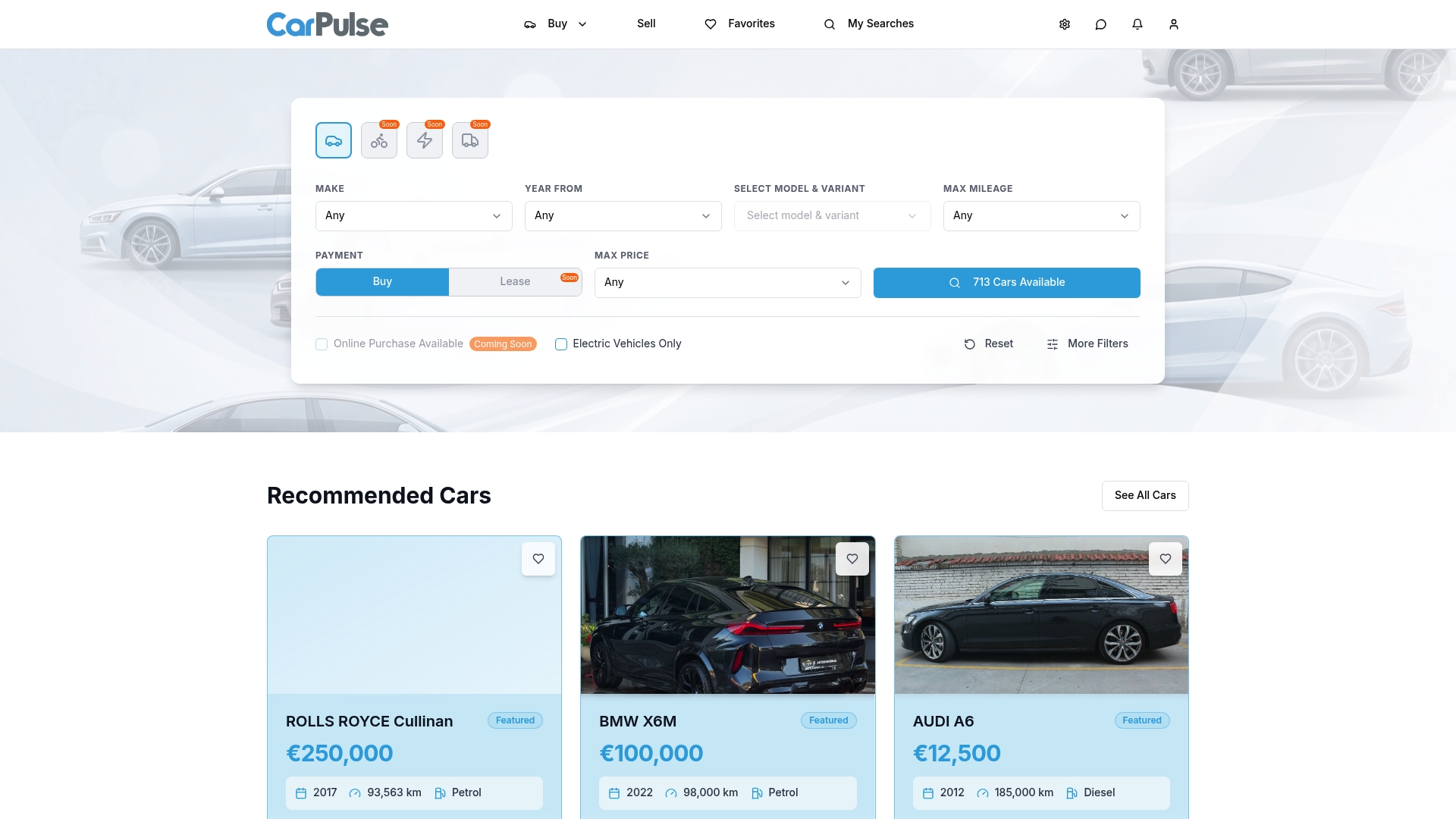
Carpulse lists new and used vehicles across all electric vehicle categories, with filters for fuel type, price, mileage, and year. Whether you are looking for a fully electric BEV, a flexible PHEV, or a self-charging HEV, you can compare real listings from verified dealerships and private sellers in one place. The Carpulse marketplace also offers VIN-based listing verification, so every vehicle’s details are accurate before you make contact. Browse current EV listings and find the type that fits your driving life today.
FAQ
What are the five main types of electric cars?
The five main types are BEV (Battery Electric Vehicle), PHEV (Plug-in Hybrid Electric Vehicle), HEV (Hybrid Electric Vehicle), eREV (Extended Range Electric Vehicle), and FCEV (Fuel Cell Electric Vehicle). Each differs in how it generates power, its electric range, and its charging or refueling method.
Which type of electric car is best for everyday use?
BEVs are best for drivers with home charging access and predictable daily distances under 400 km. PHEVs are the most practical choice for drivers who need flexibility between electric and gasoline power.
Do hybrid cars need to be plugged in?
Standard HEVs do not require any external charging. They recharge their batteries through regenerative braking and the combustion engine. PHEVs and eREVs do require an external plug to access their full electric range.
What is the difference between a PHEV and an eREV?
A PHEV can use its gasoline engine to drive the wheels directly at higher speeds. An eREV uses its gasoline engine only as a generator to produce electricity. The wheels in an eREV are always driven by the electric motor.
Are fuel cell electric vehicles available for everyday buyers?
FCEVs are available for purchase but are only practical in regions with hydrogen fueling infrastructure, such as parts of Japan, South Korea, California, and Germany. Outside those areas, the lack of fueling stations makes daily ownership difficult.
Recommended
- Blerja e Makinave Online në Shqipëri: Rritja e EV-ve 2026 | CarPulse Albania
- Blerja Online e Makinave në Shqipëri: Rritje EV 12% në 2026 | CarPulse Albania
- Blerja e makinave online në Shqipëri: Rritje 12% e EV në… | CarPulse Albania
- Blerja online e makinave në Shqipëri: 12% rritje e EV në… | CarPulse Albania