Guides
The Role of Vehicle Filters in Engine Performance

The Role of Vehicle Filters in Engine Performance

TL;DR:
- Vehicle filters serve as a critical barrier protecting engine components from contaminants that cause premature wear and costly repairs. Regular replacement of air, oil, fuel, and cabin filters maintains engine performance, fuel efficiency, and air quality, preventing silent degradation over time. Investing in high-quality filters and adhering to recommended service intervals ensures long-term vehicle health and avoids expensive damage caused by neglected filtration systems.
Vehicle filters are the primary defense system between your engine and the contaminants that cause premature wear, reduced power, and costly repairs. The role of vehicle filters covers four distinct systems: air, oil, fuel, and cabin filtration, each protecting a different part of your car from particles, debris, and chemical impurities. Neglecting any one of them sets off a chain reaction of degradation that compounds silently over thousands of miles. This guide breaks down exactly what each filter does, when to replace it, and why cutting corners on filter quality is one of the most expensive mistakes a car owner can make.
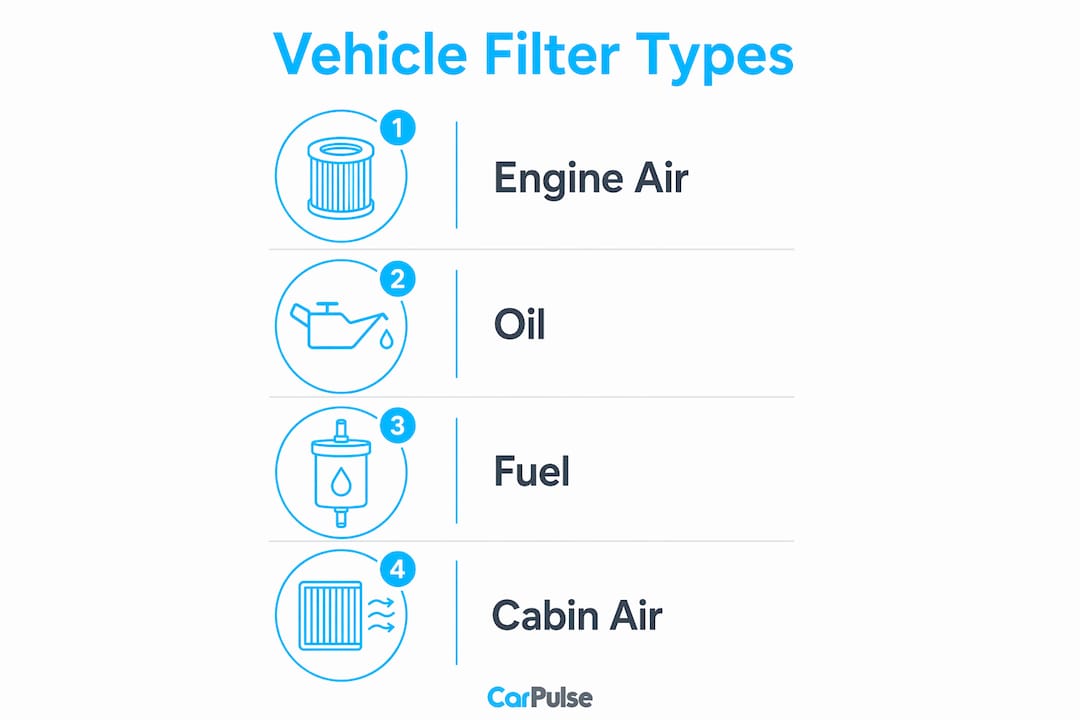
What are the main types of vehicle filters and how does each function?
The function of car filters is best understood by looking at each type individually, because they protect completely different systems through different mechanisms.
Engine air filter — Your engine needs a precise mixture of air and fuel to combust efficiently. The air filter sits at the intake and traps dust, soot, pollen, and road debris before they reach the cylinders. High-quality air filters trap up to 99.9% of fine particulates, including tire-wear particles that are small enough to score cylinder walls. Without this barrier, abrasive particles grind against pistons and rings with every combustion cycle.
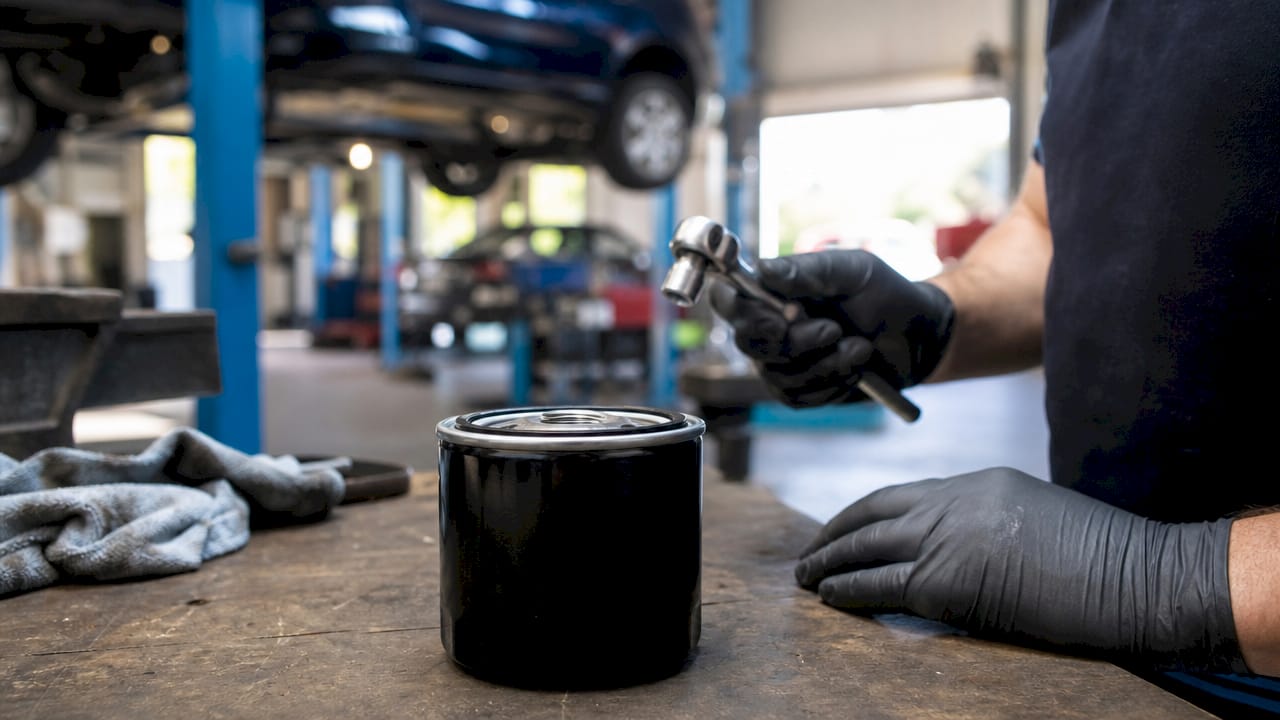
Oil filter — Engine oil circulates through moving metal components at high pressure, picking up metal shavings, carbon deposits, and combustion byproducts along the way. The oil filter strips these contaminants out before the oil completes its next circuit. One critical design feature: oil filters include bypass valves that open when the filter is severely clogged or when oil is cold and thick, allowing unfiltered oil to flow rather than starving the engine entirely. It is a failsafe, not a free pass to skip oil changes.
Fuel filter — Modern fuel injection systems operate under extremely high pressure and demand clean fuel. Secondary fuel filters trap particles as small as 4 to 10 microns to protect injectors, which is especially critical in diesel common rail systems where injector tolerances are measured in microns. Rust from the fuel tank, water contamination, and sediment from low-quality fuel all get caught here before reaching the injectors.
Cabin air filter — This filter sits in the HVAC system and cleans the air entering the passenger compartment. It captures PM2.5 particles, pollen, mold spores, and exhaust gases from surrounding traffic. Cabin filter effectiveness depends not just on filter quality but on HVAC settings and vehicle speed, since airflow dynamics at highway speeds can reduce filtration efficiency. It protects your lungs the same way the engine air filter protects your cylinders.
Together, these four filters form an integrated protection network. Each one addresses a specific contamination pathway, and each one degrades on its own schedule.
How do neglected filters damage your engine and performance?
The consequences of skipping filter maintenance are not dramatic at first. They accumulate quietly, which is exactly what makes them dangerous.
A clogged engine air filter restricts airflow to the intake manifold, forcing the engine to work harder to pull in the air it needs. Severely restricted air filters reduce engine performance by 10 to 20% and fuel efficiency by 5 to 10%. That is a measurable hit to both your driving experience and your fuel budget, and it happens gradually enough that most drivers never notice until they compare before and after readings.
The damage goes deeper than sluggish acceleration. A dirty air filter distorts the air-to-fuel ratio, which the mass airflow (MAF) sensor tries to compensate for. A clogged filter affects MAF sensor readings, turbocharger operation, and can trigger a rich fuel mixture that causes sensor faults, emission failures, and in severe cases, limp mode. What started as a $20 filter replacement becomes a diagnostic session and potential sensor replacement.
Ignoring filter maintenance causes cumulative engine wear through thousands of small contamination events, not one dramatic failure. The engine does not announce the damage. It just becomes less efficient, less reliable, and more expensive to fix.
Oil filter neglect carries its own risks. When oil filter media saturates with contaminants, the bypass valve opens and circulates unfiltered oil through the engine. Cumulative contamination events cause gradual bearing wear, increased oil consumption, and shortened engine life. A fuel filter left too long causes injector deposits, rough idle, hard starting, and in worst cases, injector failure that costs hundreds to thousands of dollars to repair.
When should you replace each type of vehicle filter?
Replacement intervals are not arbitrary. They reflect the rate at which filter media saturates under normal driving conditions, and several variables can accelerate that timeline significantly.
| Filter type | Standard interval | Accelerating factors |
|---|---|---|
| Engine air filter | 15,000 to 30,000 miles | Dusty roads, gravel driving, urban pollution |
| Cabin air filter | 12,000 to 24,000 miles | High pollen seasons, city traffic, highway speeds |
| Oil filter | Every oil change | Short trips, towing, high-performance driving |
| Fuel filter | Varies by vehicle (check manual) | Low-quality fuel, older fuel tanks, diesel systems |
Standard replacement intervals for air filters run from 15,000 to 30,000 miles, and cabin filters from 12,000 to 24,000 miles. These are baseline figures for average driving conditions. If you drive on unpaved roads, live in a high-pollution city, or frequently drive in stop-and-go traffic, you should inspect filters at the lower end of those ranges.
OEM (original equipment manufacturer) filters are designed to match your vehicle’s exact airflow requirements, pressure ratings, and fitment dimensions. Aftermarket filters from reputable brands like MAHLE, Mann-Filter, and Bosch meet or exceed OEM specifications and are widely available. Generic no-brand filters are the risk: they may use lower-density media that clogs faster or allows more particles through, and they may not seal correctly against the filter housing.
Pro Tip: Always cross-reference the filter part number against your vehicle’s VIN before purchasing. A filter that fits 90% of the housing but leaves a small gap allows unfiltered air or oil to bypass the media entirely, defeating its purpose.
What makes quality filters worth the investment?
Filter quality is not a marketing distinction. It is a measurable difference in how many particles get through to your engine, and how long the filter lasts before restriction becomes a problem.
High-quality filters use synthetic or blended media with tighter fiber spacing, which is why products from manufacturers like MAHLE achieve up to 99.9% particle capture efficiency. Cheap filters use cellulose media that degrades faster when wet, collapses under high differential pressure, and allows more particles through from the start. The difference in cost between a quality filter and a budget filter is often $10 to $20. The difference in engine protection is not proportional.
For turbocharged engines, the stakes are even higher. Turbochargers spin at up to 200,000 RPM, and even small particles that pass through a low-quality air filter can damage compressor blades. Failing to invest in quality filters risks expensive damage to injectors and turbochargers, a false economy that many owners fall into when they prioritize upfront cost over long-term protection.
Here is what to look for when selecting filters:
- Certification marks: Look for ISO 5011 compliance on air filters and API certification on oil filters.
- Media type: Synthetic or synthetic-blend media outperforms plain cellulose in both efficiency and longevity.
- Correct fitment: Verify dimensions and part numbers against your vehicle’s make, model, and engine code.
- Bypass valve quality: For oil filters, check that the bypass valve opens at the correct pressure rating for your engine.
- Brand reputation: Stick to established names like MAHLE, Bosch, Mann-Filter, WIX, or Donaldson for critical filtration components.
For performance vehicles like the VW Touareg or Porsche Cayenne, upgraded panel filters from brands like AEM offer improved airflow with maintained filtration efficiency. You can find performance panel filters designed specifically for these platforms if you want to optimize intake performance without sacrificing protection.
Pro Tip: Replace your oil filter every time you change your oil, not every other time. The cost difference is negligible, and the protection difference is not.
Key takeaways
Vehicle filters protect every major fluid and air system in your engine, and their maintenance directly determines how long your engine runs efficiently and without expensive repairs.
| Point | Details |
|---|---|
| Four filter types, four systems | Air, oil, fuel, and cabin filters each protect a distinct system and degrade on separate schedules. |
| Clogged filters cause measurable loss | A blocked air filter cuts engine performance by 10 to 20% and fuel efficiency by 5 to 10%. |
| Replace on schedule, not on failure | Air filters every 15,000 to 30,000 miles; cabin filters every 12,000 to 24,000 miles; oil filters at every oil change. |
| Quality media matters | Synthetic filter media captures up to 99.9% of particles; cheap cellulose alternatives degrade faster and protect less. |
| Bypass valves are a failsafe, not a solution | Oil filter bypass valves prevent engine seizure but circulate unfiltered oil, accelerating wear if left unaddressed. |
Why filter maintenance is the most underrated service on your schedule
Most car owners think about oil changes. Fewer think about air filters. Almost nobody thinks about fuel filters until the car starts misfiring. I have seen this pattern repeat across hundreds of vehicles, and the repair bills that follow are almost always avoidable.
The thing that surprises people most is how gradual the damage is. You do not wake up one morning to a dead engine because you skipped a cabin filter. You wake up to a car that uses slightly more fuel, pulls slightly less hard, and runs slightly rougher than it did two years ago. By the time those symptoms are obvious, the wear has already happened.
What I find most frustrating is the false economy argument. Owners who balk at a $25 MAHLE air filter will spend $800 on a MAF sensor replacement six months later and never connect the two events. The sensor did not fail in isolation. It failed because restricted, dirty airflow corrupted its readings over thousands of miles.
My practical advice: treat filter replacement as a scheduled event, not a reactive one. Set calendar reminders tied to your odometer. When you buy a used car, replace all four filters immediately regardless of what the previous owner claims. You have no way to verify their service history, and a full filter refresh costs under $100 for most vehicles. That is cheap insurance against inheriting someone else’s neglect.
Cabin air quality also depends on how you use your HVAC system, not just the filter itself. Running your system on recirculation mode in heavy traffic reduces the load on the cabin filter and keeps more exhaust particulates out of the cabin. Small behavioral adjustments compound the filter’s effectiveness.
The vehicles that reach 200,000 miles reliably are not always the most expensive ones. They are the ones whose owners treated filter maintenance as non-negotiable.
— Henri
Find your next well-maintained vehicle on Carpulse
When you are buying a used car, filter condition tells you a lot about how the previous owner maintained the entire vehicle. A clean, recently replaced air filter and a fresh oil filter are signs of an owner who followed a service schedule. Carpulse makes it easy to browse verified vehicle listings across Albania, with detailed specs by make, model, year, mileage, and fuel type so you can assess maintenance history before you commit. Whether you are buying your next car or listing one you have kept in excellent condition, browse vehicles on Carpulse to connect with serious buyers and sellers on Albania’s largest automotive marketplace.
FAQ
What is the role of vehicle filters in engine health?
Vehicle filters remove contaminants from air, oil, and fuel before they reach sensitive engine components, preventing abrasive wear, injector damage, and premature engine degradation. Without functioning filters, every combustion cycle introduces particles that score cylinder walls, clog injectors, and contaminate oil.
How do oil filters work in a car engine?
Oil filters use dense fiber media to trap metal particles, carbon deposits, and combustion byproducts as oil circulates under pressure through the engine. They also contain a bypass valve that opens when the filter is clogged or oil is cold, allowing oil flow to continue and prevent engine seizure.
What are the signs of bad filters in cars?
Common signs include reduced acceleration, increased fuel consumption, rough idle, hard starting, and dashboard warning lights such as the check engine light. A clogged air filter can also trigger MAF sensor faults and cause the vehicle to enter limp mode in severe cases.
How often should you replace vehicle filters for best performance?
Engine air filters need replacement every 15,000 to 30,000 miles, cabin air filters every 12,000 to 24,000 miles, and oil filters at every oil change. Fuel filter intervals vary by vehicle, so check your owner’s manual. Dusty environments and city driving shorten all of these intervals.
Does filter quality actually affect engine longevity?
Yes. High-quality synthetic media filters capture up to 99.9% of damaging particles, while low-cost cellulose filters degrade faster and allow more contaminants through. The cost difference between a quality filter and a budget filter is small compared to the repair costs from injector damage or accelerated engine wear.