
Guides
The Role of Safety Features in Cars: 2026 Guide
The Role of Safety Features in Cars: 2026 Guide
TL;DR:
- Car safety features include active systems that prevent crashes and passive systems that minimize injuries during collisions. The effectiveness of bundled safety technology has been proven to reduce crashes, injuries, and societal costs, especially with EU-mandated standards starting in 2026. Buyers should prioritize vehicles with comprehensive safety packages, ensure proper maintenance, and verify sensor functionality for optimal safety.
Car safety features are the systems and structural elements designed to prevent crashes and protect occupants when a crash occurs. Understanding the role of safety features in cars is the single most important factor in any vehicle purchase decision, especially as Albania’s roads see more modern vehicles with advanced technology. Safety systems fall into two categories: active features that prevent accidents before they happen, and passive features that reduce injury once a crash is unavoidable. Both categories work together, and evaluating both is the only way to judge a vehicle’s true safety level.
What are the main types of car safety features?
Active safety features are the first line of defense. They monitor the road and driver behavior in real time, then intervene to prevent a collision. The most widely adopted active system is Automatic Emergency Braking, or AEB. AEB detects obstacles ahead and applies the brakes automatically when the driver does not react in time. Pedestrian detection is a direct extension of AEB, using cameras and radar to identify people crossing the road and trigger braking before impact.

Lane Departure Warning alerts you when your vehicle drifts across lane markings without signaling. Lane Keep Assist goes one step further by gently steering the car back into its lane. Blind Spot Detection uses radar sensors in the rear bumper to flag vehicles in your blind zone, while Rear Cross Traffic Alert warns you of approaching cars when reversing out of a parking space. These four systems address the most common causes of highway and parking lot collisions.
Head-Up Displays project speed and navigation data onto the windshield, keeping your eyes on the road rather than the instrument cluster. Adaptive headlights swivel in the direction you steer, illuminating curves before you enter them. Both features reduce the cognitive load on the driver during low-visibility conditions.
Passive safety features protect occupants after a crash begins. Airbags, seat belts, and crumple zones manage crash forces and minimize injury severity when active systems cannot prevent the collision entirely. Crumple zones are engineered sections of the vehicle body that absorb and redirect energy away from the passenger cabin. Side curtain airbags deploy within milliseconds to cushion the head during side impacts.
Pro Tip: When comparing vehicles, check whether AEB and pedestrian detection come as standard equipment or as a paid option. Bundled packages are almost always better value than adding features individually.
How effective are safety features at reducing crashes and injuries?
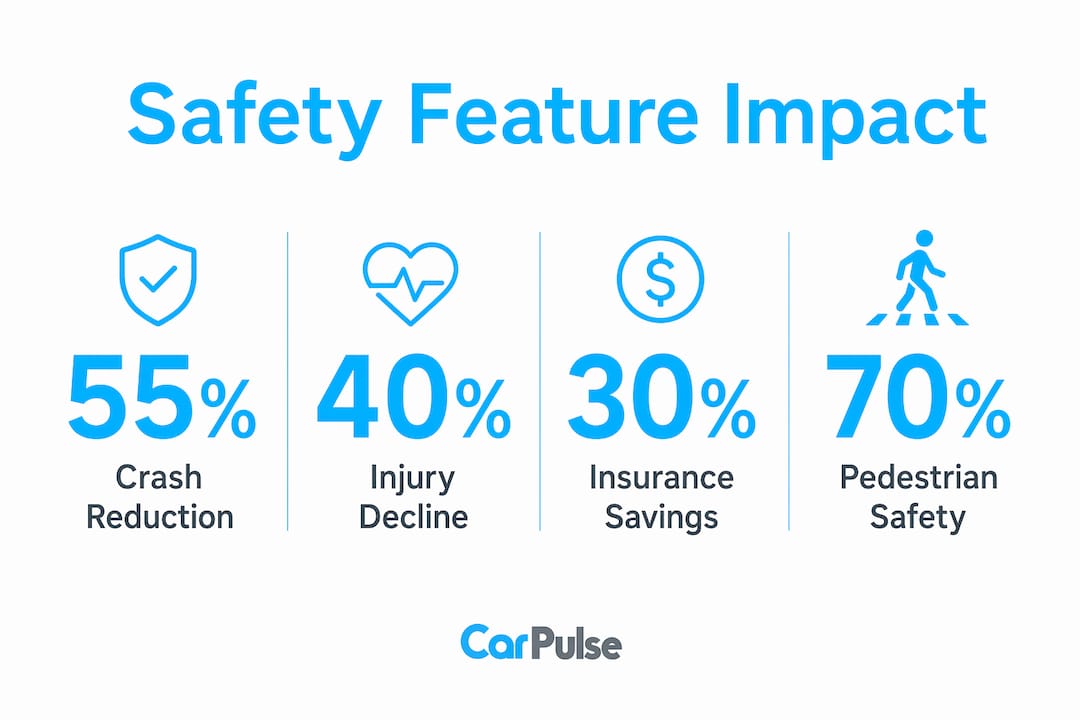
The evidence on safety technology effectiveness is substantial. Vehicle improvements from 1999 to 2024 saved over 48,000 lives and delivered $538 billion in societal savings through crashworthiness testing programs run by the Insurance Institute for Highway Safety (IIHS). That figure represents real families, not abstract statistics.
Bundled ADAS systems that combine front AEB with pedestrian detection and rear AEB produce significant crash reductions, particularly at low speeds in parking lots. Rear AEB alone is highly effective at preventing the kind of slow-speed backing incidents that account for a large share of property damage claims. Fewer claims mean lower overall insurance losses for drivers who carry these systems.
“ADAS bundles improve insurance loss outcomes overall despite increased individual claim severity, because fewer accidents occur in the first place. The net result is a clear financial and safety benefit for drivers who choose vehicles with comprehensive active safety packages.”
The table below summarizes the effectiveness of key safety technologies based on current research:
| Safety feature | Primary benefit | Impact on insurance claims |
|---|---|---|
| Front AEB with pedestrian detection | Prevents forward collisions | Reduces claim frequency |
| Rear AEB | Prevents parking lot incidents | Reduces low-speed claim frequency |
| Lane Keep Assist | Reduces lane-departure crashes | Reduces highway claim frequency |
| Driver Monitoring System | Catches distracted driving | Reduces distraction-related claims |
| Crumple zones and airbags | Reduces injury severity in crashes | Reduces injury claim severity |
The EU’s Vision Zero goal targets zero road fatalities by 2050. The 2026 mandatory safety regulations are a direct step toward that target, standardizing technologies that research proves save lives.
What are the limitations and costs of car safety technology?
Safety technology does not eliminate risk, and it comes with real financial trade-offs. ADAS features reduce accident frequency but increase claim severity because sensors and cameras mounted in bumpers and windshields are expensive to repair or replace even after minor impacts. A low-speed parking lot scrape that once cost a few hundred dollars to fix can now require sensor recalibration and camera replacement costing significantly more.
Overreliance on safety systems is a genuine danger. AEB and Lane Keep Assist have operational thresholds. They perform best in clear weather with clean, visible lane markings. Heavy rain, snow, mud on sensors, or faded road paint can all reduce system effectiveness. Drivers who treat these systems as autopilot rather than assistance tools create new risks.
Driver monitoring systems, now mandated by the EU, raise privacy questions. These systems use infrared cameras to track eye movement and head position, with alarms triggering when distraction exceeds 3.5 seconds at speeds above 31 mph. The data is processed in a closed loop within the vehicle, but ongoing discussions about audit access and data retention remain unresolved.
Practical considerations for Albanian car buyers include:
- Sensor obstructions: Mud, ice, and aftermarket accessories can block radar and camera sensors, disabling safety systems without warning.
- Recalibration costs: After any windshield replacement or front-end repair, ADAS sensors require professional recalibration. Budget for this when buying a vehicle with advanced systems.
- System compatibility: Older vehicles retrofitted with aftermarket safety tech rarely match the performance of factory-installed systems.
- Maintenance intervals: Safety system software needs periodic updates. Verify that the dealership or service center you use can perform these updates.
Pro Tip: Before buying a used car with ADAS, ask for a diagnostic report confirming all sensors are calibrated and functioning. A faulty sensor that shows no warning light is a hidden liability.
How do 2026 EU safety regulations affect cars in Albania?
The final phase of the EU General Safety Regulation took effect in july 2026, and it sets the most demanding vehicle safety standards in European history. Albania’s vehicle market draws heavily from EU production, so these regulations directly shape the cars available to Albanian buyers right now.
The 2026 mandates require all new passenger cars sold in the EU to include:
- Eye-tracking driver monitoring that alerts drivers distracted for more than 3.5 seconds at speeds above 31 mph
- Advanced pedestrian detection integrated with AEB systems
- Expanded safety glass areas to improve visibility and pedestrian protection in collisions
- Tire wear testing to verify performance under degraded conditions
Phased implementation gave manufacturers time to integrate these systems without disrupting production. The result is that vehicles built from mid-2026 onward carry a meaningfully higher baseline of safety technology than models produced just two years earlier. For Albanian buyers, this creates a clear dividing line: vehicles manufactured after the regulation’s effective date carry the full suite of mandated features, while older stock may not.
The role of electronics in modern fleets has grown to the point where safety systems now account for a substantial share of a vehicle’s total electronic architecture. Understanding which systems are present and functional is no longer optional for informed buyers.
The EU’s Vision Zero framework treats the 2026 regulations as a midpoint, not a finish line. Future phases will likely expand requirements further, meaning vehicles that meet today’s standards will hold their safety value longer than those that barely cleared previous thresholds.
Key Takeaways
Car safety features are most effective when active and passive systems work together, and 2026 EU mandates set the clearest baseline yet for what a safe new vehicle must include.
| Point | Details |
|---|---|
| Active vs. passive safety | Active systems prevent crashes; passive systems reduce injury when crashes happen. |
| IIHS crashworthiness impact | Testing programs saved over 48,000 lives and $538 billion in societal costs from 1999 to 2024. |
| ADAS cost trade-off | Bundled ADAS reduces crash frequency but raises repair costs due to sensor sensitivity. |
| 2026 EU mandates | New rules require driver monitoring, pedestrian detection, and expanded safety glass on all new cars. |
| Albania buyer priority | Choose vehicles built after mid-2026 to get the full suite of EU-mandated safety features. |
Safety features matter more than most buyers realize
Albanian buyers tend to focus on price, mileage, and fuel type when searching for a car. Safety ratings and feature bundles often come last. That ordering is a mistake, and I say that from years of watching people underestimate how much a single missing feature can cost them after an accident.
The research is clear: bundled ADAS packages outperform isolated features. A car with front AEB but no rear AEB still leaves you exposed in the scenario that causes the most parking lot damage. Buying a comprehensive package is not a luxury decision. It is a cost-control decision.
Newer models meeting the 2026 EU mandates are worth the price premium in most cases. The driver monitoring requirement alone addresses one of the leading causes of serious crashes. When you test drive a vehicle, pay attention to how the system responds. Does the lane assist feel natural or intrusive? Does the AEB engage smoothly? These are functional questions, not comfort questions.
Routine maintenance of safety systems is something most buyers never think about until something goes wrong. Sensor calibration after a windshield replacement, software updates for the driver monitoring system, and regular checks of radar sensor cleanliness all affect whether these features actually work when you need them. A car with broken ADAS is not a safe car. It is a car with expensive broken parts.
— Henri
Find safe, compliant vehicles on Carpulse
Albanian car buyers now have a clear standard to shop against: vehicles built to 2026 EU safety specifications with bundled ADAS, driver monitoring, and pedestrian detection. Finding those vehicles in Albania’s market used to require visiting multiple dealerships.
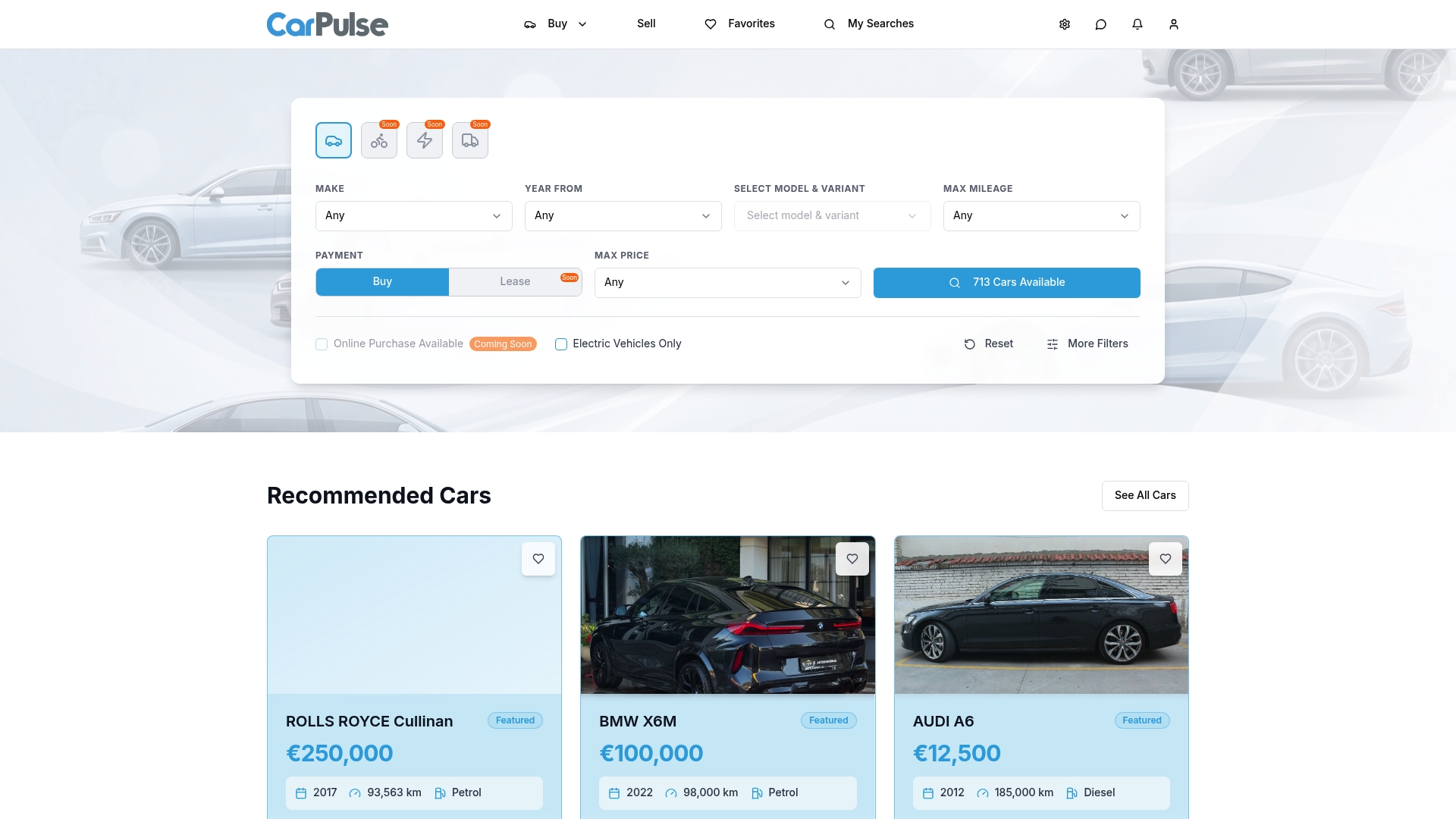
Carpulse is Albania’s largest car marketplace, connecting buyers with verified dealerships and private sellers on a single platform. You can filter listings by make, model, year, and fuel type to zero in on vehicles that meet current safety standards. Browse the full inventory at Carpulse’s car marketplace and use the mileage and year filters to prioritize newer models with the safety technology that matters most. The VIN-based listing system means vehicle details are accurate, so you know exactly what features each car carries before you contact the seller.
FAQ
What is the difference between active and passive car safety features?
Active safety features like AEB and Lane Keep Assist prevent crashes from happening. Passive features like airbags and crumple zones reduce injury severity when a crash cannot be avoided.
How much do ADAS features reduce accidents?
Bundled ADAS systems that include front and rear AEB with pedestrian detection produce significant reductions in crash frequency, particularly at low speeds. Overall insurance losses drop with ADAS bundles even though individual claim costs rise due to sensor repair expenses.
What safety features are mandatory on new cars in 2026?
The EU’s 2026 General Safety Regulation requires all new passenger cars to include eye-tracking driver monitoring, advanced pedestrian detection, expanded safety glass, and tire wear testing as standard equipment.
Do safety features increase car repair costs?
Yes. ADAS sensors and cameras are expensive to repair or recalibrate after even minor accidents, raising the cost of claims compared to vehicles without these systems.
How do I know if a used car’s safety systems are working?
Request a diagnostic report from a certified technician before purchase. Sensor faults do not always trigger dashboard warnings, so a professional check is the only reliable way to confirm all ADAS components are calibrated and functional.