
Guides
The Role of Fuel Type in Vehicle Performance and Emissions
The Role of Fuel Type in Vehicle Performance and Emissions

TL;DR:
- Fuel type influences vehicle performance, operating costs, and environmental impact significantly.
- Choosing the correct fuel involves checking manufacturer guidelines, compatibility, and local infrastructure.
Fuel type is defined as the energy source a vehicle burns or converts to generate motion, and it determines everything from engine output to tailpipe emissions. The role of fuel type shapes how much you pay per mile, how your engine ages, and how much carbon your vehicle puts into the atmosphere. Gasoline, diesel, ethanol blends, compressed natural gas (CNG), liquefied petroleum gas (LPG), hydrogen, and battery electric power each carry distinct performance profiles and environmental footprints. Choosing the wrong fuel for your vehicle is not just a cost issue. It can cause engine damage, void warranties, and produce far more pollution than necessary.
What are the main types of vehicle fuels?
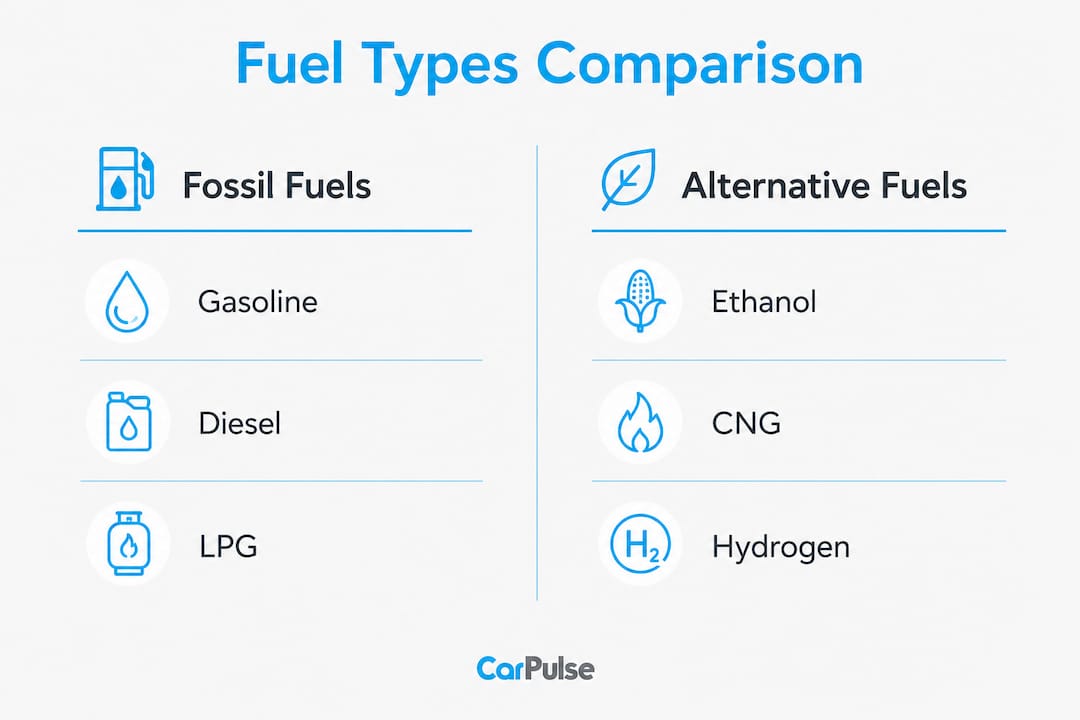
Vehicle fuels fall into two broad categories: conventional fossil fuels and alternative energy sources. Understanding fuel type differences starts with knowing what each option actually delivers.
Gasoline comes in three grades based on octane rating: regular (87), mid-grade (89), and premium (91–93). Octane measures a fuel’s resistance to premature ignition. Higher octane is required for high-compression or turbocharged engines. Using a lower octane than recommended causes engine knocking, which wears down internal components over time.
Diesel burns differently from gasoline. It ignites through compression rather than a spark, which produces more torque at lower RPMs. That makes diesel the preferred choice for trucks, buses, and long-haul vehicles where pulling power matters more than top-end speed.
Ethanol blends like E10 (10% ethanol, 90% gasoline) and E85 (85% ethanol) are common alternatives. Ethanol has lower energy density than pure gasoline, so E10 increases fuel consumption by 1–3% compared to regular unleaded. That small efficiency loss often cancels out any savings from the lower pump price.
CNG and LPG are gaseous fuels stored under pressure. They burn cleaner than gasoline at the point of use and cost less per unit of energy in many markets. Hydrogen fuel cell vehicles (FCVs) convert hydrogen gas into electricity through a chemical reaction, emitting only water vapor. Battery electric vehicles (BEVs) store electrical energy in a pack and use no combustion at all.
| Fuel type | Energy source | Key advantage | Main drawback |
|---|---|---|---|
| Gasoline | Fossil fuel | Wide availability | CO2 emissions |
| Diesel | Fossil fuel | High torque, efficiency | NOx and particulate emissions |
| E10/E85 | Ethanol blend | Renewable component | Lower energy density |
| CNG | Natural gas | Lower operating cost | Reduced power output |
| LPG | Petroleum gas | Cleaner combustion | Limited refueling network |
| Hydrogen FCV | Hydrogen | Near-zero tailpipe emissions | Infrastructure gaps |
| BEV | Electricity | Zero tailpipe emissions | Grid-dependent footprint |
How does fuel type impact vehicle performance and engine health?
The impact of fuel type on performance is more specific than most drivers realize. The biggest misconception is that premium gasoline makes any car faster or more efficient. Premium fuel offers no advantage in engines designed for regular unleaded. You pay more at the pump and get nothing in return. Premium is only worth buying when your vehicle’s manufacturer explicitly requires it.

Diesel and gasoline engines are built around fundamentally different combustion cycles. Putting gasoline into a diesel tank, or diesel into a gasoline tank, is called misfuelling. It can destroy fuel injectors, pumps, and seals within minutes of starting the engine. The repair bill often exceeds the vehicle’s value in older cars.
CNG retrofitting presents a different set of trade-offs. CNG retrofits reduce torque by about 19% and cut power output by over 33% when the air conditioning is running. That is a significant performance penalty for city drivers in hot climates. The operating cost savings of up to 48% are real, but they come with a noticeably less responsive vehicle.
Ethanol compatibility is another practical concern. Vehicles built after 2011 are generally compatible with E10. Cars from 2000 to 2011 require a manual check against the manufacturer’s specifications. Older vehicles risk damage to rubber seals and fuel system components because ethanol is mildly corrosive to materials used before modern fuel standards.
Pro Tip: Check your owner’s manual for the exact octane rating and ethanol tolerance your engine requires. The fuel door on most cars also lists this information. Following the manufacturer’s specification protects your engine and keeps your warranty intact.
Key performance factors to verify before switching fuel types:
- Manufacturer’s minimum octane rating
- Ethanol compatibility by model year
- CNG or LPG retrofit certification for your specific engine
- Torque and power changes under auxiliary loads like AC
- Fuel system seal and injector compatibility
What is the environmental impact of different fuel types?
Fuel type selection carries real environmental consequences, and the differences between options are larger than most people expect. Green hydrogen FCVs reduce life-cycle greenhouse gas emissions by 77.8% compared to conventional gasoline and diesel vehicles. BEVs powered by grids with at least 50% renewable energy reduce emissions by up to 60%. Those numbers represent the ceiling of what current technology can achieve.
CNG looks cleaner on paper, but the full picture is more complicated. CNG retrofitting increases NOx emissions fivefold compared to the original petrol engine. NOx contributes to smog and respiratory disease. So while CNG cuts CO2, it trades one pollution problem for another.
BEVs present a nuanced case. Their tailpipe emissions are zero, but their actual environmental benefit depends entirely on where the electricity comes from.
“Battery electric vehicles deliver maximum environmental benefits only in grids with high renewable energy penetration. In fossil fuel-heavy grids, internal combustion engine vehicles remain environmentally competitive.”
That insight reframes the BEV debate entirely. A BEV charged on a coal-heavy grid may produce more lifecycle emissions than a modern diesel hybrid. Buyers in countries with high renewable energy penetration get the full environmental benefit. Buyers in fossil-heavy markets get a smaller gain, though still a real one as grids continue to clean up.
Ethanol blends reduce the carbon intensity of gasoline by substituting a renewable component, but the benefit is modest. E10 cuts the fossil fuel share by only 10%, and the 1–3% efficiency loss means you burn slightly more fuel per kilometer. E85 delivers a larger carbon reduction but requires a flex-fuel vehicle and is not widely available in most markets.
| Fuel type | Lifecycle CO2 vs. gasoline | NOx profile | Infrastructure readiness |
|---|---|---|---|
| Green hydrogen FCV | 77.8% lower | Near zero | Limited |
| BEV (renewable grid) | Up to 60% lower | Zero tailpipe | Growing |
| BEV (fossil grid) | Modest reduction | Zero tailpipe | Growing |
| CNG retrofit | Moderate CO2 reduction | 5x higher NOx | Moderate |
| E10 blend | Marginal reduction | Similar to gasoline | Widely available |
| Diesel | Baseline comparison | High NOx and PM | Widely available |
How is the role of fuel types evolving with new energy sources?
The role of energy sources in transport is shifting away from liquid fuels as the primary power carrier. Liquid fuels are transitioning from dominant energy carriers to flexible complements alongside renewable electricity. That shift is already visible in vehicle sales data across Europe and Asia, where BEV adoption is accelerating rapidly.
Hydrogen holds significant promise for heavy transport, aviation, and long-haul trucking where battery weight becomes a limiting factor. The challenge is infrastructure. Hydrogen refueling stations are rare in most countries, and producing green hydrogen at scale remains expensive. Gray hydrogen, produced from natural gas, does not deliver the same emissions benefits.
Limited refueling infrastructure slows adoption of alternatives like bioCNG even when the emission reductions are well documented. This is not a technology problem. It is a market coordination problem. Fuel suppliers will not build stations without customers, and customers will not buy vehicles without stations.
Key trends shaping fuel type evolution through the late 2020s:
- Renewable electricity is becoming the dominant energy source for personal transport
- Hydrogen is gaining traction in commercial and heavy-duty applications
- Biofuels and ethanol blends serve as transitional fuels in markets where electrification is slow
- Regulatory pressure through emissions standards is accelerating the phase-out of pure gasoline and diesel vehicles
- Grid improvements in renewable penetration are increasing the real-world environmental advantage of BEVs
How to select the right fuel type for your vehicle and needs?
Fuel type efficiency and cost depend on matching the fuel to both the vehicle and the driver’s specific situation. Follow these steps to make an informed choice.
-
Read your owner’s manual first. The manufacturer specifies the minimum octane rating, ethanol tolerance, and any alternative fuel restrictions. This is the single most reliable source of information for your specific engine.
-
Check your vehicle’s build year for ethanol compatibility. Cars built after 2011 generally handle E10 without issue. If your vehicle is older, verify compatibility before switching to an ethanol blend to avoid damage to fuel system components.
-
Evaluate CNG or LPG retrofitting carefully. The operating cost savings are real, but the torque and power reductions are significant. If you drive in hilly terrain or frequently use air conditioning, the performance penalty may outweigh the savings.
-
Consider your local electricity grid before buying a BEV. In markets with high renewable energy penetration, a BEV delivers substantial emissions reductions. In fossil-heavy grids, the benefit is smaller but still positive over the vehicle’s lifetime as grids continue to improve.
-
Do not pay for premium fuel unless your engine requires it. Using premium in a standard engine wastes money with zero performance or efficiency return. Check the fuel door label or owner’s manual to confirm what your engine actually needs.
-
Factor in infrastructure availability. Hydrogen FCVs and CNG vehicles offer real advantages, but only where refueling stations exist. Check station density in your area before committing to a vehicle that runs on a less common fuel.
Drivers interested in fuel-efficient vehicle options can find curated selections that match specific fuel preferences and driving patterns. For a deeper look at how each fuel type performs in real-world Albanian driving conditions, the automotive fuel types guide covers local market specifics in detail.
Key Takeaways
The role of fuel type determines vehicle performance, operating cost, and environmental impact more than any other single factor in the buying decision.
| Point | Details |
|---|---|
| Octane rating matters | Use the manufacturer’s specified octane to prevent engine knocking and long-term damage. |
| Premium fuel is not universal | Premium gasoline benefits only engines designed for it; standard engines gain nothing from the higher cost. |
| BEV emissions depend on the grid | Electric vehicles deliver the greatest environmental benefit in markets with high renewable energy penetration. |
| CNG saves money but costs performance | CNG retrofits cut operating costs by up to 48% but reduce torque by about 19% and power by over 33% under AC load. |
| Ethanol compatibility varies by age | Vehicles built before 2011 require a manual compatibility check before using E10 or higher ethanol blends. |
Why fuel type decisions deserve more attention than they get
Most drivers treat fuel type as an afterthought. They pull up to the pump, pick the cheapest option, and drive away. That habit costs real money and causes real engine wear over time.
The premium fuel myth is the clearest example. Drivers spend extra at every fill-up believing they are protecting their engine or gaining power. The data says otherwise. Standard engines cannot use the higher octane rating. The fuel burns the same way, and the extra cost disappears with zero benefit.
What I find more interesting is the BEV emissions question. The popular narrative treats electric vehicles as automatically clean. The reality is more conditional. An EV charged on a coal-heavy grid may not outperform a modern diesel on a lifecycle basis. That does not mean EVs are a bad choice. It means the environmental case for EVs strengthens as grids get cleaner, which is happening across most markets.
The practical lesson I keep coming back to is this: your owner’s manual is the most underused document in most households. It tells you exactly what fuel your engine needs, what ethanol tolerance your fuel system has, and what happens if you deviate. Following it costs nothing and prevents expensive mistakes.
Fuel technology is moving fast, but infrastructure is moving slower. Hydrogen is genuinely promising for heavy transport. For personal vehicles in most markets today, the realistic choice is between optimized gasoline or diesel use and a BEV if your grid supports it. CNG and LPG fill a useful middle ground for high-mileage drivers where the infrastructure exists.
— Henri
Find your next vehicle by fuel type on Carpulse
Carpulse is Albania’s largest car marketplace, and it lets you filter listings directly by fuel type, whether you are looking for a gasoline, diesel, hybrid, or electric vehicle.
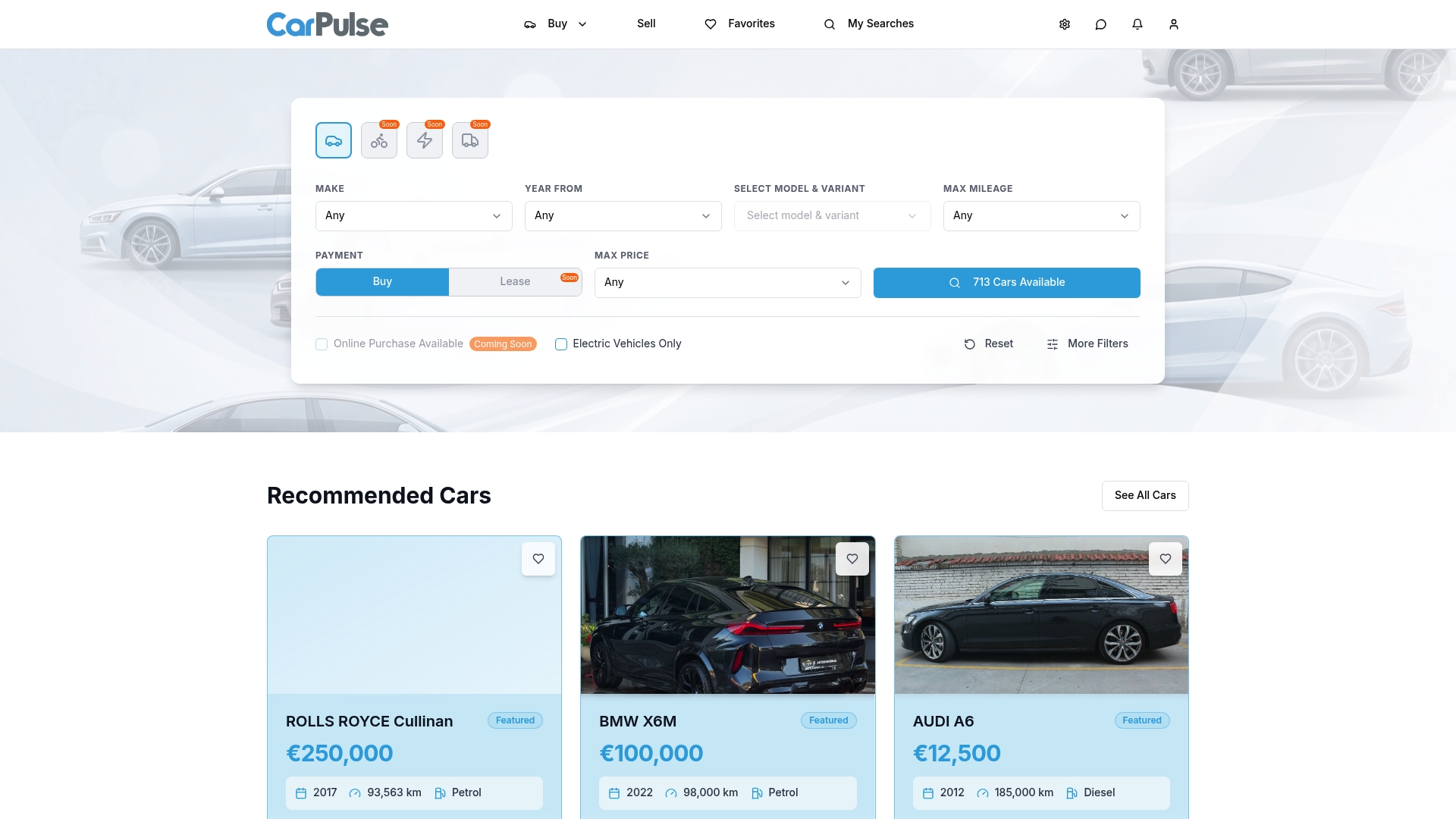
Browsing by fuel type on Carpulse takes the guesswork out of matching a vehicle to your energy preferences and budget. Every listing includes fuel type, mileage, and year, so you can compare options side by side without contacting multiple sellers. Verified dealership listings and private sellers both appear on the same platform, giving you the full market picture in one place. If you are ready to upgrade to a more efficient vehicle, the Carpulse marketplace is the fastest way to find what is available in Albania right now.
FAQ
What does fuel type mean for a vehicle?
Fuel type refers to the energy source a vehicle uses to generate motion, such as gasoline, diesel, electricity, or hydrogen. It directly affects engine performance, operating cost, and emissions output.
Does premium fuel improve performance in any car?
Premium fuel only benefits engines specifically designed for high-octane fuel, such as turbocharged or high-compression engines. Using premium in a standard engine provides no performance or efficiency gain.
How does fuel type affect vehicle emissions?
Green hydrogen fuel cell vehicles reduce lifecycle greenhouse gas emissions by 77.8% compared to gasoline vehicles, while BEVs on renewable grids cut emissions by up to 60%. Conventional gasoline and diesel produce the highest lifecycle emissions of common fuel types.
Is CNG a good alternative to gasoline?
CNG can reduce operating costs by up to 48% compared to gasoline, but it also reduces torque by about 19% and cuts power by over 33% when the air conditioning is running. It is best suited for high-mileage drivers in areas with reliable CNG infrastructure.
Are ethanol blends safe for all vehicles?
E10 is safe for most vehicles built after 2011, but older vehicles may experience damage to rubber seals and fuel system components from ethanol’s corrosive properties. Always verify compatibility in your owner’s manual before switching to an ethanol blend.