Guides
The Role of Digital Car Retail for Albanian Buyers

The Role of Digital Car Retail for Albanian Buyers

TL;DR:
- Digital car retail in Albania is now a vital part of the purchasing process, with most buyers researching and financing online before visiting dealerships. Rapid response times, video communication, and integrated digital platforms increase dealer trust, efficiency, and customer confidence. Albanian buyers should prioritize dealers with connected online and offline systems for a seamless and informed car-buying experience.
The role of digital car retail in Albania is no longer a future conversation. It’s happening right now, and most buyers are already part of it whether they realize it or not. Over 60% of auto buyers now prefer starting their car purchase online, and 25% more are willing to complete the entire transaction digitally compared to just a year ago. If you’re shopping for a car in Albania today, understanding how this shift works, what it means for your wallet, and how to use it to your advantage is worth your time.
Table of Contents
- Key takeaways
- The role of digital car retail explained
- How digital retail changes buyer behavior and dealer operations
- Key trends shaping digital car retail in 2026
- How digital retail transforms the purchasing journey
- Digital vs. traditional car retail: a direct comparison
- My take on Albania’s digital car retail moment
- Start your search on Carpulse today
- FAQ
Key takeaways
| Point | Details |
|---|---|
| Buyers lead online first | Most car purchases now start digitally, with browsing, pricing, and financing happening before a dealership visit. |
| Speed determines outcomes | Dealers who respond to online leads in under 90 seconds convert dramatically more buyers than those who wait hours. |
| Video builds buying confidence | Video communication nearly doubles appointment rates and helps buyers make faster, more informed decisions. |
| Albania is part of this shift | Local EV adoption and online car buying in Albania are growing, with digital tools reshaping how local dealerships operate. |
| Platform quality matters | Buyers should prioritize dealers who use integrated, transparent digital tools rather than those with disjointed, incomplete online experiences. |
The role of digital car retail explained
Digital car retail is not just posting inventory photos on a website. It’s a full, connected process that takes a buyer from initial curiosity to signed deal, with much of it happening before they ever set foot in a showroom.
The core components of a real digital retail experience include:
- Inventory browsing with rich filters by make, model, year, mileage, price, and fuel type, so buyers narrow their choices before contacting anyone
- Online financing pre-approval, which lets buyers understand their budget and credit position ahead of negotiations
- Trade-in valuation tools that provide instant estimates so sellers know what their current car is worth before they walk in
- Video walkarounds and virtual communication, so buyers can inspect a vehicle without traveling across the city
- AI-driven CRM systems that track buyer intent, follow up automatically, and flag high-interest leads for sales teams
What makes this genuinely different from the old model is integration. Effective digital retail requires deep connection between CRM platforms, dealership management systems, and digital retailing tools. When those systems talk to each other, the buyer never has to re-enter their information or repeat themselves. When they don’t, the experience breaks down fast.
Pro Tip: Before contacting a dealer online, test their digital experience by using their search filters, requesting a quote, and noting how fast they respond. A dealer who replies in minutes is far better equipped for the digital era than one who calls back the next day.
How digital retail changes buyer behavior and dealer operations
The numbers tell a clear story about how buyer behavior has shifted. 66% of buyers would consider purchasing a car directly through a dealership’s website today. That’s not a niche audience. That’s the mainstream.
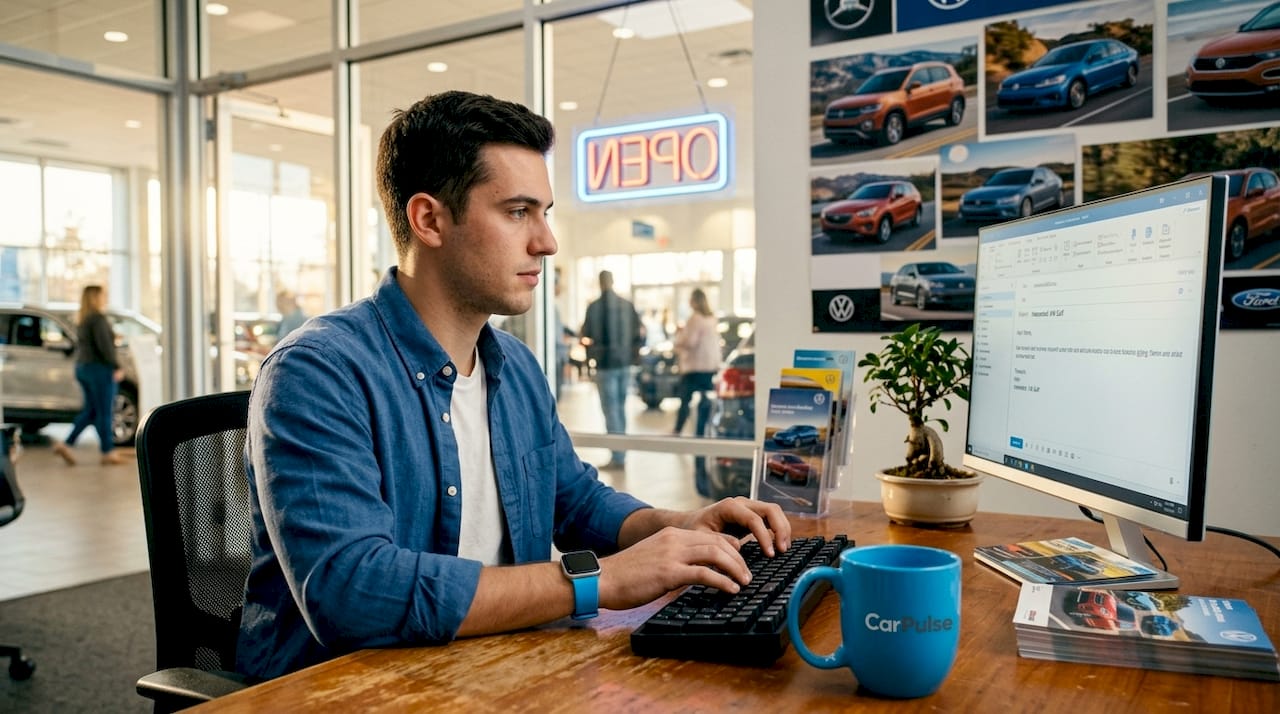
One of the biggest operational shifts for dealerships is response speed. The average dealer response time sits at 42 hours, but automation can reduce that to under 90 seconds. The gap between those two numbers is where most sales are lost. After business hours, the problem compounds: after-hours lead response averages 17 hours, which is a significant missed opportunity given how many buyers browse late in the evening.
| Factor | Traditional retail | Digital retail |
|---|---|---|
| Average response time | 42 hours | Under 90 seconds (with automation) |
| Appointment setting | Phone-only, business hours | Video and AI, 24/7 |
| Inventory transparency | Visit required | Full online browsing |
| Lead conversion boost | Baseline | 42% higher with AI-powered CRM |
| Buyer trust building | In-person only | Video + digital communication |
Video communication deserves special attention here. Dealerships using video nearly double their appointment rates. Modern buyers watch an average of 20 videos before narrowing their dealership choices. That means a dealer without a video strategy is essentially invisible during the research phase.
There’s a real challenge on the operational side, though. Many dealerships suffer from what experts call “tool sprawl,” meaning they’ve invested in multiple unconnected software platforms that each do one thing. Only 35% of dealers actively measure whether their media spending actually leads to offline sales. The dealers winning right now are the ones who’ve connected those dots.
Pro Tip: Ask dealers whether their online quote and financing data carries over to the in-person signing process. If they say you’ll need to re-enter your details in the showroom, they’re running disconnected systems, and your experience will reflect that.
Key trends shaping digital car retail in 2026
The digital car retail picture keeps evolving, and a few trends stand out for Albanian buyers and dealers heading into 2026.
- AI is becoming operational infrastructure, not just a feature. 76% of dealerships plan to increase their AI budgets this year. AI now handles speed-to-lead systems, after-hours inquiry coverage, and call scoring that rates sales conversations for coaching. It’s not replacing salespeople. It’s giving them better data to work with faster.
- Video has moved from nice-to-have to non-negotiable. Buyers expect a visually rich, socially familiar experience when researching vehicles. Static photos no longer hold attention the way a well-produced vehicle walkthrough does.
- EV adoption is climbing in Albania. Local data shows a 12% rise in electric vehicle interest among Albanian buyers in 2026, and digital platforms are the primary research channel for that category because EV buyers tend to be more tech-comfortable overall.
- Platform integration is replacing siloed tools. Digital retail platforms are increasingly managing entire dealership ecosystems, covering inventory, pricing, finance, marketing, and customer management in one connected environment.
- Buyer expectations are social-media speed. Shoppers now expect the same responsive, visual, instant experience they get from Instagram or TikTok when browsing a car platform. Dealerships that match that energy convert more buyers.
The gap between dealers who’ve embraced this and those who haven’t is widening. For Albanian buyers, that gap is actually an advantage. You can now quickly identify which dealers are worth your time just by interacting with their digital presence.
How digital retail transforms the purchasing journey
For Albanian buyers specifically, here is how to put digital car retail tools to practical use and get more out of every step.
- Start with platform research, not a dealership visit. Use an online marketplace to filter by exactly what you need before calling anyone. Know your preferred make, model, price range, and fuel type. Arrive at a dealer already informed.
- Get pre-approved for financing online first. Knowing your financing ceiling before you negotiate puts you in a much stronger position. Many dealers now offer instant pre-approval directly on their sites.
- Request a video walkthrough before traveling. A short video of the specific car you’re interested in saves time and tells you a lot about how the dealer communicates. Good dealers provide this within hours.
- Use trade-in valuation tools early. Get an estimate for your current vehicle before entering negotiations so you have a clear, data-backed starting point rather than relying on what the dealer offers in the moment.
- Watch for integration red flags. If a dealer’s website shows great features but their follow-up is slow or requires you to repeat your information, many dealers cannot complete every step online yet. That matters for your experience.
Price transparency is one of the most significant benefits you gain from this process. Digital platforms that display actual transaction prices, fees, and financing terms remove the guesswork that previously made car buying stressful. Buyers who start online arrive at dealerships with more information and more confidence. That changes the negotiation dynamic in a meaningful way.
Pro Tip: Save your search on a marketplace platform and set up alerts for new listings matching your criteria. Prices shift weekly, and buyers who move fast on a great listing consistently get better deals than those browsing casually.
Digital vs. traditional car retail: a direct comparison
The differences between digital and traditional car retail go beyond convenience. They affect trust, efficiency, and the total experience for buyers and dealers alike.
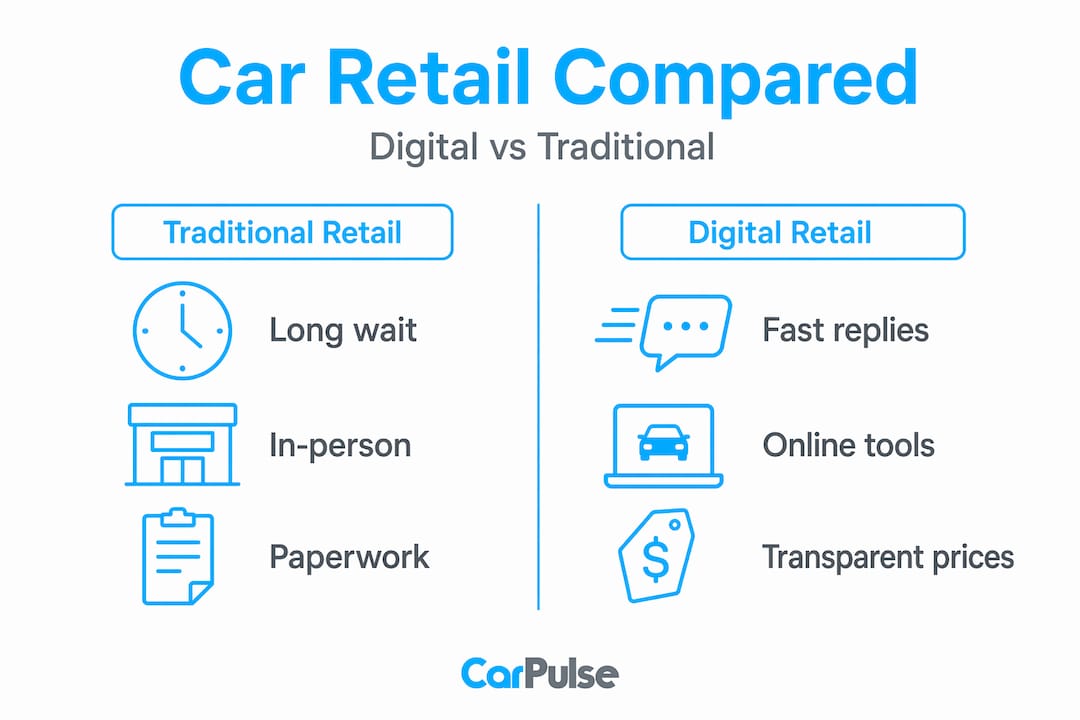
| Dimension | Traditional retail | Digital retail |
|---|---|---|
| Convenience | Visit dealership, business hours only | Browse and communicate 24/7 |
| Price transparency | Negotiated in-person, often opaque | Displayed online, pre-negotiated |
| Speed of purchase | Days of back-and-forth | Hours when fully integrated |
| Trust building | Relationship with salesperson | Video, reviews, verified listings |
| Buyer control | Dealer-led process | Buyer-led, self-serve options |
| Dealer reach | Local walk-in traffic | Regional and national digital reach |
The common concern is that going digital means losing the personal relationship with a salesperson. That’s mostly wrong. Automation is designed to facilitate immediate human contact rather than replace it. AI handles the speed and coverage; humans close the deal. The best digital retail experiences feel personal precisely because the technology clears the friction away before you ever speak to anyone.
Traditional dealerships that resist digital tools aren’t protecting a superior experience. They’re just making buyers work harder to give them money.
My take on Albania’s digital car retail moment
I’ve watched Albania’s automotive market move through several cycles, and what’s happening right now is different from the incremental changes that came before.
For most of the last decade, “going digital” for Albanian dealers meant having a Facebook page and maybe a basic website. What I see emerging in 2026 is something more structural. Buyers are arriving at showrooms having already done serious research. They know the market price, they’ve watched videos of the model they want, and they’ve checked comparable listings. That shift in buyer preparation is not going to reverse.
What concerns me is the uneven readiness on the dealer side. A significant portion of local dealers still run disconnected systems, and the buyer experience suffers for it. When you start a purchase online and then have to restart from scratch in the showroom, it erodes the trust that digital tools are supposed to build. The importance of digital car retail is not just about adding features. It’s about creating one continuous experience from first click to final signature.
My advice for Albanian buyers: reward the dealers who’ve made that investment. Ask direct questions about how their online and in-person processes connect. The dealers building real digital experiences deserve your business. And for enthusiasts watching this market, the next two years will define which dealerships survive long-term in Albania.
— Henri
Start your search on Carpulse today
Carpulse is built for exactly this moment in Albanian car buying. The platform connects buyers with verified dealerships and private sellers on a single marketplace, with filtering by make, model, year, price, mileage, and fuel type so you start informed rather than overwhelmed.
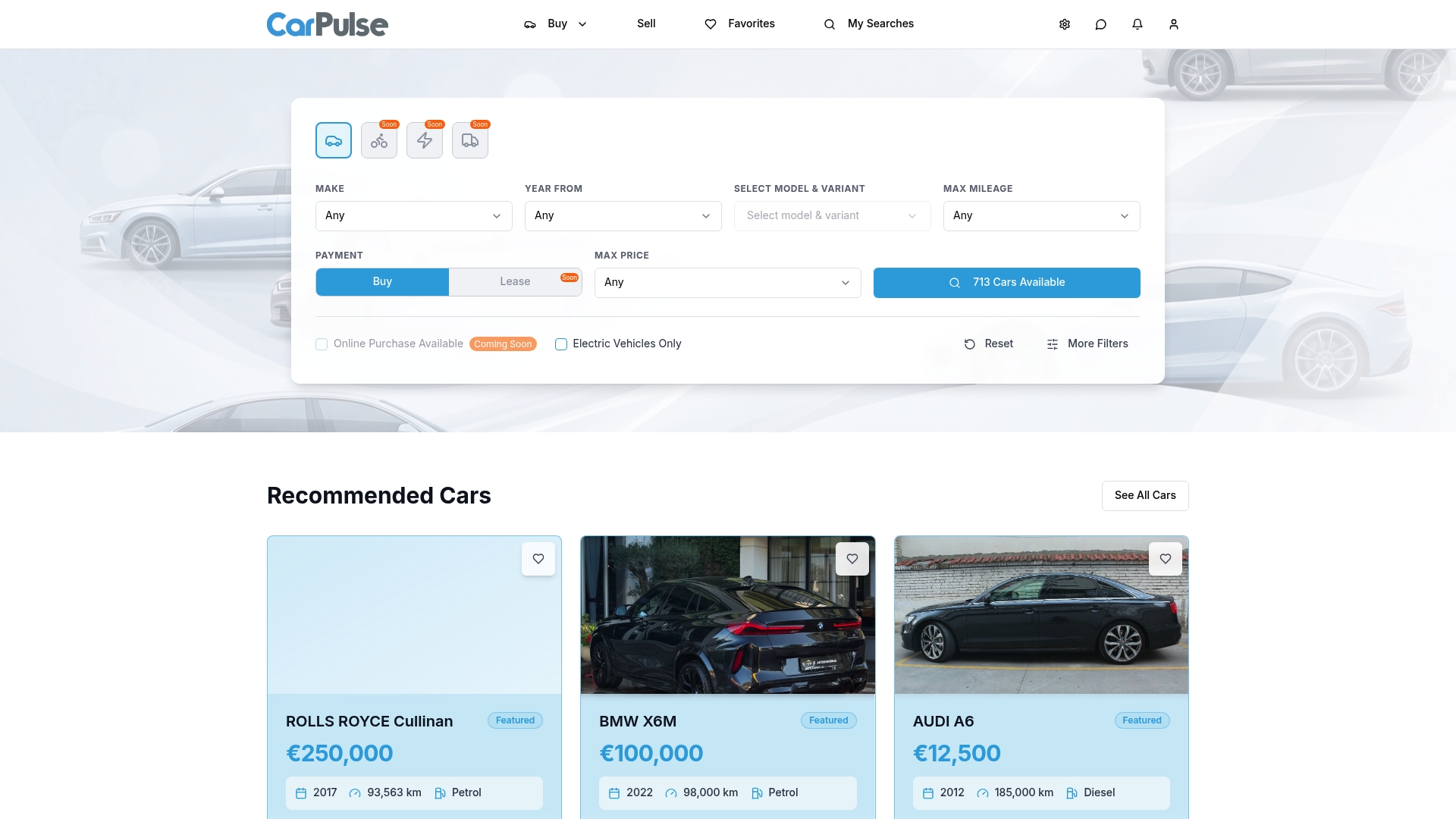
Sellers list vehicles using VIN-based listing that auto-populates details from the VIN number, which means accurate information for every listing you browse. Buyers can save searches, bookmark favorites, and contact sellers directly without leaving the platform. Whether you’re buying or selling your car in Albania, Carpulse gives you the tools to do it with confidence. The Albanian car marketplace is open on desktop and available on iOS and Android. Your next car is already listed.
FAQ
What does the role of digital car retail actually mean?
Digital car retail refers to the integration of online tools like inventory browsing, financing, trade-in valuation, and video communication into the traditional car buying process. It allows buyers to complete most of the purchase journey before ever visiting a dealership.
How does digital retail benefit Albanian car buyers?
Digital retail gives Albanian buyers price transparency, faster responses from dealers, and the ability to research and compare vehicles on their own schedule. Buyers who start online arrive at dealerships better informed and in a stronger negotiating position.
Is it safe to buy a car online in Albania?
Buying through a verified digital marketplace significantly reduces risk. Platforms like Carpulse use verified dealer networks and VIN-based listings that provide accurate vehicle data, making it easier to spot legitimate listings and avoid misrepresentation.
How do I know if a dealer is ready for digital retail?
Test them. Search their inventory online, request a quote, and note how fast they respond. Dealers with real digital retail capabilities respond within minutes and can carry your information through to the in-store process without asking you to repeat it.
What trends will shape car buying in Albania through 2026?
AI-driven lead management, video communication, rising EV interest, and integrated digital platforms are the defining trends. Buyers who understand these shifts will be better positioned to find better cars at better prices in less time.
Recommended
- Blerja e Makinave Online në Shqipëri: Rritja e EV-ve 2026 | CarPulse Albania
- Blerja e makinave online në Shqipëri: Rritje 12% e EV në… | CarPulse Albania
- Blerja online e makinave në Shqipëri: 12% rritje e EV në… | CarPulse Albania
- Si të listoni makina online në Shqipëri për shitje të… | CarPulse Albania