Guides
The Auto Leasing Process in Albania: 2026 Guide

The Auto Leasing Process in Albania: 2026 Guide

TL;DR:
- Most people mistakenly believe auto leasing involves owning the car, but it only grants the right to use it temporarily. Leasing payments cover depreciation and financing costs without building equity, and exceeding mileage limits results in costly penalties. Albanian lessees often overlook insurance gaps and default clauses, risking significant financial exposure if they do not carefully read their contracts.
Most people who ask about the auto leasing process assume they are working toward owning the car. They are not. Understanding what auto leasing actually is changes how you evaluate every number on the contract. Leasing is paying for the use of a vehicle over a set period, not buying it in installments. You return the car at the end unless a purchase option exists and you choose to use it. This guide breaks down every step of the car leasing process, the real costs involved, and what Albanian lessees specifically need to know before signing anything.
Table of Contents
- Key takeaways
- What the auto leasing process actually means
- How the leasing process works, step by step
- Understanding the real costs of leasing
- Insurance requirements for leased vehicles in Albania
- My take on what Albanian lessees get wrong
- Find your next vehicle on Carpulse
- FAQ
Key takeaways
| Point | Details |
|---|---|
| Leasing is not buying | You pay for vehicle use over a fixed term, not for eventual ownership. |
| Mileage limits matter most | Exceeding your annual cap triggers per-mile penalties that add up fast. |
| Upfront costs are real | Acquisition fees, deposits, and first-month payments are due before you drive. |
| Albanian insurance has gaps | Mandatory TPL insurance covers third parties, not damage to your leased car. |
| Read the contract closely | Defaults can trigger immediate full payment of all remaining installments. |
What the auto leasing process actually means
Vehicle leasing, also called consumer leasing or contract hire in some markets, is a financing arrangement where you pay to use a car for a defined period without acquiring ownership. Most leases run 24 to 36 months, and your monthly payments cover the vehicle’s estimated depreciation during that period plus a financing charge. You are not paying off the car’s full value. That is the fundamental difference between leasing and a standard auto loan.
When you buy a car outright or finance it, you are building equity. With a lease, there is no equity. What you get instead is lower monthly payments, the ability to drive a newer vehicle more often, and no long-term ownership responsibility. The car belongs to the lessor (the leasing company or dealership) throughout the entire term.
A few terms worth knowing before you go further:
- Residual value: The projected value of the car at lease end. A higher residual value lowers your monthly payments because less depreciation needs to be covered.
- Money factor: The financing rate on a lease, expressed as a small decimal. Multiply it by 2,400 to get the rough annual percentage rate equivalent.
- Capitalized cost: The agreed-upon price of the vehicle. Negotiating this down directly reduces your payments.
- Acquisition fee: A lender fee, typically up to $1,000, that is rarely negotiable and often rolled into the lease.
- Mileage cap: Lesses agree to an annual limit usually between 10,000 and 15,000 miles. Going over triggers per-mile charges.
Most consumer leases are closed-end, meaning the residual value risk stays with the lessor. If the car is worth less than projected at lease end, that is their problem, not yours, as long as you followed the contract terms.
How the leasing process works, step by step
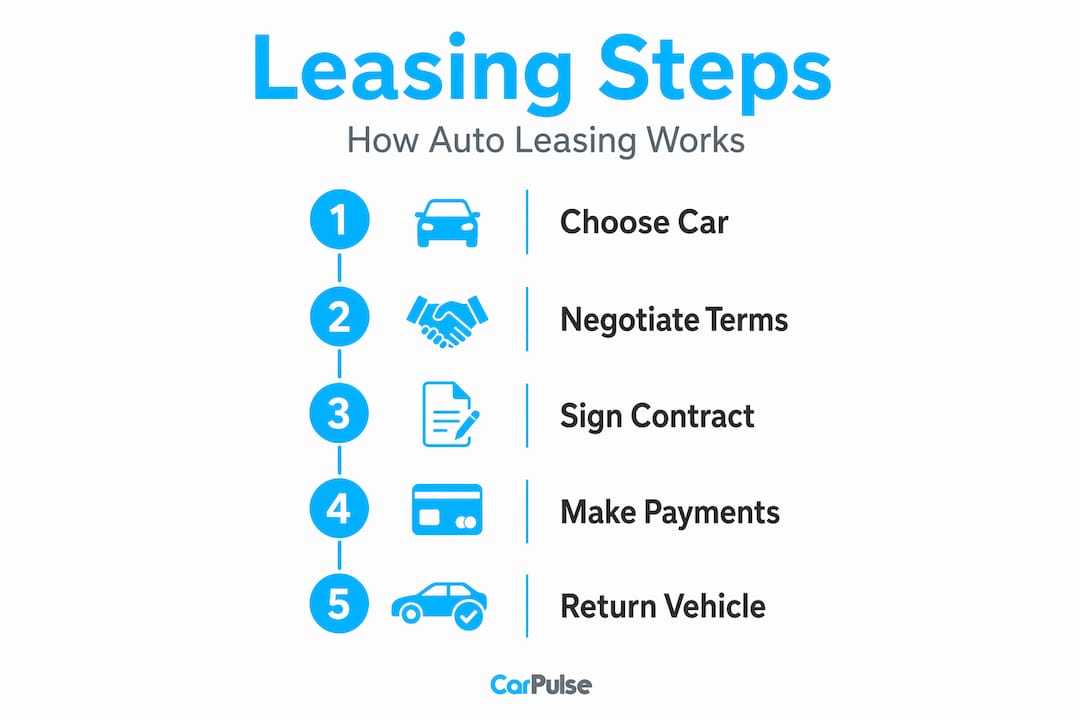
The core leasing process runs from selecting terms through returning or purchasing the vehicle at contract end. Here is what that looks like in practice:
- Check your credit and set a budget. Leasing companies review credit scores closely. A stronger score unlocks better money factors. Know your monthly limit before you walk into a dealership.
- Choose a lease term. Terms typically run two to four years. Shorter terms mean higher monthly payments but more flexibility. Longer terms stretch payments out but commit you to the vehicle longer.
- Estimate your annual mileage honestly. This is where most people go wrong. Think about your daily commute, weekend trips, and any seasonal travel. Underestimate and you will pay penalties at return.
- Negotiate the capitalized cost. The vehicle price is negotiable, just like in a purchase. A lower cap cost means lower monthly payments. Do not skip this step because it feels awkward.
- Review all fees and the money factor. Ask the dealer to show you the money factor explicitly. Compare it to current market rates. Acquisition fees and disposition fees (charged at lease end) should be disclosed upfront.
- Sign the lease contract carefully. Read every clause, especially the sections on mileage overages, wear and tear standards, early termination penalties, and what happens if you default. Leases are binding contracts and transferring or selling the vehicle is generally not permitted.
- Make payments on time, every month. Late payments are not a small inconvenience on a lease. More on that in the costs section.
- Choose your end-of-lease option. Return the car, buy it at the predetermined residual value if the contract allows it, or in some cases, roll into a new lease.
Pro Tip: Before you sign, ask the dealer to walk you through a full lease worksheet showing the cap cost, residual value, money factor, and all fees. Any dealer unwilling to show you this breakdown is a dealer worth walking away from.
Understanding the real costs of leasing
Leasing can look inexpensive at first glance. Monthly payments are almost always lower than a loan for the same car. But the full picture includes a range of costs that catch new lessees off guard.

Upfront costs are significant. Initial fees can include a security deposit, first month’s payment, acquisition fee, taxes, and registration fees. In some deals, a capitalized cost reduction (essentially a down payment) is required or recommended to lower monthly payments. Before you drive off the lot, you may be writing a check worth several thousand dollars.
Monthly payments are calculated based on depreciation plus the financing charge. A vehicle with strong residual value and a low money factor produces the most favorable payments. This is why some models lease much better than others even when their sticker prices are similar.
The costs that surprise people most are the penalties:
- Mileage overages: Exceeding your cap typically costs 15 to 25 cents per mile, depending on the contract. Drive 5,000 miles over a 36-month lease and you could owe $750 to $1,250 at return.
- Wear and tear: Normal wear is usually acceptable. Scratches, dents, worn tires, and interior damage beyond the standard threshold are charged at return.
- Early termination: Penalties for ending a lease early are substantial. The lessor typically charges remaining payments, fees, and a termination penalty. There is no clean exit from a lease contract midway through.
Pro Tip: If you know your driving patterns tend to run high, negotiate a higher mileage cap upfront. The per-mile rate in the contract is almost always cheaper than the overage penalty charged at return.
For a broader look at car financing options in Albania including how leasing compares to traditional loans, CarPulse has a detailed local guide worth reading before you commit.
Insurance requirements for leased vehicles in Albania
This section matters more than most Albanian lessees realize. The country’s standard insurance framework does not fully protect you when you are driving a leased car.
Motor liability insurance (TPL) is mandatory for all vehicles in Albania. It covers third-party material and health damages if you cause an accident. What it does not cover is damage to your own vehicle, the leased car itself. If you crash, TPL pays the other party. The leased vehicle’s repair bill lands on you.
This creates a real financial exposure. Since the car belongs to the leasing company, damage to it during your term is your contractual responsibility. Most lease contracts require you to carry comprehensive and collision coverage in addition to TPL. Verify this in your contract before you sign.
A few other things to know:
- Report accidents immediately. Damage to a leased vehicle requires prompt notification to the lessor and typically a police report. Unauthorized repairs can result in contract violations and fines.
- Claims have a statute. Under Albanian law, motor liability claims must be made within two years of the incident.
- Cross-border driving. Many Albanian lease contracts include restrictions on driving the vehicle outside the country. If you need to cross borders, check whether the contract requires advance authorization and what additional insurance is needed.
If your lease contract does not specify required coverage beyond TPL, ask in writing before signing. A gap in coverage on a vehicle you do not own is a risk you cannot afford to ignore.
My take on what Albanian lessees get wrong
I have seen a lot of people walk into a lease expecting flexibility and walk out feeling trapped. Most of the frustration traces back to two things: mileage miscalculation and not reading the default clauses.
In my experience, people estimate their annual mileage based on their best-case driving habits, not their actual ones. Then they hit month 30 of a 36-month lease and realize they are already 4,000 miles over. The math at that point is painful and unavoidable.
The financial shock that comes with a default is even worse. Lease defaults in Albania can trigger a clause requiring immediate full payment of all remaining installments. That is not a warning letter. That is the entire remaining balance due at once. Most people do not read that provision until it applies to them.
What I tell anyone looking at a lease: treat the mileage cap as your hard ceiling and build a buffer into your budget for the first month of the next lease overlap. The Albanian market is growing in this area, but local contracts are not always written with the lessee’s education in mind. You need to advocate for yourself at the signing table.
Matching lease terms to your actual habits is not optional advice. It is the single most important decision you make in the whole process.
— Henri
Find your next vehicle on Carpulse
Whether you are ready to lease or still comparing your options, CarPulse makes it easier to see what is available in Albania right now.
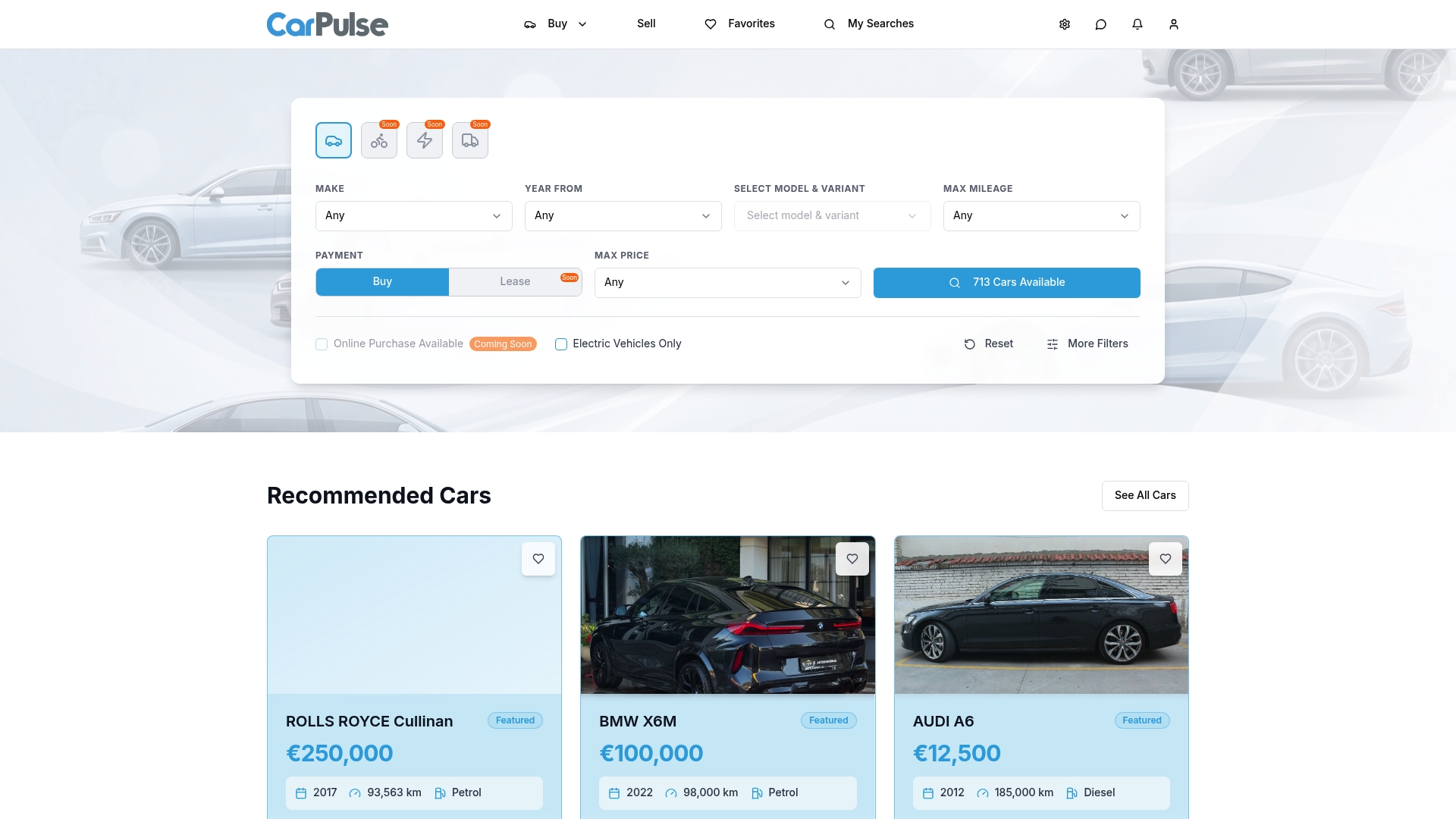
CarPulse is Albania’s largest car marketplace, connecting buyers and lessees with verified dealerships and private sellers across the country. You can filter by make, model, year, price, and fuel type to find vehicles that fit your budget and lease preferences. Dealers on the platform are verified, listings are detailed, and the mobile app means you can browse, save, and compare from anywhere. If you are working through the lease vs. buy decision, the car financing guide on CarPulse walks through the full comparison with Albanian market context built in.
FAQ
What is the auto leasing process in simple terms?
The auto leasing process involves selecting a vehicle and lease term, negotiating pricing, signing a contract, making monthly payments, and returning or purchasing the vehicle at term end. You pay for the car’s use, not ownership.
How does the car leasing process differ from buying?
When you buy, you build equity and eventually own the vehicle. With a lease, payments cover depreciation and financing charges only, and the car returns to the lessor at the end of the term.
What happens if I exceed my mileage limit?
Exceeding the mileage cap triggers per-mile penalties set in the lease contract, typically between 15 and 25 cents per mile. These charges are calculated and collected at vehicle return.
Do I need more than TPL insurance for a leased car in Albania?
Yes. TPL is mandatory but only covers third-party damages. Lessees typically need additional coverage for damage to the leased vehicle itself, as the contract usually requires comprehensive and collision insurance.
Can I end a car lease early in Albania?
Early termination is technically possible but costly. Terminating early usually means paying remaining installments, fees, and a termination penalty. In some cases, default clauses can make the full remaining balance due immediately.